Horus Eye Necklace Buying Guide: Materials & Styles
Discover how to choose the perfect Horus eye necklace. Our expert buying guide covers metal grades, gemstone authenticity, enamel types, and pricing.

The Wedjat Distinction: Horus vs. Ra
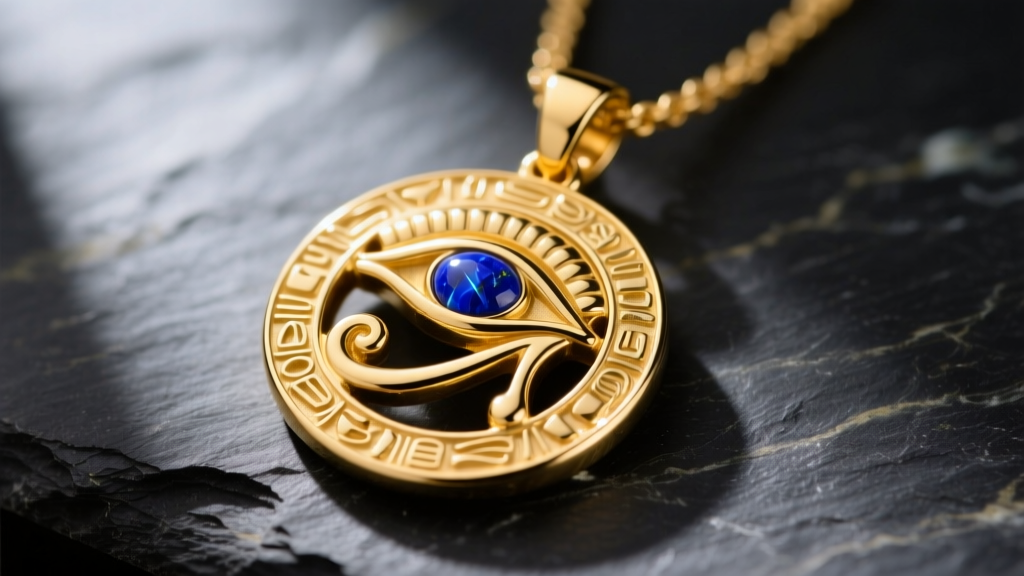
Before investing in a Horus eye necklace, it is crucial to understand the historical and symbolic nuances of the design. The symbol you are likely looking for is the Wedjat, traditionally representing the left eye of the falcon god Horus. According to World History Encyclopedia, the Eye of Horus is intrinsically linked to the moon, healing, restoration, and protection. In contrast, the Eye of Ra represents the right eye, the sun, and divine wrath. When browsing artisan or historically accurate jewelry lines, you will notice that authentic Horus eye pendants feature a stylized teardrop or falcon cheek marking beneath the eye, a defining anatomical trait of the Wedjat. Mass-produced fashion jewelry often blurs these lines, but discerning collectors and historians look for the precise left-eye curvature and the extended spiral or teardrop motif that signifies the healing tears of Horus.
Metal Purity and Hallmarks: What to Demand
The longevity and skin-safety of your necklace depend entirely on the base metal. Because the Horus eye features intricate negative spaces and sharp angles, the metal must be cast or stamped with precision.
Sterling Silver (925)
The most common and versatile choice for this amulet is 925 sterling silver. However, silver is prone to tarnishing, especially in the deep crevices of an engraved Eye of Horus. Always look for pieces that are rhodium-plated. Rhodium is a precious metal from the platinum family that provides a brilliant, tarnish-resistant finish. If a product description simply says '925 silver' without mentioning rhodium or e-coating, expect to polish the recessed areas frequently with a specialized silver cloth.
Gold Alloys (14k vs. 18k)
For a warmer, ancient-inspired aesthetic, gold is unparalleled. A 14k gold Horus eye necklace offers superior durability and scratch resistance, making it ideal for daily wear. 18k gold provides a richer, deeper yellow hue that closely mimics ancient Egyptian electrum, but it is softer and more prone to denting if the pendant is thin. Beware of 'gold vermeil'—while it is a thick layer of gold over sterling silver (usually 2.5 microns), the intricate edges of the Horus eye are high-friction areas where vermeil will eventually wear away, exposing the silver beneath.
Avoid: 'Tibetan Silver' or 'Nickel Silver.' These are misleading trade names for base metal alloys containing copper, nickel, and zinc. They can cause severe contact dermatitis and will turn your skin green.
Gemstone Inlays: Spotting the Fakes
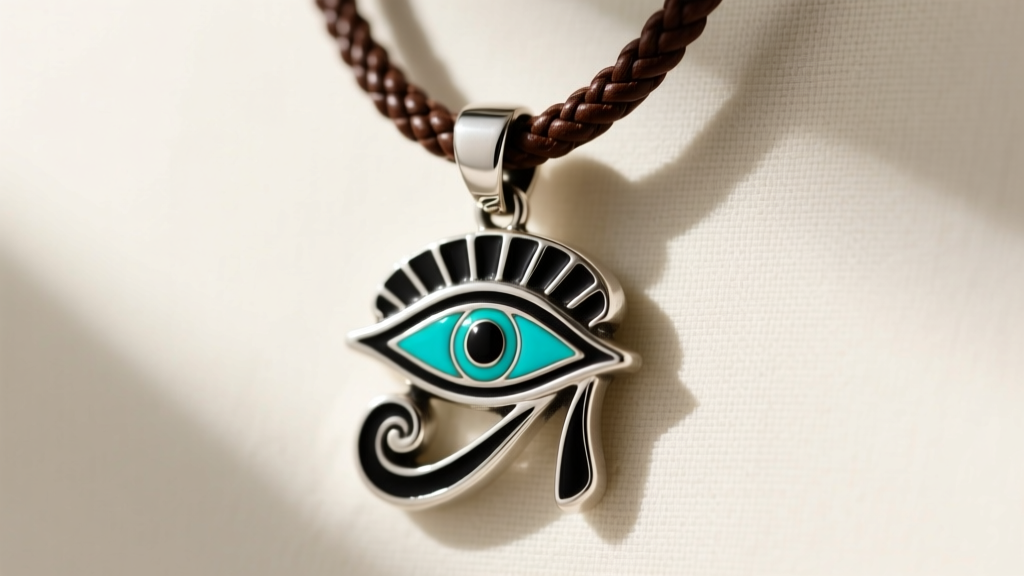
Traditional Horus eye necklaces frequently incorporate lapis lazuli, turquoise, and onyx to replicate the vibrant colors of ancient Egyptian faience and royal tombs. The gemstone market is flooded with imitations, so knowing what to look for is essential.
Lapis Lazuli
True lapis lazuli is a complex rock, not a single mineral. According to the Gemological Institute of America (GIA), high-quality lapis should exhibit a deep, royal blue color with golden pyrite flecks and occasional white calcite streaks. If the stone is completely uniform in color with no pyrite, it is likely dyed jasper, synthetic spinel, or sodalite. If the 'gold' flecks look like perfectly uniform, painted glitter, it is a manufactured imitation.
Turquoise
Turquoise is highly porous and is almost always stabilized with a clear epoxy resin to prevent it from cracking during the cutting process. This is an accepted industry practice. However, you must avoid dyed howlite or dyed magnesite. Howlite features distinct gray or black webbing that is artificially dyed blue. Real turquoise matrix (the host rock webbing) is usually brown, black, or golden, and the webbing patterns are organic and asymmetrical. For a complete breakdown of treatments, refer to the GIA Turquoise Guide.
Enamel Techniques: Vitreous vs. Cold
Many modern Horus eye necklaces use enamel to achieve the striking blue, black, and white contrasts of the Wedjat. The manufacturing method drastically affects the price and lifespan of the piece.
- Vitreous (Kiln-Fired) Enamel: This is powdered glass fused to metal at temperatures exceeding 1400°F. It is incredibly durable, scratch-resistant, and will never yellow or fade. It is expensive and usually found in luxury or artisan-crafted pieces.
- Cold Enamel (Epoxy Resin): A pigmented resin poured into the metal recesses and air-dried. It is cheaper and allows for vibrant, modern colors. However, cold enamel is susceptible to scratching, can chip if dropped on a hard surface, and white or light-blue resins may yellow over time with UV exposure.
Chain Pairing and Weight Distribution
The Horus eye is a visually heavy, asymmetrical symbol. Pairing it with the wrong chain will cause the pendant to constantly flip or drag the necklace down. You must match the chain gauge to the pendant's physical weight.
Lightweight Pendants (Under 5 Grams)
For minimalist, die-struck, or hollow-backed Horus eye pendants, a 1.0mm to 1.2mm box chain or a delicate cable chain is ideal. The box chain's square links lay flat against the collarbone, providing a modern, geometric contrast to the organic curves of the eye.
Heavy Cast Pendants (8 to 15+ Grams)
Solid cast silver or gold pieces require structural support. Opt for a 2.0mm to 3.0mm rope chain or Figaro chain. The twisted links of a rope chain mimic the texture of ancient cordage, complementing the historical nature of the amulet while providing the tensile strength needed to hold a heavy pendant without stretching the bail.
Pricing Tiers and Value Matrix
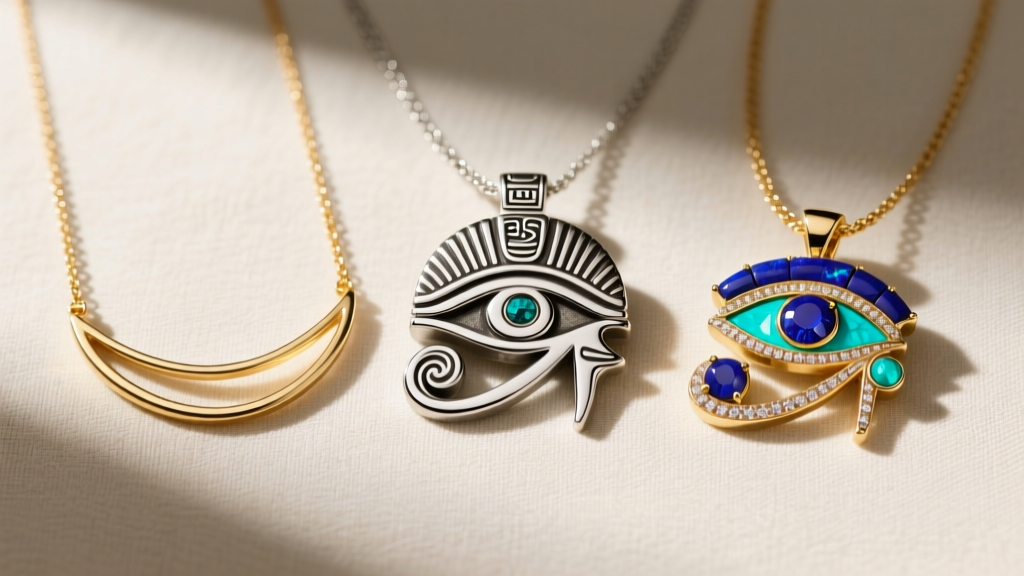
Understanding the market value prevents overpaying for mass-produced items or underestimating the cost of genuine materials. Use this matrix to benchmark your purchase.
| Tier | Price Range | Materials & Craftsmanship | Best For |
|---|---|---|---|
| Budget | $20 - $45 | Brass or stainless steel base, gold/silver plating, dyed howlite or synthetic enamel. | Occasional wear, fashion trends, cosplay. |
| Mid-Range | $60 - $150 | Solid 925 Sterling Silver (rhodium plated), genuine stabilized turquoise or lapis lazuli inlay, cold enamel. | Daily wear, meaningful gifts, spiritual practitioners. |
| Luxury / Artisan | $250 - $800+ | Solid 14k/18k Gold, untreated high-grade lapis, kiln-fired vitreous enamel, hand-engraved detailing. | Heirloom investments, collectors, fine jewelry enthusiasts. |
Red Flags and Counterfeits to Avoid
When shopping online or in tourist markets, be vigilant against these common deceptive practices:
- The 'Egyptian Gold' Myth: Vendors may claim a piece is made of 'Egyptian Gold' or 'Pharaoh's Gold.' These are not recognized metallurgical terms and usually refer to heavily tarnished brass or copper alloys that will cause skin discoloration.
- Glued-In Stones: In high-quality jewelry, gemstone inlays are bezel-set or precisely channel-set. If you can see thick, messy glue residue around the lapis lazuli or turquoise, the piece was hastily assembled and the stones will likely pop out upon impact or exposure to water.
- Laser-Etched vs. Cast Detail: Inspect the pupil and the falcon markings. Cheap pendants are cast as flat discs with the design laser-etched on top, resulting in shallow, lifeless lines. A quality Horus eye necklace features deep, multi-level relief casting, where the eye sits on a distinct, raised plane above the surrounding metal.
By prioritizing verified hallmarks, understanding gemstone treatments, and selecting the appropriate chain gauge, you can secure a Horus eye necklace that is not only a powerful symbol of protection but also a masterfully crafted piece of enduring jewelry.


