How Do You Measure a Necklace Length? A Beginner's Guide
Learn exactly how do you measure a necklace length with our beginner-friendly guide. Discover standard sizes, neckline pairings, and DIY measuring tips.

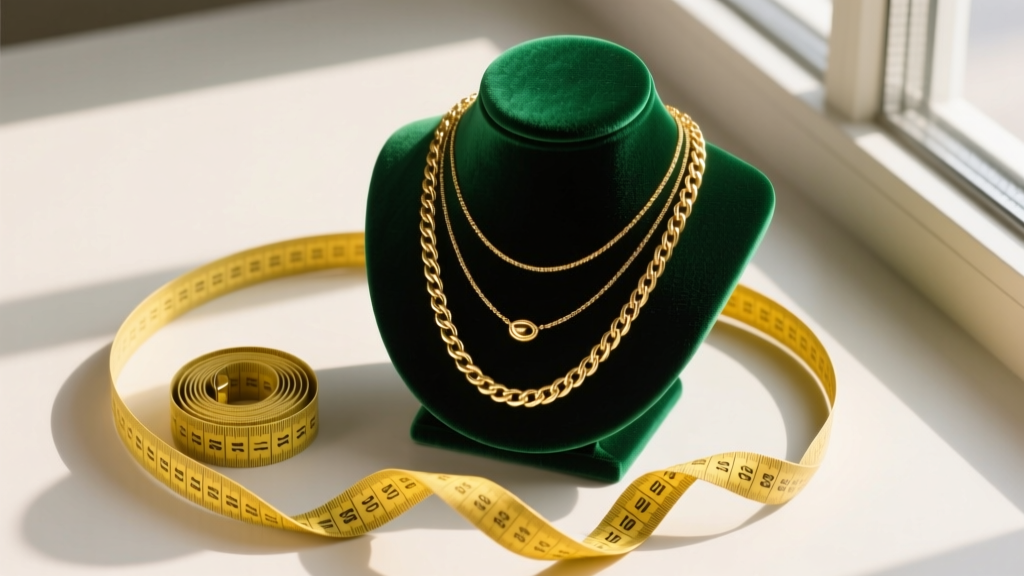
Why Getting the Right Necklace Length Matters
Choosing the perfect necklace goes far beyond selecting the right metal or gemstone. The length of the chain dictates how the piece drapes, where it sits on your chest, and how it complements your wardrobe. A chain that is too short can feel restrictive and sit awkwardly above the collarbone, while one that is too long might get lost under a blouse or fail to highlight a pendant properly. If you have ever asked yourself, 'how do you measure a necklace length,' you are not alone. Many beginners struggle with standard jewelry sizing because neck sizes and torso proportions vary wildly from person to person.
In this comprehensive guide, we will break down the exact methods for measuring your neck, explain standard industry lengths, and reveal the hidden variables—like clasp sizes and pendant drops—that can completely change how a necklace fits. Whether you are buying a delicate 14k gold cable chain or a heavy stainless steel Cuban link, mastering these measurements is the first step to building a perfectly curated jewelry collection.
Step-by-Step: How Do You Measure a Necklace Length?
Before you look at standard size charts, you need to know your personal baseline. There are two highly effective methods to determine your ideal necklace length at home.
Method 1: The String and Ruler Technique
This is the most accurate way to visualize how a chain will sit on your unique body type. You will need a piece of non-stretchy string (cotton or nylon works best; avoid elastic or yarn) and a standard ruler or measuring tape.
- Step 1: Stand in front of a mirror wearing a form-fitting shirt or bare skin so you can see your neckline clearly.
- Step 2: Wrap the string around your neck, bringing the ends together at the front where you want the necklace to clasp.
- Step 3: Adjust the string up or down until it hits your desired drop point. For a standard pendant necklace, let it fall just below the collarbone.
- Step 4: Pinch the string where the ends meet, remove it carefully, and lay it flat against a ruler. Measure the total length in inches.
Method 2: Measuring an Existing Chain
If you already own a necklace that fits perfectly, you can use it as a template. However, there is a critical industry secret you must know: standard jewelry measurements exclude the clasp. When a jeweler sells a '16-inch chain,' they are measuring the chain links only. To measure your existing piece accurately, lay it flat on a table, unclasped, and measure from the inside of the clasp to the very end of the jump ring. Do not pull the chain taut, as the natural flexibility of the links accounts for how it will drape on your skin.
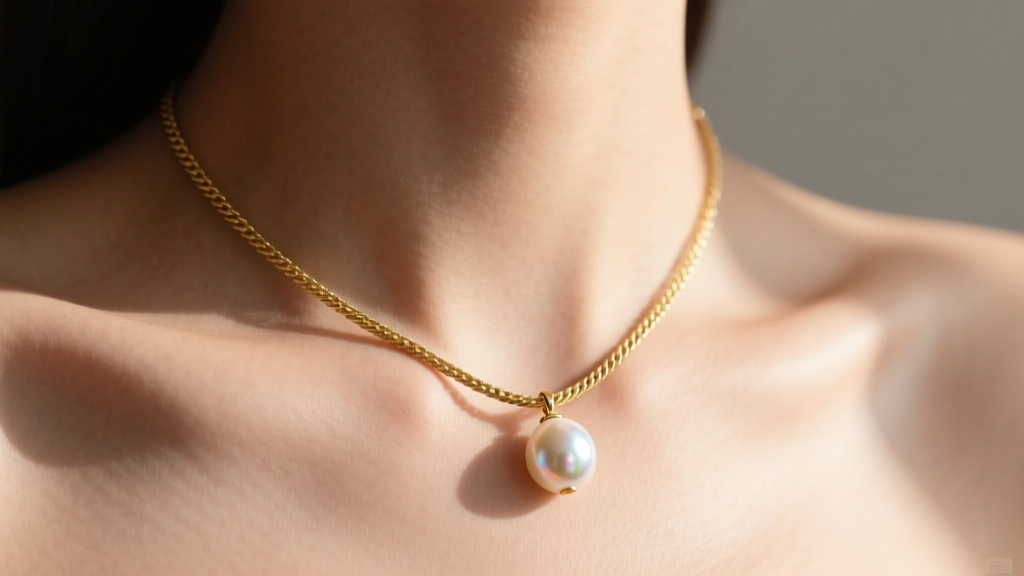
Standard Necklace Lengths Explained
Once you know your measurements, you need to translate them into standard jewelry industry terms. According to the Jewelers of America, necklace lengths are categorized into specific tiers, each serving a distinct stylistic purpose. Below is a detailed breakdown of standard lengths, their metric conversions, and where they typically fall on the average female torso.
| Category | Length (Inches) | Length (cm) | Where It Falls | Best Necklines |
|---|---|---|---|---|
| Collar | 12 - 13" | 30 - 33 cm | Tightly around the base of the neck | Off-shoulder, boatneck, V-neck |
| Choker | 14 - 16" | 35 - 40 cm | Resting on the collarbone | Scoop neck, crew neck, strapless |
| Princess | 17 - 19" | 43 - 48 cm | Just below the collarbone | Almost any neckline, high collars |
| Matinee | 20 - 24" | 50 - 60 cm | Top of the bust / cleavage area | Business attire, turtlenecks, deep V |
| Opera | 28 - 36" | 71 - 91 cm | Below the bust / sternum | High necklines, evening wear |
| Rope / Lariat | 37"+ | 94+ cm | Falls to the waist or can be doubled | Simple sheath dresses, casual layers |
Adjusting for Neck Size and Body Proportions
Standard sizes are based on an average female neck circumference of roughly 13 to 14 inches. If your neck circumference falls outside this range, you must adjust your baseline. The golden rule for chokers is to measure your neck and add exactly 2 inches for a comfortable, non-restrictive fit. For example, if your neck measures 15 inches, a standard 14-inch choker will feel like a collar; you should opt for a 17-inch Princess length instead.
Torso length also plays a massive role, particularly for Matinee and Opera lengths. A 24-inch Matinee chain will hit the upper bust on a person with a shorter torso, but it might fall awkwardly close to the neckline on someone with a longer torso. Always use the string method to verify where a 24-inch drop actually lands on your specific frame before purchasing.
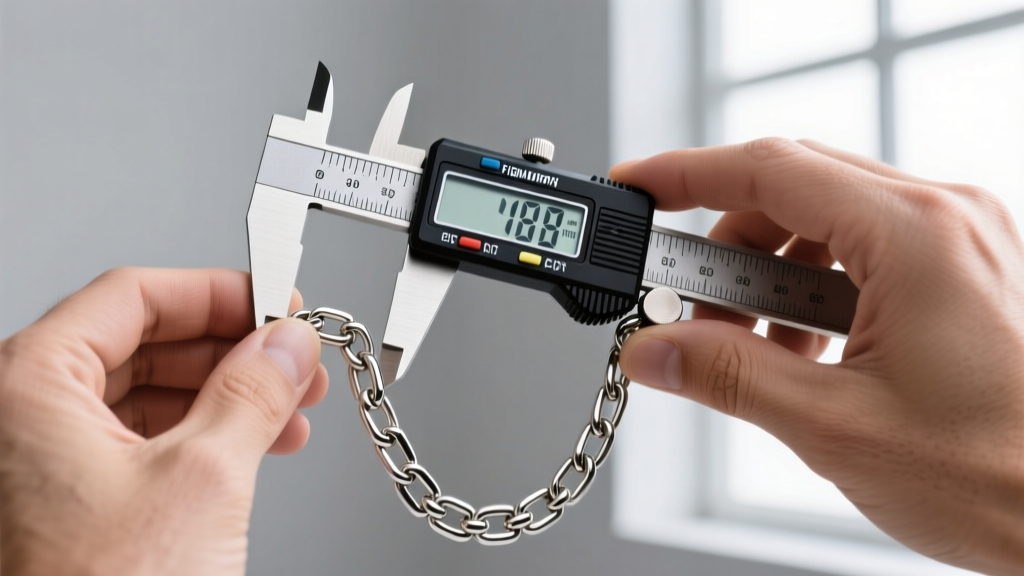
The Hidden Variables: Pendants, Bails, and Clasps
Understanding how do you measure a necklace length is only half the battle. Beginners often forget that adding a pendant completely changes the visual length of the jewelry. The Gemological Institute of America (GIA) notes that the visual drop of a necklace is determined by the chain length plus the pendant drop and the bail size.
- The Bail: The bail is the loop that connects the pendant to the chain. A standard 5mm bail adds roughly 0.2 inches to the total drop. Ornate or hidden bails can add up to 0.5 inches.
- The Pendant: If you attach a 1.5-inch teardrop pendant to a 16-inch choker, the visual center of the piece now sits at 17.7 inches, effectively turning your choker into a Princess-length necklace.
- Chain Width (Gauge): A 1mm delicate cable chain drapes closely to the skin, while a 5mm thick Figaro or Cuban chain has structural rigidity. Thicker chains push outward from the chest, meaning a 16-inch thick chain will sit slightly higher on the neck than a 16-inch delicate chain due to the wider circumference required to wrap around the neck and shoulders.
Common Beginner Mistakes to Avoid
Even with the right tools, it is easy to make errors when buying jewelry online. Avoid these common pitfalls:
- Measuring the Clasp: As mentioned, do not include the lobster clasp or spring ring in your measurement. If you measure a 16-inch chain and add the 0.5-inch clasp, you will mistakenly think you own a 16.5-inch chain.
- Ignoring the Extender Chain: Many modern necklaces come with a 2-inch extender chain. A necklace listed as '16 to 18 inches' means the base chain is 16 inches. Always measure the base chain for your primary fit.
- Forgetting Layering Spacing: If you plan to layer necklaces, you need at least a 2-inch gap between each chain to prevent tangling. A 16-inch and an 18-inch chain layer perfectly, but a 16-inch and a 17-inch will constantly knot together.
Final Thoughts
Mastering the art of jewelry sizing transforms how you wear and buy accessories. By utilizing the string method, understanding standard industry tiers, and accounting for the hidden variables of pendants and chain gauges, you will never have to guess your size again. The next time someone asks you how do you measure a necklace length, you will have the precise, expert knowledge to guide them to their perfect fit.


