How Long Should a Necklace Be? The Ultimate Fit & Style Guide
Discover exactly how long a necklace should be for your neckline, body type, and pendant weight. Our expert buying guide ensures the perfect fit.

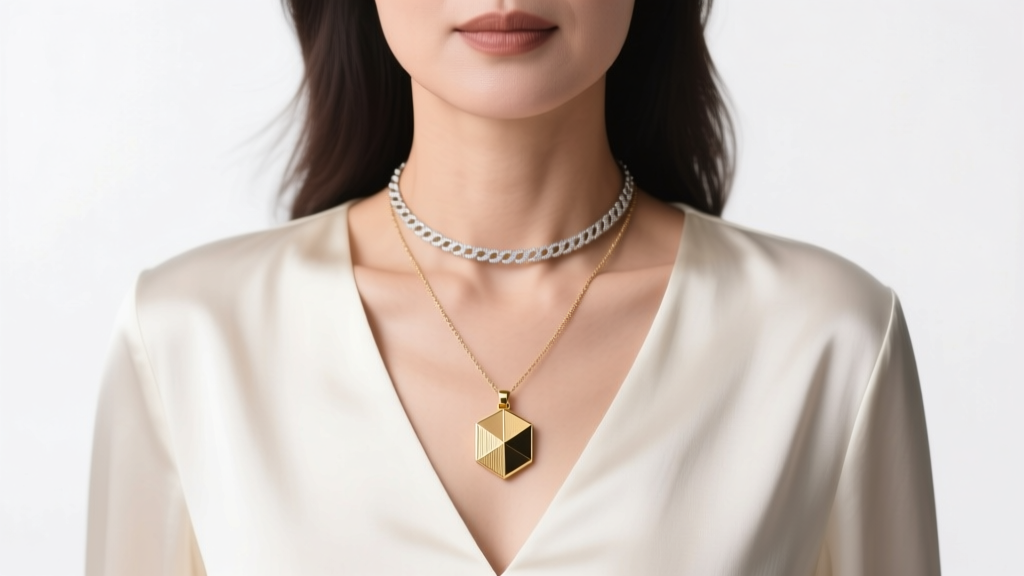
When shopping for fine jewelry online, the most common question we encounter from buyers is: how long should a necklace be? Unlike rings or bracelets, necklaces interact dynamically with your anatomy, wardrobe, and the specific weight of the pendants you attach. A chain that looks perfect on a mannequin might sit awkwardly against your collarbone or disappear beneath your favorite sweater. In this comprehensive buying guide, we break down the exact science of necklace sizing, chain gauge physics, and neckline pairing to ensure your next purchase fits flawlessly.
The Standard Necklace Length Chart & Where They Fall
The jewelry industry relies on standard length classifications. However, these measurements assume an average neck circumference of 13 to 14 inches. If your neck measures outside this range, you will need to adjust your target length accordingly. Below is the definitive sizing matrix used by master jewelers.
| Length (Inches) | Industry Name | Typical Placement | Best For |
|---|---|---|---|
| 14' | Collar | Tightly around the mid-neck | Open-neck tops, formal wear |
| 16' | Choker | Base of the neck / collarbone | Everyday wear, V-necks, scoop necks |
| 18' | Princess | Just below the collarbone | Pendants, crew necks, business attire |
| 20' - 24' | Matinee | Top of the bust / cleavage | Turtlenecks, high necklines, layering |
| 28' - 36' | Opera | Below the bust / sternum | Formal gowns, double-wrap layering |
| 37'+ | Rope / Lariat | Waist or multi-wrap | Bohemian styles, knotting, lariats |
How to Measure Your Neck for the Perfect Fit
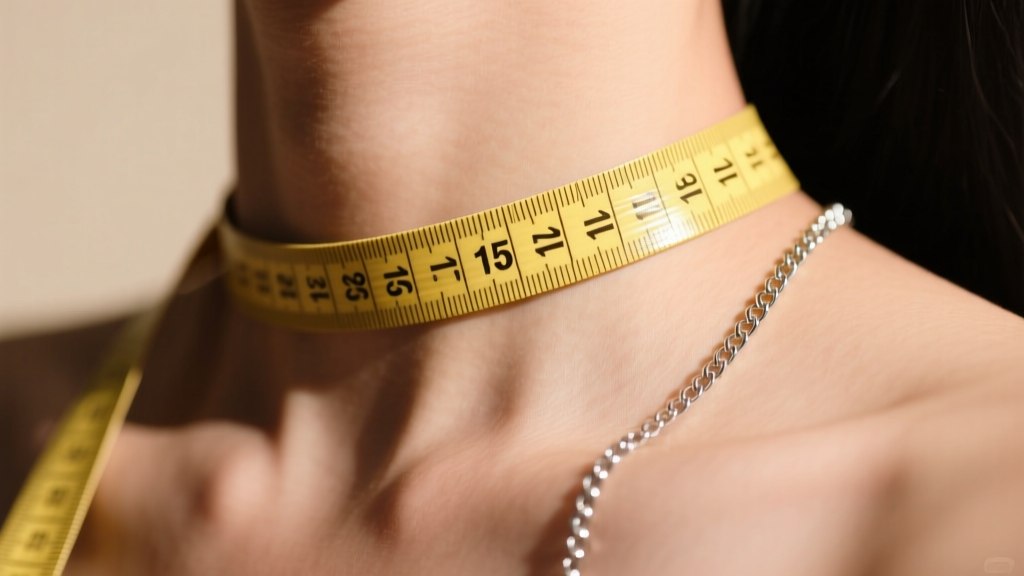
To accurately determine how long a necklace should be for your specific anatomy, skip the guesswork and use a flexible tailor's measuring tape. If you don't have one, use a piece of non-stretch string, mark the circumference, and measure it against a rigid steel ruler.
- The Choker Rule: Measure your neck snugly and add exactly 2 inches. This allows for breathing room and swallowing without the chain binding against your trachea.
- The Princess Rule (Standard): Measure your neck and add 4 inches. This will typically place the chain right at the hollow of your collarbone.
- The Two-Finger Test: When trying on a physical chain, you should be able to comfortably slide two fingers between the metal and your skin. Any tighter, and the chain will cause friction and skin irritation over time.
Matching Necklace Lengths to Necklines
The interplay between metal and fabric dictates the visual success of your outfit. Here is how to pair your chain length with common wardrobe staples.
V-Neck and Plunge Necklines
A V-neck creates a natural downward vector. You want a necklace that mimics and elongates this line. A 16-inch choker with a small drop pendant or an 18-inch princess chain with a Y-drop design works best. Avoid wide, horizontal collars that clash with the V-shape.
Crew Neck and Scoop Necklines
Crew necks sit high and tight. To avoid visual clutter, opt for a 16-inch chain that rests just above the fabric hem, or a 20-inch matinee that rests entirely below it. Never let a chain rest directly on the ribbed collar of a crew neck t-shirt, as the friction will degrade both the fabric and the metal finish.
Turtlenecks and High Collars
High necklines demand longer chains. A 22-inch to 24-inch matinee or a 28-inch opera length breaks up the expanse of fabric and draws the eye vertically. Heavy chain styles, such as 3.0mm Cuban links or paperclip chains, provide necessary visual weight against thick winter knits.
The Physics of Pendants: Weight and Gauge
One of the most overlooked factors when deciding how long a necklace should be is the weight of the pendant. A heavy pendant creates a downward gravitational pull, effectively shortening the chain's resting position by up to 1.5 inches compared to when it is worn bare.
According to manufacturing standards outlined by jewelry suppliers like Rio Grande, matching the chain gauge (thickness) to the pendant weight is critical to prevent metal fatigue and snapping.
Expert Sizing Tip: If you are attaching a 15-gram solid gold pendant to a 20-inch chain, the weight will pull the chain down to sit like an 18.5-inch chain. Always buy a chain 1 to 2 inches longer than your desired final resting place if you plan to use a heavy pendant.
Chain Gauge to Pendant Weight Matrix
- Under 5 grams: 0.9mm - 1.2mm gauge (Delicate cable, fine box chains)
- 5 to 10 grams: 1.2mm - 1.8mm gauge (Standard box, rope, or wheat chains)
- 10 to 20 grams: 2.0mm - 3.0mm gauge (Heavy wheat, thick curb, or Figaro chains)
- Over 20 grams: 3.5mm+ gauge (Solid Cuban links, heavy rope chains with reinforced lobster clasps)
Furthermore, material purity matters. An 18k gold chain is softer than 14k gold. If you are buying an 18k chain for a heavy pendant, you must increase the gauge by at least 0.5mm to compensate for the metal's lower tensile strength, a principle widely documented in gemological and metallurgical resources like the Gemological Institute of America (GIA).
Adjusting for Body Type and Proportions
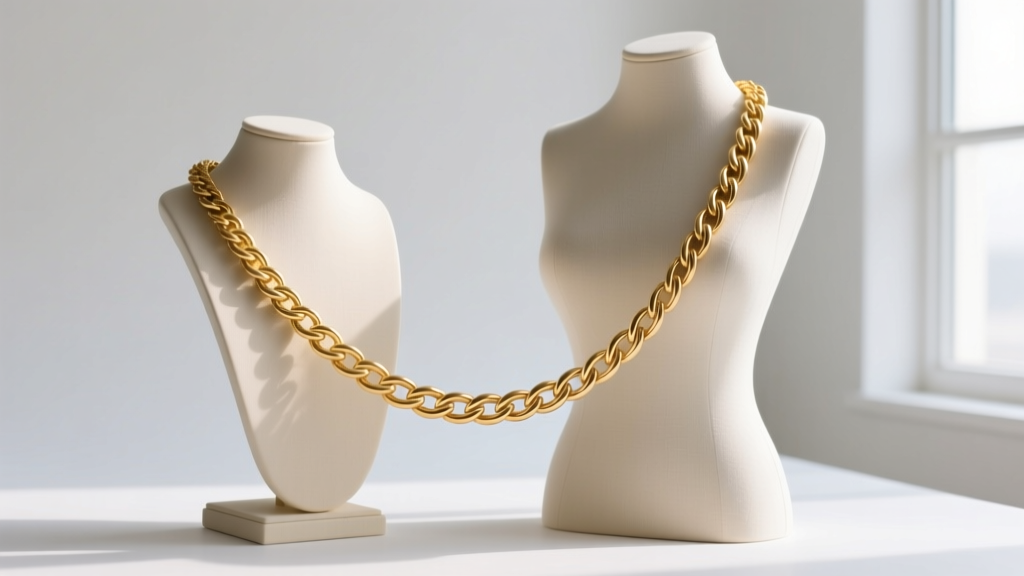
Standard jewelry sizing is based on a baseline mannequin. If you have a larger bust, broader shoulders, or a wider neck circumference, standard lengths will sit higher on your body than intended.
- Petite Frames (Under 5'4''): Standard lengths often run long. A 20-inch matinee might dip too low into the bust line. Opt for 15-inch chokers and 17-inch princess lengths to maintain proportion.
- Plus-Size or Busty Frames: A standard 18-inch princess chain may sit too close to the throat or get lost in the bust line. Upgrade to a 20-inch or 22-inch chain to ensure the pendant rests visibly on the sternum.
- Athletic/Broad Shoulders: Wider necks require longer base chains. Add an extra 1 to 2 inches to any standard recommendation to prevent the chain from looking like a tight collar.
Common Sizing Mistakes and How to Avoid Them
Even with the right measurements, buyers frequently make hardware mistakes that ruin the fit and longevity of the piece.
Ignoring the Clasp Type
Spring ring clasps are standard on delicate chains under 1.5mm. However, they are notorious for failing under the lateral stress of heavy pendants. If your pendant exceeds 8 grams, ensure your chain is equipped with a lobster clasp. Lobster clasps feature a solid internal spring mechanism that prevents accidental unhooking.
The 2-Inch Extender Rule
When buying online, always look for chains that include a 2-inch extender chain at the clasp. This simple addition provides crucial micro-adjustability, allowing you to adapt the necklace length by a few centimeters depending on the thickness of the shirt you are wearing that day. It is the single most effective way to guarantee a perfect fit when you cannot try the piece on in person.
Final Verdict: Finding Your Signature Length
Ultimately, answering the question of how long a necklace should be requires balancing your physical measurements, your wardrobe staples, and the physics of your chosen pendants. For a versatile, everyday piece that works with 80% of standard necklines, an 18-inch princess chain in a 1.5mm box or cable link remains the undisputed champion of fine jewelry. Measure twice, account for pendant drop, and always prioritize structural gauge over sheer visual bulk.