How to Authenticate Bvlgari Necklaces and Pendants: Expert Guide
Learn how to authenticate Bvlgari necklaces and pendants with our step-by-step expert guide. Spot fakes by checking hallmarks, weight, and clasps.

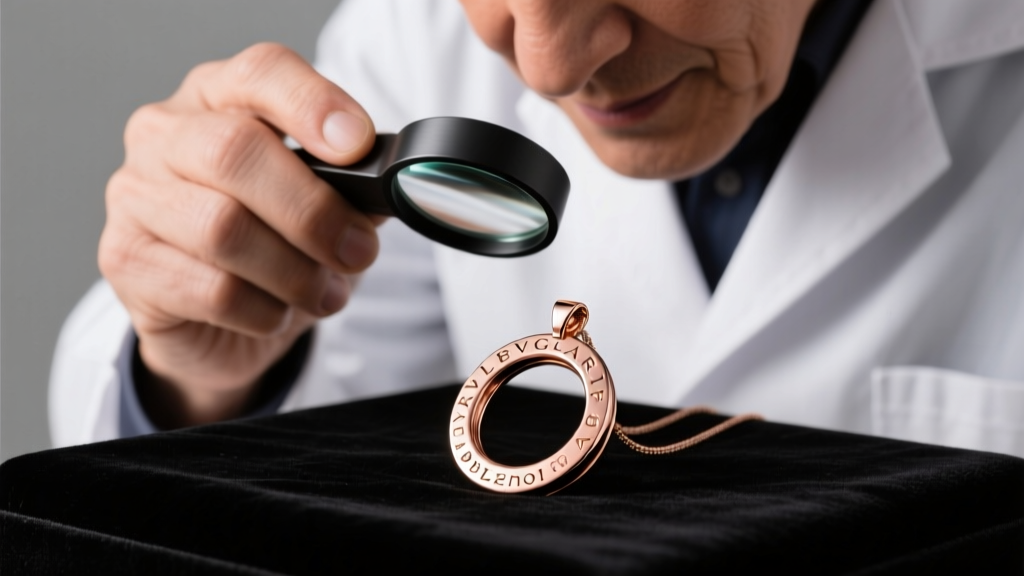
The secondary market for luxury jewelry has exploded in 2026, bringing with it a new generation of highly deceptive "super-fakes." When shopping for pre-owned or discounted Bvlgari necklaces and pendants, a simple visual inspection is no longer sufficient. Counterfeiters have become adept at replicating the general aesthetics of iconic collections like the B.zero1, Serpenti, and Divas' Dream. However, these fakes consistently fail under microscopic scrutiny and metallurgical analysis.
This step-by-step guide provides the exact framework professional authenticators and gemologists use to verify the legitimacy of Bvlgari jewelry. By focusing on micro-engravings, material density, and proprietary clasp mechanics, you can confidently separate authentic masterpieces from sophisticated replicas.
Essential Tools for Authentication
Before beginning your inspection, gather the following professional tools. Relying on the naked eye will result in missed details.
- 20x Triplet Jeweler's Loupe: Essential for inspecting font kerning and micro-stamps.
- Digital Milligram Scale: Must be accurate to 0.01 grams for density verification.
- Digital Calipers: For measuring exact pendant thickness and chain link gauge.
- UV Flashlight (365nm):strong> Crucial for testing gemstone inlays and detecting epoxy resins.
Step 1: Analyze the Hallmarks and Engravings
The most common failure point for counterfeit Bvlgari necklaces and pendants is the hallmark engraving. Bvlgari utilizes precision laser engraving or deep mechanical stamping that remains incredibly crisp under magnification.
Font and Kerning Specifics
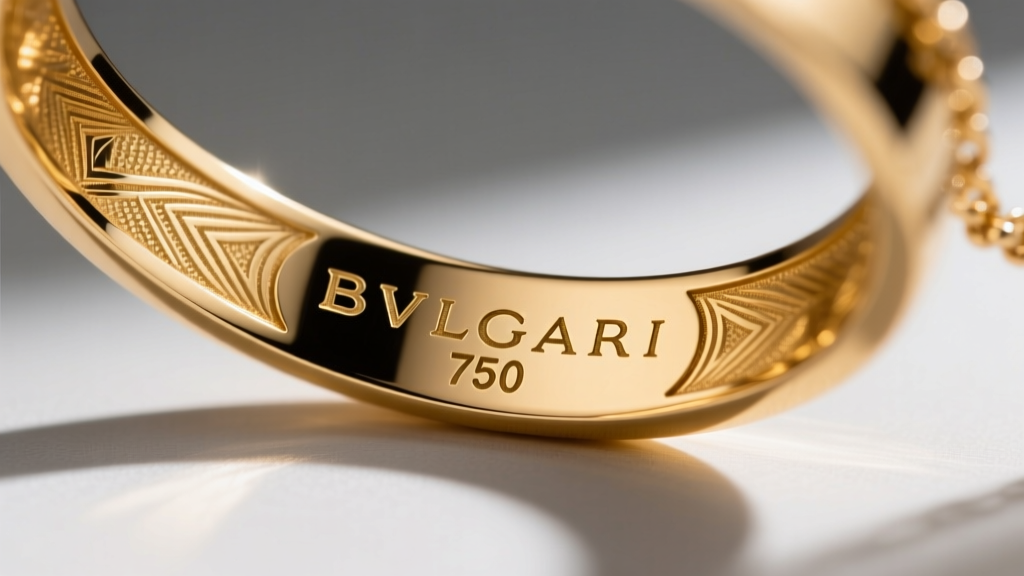
Examine the "BVLGARI" logo stamped on the pendant or clasp tag. The brand uses a custom, modified sans-serif font. Notice the 'B': the upper bowl is noticeably smaller than the lower bowl. The 'V' is sharply pointed with no serifs, and the 'O' is a mathematically perfect circle. In counterfeit pieces, the 'O' is often slightly oval, and the 'G' lacks the distinct inward tick found on authentic models.
The "750" and Serial Number Stamps
Authentic 18k gold pieces will feature a "750" stamp indicating 75% pure gold purity. This stamp should be perfectly horizontal and aligned with the brand logo. Additionally, look for the serial number, which typically consists of two letters followed by five digits (e.g., BP12345). Under a 20x loupe, authentic serial numbers show clean, sharp edges. Fakes often exhibit a "dot-matrix" or pixelated appearance due to low-quality laser etching, or the stamping appears shallow and blurred.
Step 2: Evaluate the Clasp and Chain Mechanics
Bvlgari's hardware is engineered for both security and seamless aesthetics. The chain links on authentic pieces are uniformly soldered, with no visible gaps or weak points. The clasp mechanisms vary strictly by collection.
| Collection | Authentic Clasp Type | Counterfeit Red Flags |
|---|---|---|
| B.zero1 | Custom spring ring or lobster clasp with a flat, logo-engraved tag. | Standard off-the-shelf lobster clasps; poorly stamped or misaligned logo tags. |
| Serpenti Viper | Concealed or highly integrated lobster clasp that blends into the chain. | Bulky, visible clasps that disrupt the continuous scale-like flow of the chain. |
| Divas' Dream | Standard lobster clasp featuring a specific teardrop-shaped end tag. | Round or oval end tags; thin, easily bendable chain links (under 1.2mm gauge). |
Always check the clasp tag for the "MADE IN ITALY" stamp. On authentic Bvlgari necklaces and pendants, this text is microscopically precise. Fakes often feature sloppy, uneven lettering that bleeds into the surrounding metal.
Step 3: Weigh the Piece and Test Material Density
Material density is a metric that most counterfeiters fail to replicate accurately. 18k gold (750) has a specific gravity of approximately 15.6 g/cm³. Counterfeiters typically use a brass core (8.5 g/cm³) with thick gold plating, or a tungsten core (19.3 g/cm³) to mimic the heft of gold.
Expected Weight Ranges
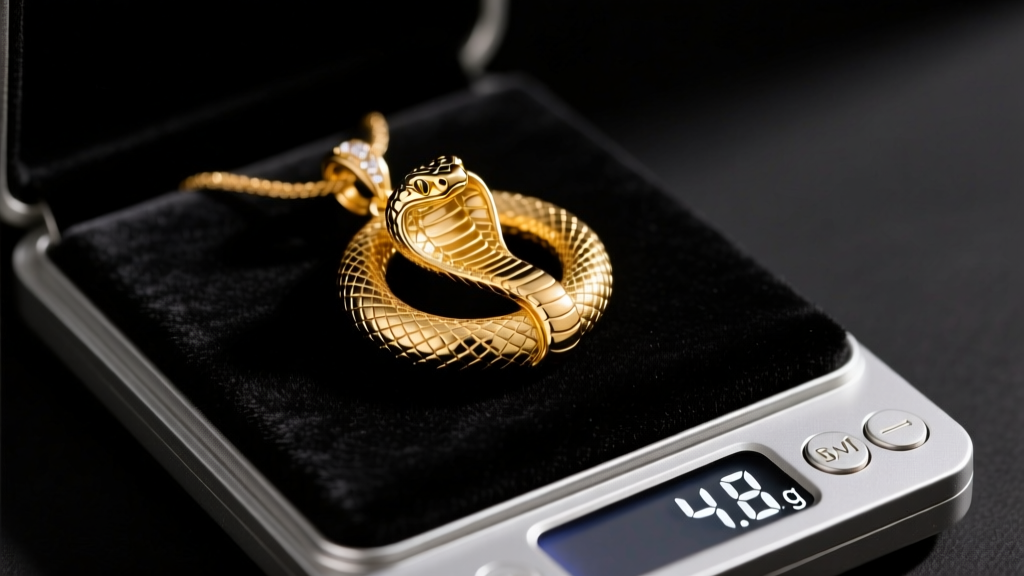
Use your digital scale to weigh the pendant (excluding the chain, if possible, or compare the total weight to known authentic benchmarks).
- B.zero1 One-Band Pendant (18k Gold): Should weigh between 4.5g and 5.5g.
- B.zero1 Two-Band Pendant (18k Gold): Should weigh between 7.5g and 8.5g.
- Serpenti Viper Small Pendant (18k Gold): Should weigh approximately 3.2g to 3.8g.
If a one-band B.zero1 pendant weighs only 2.8 grams, it is almost certainly gold-plated brass. If it weighs over 7 grams, it may contain a tungsten core. For a deeper understanding of gold density and hallmarking standards, refer to the Gemological Institute of America (GIA) educational resources on precious metal verification.
Step 4: Inspect Gemstone Settings and Inlays
Collections like Divas' Dream and Serpenti frequently feature precious and semi-precious stone inlays, such as malachite, onyx, mother-of-pearl, and carnelian. This is where UV testing and microscopic inspection become vital.
Detecting Synthetic and Dyed Stones
Counterfeiters rarely source high-grade natural malachite or onyx. Instead, they use dyed howlite, agate, or synthetic resin. Shine your 365nm UV flashlight on the stone inlay. Natural malachite and onyx will remain inert (dark) under UV light. If the stone glows or fluoresces, it is likely a synthetic resin or a porous stone heavily treated with fluorescent dyes.
Prong and Bezel Settings
For Serpenti pieces featuring diamond pavé or central gemstones, inspect the setting under your loupe. Authentic Bvlgari prongs are perfectly symmetrical, smoothly polished, and hold the stone securely without any visible gaps. Counterfeit pieces often reveal traces of epoxy glue around the stone's girdle, or the prongs will appear rough, scratched, and unevenly filed. Bvlgari's master jewelers never use adhesive to secure primary gemstones in their fine jewelry lines. For official brand standards on gemstone sourcing and craftsmanship, you can review the Bvlgari Customer Care and Authenticity guidelines.
Summary Checklist for Authentication
Before finalizing your purchase of any Bvlgari necklaces and pendants, run through this final checklist:
- Font Check: Are the 'B', 'V', and 'O' in the BVLGARI logo perfectly proportioned?
- Serial Match: Is the serial number cleanly stamped and formatted correctly (2 letters, 5 digits)?
- Hardware Integration: Does the clasp match the specific collection's proprietary design?
- Weight Verification: Does the gram weight align with 18k gold density standards?
- UV Gemstone Test: Do the stone inlays remain inert under 365nm UV light?
By applying these rigorous, step-by-step authentication methods, you can protect your investment and ensure that your luxury jewelry collection remains entirely authentic. When in doubt, always consult a certified gemologist or utilize a professional luxury authentication service before completing high-value secondary market transactions.


