How to Choose a Gemstone Necklace Mens Style Guide
Master the art of masculine jewelry with our step-by-step guide. Learn how to select, size, and layer a gemstone necklace mens style.

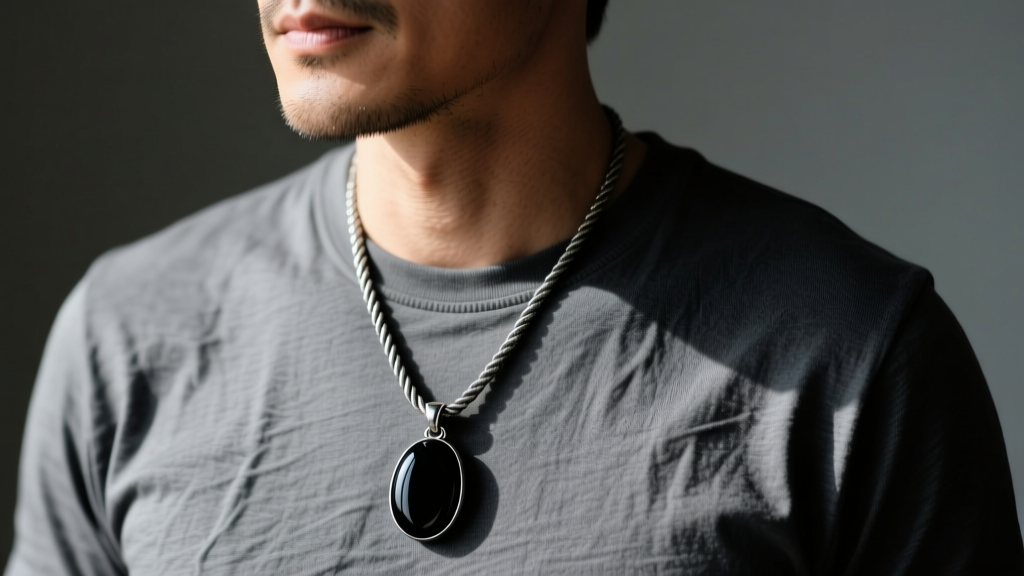
Step 1: Evaluate Gemstone Hardness for Daily Wear
When selecting a gemstone necklace mens fashion enthusiasts often overlook the critical metric of mineral hardness. Men's jewelry is subjected to higher impact risks, from gym sessions to manual labor, making durability paramount. The Mohs scale of mineral hardness is your primary decision framework. According to the Gemological Institute of America (GIA), hardness determines a stone's resistance to scratching, while toughness dictates its resistance to chipping and breaking.
For daily wear, target gemstones with a Mohs rating of 7 or higher. Black onyx (Mohs 7), agate (Mohs 7), and sapphire (Mohs 9) are exceptional choices that will not scratch when bumping against steel watches or desk edges. Conversely, stones like lapis lazuli (Mohs 5-5.5) or turquoise (Mohs 5-6) are highly porous and soft. If you choose these softer stones for a masculine pendant, ensure they are set in a protective bezel or flush setting rather than exposed prong settings, which leave the girdle vulnerable to chipping.
Toughness vs. Hardness: The Jade Exception
Do not confuse hardness with toughness. Jade (nephrite and jadeite) sits at a moderate 6.5 to 7 on the Mohs scale but possesses interlocking microscopic crystals that give it exceptional toughness. As noted in the GIA Gem Encyclopedia, jade is incredibly resistant to fracturing, making it one of the most practical gemstones for heavy, active menswear pendants despite its moderate scratch resistance.
Step 2: Calibrate Chain Gauge to Pendant Weight
A common failure point in men's jewelry is pairing a heavy gemstone pendant with an inadequate chain. The weight of the stone, combined with the metal setting, dictates the minimum chain width (gauge) and clasp type required to prevent catastrophic failure.
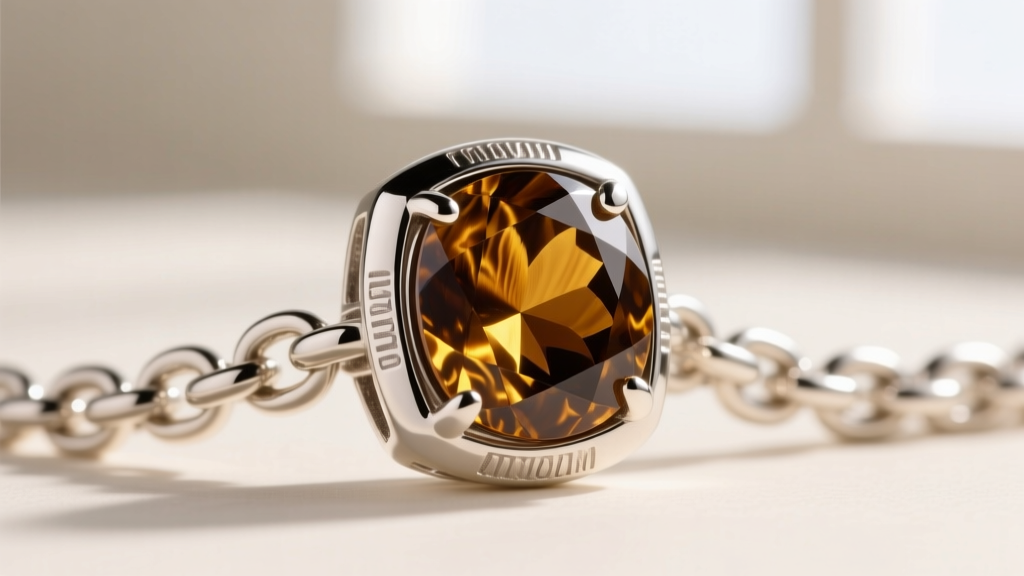
| Total Pendant Weight | Minimum Chain Width | Recommended Chain Style | Required Clasp Type |
|---|---|---|---|
| Under 10g (Light) | 1.5mm - 2.5mm | Cable, Box, or Rope | Spring Ring or Small Lobster |
| 10g - 25g (Medium) | 3.0mm - 4.0mm | Curb, Figaro, or Wheat | Standard Lobster Clasp |
| 25g - 50g+ (Heavy) | 5.0mm - 8.0mm+ | Cuban Link or Miami Cuban | Heavy Lobster or Toggle |
Pro Tip: Avoid spring ring clasps for any pendant over 10 grams. The internal spring mechanism is prone to fatigue and snapping under dynamic loads. Always upgrade to a solid cast lobster clasp or a thick toggle clasp for heavy statement pieces.
Step 3: Map the Drop Length to Your Neckline
The visual impact of a gemstone necklace mens styling relies heavily on the drop length. The chain length determines where the pendant rests, which must harmonize with your typical wardrobe necklines.
- 18 Inches (Choker/Base of Neck): Sits tightly above the collarbone. Best for smaller, minimalist gemstone beads (4mm-6mm) or worn hidden under a crewneck t-shirt. Rarely suited for large pendants.
- 20 Inches (Collarbone): The standard men's length. The pendant rests exactly at the collarbone, making it visible above an unbuttoned Oxford shirt or a crewneck sweater. Ideal for medium-sized pendants (15mm-25mm).
- 22 Inches (Mid-Chest): Drops below the collarbone, resting on the upper chest. Perfect for wearing over t-shirts or lightweight hoodies. This length accommodates larger, heavier statement stones.
- 24+ Inches (Sternum): A bold, streetwear-oriented length that rests on the sternum. Best reserved for oversized, raw-cut gemstones or heavy metallic talismans worn over outerwear.
Step 4: Harmonize Stone Color with Skin Undertones
Color theory applies strictly to masculine jewelry. Identifying your skin's undertone will dictate which gemstones enhance your natural complexion rather than clashing with it.
Warm Undertones
If the veins on your wrist appear greenish and you tan easily, you have warm undertones. Opt for earth-toned gemstones that reflect warmth. Tiger's eye, carnelian, yellow jasper, and warm-toned turquoise create a cohesive, grounded look. Pair these with yellow gold or rose gold chains to amplify the warmth.
Cool Undertones
If your veins appear blue or purple and you burn easily in the sun, you have cool undertones. Choose stones with sharp, crisp color profiles. Black onyx, lapis lazuli, sodalite, and amethyst provide excellent contrast. Pair these with white metals like 925 sterling silver, platinum, or 316L stainless steel for a sharp, modern aesthetic.
Neutral Undertones
If you cannot distinctly identify warm or cool vein colors, you possess neutral undertones. You have the versatility to wear the entire spectrum of gemstones, though high-contrast stones like deep green malachite or stark white howlite will provide the best visual pop.
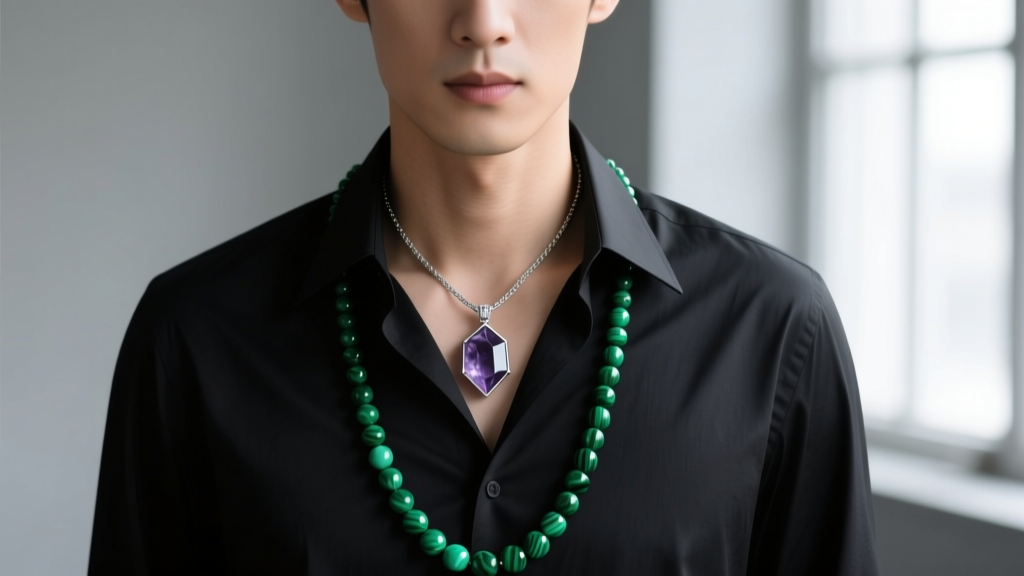
Step 5: Execute the Two-Inch Layering Rule
Layering necklaces is a staple of contemporary men's style, but improper execution leads to tangled chains and visual clutter. When layering a gemstone necklace mens outfits require strict adherence to spacing and texture contrast.
The Two-Inch Rule: Always maintain a minimum two-inch difference between layered chains. For example, pair a 20-inch beaded gemstone necklace with a 22-inch or 24-inch metal chain featuring a single pendant. This prevents the clasps and stones from interlocking and abrading one another.
Texture Contrast: Never layer two identical chain styles or two beaded necklaces of the same stone size. Combine a smooth metal chain (like a 3mm Figaro) with a matte beaded strand (like 8mm lava rock or onyx). This contrast creates depth and ensures each piece is individually distinguishable.
Maintenance: Ultrasonic vs. Hand Washing Protocols
Proper maintenance extends the life of your gemstone jewelry. Many men mistakenly throw all jewelry into ultrasonic cleaners, which can destroy specific stones. Ultrasonic cleaners use high-frequency sound waves that create microscopic cavitation bubbles. While excellent for cleaning bare diamond or sapphire, these vibrations can shatter stones with internal fractures or strip the polish from porous gems.
- Safe for Ultrasonic: Sapphire, ruby, diamond, and solid agate.
- NEVER Ultrasonic (Hand Wash Only): Turquoise, lapis lazuli, malachite, opal, and any stone with visible inclusions or fractures.
For hand washing, use a few drops of mild, phosphate-free dish soap in lukewarm water. Gently agitate with a soft-bristled baby toothbrush, focusing on the back of the gemstone where skin oils and dead cells accumulate. Rinse thoroughly and dry immediately with a microfiber cloth to prevent water spots on the metal setting.
Expert Insight: If your sterling silver chain has heavily oxidized (blackened) intentionally to highlight the chain links, avoid using silver dip liquids. These harsh chemicals will strip the intentional oxidation and leave the chain looking flat and overly polished. Use a polishing cloth only on the high points.


