The Complete Quatrefoil Necklace Buying Guide & Style Tips
Discover how to choose the perfect quatrefoil necklace. Our expert buying guide covers metal grades, gemstone inlays, chain types, and pricing.

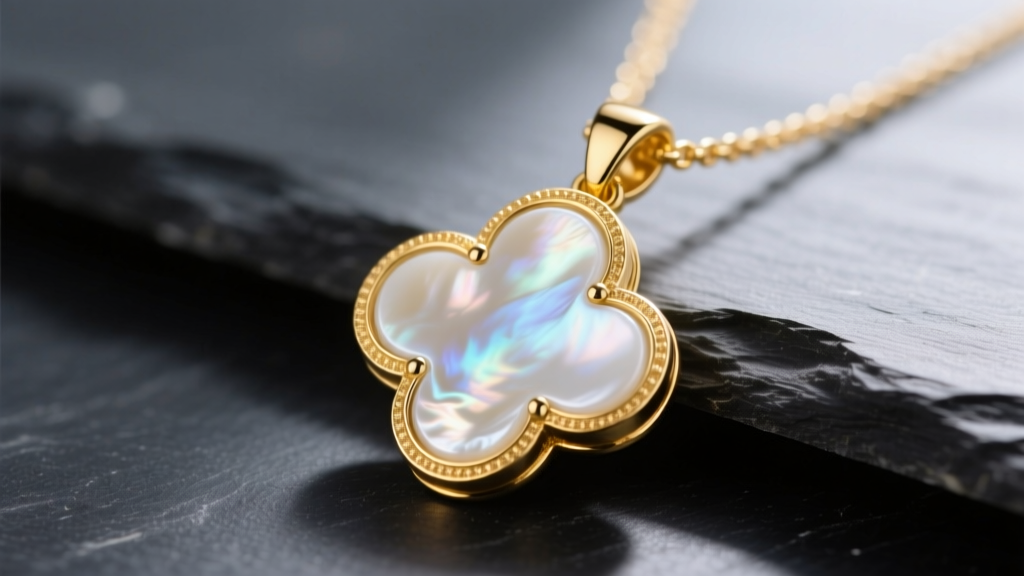
The quatrefoil necklace has transcended its mid-century luxury origins to become an absolute staple in 2026 jewelry wardrobes. Characterized by its four overlapping circles, this symmetrical motif balances architectural precision with organic elegance. However, the market is currently saturated with everything from $50 gold-plated replicas to $15,000 high-jewelry masterpieces. As a buyer, distinguishing between a well-crafted heirloom and a poorly proportioned knockoff requires a keen eye for geometry, metallurgy, and lapidary work. This comprehensive buying guide will walk you through the exact specifications, material grades, and construction details you need to evaluate before investing in a quatrefoil pendant.
The Geometry and Heritage of the Quatrefoil Motif
Before assessing metals and stones, you must understand the shape itself. According to Encyclopædia Britannica, the quatrefoil (meaning "four leaves") has roots in Gothic architecture and heraldry, symbolizing harmony and symmetry. In jewelry, a true quatrefoil is not merely a four-leaf clover. It is a precise geometric construction formed by four overlapping circles of equal radius.
When shopping, scrutinize the pendant's silhouette. In poorly manufactured pieces, the inner intersections (the "waist" of the lobes) are often too sharp or too shallow, making the pendant look like a squished square rather than a fluid, continuous curve. High-end jewelers use CAD (Computer-Aided Design) modeling to ensure the negative space and positive gold borders maintain a mathematically perfect ratio, typically resulting in a pendant diameter between 14mm and 16mm for standard everyday wear.
Evaluating Metal Purity and Construction
The metal framework of a quatrefoil necklace serves two purposes: it acts as the bezel securing the inlay, and it provides the structural integrity of the motif. Your choice of karat weight dramatically impacts both durability and color.
18k vs. 14k Gold
Legacy luxury brands almost exclusively use 18k yellow gold (75% pure gold) for their quatrefoil collections. This provides a rich, buttery hue that pairs beautifully with warm inlays like carnelian or tiger's eye. However, 18k gold is relatively soft. If you plan to wear your necklace daily, especially with harder gemstone inlays that might shift over time, 14k gold (58.5% pure gold) offers superior tensile strength and scratch resistance. In 2026, many contemporary demi-fine brands have pivoted to 14k gold to offer accessible luxury without sacrificing longevity.
Stamping vs. Casting
Examine the edge detailing. Premium quatrefoil pendants feature a raised, polished gold border (the bezel wall) that sits slightly above the inlay to protect it from impact. Some artisans add milgrain (tiny beaded) detailing along the inner edge of the bezel. Avoid pendants that feel entirely flat or appear to be stamped from a single sheet of metal, as these lack the dimensional depth required to secure gemstone inlays safely.
The Inlay Matrix: Gemstones and Enamel
The soul of a quatrefoil necklace lies in its inlay. Because the shape features four distinct lobes, the gemstone must be custom-cut into a "calibrated cabochon" to fit perfectly within the gold bezel. The GIA Gem Encyclopedia notes that different inlay materials require vastly different care regimens and setting techniques. Below is a breakdown of the most popular inlay materials and their physical properties.
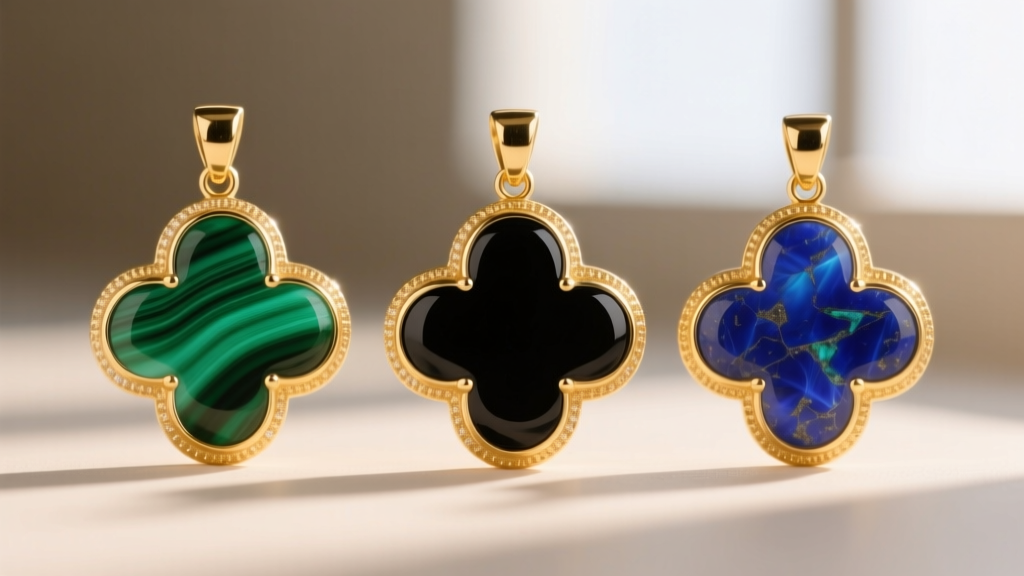
| Inlay Material | Mohs Hardness | Durability & Care | Best Metal Pairing |
|---|---|---|---|
| White Mother-of-Pearl | 2.5 - 4.5 | Prone to scratching; avoid acids and perfumes. Requires a high bezel wall. | 18k Yellow or Rose Gold |
| Black Onyx (Dyed Agate) | 7.0 | Highly durable; excellent for daily wear. Resists chipping and chemicals. | 14k or 18k Yellow Gold |
| Malachite | 3.5 - 4.0 | Very fragile and porous. Must never be cleaned with ultrasonic machines. | 18k Yellow Gold |
| Guilloché Enamel | N/A (Glass) | Can shatter upon hard impact. Look for flame-fired enamel, not cold epoxy. | Sterling Silver or White Gold |
The Importance of Bezel Height
When evaluating a malachite or mother-of-pearl quatrefoil, run your fingernail lightly across the face of the pendant. The gold bezel should be microscopically higher than the stone. If the gemstone is flush or protruding above the metal, it will absorb the brunt of any impact against tables or doorframes, leading to inevitable chipping.
Chain Pairings: Weight, Weave, and Length
A quatrefoil pendant typically weighs between 3.5 and 6 grams, depending on the presence of diamond pavé or solid gold backing. Pairing it with the wrong chain is a common point of failure.
- The Box Chain (0.9mm - 1.1mm): The absolute best choice for quatrefoil pendants. The square, interlocking links reflect light similarly to the geometric pendant, and the flat surface prevents the bail (the loop connecting pendant to chain) from catching and wearing down the metal.
- The Rope Chain (1.0mm - 1.5mm): Offers a vintage, textured look that complements milgrain-edged pendants. However, the twisted links can sometimes trap the delicate jump ring of the pendant if the gauge is too thin.
- The Cable Chain (0.5mm - 0.7mm): Generally too delicate for a standard quatrefoil. While it creates a beautiful "floating" illusion, chains under 0.8mm are prone to snapping under the pendulum weight of a 5-gram pendant.
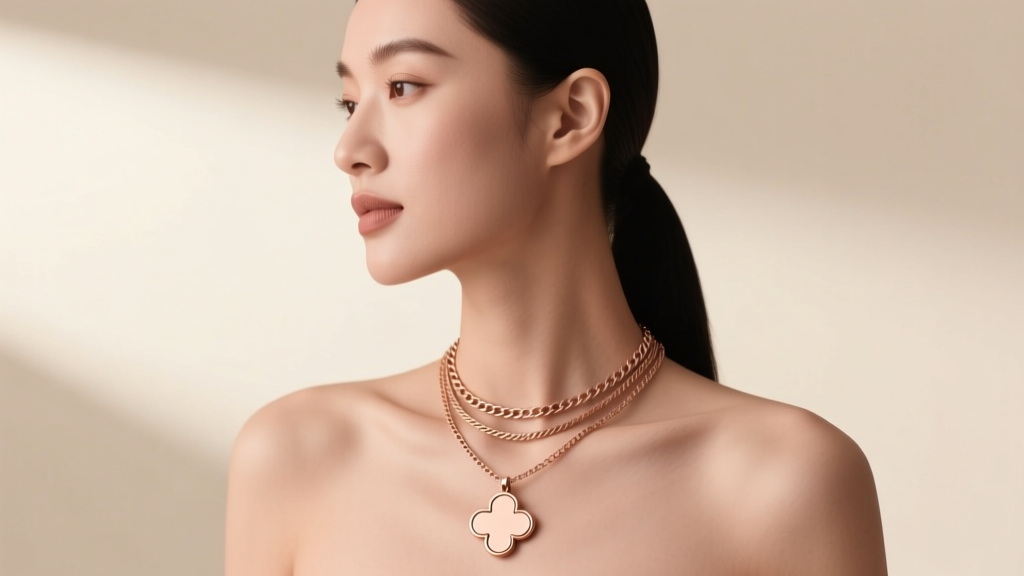
For length, a 16-inch chain positions the quatrefoil perfectly in the hollow of the collarbone, maximizing visibility. An 18-inch chain allows the pendant to rest on the upper chest, which is preferable if you are layering it over silk blouses or turtlenecks in colder months.
Price Tiers and Market Positioning
Understanding where a piece falls in the market hierarchy will help you manage expectations regarding materials and craftsmanship.
Demi-Fine ($150 - $450)
In this tier, expect gold vermeil (thick gold plating over sterling silver) or solid 10k/14k gold with synthetic or reconstituted stone inlays. The pendants may be slightly smaller (10mm - 12mm) to reduce metal weight. These are excellent for trend-driven styling but will require re-plating or careful maintenance over a decade.
Fine Jewelry ($800 - $3,500)
This is the sweet spot for solid 14k or 18k gold paired with genuine, calibrated semi-precious stones like natural onyx, lapis lazuli, or high-grade mother-of-pearl. Craftsmanship should include seamless soldering at the bail and perfectly flush bezel settings.
High Jewelry & Heritage ($4,000 - $15,000+)
At the apex of the market, heritage houses and master jewelers incorporate diamond pavé borders, guilloché enameling done by hand, and exotic hardstones like blue chalcedony or pink opal. These pieces often feature proprietary clasps and are considered investment-grade assets.
Craftsmanship Red Flags to Avoid
When inspecting a quatrefoil necklace in person or via high-resolution macro photography online, look out for these critical failure modes:
- Epoxy Seepage: Cheaper manufacturers glue inlays rather than using precise friction-fit bezels. Look for cloudy residue or yellowing glue lines between the stone and the gold.
- Asymmetrical Lobes: Fold a mental crosshair over the pendant. If the top-left lobe is wider than the bottom-right, the CAD modeling was flawed or the casting warped during cooling.
- Hollow Backings: While some large pendants are hollowed out to reduce weight and cost, a high-quality quatrefoil should have a solid or intricately pierced gold back. A completely hollow back can trap moisture against the skin, leading to verdigris (green tarnish) on lower-karat golds or silver bases.
- Weak Jump Rings: The loop attaching the pendant to the chain must be soldered shut or made of heavy-gauge wire. An unsoldered, thin jump ring will eventually pull apart under the pendant's swinging momentum.
Final Verdict
Investing in a quatrefoil necklace is an exercise in appreciating geometric harmony and lapidary precision. By prioritizing mathematically accurate proportions, selecting inlay materials that match your lifestyle's durability requirements, and pairing the pendant with a structurally sound box or rope chain, you secure a piece that transcends seasonal trends. Whether you opt for the striking contrast of black onyx in 18k yellow gold or the ethereal glow of mother-of-pearl in rose gold, a well-chosen quatrefoil remains an enduring emblem of elegance.


