How to Clean a Chain Necklace: Metal-Specific Troubleshooting Guide
Learn how to clean a chain necklace based on its metal type. Expert troubleshooting for tarnished silver, grimy gold, and delicate plated chains.

The Chemistry of Chain Necklace Grime
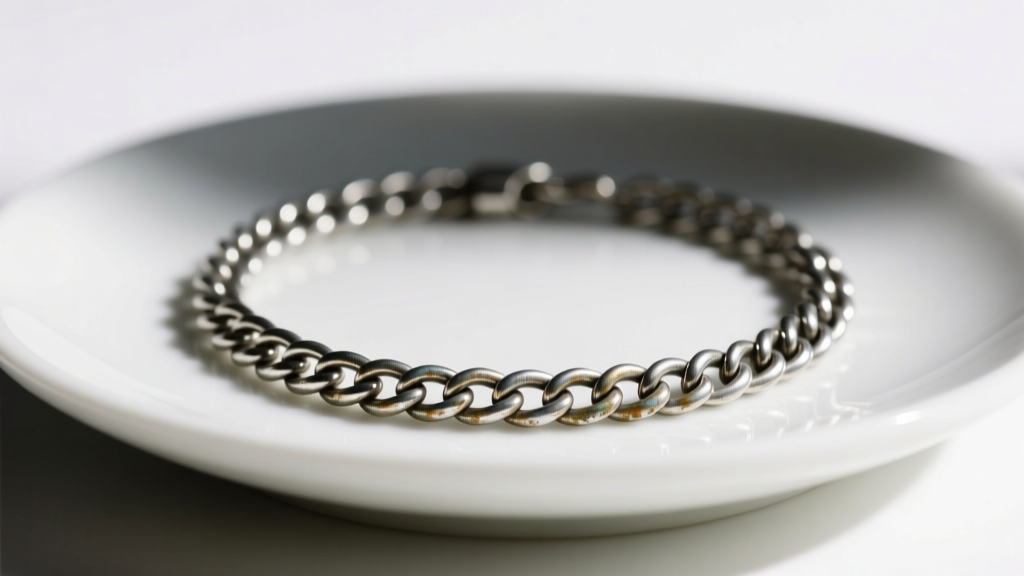
When learning how to clean a chain necklace, the first step is identifying the exact metal composition. A one-size-fits-all approach is a recipe for disaster, particularly in 2026 where advanced plating techniques and mixed-metal alloys are more prevalent than ever. Chain necklaces, with their intricate interlocking links—be it a Cuban link, rope, box, or cable chain—create microscopic crevices that trap sebum, dead skin cells, cosmetic residues, and environmental pollutants.
Tarnish is not simply 'dirt'; it is a chemical reaction. For sterling silver, hydrogen sulfide in the air reacts with the copper alloyed in the 925 silver to form silver sulfide, a blackish layer that dulls the metal. Gold, being a noble metal, does not tarnish, but its high density and the intricate gaps in chain links make it a magnet for heavy oils and lotions, which refract light and make the chain appear dull. Understanding these failure modes is critical before you apply any cleaning agent.
How to Clean a Chain Necklace: Metal-by-Metal Breakdown
Sterling Silver (925): The Electrochemical Method
For heavily tarnished solid sterling silver chains without porous gemstones (like turquoise or pearls), skip the abrasive polishing cloths that slowly strip away precious metal over time. Instead, use an electrochemical redox reaction to convert silver sulfide back into pure silver.
- Line a glass or ceramic bowl with aluminum foil, shiny side up.
- Place your silver chain directly on the foil. The physical contact between the silver and aluminum is mandatory for the electron transfer.
- Sprinkle 2 tablespoons of baking soda over the chain.
- Pour boiling water into the bowl until the chain is submerged. You will immediately smell a sulfur (rotten egg) odor as the silver sulfide is reduced.
- Let it sit for 3 to 5 minutes. Use wooden or plastic tongs to remove the chain—never use metal tweezers which can scratch the softened silver.
- Rinse thoroughly under warm distilled water and pat dry with a microfiber cloth.
Expert Note: If your sterling silver chain is rhodium-plated (common in high-end 2026 designs to prevent tarnish), do not use the boiling water method. The thermal shock can cause micro-fractures in the rhodium layer. Use a mild dish soap bath instead.
Solid Gold (14K, 18K, 22K, 24K): Surfactant Lift
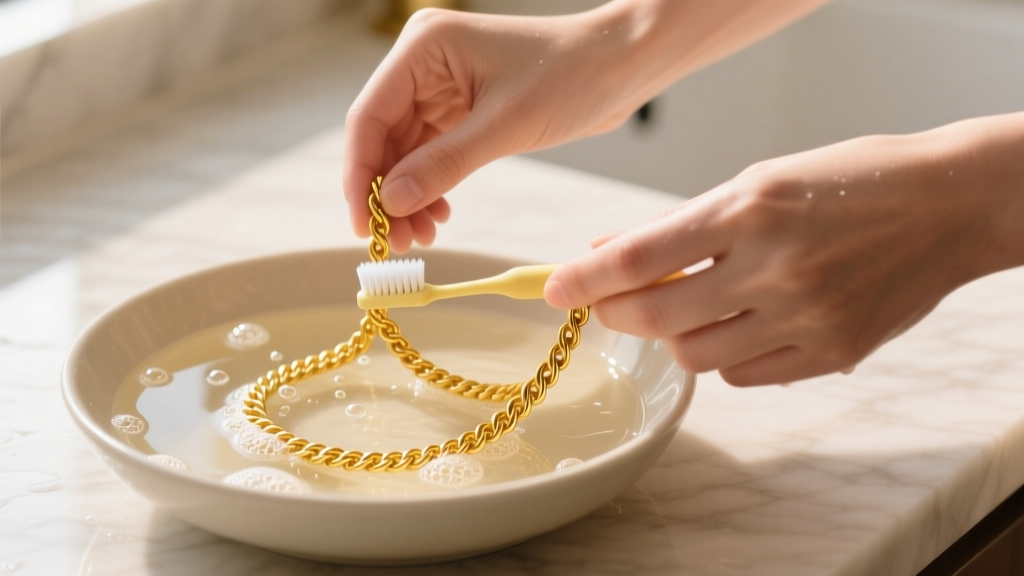
Solid gold requires a gentle surfactant to break down the lipid bonds of body oils and skincare products trapped in the links. High-karat gold (22K and 24K) is exceptionally soft and prone to micro-scratches, so abrasive pastes are strictly forbidden.
- The Solution: Mix 4 drops of a mild, phosphate-free dish soap (like Dawn) into a bowl of lukewarm water. Avoid hot water, which can weaken the structural integrity of soldered jump rings.
- The Agitation: Submerge the chain for 15 minutes. Then, use an extra-soft baby toothbrush to gently agitate the links. Standard toothbrushes have bristles that are too stiff and will leave microscopic swirl marks on polished gold surfaces.
- The Rinse: Rinse under a gentle stream of lukewarm water. Ensure the drain is plugged or use a mesh strainer to prevent losing the chain or its clasp components.
Gold Vermeil and Plated Chains: Friction Mitigation
Gold vermeil (a thick layer of gold, legally required to be at least 2.5 microns, over a sterling silver base) and standard gold-plated chains (usually brass or copper bases with less than 0.5 microns of gold) require extreme caution. The primary failure mode here is plating wear, not chemical tarnish.
Never soak plated chains. Prolonged water exposure can seep into the microscopic pores of the plating and oxidize the base metal underneath, causing the gold to flake or turn your skin green. Instead, dampen a lint-free microfiber cloth with a 50/50 mixture of water and isopropyl alcohol. Gently wipe down each individual link. For stubborn grime in the crevices, use a dry, soft-bristled makeup brush to dislodge debris without applying moisture or friction to the gold layer.
Troubleshooting Stubborn Chain Necklace Issues
Even with regular maintenance, specific chain styles and environmental factors can lead to unique problems. Use this troubleshooting matrix to diagnose and resolve advanced issues.
| Issue | Root Cause | Solution | Tools Needed |
|---|---|---|---|
| Stiff or 'Crunchy' Links | Hardened sebum and dead skin calcified in the hinge points of box or omega chains. | Apply a single drop of mineral oil to the stiff link. Let it sit for 1 hour to break down the lipids, then flex the link gently and wash with dish soap. | Mineral oil, toothpick, dish soap |
| Green Discoloration on Skin | Copper or nickel in the base metal of plated chains reacting with sweat acidity (pH levels below 5.5). | Coat the inside of the chain links with a micro-thin layer of clear nail polish or a specialized jewelry barrier sealant to block the acid-metal reaction. | Clear nail polish or Jewelry Shield |
| Blackened Silver Clasp | The spring mechanism contains steel or non-silver alloys that do not respond to the aluminum foil redox bath. | Use a targeted silver dip liquid (like Hagerty) applied via a cotton swab strictly to the clasp mechanism, avoiding the main chain. | Hagerty Silver Dip, cotton swabs |
| White, Chalky Residue | Hard water mineral deposits (calcium/magnesium) left behind after air-drying. | Wipe the chain with a cloth lightly dampened with distilled white vinegar to dissolve the alkaline minerals, then buff dry immediately. | Distilled white vinegar, microfiber |
The Ultrasonic Cleaner Debate: When to Use 42kHz Frequencies
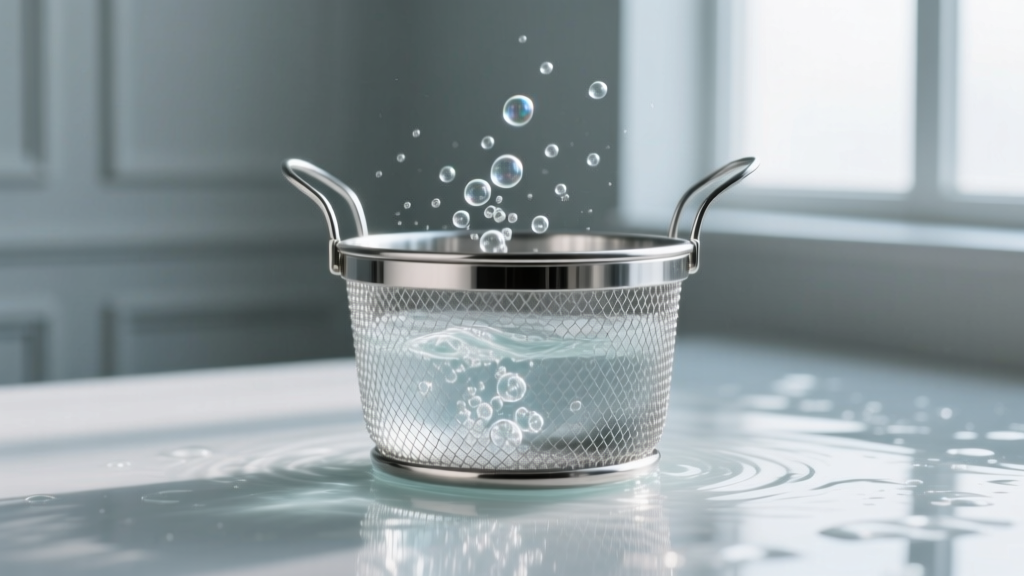
Ultrasonic cleaners use high-frequency sound waves (typically 40kHz to 45kHz) to create microscopic cavitation bubbles in a liquid solution. When these bubbles collapse against the chain, they generate localized shockwaves that blast grime out of the tightest link crevices. However, they are not universally safe.
Safe for: Solid 14K/18K gold chains, platinum chains, and solid sterling silver chains without gemstones. The cavitation will clean a solid Cuban link chain in exactly 3 minutes better than hours of manual scrubbing.
Dangerous for:
- Plated/Vermeil Chains: The shockwaves will literally strip the microscopic gold layer off the base metal, ruining the piece instantly.
- Oxidized/Antiqued Silver: If your chain features intentional black detailing in the grooves, the ultrasonic waves will blast the oxidation right out, leaving the piece looking flat and unnatural.
- Chains with Porous Stones: If your chain necklace includes turquoise, opal, emerald, or pearl stations, the vibrations will cause internal fracturing and clouding.
For authoritative guidelines on gemstone and metal compatibility with ultrasonic waves, consult the Gemological Institute of America (GIA) care manuals.
Preventative Maintenance and Storage
Knowing how to clean a chain necklace is only half the battle; preventing the buildup in the first place saves time and preserves the metal's lifespan. The cardinal rule of jewelry storage is to control humidity and atmospheric sulfur.
Never store silver chains in cardboard boxes or wrapped in rubber bands. Cardboard manufacturing processes often leave trace sulfur compounds, and rubber contains high levels of sulfur, both of which will aggressively accelerate silver sulfide formation. Instead, store chains in airtight polyethylene ziplock bags. Include a 3M Anti-Tarnish strip and a small silica gel desiccant packet in each bag. The anti-tarnish strip acts as a sacrificial anode, absorbing airborne sulfides before they can reach your silver, while the silica gel keeps the relative humidity below 40%, stalling the oxidation process entirely.
For gold chains, store them laid flat or hung on a multi-tiered jewelry stand to prevent the links from kinking. Rope and snake chains are particularly susceptible to permanent kinking if stored in tangled piles, which can lead to structural failure and snapped links over time.
Expert Sources & Further Reading
To deepen your understanding of metallurgy and jewelry conservation, refer to these industry-standard resources:
- Gemological Institute of America (GIA) - Gem and Metal Care Guidelines
- Rio Grande - Metals Handbook and Finishing Techniques
By matching your cleaning methodology to the specific metallurgical properties of your chain necklace, you ensure that your pieces remain brilliant, structurally sound, and ready to wear for decades to come.


