How to Clean Silver Necklaces: Expert Tarnish Removal Guide
Learn how to clean silver necklaces safely. Discover expert troubleshooting for heavy tarnish, rhodium-plated sterling, and delicate chains.

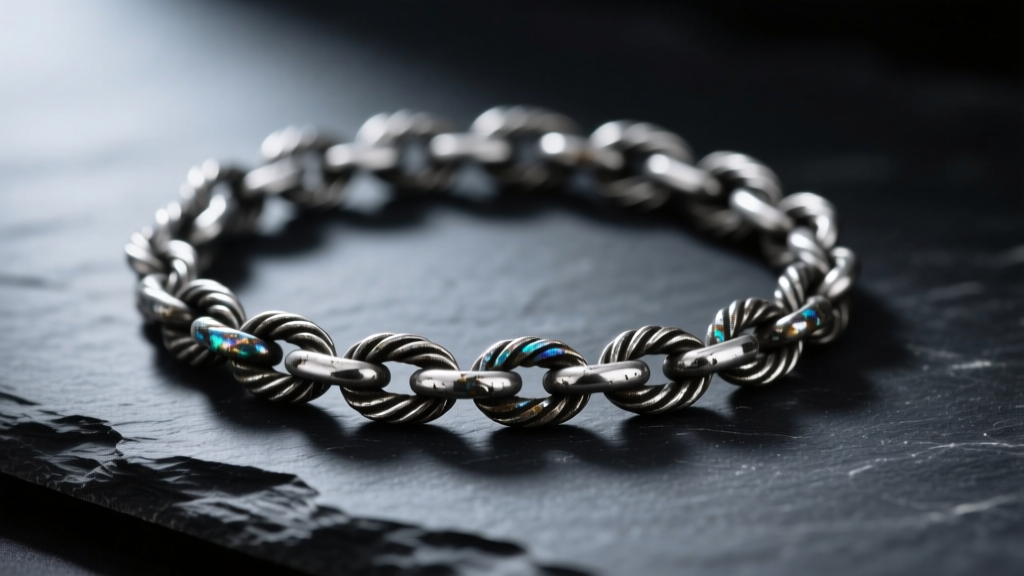
Silver necklaces are timeless staples in any jewelry collection, but their brilliant luster is constantly under threat from environmental chemistry. If you are wondering how to clean silver necklaces without damaging delicate chains or stripping intentional finishes, you need to move beyond generic internet hacks. As a domain expert in jewelry maintenance, I have seen countless heirloom pieces ruined by abrasive toothpaste or improper chemical baths. This guide provides a scientifically grounded, troubleshooting-first approach to restoring your 925 sterling, fine 999 silver, and plated necklaces.
The Chemistry of Silver Tarnish: Why It Happens
Unlike iron, which rusts and flakes away when exposed to oxygen, silver does not react with oxygen at room temperature. Instead, silver tarnish is primarily silver sulfide (Ag2S). This black or dull-grey compound forms when silver reacts with sulfur-containing compounds in the air, such as hydrogen sulfide. Common culprits include wool, felt, certain foods (like eggs and onions), rubber bands, and even the natural amino acids in your sweat.
Because pure silver has a Mohs hardness of just 2.5 to 3, it is exceptionally soft. Even 925 sterling silver (alloyed with 7.5% copper for strength) maxes out around a 3 on the Mohs scale. This means that using harsh abrasives to scrub away silver sulfide will permanently micro-scratch the metal, creating a dull, matte finish that traps future tarnish deeper in the grooves.
How to Clean Silver Necklaces: 3 Proven Methods
The correct cleaning method depends entirely on the necklace's finish and construction. Below are the three professional-grade methods we recommend at the studio.
Method 1: The Electrochemical Reduction Bath (For Solid 925 & 999)
This method reverses the chemical reaction of tarnish without removing any base metal. It is ideal for solid sterling or fine silver chains without gemstones.
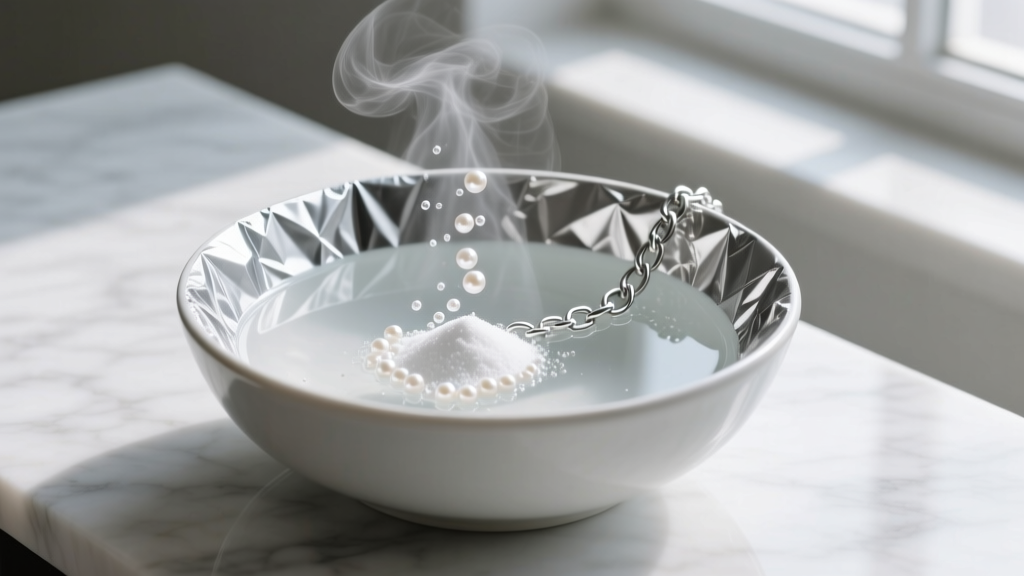
- Line a glass or ceramic bowl with aluminum foil (shiny side up).
- Place your silver necklace in the bowl, ensuring it touches the aluminum.
- Sprinkle 1 tablespoon of baking soda and 1 tablespoon of non-iodized salt over the jewelry.
- Pour 1 cup of boiling water into the bowl. You will see bubbling as the sulfur transfers from the silver to the aluminum.
- Let it sit for 2 to 5 minutes. Remove with wooden tongs, rinse thoroughly in distilled water, and pat dry with a microfiber cloth.
Method 2: Mild Surfactant Wash (For Rhodium-Plated & Oxidized Silver)
If your necklace is rhodium-plated (to prevent tarnish and add a white-gold-like shine) or features intentional oxidized (blackened) crevices, the electrochemical bath will strip these finishes. Instead, use a mild surfactant.
Mix three drops of phosphate-free, unscented dish soap (like Dawn) into a bowl of lukewarm distilled water. Gently agitate the necklace in the solution for 60 seconds. Use an extra-soft baby toothbrush to lightly sweep the chain links. Rinse with distilled water and air dry on a lint-free towel.
Troubleshooting Common Silver Cleaning Disasters
Even with the best intentions, things can go wrong. Use this diagnostic table to troubleshoot and reverse common silver cleaning mistakes.
| Problem Symptom | Root Cause | Expert Solution |
|---|---|---|
| Chalky white residue on chain links | Hard water minerals left behind after rinsing, or incomplete baking soda removal. | Submerge in distilled white vinegar for 30 seconds, then rinse exclusively with distilled water and buff with a jeweler's cloth. |
| Loss of dark contrast in pendant crevices | Accidentally used the electrochemical aluminum bath on intentionally oxidized silver. | You must re-oxidize the piece. A jeweler can apply a diluted liver of sulfur solution to restore the dark patina in the recesses. |
| Dull, cloudy, micro-scratched surface | Cleaned with toothpaste. Most toothpastes contain hydrated silica (Mohs 7), which severely scratches silver (Mohs 2.5). | The piece requires professional machine polishing with jeweler's rouge to remove the scratched surface layer and restore the mirror finish. |
| Chain links feel stiff or brittle | Exposed to chlorine (bleach or pool water), which forms silver chloride and weakens the metal's crystalline structure. | Soak in a mild ammonia solution (1 part ammonia to 6 parts water) for 60 seconds to dissolve silver chloride. If links snap, seek soldering repair. |
The Dangers of Ultrasonic Cleaners
Many consumers purchase 40kHz ultrasonic jewelry cleaners for home use. While highly effective at shaking dirt loose from diamond settings, they are notoriously dangerous for many silver necklaces.
- Micro-fracture propagation: The high-frequency cavitation bubbles can snap delicate chains (such as 0.8mm box chains or serpentine chains) if they possess unseen micro-fractures from daily wear.
- Soft gemstone destruction: Never put silver necklaces featuring turquoise, opals, pearls, or emeralds in an ultrasonic cleaner. The vibrations will shatter or craze these porous and brittle stones.
- Plating delamination: If your sterling silver necklace is flash-plated with rhodium or gold, ultrasonic waves can cause the plating to peel or flake off entirely.
Pro-Tip: According to the Gemological Institute of America (GIA), when in doubt about a gemstone's durability or a necklace's structural integrity, stick to manual cleaning with a soft, lint-free cloth and mild soapy water.
Preventative Storage & Maintenance Framework
Knowing how to clean silver necklaces is only half the battle; preventing silver sulfide formation is the ultimate goal. Tarnish requires sulfur and moisture to accelerate. By controlling the micro-climate of your jewelry storage, you can reduce cleaning frequency from monthly to annually.
Optimal Storage Protocols
Never store silver necklaces in standard polyethylene plastic bags or cardboard boxes, as these materials can emit sulfur gases and trap ambient humidity. Instead, utilize the following framework:
- Pacific Silvercloth: Wrap individual necklaces in Pacific Silvercloth, a specialized cotton fabric embedded with microscopic silver particles that intercept and neutralize sulfur gases before they reach your jewelry.
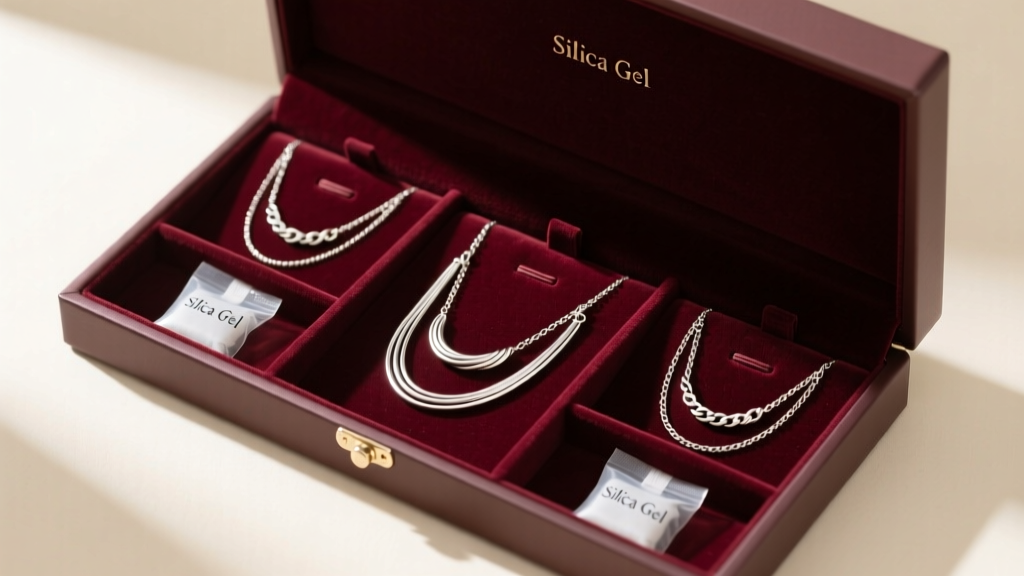
- Desiccant Packs: Place silica gel packets or activated charcoal sachets in your jewelry drawer to maintain a relative humidity below 40%.
- Anti-Tarnish Strips: For enclosed boxes, use 3M anti-tarnish strips, which absorb airborne sulfides and halogens. Replace these strips every 6 months.
- Hang or Lay Flat: To prevent mechanical stress and tangling, hang heavier pendants on a velvet-lined hook, or lay delicate chains perfectly flat in individual compartments.
When to Seek Professional Jeweler Intervention
While home maintenance is excellent for surface tarnish, certain scenarios require professional intervention. If your silver necklace features severe pitting (deep corrosion caused by prolonged exposure to harsh chemicals), broken clasps, or heavily soiled pavé gemstone settings, do not attempt DIY cleaning. As noted by The Silver Institute, professional jewelers utilize specialized ultrasonic equipment, steam cleaners, and precision polishing wheels that can safely restore heavily damaged pieces without compromising their structural integrity. By understanding the chemistry of your jewelry and applying these targeted troubleshooting methods, your silver necklaces will retain their brilliant luster for generations.


