How to Layer Necklaces: The Ultimate Buying Guide
Learn how to layer necklaces without tangling. Our buying guide covers chain styles, ideal lengths, metal weights, and clasp types for perfect stacks.

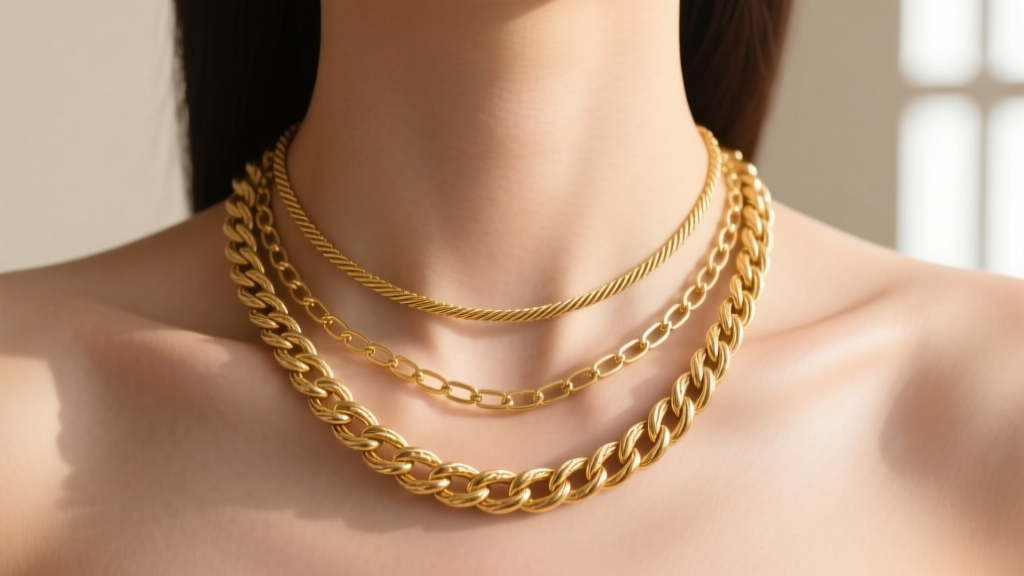
Mastering the art of the necklace stack is less about spontaneous styling and more about strategic purchasing. When consumers ask how to layer necklaces without ending up with a frustrating, tangled knot by midday, the answer rarely lies in styling hacks. Instead, the secret is embedded in the jewelry box itself. A flawless stack requires a deliberate curation of chain profiles, precise length graduations, and compatible hardware weights. This comprehensive buying guide breaks down the exact specifications, material grades, and structural details you must look for when purchasing necklaces specifically designed for layering.
The Physics of a Perfect Stack: Why Necklaces Tangle
Before adding another chain to your cart, you must understand the mechanical friction that causes necklaces to tangle. Tangling is not a matter of bad luck; it is a predictable outcome of link geometry. Chains with circular, uniform links—such as standard cable chains or bead (ball) chains—act like interlocking gears. When two cable chains of similar gauge rub against each other, the open loops catch and bind, creating a static knot that tightens with body movement.
What to look for when buying: To prevent the "gear effect," you must mix chain geometries. Never buy two round-link chains for the same stack. Instead, pair a round-link chain with a flat-link chain. Flat links, such as curb, figaro, or herringbone profiles, lay flush against the skin and slide past round links without catching. According to jewelry manufacturing standards detailed by The Spruce Crafts, varying the physical footprint of the chain links is the single most effective way to engineer a tangle-free stack.
The Golden Ratio of Lengths (Buying by the Inch)
The most common mistake buyers make is purchasing necklaces that are too close in length. If the gap between layers is less than two inches, the pendants will collide, the clasps will overlap at the nape of the neck, and the chains will twist together. When shopping, you must adhere to a strict minimum 2-inch graduation rule.
The Ideal Length Matrix
Use this structural matrix when building your collection to ensure each layer occupies its own visual and physical zone on the décolletage.
| Stack Size | Layer 1 (Choker/Collar) | Layer 2 (Princess) | Layer 3 (Matinee) | Layer 4 (Opera) |
|---|---|---|---|---|
| 2-Layer | 14" or 15" | 18" | - | - |
| 3-Layer | 14" | 16" | 18" or 20" | - |
| 4-Layer | 14" | 16" | 18" | 22" or 24" |
Pro-Tip for Buyers: Always buy necklaces with a 2-inch extender chain. This hardware addition allows you to micro-adjust a 16-inch chain to 17 inches or 18 inches depending on the neckline of your garment and the thickness of the other chains in your stack.
Chain Profiles That Play Well Together
A balanced stack requires a hierarchy of visual weight. If all your chains are delicate 1mm cables, the stack will look messy and lack a focal point. If all your chains are thick 5mm ropes, the result will be heavy, uncomfortable, and visually overwhelming. You need to buy "Anchors" and "Delicates."
The Anchors (2.5mm to 4.0mm Width)
The anchor is the longest or most visually dominant chain in your stack. It provides the structural foundation that pulls lighter chains downward, preventing them from flipping over. Best anchor profiles to buy:
- Rope Chains (2.5mm - 3.5mm): The twisted geometry reflects light brilliantly and provides enough surface area to lay flat against the chest.
- Figaro Chains (3.0mm - 4.0mm): The alternating long and short links create a masculine-meets-feminine contrast that grounds delicate pendants.
- Curb Chains (2.5mm - 3.5mm): Interlocking flat links that offer maximum durability and a sleek, modern aesthetic.
The Delicates (1.0mm to 1.5mm Width)
Delicates sit closer to the neck and serve as the framing elements. They should be lightweight (under 3 grams for a 16-inch length) so they do not drag down the anchor chain. Best delicate profiles to buy:
- Box Chains (1.0mm - 1.2mm): Square links offer a geometric, modern look. However, ensure the links are soldered; hollow box chains are prone to denting and snapping under the tension of a layered stack.
- Cable Chains (1.0mm - 1.5mm): The classic oval link. Because they are prone to tangling, only buy cable chains if they are being paired with a flat-link anchor chain.
Hardware and Clasps: The Unsung Heroes
When evaluating how to layer necklaces, most guides ignore the clasp. This is a critical oversight. The clasp dictates the ease of putting the stack on and the security of the metals.
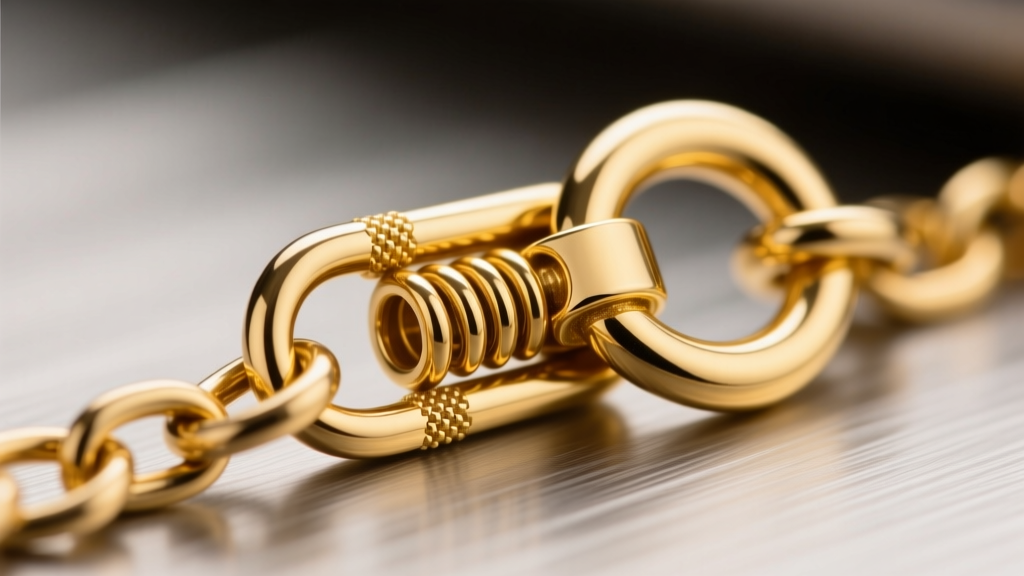
Spring Ring vs. Lobster Claw: Avoid spring ring clasps for layered stacks. They are notoriously difficult to operate with one hand when you have three other chains dangling in the way. Always buy necklaces equipped with lobster claw clasps. For delicate chains (under 1.5mm), a 5mm or 6mm lobster clasp is ideal. For anchor chains (over 2.5mm), look for a 7mm to 9mm lobster clasp to ensure the spring mechanism can handle the higher gram weight.
The Jump Ring Check: Inspect the jump ring connecting the clasp to the chain. It must be soldered (meaning the gap is fused shut with metal). If the jump ring is simply bent closed, the lateral friction of a layered stack will eventually pry it open, resulting in a lost necklace.
Material Grades and Metal Mixing
Layering accelerates the wear and tear on jewelry metals due to constant chain-on-chain friction. Therefore, the material grade you buy is paramount.
Solid Gold (14k vs. 18k): For everyday layering, 14k solid gold is vastly superior to 18k. As noted by the Gemological Institute of America (GIA), 14k gold contains a higher percentage of alloy metals (like copper and zinc), making it significantly harder and more resistant to the micro-scratches caused by chain friction. 18k gold, while richer in color, is softer and will show wear marks much faster in a high-friction stack.
Gold Vermeil vs. Flash Plating: If solid gold is outside your budget, you must understand the difference between vermeil and standard plating. Standard "gold-plated" jewelry over brass features a microscopic flash layer (usually 0.1 to 0.5 microns) that will rub off within months of layered friction. Always buy Gold Vermeil. By industry definition, vermeil must consist of a sterling silver base coated with a minimum of 2.5 microns of gold. This thickness can withstand the friction of a necklace stack for years before requiring re-plating.
Troubleshooting Common Layering Failures
Even with the right purchases, you may encounter mechanical issues. Here is how to solve them through targeted accessory buying:
- The Sliding Pendant: If your pendant constantly slides to the side and hides behind the adjacent chain, buy a silicone or rubber necklace stopper. These tiny, invisible O-rings grip the chain on either side of the pendant bail, locking it in the center of your chest.
- The Flipping Chains: If your shortest choker chain keeps flipping over to show the clasp at the front, the chain is too light. You must buy a choker with a slightly heavier gram weight or add a small, 2mm gold bead near the clasp to act as a counterweight at the nape of the neck.
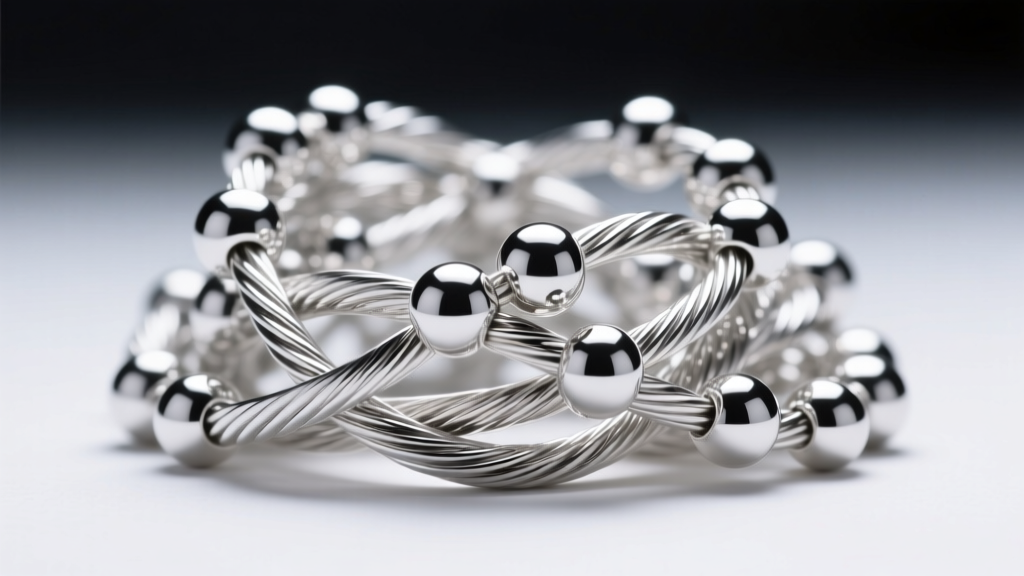
- The Ultimate Fix - Necklace Spacers: If you refuse to do the math on lengths and geometries, the modern market has introduced necklace spacer clasps. These are single, unified clasps featuring multiple integrated loops. You simply thread your existing chains through the loops, and the spacer locks them in place at fixed intervals, physically making tangling impossible.
Ultimately, knowing how to layer necklaces is an exercise in jewelry engineering. By prioritizing flat-link geometries, enforcing strict 2-inch length graduations, demanding soldered hardware, and selecting friction-resistant 14k gold or thick vermeil, you transform a chaotic jumble of metals into a sophisticated, intentional, and tangle-free signature style.


