How to Wire-Wrap and Style a Glass Necklace Pendant
Learn how to wire-wrap and style a custom glass necklace pendant. Master wire gauges, tension framing, and chain selection for fragile glass gems.

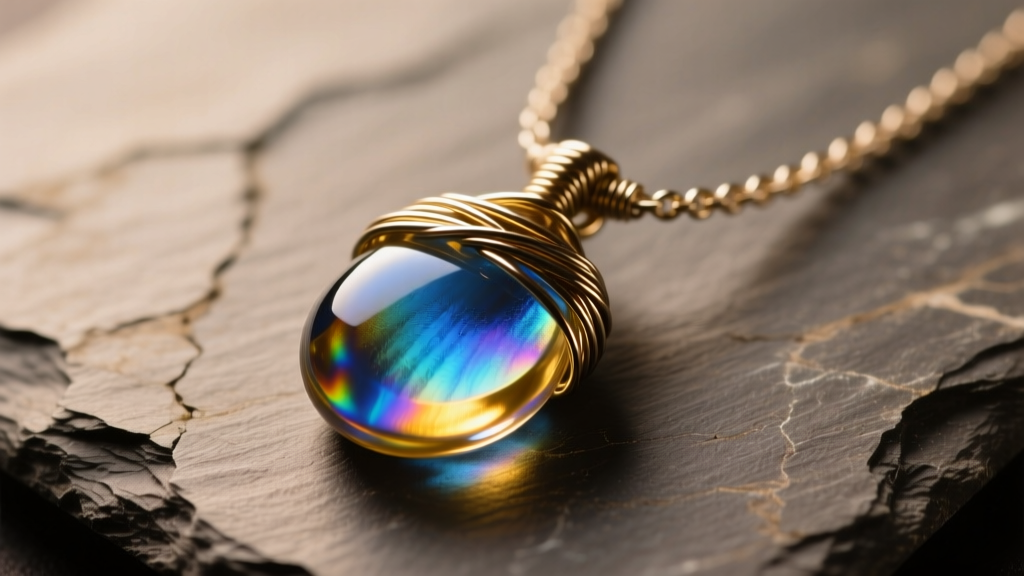
The Art of Securing Fragile Glass
Working with glass requires a fundamental understanding of its physical limitations. Unlike quartz or sapphire, which rank at 7 and 9 on the Mohs hardness scale respectively, most jewelry-grade glass—whether kiln-fused dichroic, artisan lampwork, or tumbled sea glass—sits between 5.5 and 6.5. This means it is highly susceptible to chipping from lateral pressure and thermal shock. When crafting a custom glass necklace pendant, traditional prong setting or heavy bezel soldering is often impossible or too risky. Wire-wrapping emerges as the superior technique, utilizing tension and structural cages rather than brute force to secure the stone.
In this comprehensive guide, we will break down the exact metallurgy, tooling, and step-by-step mechanics required to wire-wrap a glass pendant without causing micro-fractures, followed by advanced styling frameworks to maximize the optical properties of your finished piece.
Materials Matrix: Wire Hardness and Glass Compatibility
The most common failure mode in beginner wire-wrapping is selecting the wrong wire temper. Wire is sold in various tempers: dead-soft, half-hard, and full-hard. For a glass necklace pendant, you must exclusively use dead-soft wire for the primary frame. Half-hard wire requires too much torque to bend, which transfers kinetic energy directly into the glass, causing it to snap.
According to master instructors at Wire-Sculpture, Argentium silver or pure copper are ideal due to their malleability and tarnish resistance. Below is the structural matrix for selecting your wire gauges:
| Wire Gauge | Temper | Primary Function in Glass Pendant | Tension Limit |
|---|---|---|---|
| 20-Gauge | Dead-Soft | Main structural U-frame and bail base | High (Supports weight) |
| 24-Gauge | Dead-Soft | Decorative weaving and locking wraps | Medium (Secures frame) |
| 28-Gauge | Dead-Soft | Micro-coiling over the 20g frame | Low (Purely aesthetic) |
Essential Tooling for Non-Marring Construction
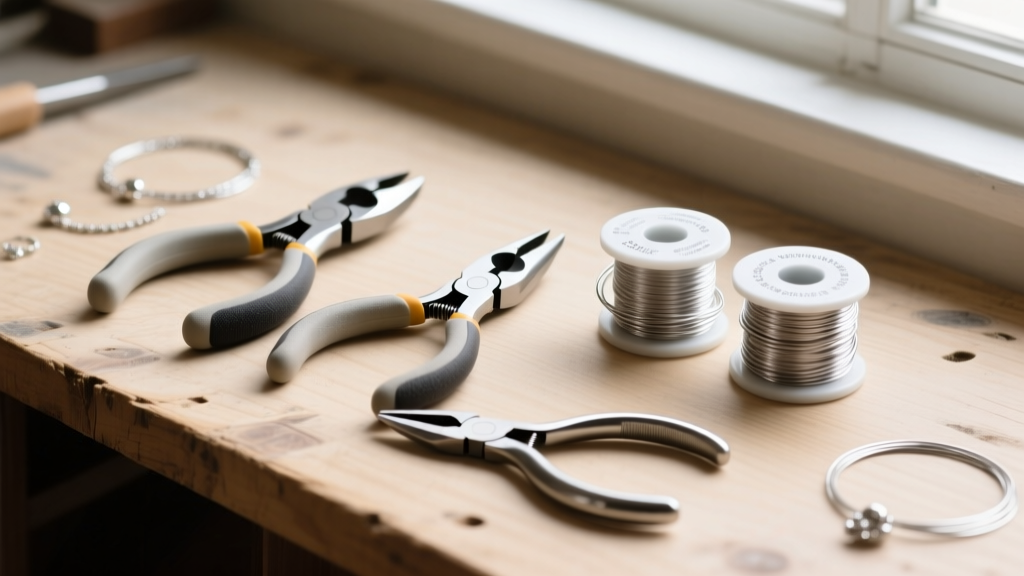
Steel tools will gouge soft silver and copper wire, creating weak points that can snap under the weight of a heavy glass cabochon. To maintain the structural integrity of your wire and protect the glass surface, your toolkit must include:
- Nylon Jaw Pliers: Essential for straightening dead-soft wire and pressing the frame flush against the glass without scratching either material.
- Flush Cutters: For achieving perfectly flat cuts on your 24-gauge weaving wire, ensuring no sharp ends protrude to catch on clothing or scratch the glass.
- Chain-Nose Pliers (Serrated-Free): The smooth inner jaws allow for tight, precise 90-degree bends at the shoulders of the pendant.
- Masking Tape or Painter's Tape: Used to temporarily hold the glass to the frame while you execute the initial locking wraps.
Step-by-Step: Tension Framing Your Glass Necklace Pendant
Step 1: Creating the U-Channel Base
Cut exactly 14 inches of 20-gauge dead-soft wire. Find the center point using your chain-nose pliers and gently bend the wire around the bottom curve of your glass cabochon. You are creating a U-channel. The wire should sit flush against the bottom edge, extending equally up both the left and right sides of the glass. Do not squeeze the wire tight against the glass; leave a 0.5mm tolerance gap to account for thermal expansion.
Step 2: The Shoulder Bends and Locking Wraps
At the exact point where the glass begins to taper toward the top (the shoulders), use your chain-nose pliers to create a crisp 90-degree bend inward, so the wire crosses over the front face of the glass. Immediately wrap your 24-gauge weaving wire around the intersection of the two 20-gauge wires. Execute three tight, adjacent coils to lock the frame in place. This 'cross-over' technique prevents the glass from slipping forward out of the pendant frame.
Step 3: Forming a Woven Bail
Gather the remaining tail wires at the top of the pendant. Bind them together tightly using your 24-gauge wire, creating a solid bundle about half an inch long. Take your longest remaining 20-gauge tail wire and bend it backward over the bundle to form a loop (the bail). Wrap the excess tail wire down the neck of the bundle, locking the bail into a permanent, load-bearing position. This ensures the chain's pulling force is distributed across the entire wire frame, not just the glass.
Styling Frameworks for Glass Optics
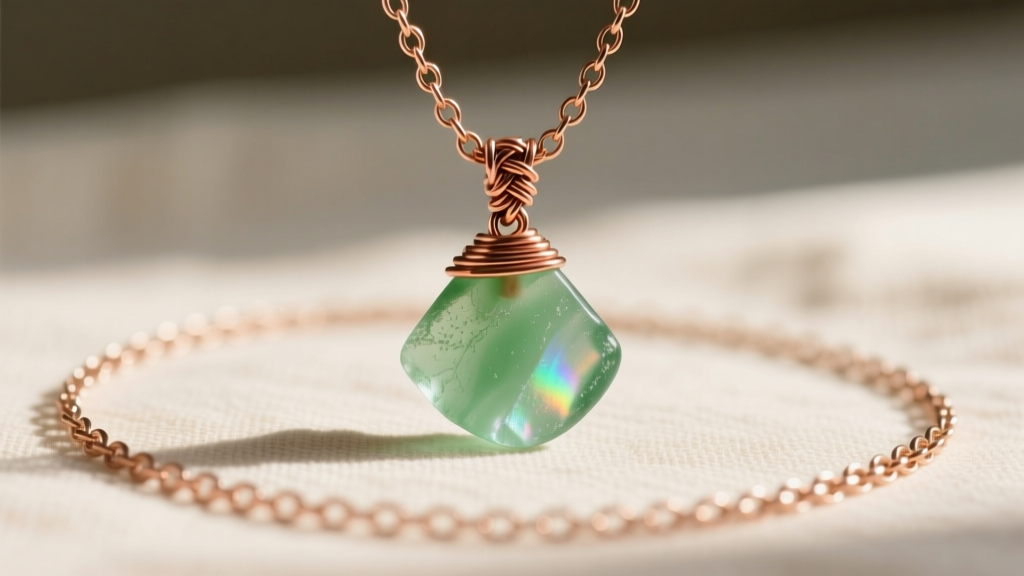
The beauty of a glass necklace pendant lies in its interaction with light. Dichroic glass, for instance, utilizes micro-layers of metal oxides to transmit certain wavelengths while reflecting others, creating a dynamic color-shifting effect. To maximize this, your styling and chain selection must be deliberate.
Chain Selection by Glass Type
- Dichroic & Fused Glass: These pendants are highly reflective and visually 'busy'. Pair them with minimalist chains like a 1.5mm snake chain or a delicate 18-inch rolo chain. Avoid complex rope chains that compete with the glass's internal patterns.
- Sea Glass & Frosted Glass: These have a matte, diffuse light transmission. They pair beautifully with oxidized sterling silver or raw copper chains, which complement their organic, weathered aesthetic. A 20-inch oxidized box chain provides an excellent contrasting backdrop.
- Lampwork Beads: Because lampwork is often cylindrical and features 3D floral encasements, hang them on simple leather cords or silk knotted strands to maintain an artisan, bohemian profile.
Neckline Pairing Strategies
For V-neck blouses and wrap dresses, select a glass pendant that drops precisely 1 to 2 inches below the collarbone, allowing the glass to sit in the negative space of the neckline. For crew necks and high collars, opt for shorter 16-inch choker-length chains featuring wider, horizontally oriented glass bar pendants to break up the heavy fabric line.
Long-Term Care: Avoiding Thermal and Chemical Shock
Proper maintenance of your glass necklace pendant requires understanding its vulnerability to sudden temperature changes and harsh chemicals. Glass is an amorphous solid; it lacks a crystalline structure, making it highly sensitive to thermal shock.
Never clean a wire-wrapped glass pendant in an ultrasonic cleaner. The high-frequency cavitation bubbles can easily cause micro-fissures in kiln-fused or dichroic glass to expand, resulting in catastrophic shattering. Furthermore, the ultrasonic vibrations will work-harden and potentially snap your delicate 28-gauge decorative coils.
Instead, follow this safe cleaning protocol recommended by gemological experts at Fire Mountain Gems:
- Mix a few drops of mild, phosphate-free dish soap into a bowl of lukewarm (never hot) water.
- Submerge the pendant for no more than 3 minutes.
- Gently agitate the water; do not scrub the glass with a brush, as trapped silica dust can scratch the surface.
- Rinse under a slow stream of room-temperature distilled water to prevent hard water spots.
- Pat dry immediately with a microfiber cloth, ensuring no moisture is trapped between the wire frame and the glass, which could lead to metal oxidation.
By respecting the material science of both the glass and the wire, your custom pendant will remain a structurally sound and optically brilliant centerpiece in your jewelry collection for years to come.


