How to Layer a Starfish and Pearl Necklace: Step-by-Step Guide
Learn how to layer a starfish and pearl necklace with our step-by-step guide. Master lengths, material care, and neckline pairings for coastal elegance.

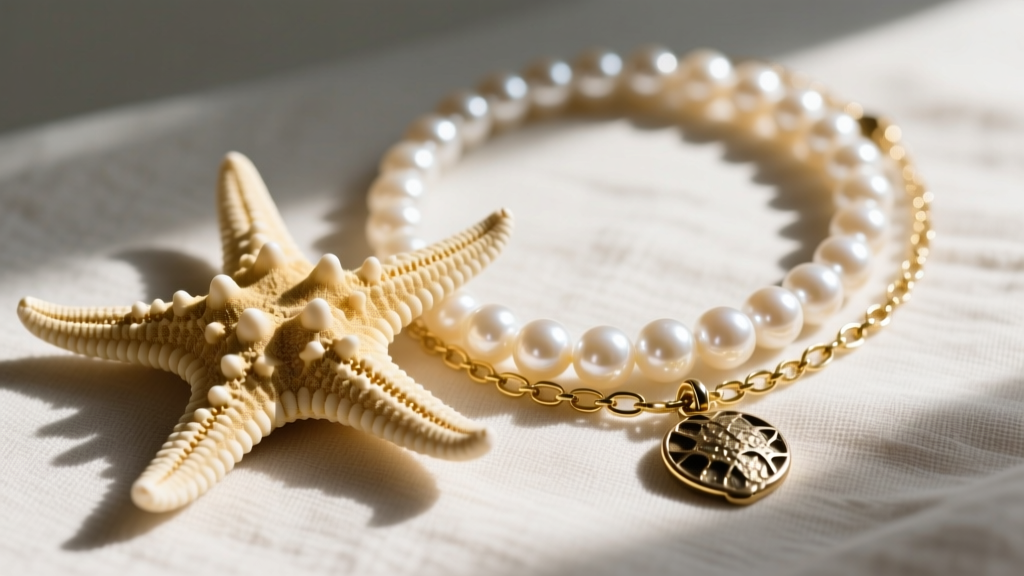
The coastal aesthetic has evolved far beyond simple beachwear accessories. In 2026, the starfish and pearl necklace stands as a sophisticated staple in fine jewelry, bridging the gap between organic textures and timeless elegance. Whether you are styling a natural calcified starfish charm or a meticulously cast sterling silver piece, layering this necklace requires an understanding of proportion, material science, and visual weight.
This comprehensive, step-by-step guide will teach you how to layer your starfish and pearl necklace flawlessly, match it to specific necklines, and care for the delicate organic materials involved.
Step 1: Understand Your Materials and Visual Weight
Before you begin layering, you must assess the physical properties of your focal piece. The visual weight of your starfish and pearl necklace dictates the chains you will pair it with.
Natural vs. Cast Starfish Charms
Natural starfish are composed of porous calcium carbonate and score a mere 1.5 on the Mohs hardness scale. They are incredibly fragile and usually feature a matte, chalky texture. Cast starfish charms, typically made from 14k gold, sterling silver, or brass, offer a reflective surface and higher durability. If your starfish is natural, it absorbs light; if it is cast metal, it reflects it. This distinction is crucial when selecting accompanying chains.
Pearl Grade and Luster
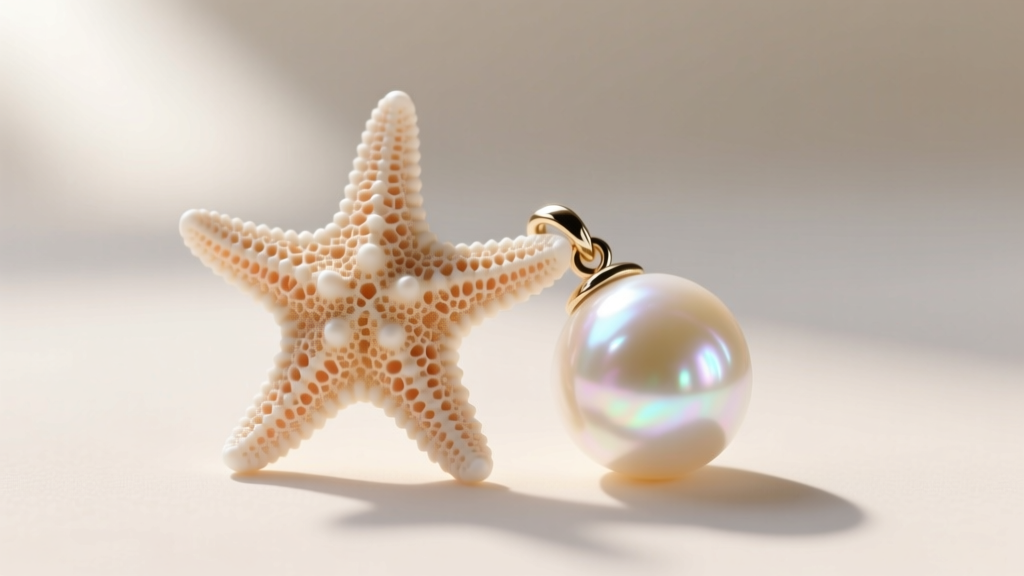
Pearls range from 2.5 to 3.0 on the Mohs scale. A high-quality Akoya pearl possesses a mirror-like luster that acts as a secondary light source against the skin. Conversely, baroque freshwater pearls offer a softer, satiny glow. When layering, ensure your accompanying chains do not overpower the pearl's luster. A delicate 14k gold cable chain (1.5mm to 2.0mm width) is usually the ideal partner for a pearl-and-starfish pendant.
Step 2: The 3-Step Layering Framework
Successful layering relies on the 'Rule of Thirds' for vertical spacing. You need a minimum of two to three distinct lengths to prevent tangling and create a cascading effect.
- Layer 1: The Base (14 to 15 inches)
Start with a lightweight chain or a simple pearl choker. A 14-inch 18k gold figaro chain or a strand of 6mm button pearls sits snugly at the collarbone, drawing the eye upward and framing the face. - Layer 2: The Focal Point (17 to 19 inches)
This is where your starfish and pearl necklace lives. An 18-inch princess-length chain allows the starfish pendant to rest perfectly in the hollow of the clavicle. Ensure the bail (the loop connecting the charm to the chain) is secure, preferably a soldered jump ring rather than a spring-loaded clasp. - Layer 3: The Anchor (22 to 24 inches)
Ground the look with a heavier chain, such as a 3mm rolo or box chain. Add a simple geometric pendant, like a solid gold disc or a minimalist compass, to contrast the organic shape of the starfish. This matinee-length layer elongates the torso and prevents the neckline from looking cluttered.
Step 3: Matching Necklines to Your Layered Look
A starfish and pearl necklace must be adapted to the garment you are wearing. The wrong chain length can cause the pendant to hide beneath fabric or clash with the garment's seams.
| Neckline Type | Ideal Chain Lengths | Styling Strategy |
|---|---|---|
| V-Neck | 16' + 18' (Focal) | Let the starfish pendant sit exactly one inch above the V-neck seam to elongate the neck. |
| Crew Neck | 14' + 20' + 24' | Use a longer cascade to break up the solid block of fabric. Keep the starfish on the 20-inch chain. |
| Square Neck | 15' Choker + 18' | Mirror the horizontal lines of the neckline with a choker, letting the starfish rest just below the collarbone. |
| Off-the-Shoulder | 14' + 28' Lariat | Expose the collarbones entirely. Use a long lariat style that drapes vertically down the bare chest. |
Step 4: Cleaning and Preserving Organic Jewelry
Layering increases the friction between chains, charms, and your skin. Because both pearls and natural starfish are organic gemstones, they require meticulous care to prevent degradation.
Critical Warning: Never use ultrasonic cleaners or steamers on a starfish and pearl necklace. Ultrasonic vibrations will shatter a natural calcified starfish instantly and can strip the nacre from thin-skinned pearls, ruining their luster permanently.
The 'Last On, First Off' Rule
Pearls are highly sensitive to the pH levels of human sweat, as well as the chemicals found in perfumes, hairsprays, and cosmetics. Always apply your beauty products and allow them to dry completely before putting on your necklace. When you return home, your jewelry should be the first thing you take off.
Step-by-Step Cleaning Routine
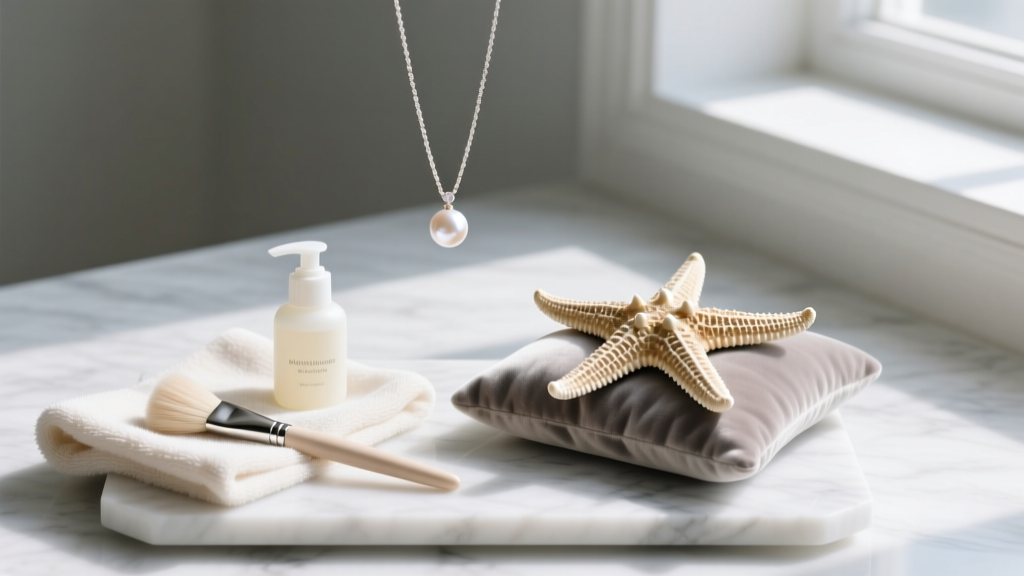
- Wipe Down: After every wear, gently wipe the pearls and the starfish charm with a clean, dry, lint-free microfiber cloth to remove oils and acids.
- Spot Cleaning: If the necklace becomes visibly soiled, dampen a soft cloth with distilled water and a single drop of pH-neutral castile soap. Gently dab the metal chains and the pearls. Never submerge the necklace in water, especially if the starfish is natural or if the pearls are silk-knotted, as water will stretch the silk and degrade the calcium carbonate.
- Drying: Lay the necklace flat on a dry towel in a well-ventilated area away from direct sunlight. Ensure the silk or nylon thread is completely dry before storing.
- Storage: Store your starfish and pearl necklace in a soft cotton pouch. Avoid airtight plastic bags; pearls are organic and require trace amounts of moisture to prevent cracking and yellowing over time.
Expert Insights on Chain Hardware
When building a layered look, the hardware matters just as much as the charms. According to the Gemological Institute of America (GIA), the longevity of organic gemstones is heavily tied to how they are mounted and stored. For a starfish and pearl necklace, opt for a lobster clasp rather than a spring-ring clasp. Lobster clasps offer superior tensile strength and are less likely to snap open when tangled with secondary layering chains.
Furthermore, if you are layering multiple gold chains, ensure they are all the same karat and color (e.g., all 14k yellow gold). Mixing 14k and 18k gold can create a subtle but jarring mismatch in yellow undertones, detracting from the cohesive coastal elegance you are trying to achieve.
Final Thoughts on Coastal Styling
Mastering the art of layering a starfish and pearl necklace is about balancing the rugged, organic texture of the sea with the refined, cultivated beauty of pearls. By adhering to precise chain lengths, respecting the fragility of organic materials, and matching your layers to your wardrobe's architecture, you elevate a simple beach-inspired charm into a masterclass of personal style. For further reading on organic gemstone preservation, the American Gem Society offers extensive guidelines on maintaining the structural integrity of porous jewelry materials.