How to Choose a Custom Mothers Day Necklace With Names
Discover expert tips for selecting a custom mothers day necklace with names. Learn about metal grades, laser engraving depths, and chain durability.
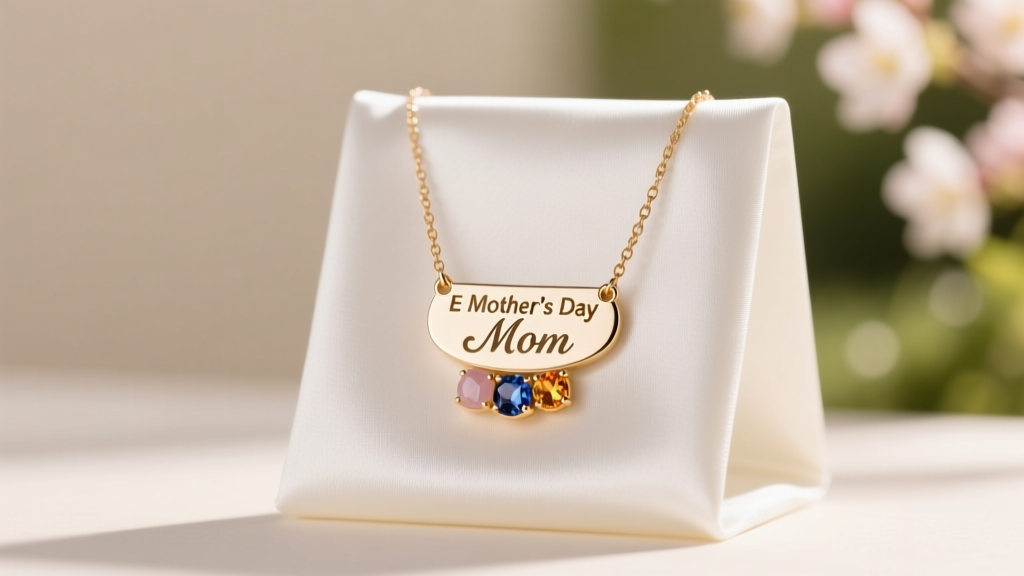
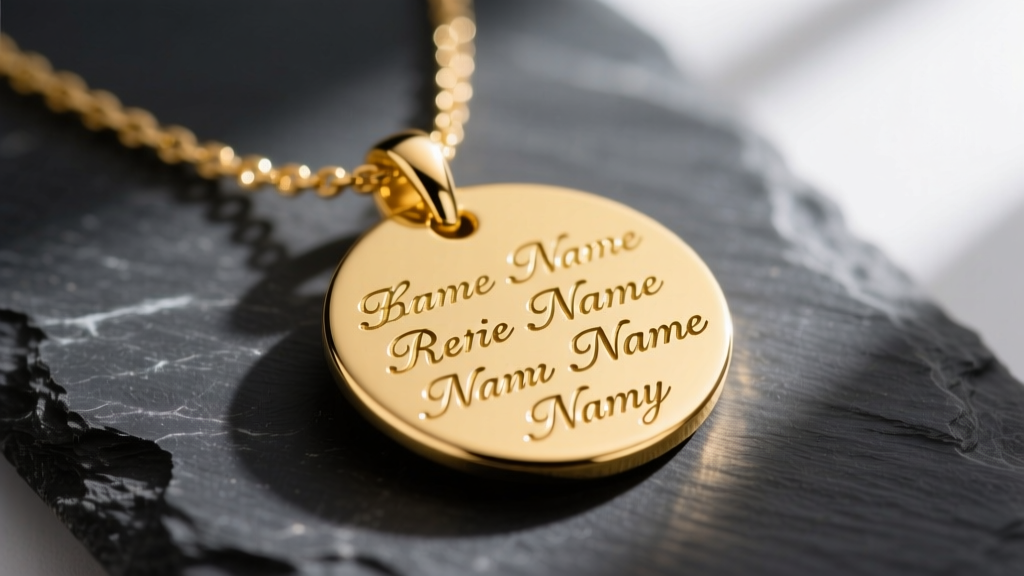
When selecting a mothers day necklace with names, the sentimental value is only as enduring as the metallurgy and craftsmanship behind it. The market is saturated with mass-produced, thinly plated pendants that tarnish within months and chains that snap under the weight of multi-name discs. As jewelry manufacturing evolves in 2026, understanding the technical specifications of personalized jewelry is crucial for making an investment that lasts generations. This expert guide bypasses the marketing fluff to examine the precise metal alloys, engraving technologies, and structural mechanics required for a high-quality custom necklace.
The Metallurgy of Personalized Pendants
The foundation of any custom name necklace is the base metal. The Vickers hardness (HV) of the alloy directly dictates how crisply names can be engraved and how well the piece resists daily deformation.
- 925 Sterling Silver: With a hardness of roughly 60-70 HV, sterling silver is relatively soft. It is highly reflective but prone to micro-scratches. According to the Jewelers of America, authentic 925 silver must contain exactly 92.5% pure silver. For engraved silver, look for rhodium-plated finishes to prevent the oxidation that naturally pools inside engraved letter grooves.
- 14k Solid Gold (58.5% Pure): Alloyed with copper, zinc, or silver, 14k gold achieves a Vickers hardness of 130-150 HV. This is the metallurgical sweet spot for personalized jewelry. It is hard enough to hold crisp, deep rotary engravings without burring, yet malleable enough for artisan jewelers to resize or repair.
- 18k Solid Gold (75% Pure): Softer than 14k (around 110-120 HV), 18k gold offers a richer, warmer hue. However, deep mechanical engraving can sometimes cause microscopic edge tearing. Fiber laser engraving is the preferred method for 18k gold to ensure clean typography.
- Gold Vermeil vs. Gold-Filled: Vermeil requires a minimum of 2.5 microns of gold plating over a sterling silver core. If a jeweler uses deep rotary engraving on vermeil, the cutting tool will breach the gold layer, exposing the silver core and leading to galvanic corrosion. For plated jewelry, always opt for surface-level laser darkening rather than deep cutting.
Engraving Technologies: Laser vs. Mechanical
The method used to inscribe the names onto the pendant drastically affects the legibility, depth, and longevity of the text. In 2026, Ytterbium fiber lasers operating at a 1064 nm wavelength have become the industry standard for metal marking, largely replacing older CO2 and Nd:YAG systems.
| Engraving Method | Depth / Mechanism | Best Metal Compatibility | Typography Limitations |
|---|---|---|---|
| Fiber Laser (Annealing) | Surface level (0.0001") | Titanium, Stainless Steel, Tungsten | Excellent for micro-text and barcodes |
| Fiber Laser (Ablation) | Shallow cut (0.001" - 0.005") | 14k/18k Gold, Sterling Silver | Clean edges, ideal for script fonts |
| Diamond Drag (Rotary) | Deep cut (0.01"+) | 14k Gold, Platinum, Brass | Requires wider kerning; serif fonts work best |
| Hand Engraving (Graver) | Variable, deep (0.02"+) | Platinum, 18k Gold, Heirloom pieces | Highly artistic, but inconsistent for micro-names |
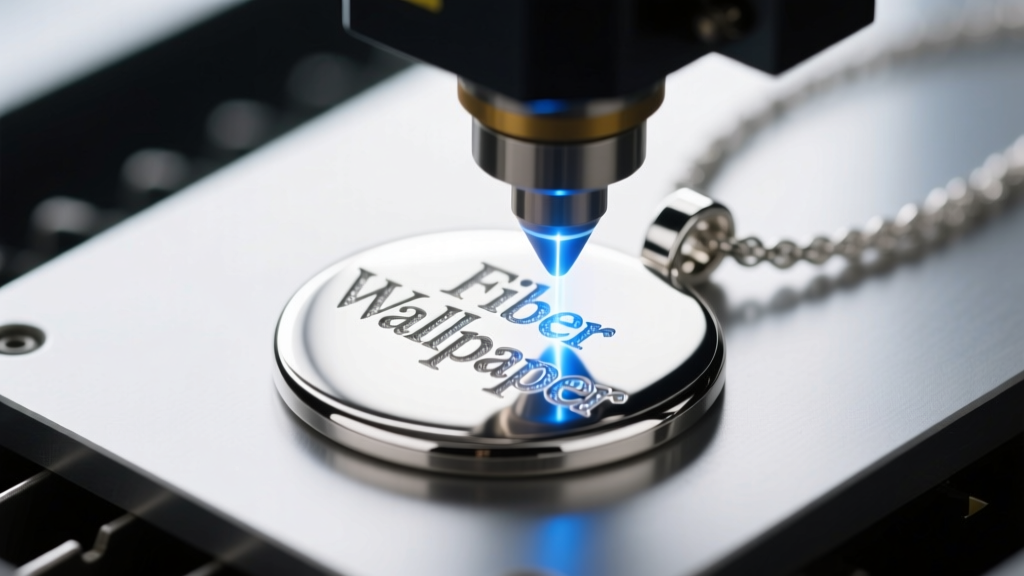
For a mothers day necklace with names featuring multiple children (often 3 to 5 names on a single 25mm disc), fiber laser ablation is generally superior. It vaporizes the metal cleanly without pushing up a "burr" or lip around the letters, which can catch on clothing and wear down over time. If you prefer the traditional look of deep mechanical engraving, ensure the jeweler polishes the pendant post-engraving to remove any sharp metallic burrs.
Chain Mechanics: Gauge, Tensile Strength, and Clasps
A multi-name disc pendant carries significant weight. A standard 25mm solid 14k gold disc engraved with four names can easily weigh between 8 and 14 grams. Pairing this with a delicate 0.7mm cable chain is a structural failure waiting to happen.
Matching Chain Gauge to Pendant Weight
The gauge (thickness) of the chain must be scaled to the pendant's mass. Tensile strength varies wildly by link style:
- 0.9mm - 1.1mm Rope Chains: Excellent tensile strength due to the twisted, interlocking links. Suitable for pendants up to 10 grams. The spiral structure naturally hides minor kinks.
- 1.2mm - 1.5mm Box Chains: Composed of square, interlocking links. They lay flat and distribute weight evenly, making them the premier choice for heavy, multi-name discs ranging from 10 to 20 grams.
- 1.5mm Wheat (Spiga) Chains: Woven in a braided pattern, wheat chains offer the highest tensile strength in the jewelry industry. They are virtually kink-proof and highly recommended for oversized, solid gold family tree or multi-disc pendants.
The Critical Role of the Bail and Jump Ring
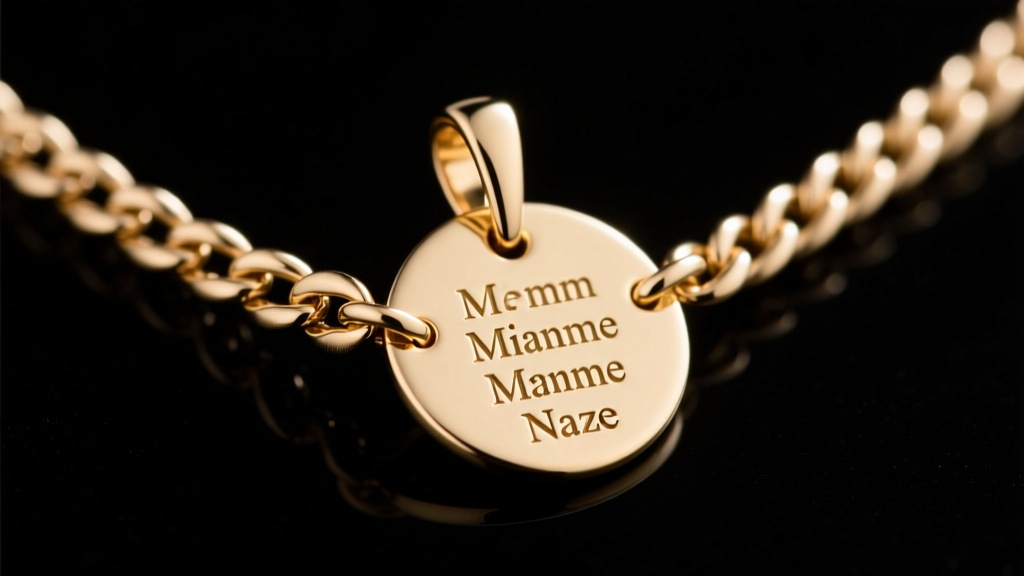
The bail (the loop connecting the pendant to the chain) is the primary stress point. For heavy name discs, the bail should be cast solid, not stamped from sheet metal. Furthermore, the jump ring attaching the bail to the chain must be soldered shut. An unsoldered jump ring will slowly twist open under the pendulum motion of a heavy pendant, eventually dropping the piece. Always verify with the jeweler that the jump rings are laser-welded or torch-soldered.
Typography and Micro-Kerning Considerations
When fitting multiple names onto a finite surface area, typography is not just an aesthetic choice; it is a matter of physical legibility. The "kerf" (the width of the cut or laser beam) dictates which fonts will survive the engraving process.
"When engraving names at a 1.5mm cap height, serif fonts like Times New Roman often fail. The delicate serifs become muddy or disappear entirely into the laser kerf. We strictly recommend geometric sans-serif fonts like Futura or clean scripts with uniform stroke widths for micro-typography on jewelry."
— Master Engraver, Custom Jewelry Manufacturing Guild
If you are ordering a necklace with five or more names, consider a tiered or cascading layout rather than forcing them into a single horizontal line. Cascading the names along the curve of a crescent or heart pendant maintains a minimum font size of 1.2mm, ensuring the text remains readable to the naked eye without requiring a jeweler's loupe.
Long-Term Care for Engraved Grooves
The grooves created by engraving act as microscopic traps for sebum, lotions, and environmental dust. Over time, this buildup creates a dark, shadowed effect that can actually enhance the contrast of the names. However, if the buildup becomes unhygienic or dulls the metal, specific care protocols must be followed.
The Gemological Institute of America (GIA) advises against using harsh chemical dips on porous or plated engraved jewelry. For solid gold and sterling silver name necklaces, an ultrasonic cleaner is highly effective at vibrating debris out of deep rotary-engraved letter grooves. However, if your pendant features enamel-filled names or is gold vermeil, ultrasonic vibrations can shatter the enamel or strip the plating. In these cases, a soft-bristled baby toothbrush with a mild, phosphate-free dish soap and warm water is the safest mechanical cleaning method.
By prioritizing structural integrity, appropriate laser technologies, and precise metallurgy, you can ensure that a custom mothers day necklace with names transcends being a mere seasonal gift and becomes a durable, multi-generational heirloom.


