Gun in Holster Necklace Buying Guide: Metals & Styles
Discover what to look for in a gun in holster necklace. Our buying guide covers metal grades, chain weights, and styling tips for western and tactical wear.

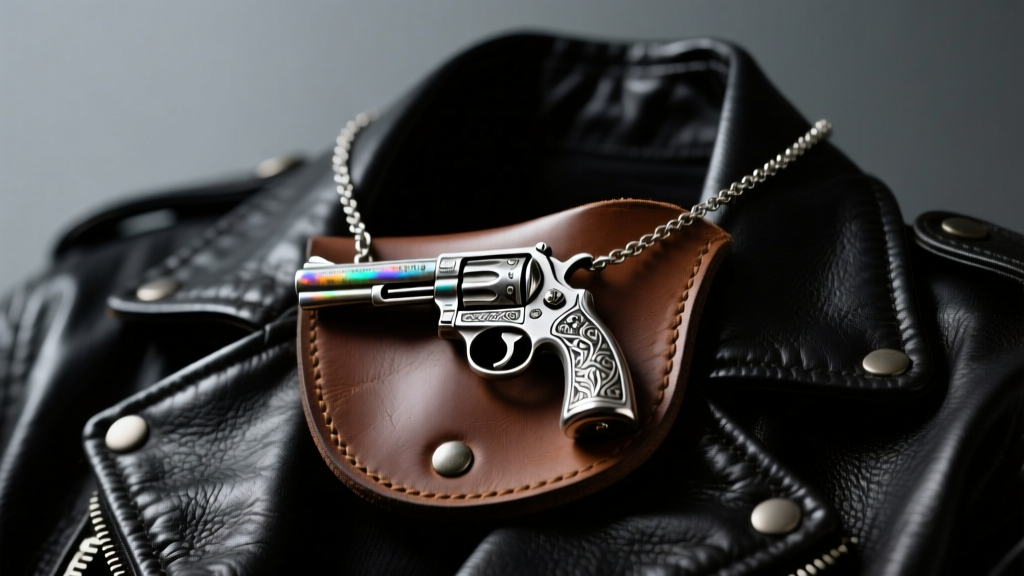
The Intersection of Western Heritage and Tactical Aesthetics
The gun in holster necklace occupies a unique space in the jewelry market, bridging the gap between traditional Western heritage, 2A advocacy, and modern tactical streetwear. Whether you are drawn to the romanticized era of the Wild West six-shooter or the sleek, utilitarian lines of a modern polymer-frame concealed carry setup, choosing the right pendant requires more than just picking a design you like. Because these pendants are often highly detailed, asymmetrical, and surprisingly heavy, they present specific structural challenges that generic jewelry guides fail to address.
As a senior analyst for Jewel Style Radar, I have evaluated dozens of firearm-themed pendants, from mass-produced zinc alloys to bespoke, hand-finished sterling silver pieces. This comprehensive buying guide will break down the exact metallurgical properties, chain tensile strengths, and craftsmanship markers you need to inspect before investing in a gun in holster necklace that will last a lifetime.
Material Science: What Metals Actually Hold Up?
The most common failure point in novelty and statement jewelry is metal degradation. A holster pendant features deep undercuts, tiny crevices (like cylinder flutes or slide serrations), and high-relief elements that trap moisture and skin oils. Choosing the right alloy is non-negotiable.
925 Sterling Silver: The Western Standard
For traditional Western motifs—think engraved Colt Single Action Army revolvers in tooled leather holsters—925 sterling silver is the undisputed king. According to The Silver Institute, sterling silver contains 92.5% pure silver and 7.5% copper, providing the necessary hardness for intricate casting while retaining a beautiful luster. More importantly, sterling silver reacts exceptionally well to oxidation (often using liver of sulfur). Jewelers use this to darken the recessed areas of the gun grips and holster stitching, creating a high-contrast, antique finish that makes the microscopic details pop. However, be prepared to polish the high-relief areas with a jeweler's cloth to prevent overall tarnishing.
316L Surgical Stainless Steel: The Tactical Workhorse
If your aesthetic leans toward modern tactical gear, Glocks, or 1911s, 316L marine-grade stainless steel is your best option. Unlike cheaper 304 stainless steel, 316L contains molybdenum, which drastically increases resistance to corrosion from sweat and environmental chlorides. It is hypoallergenic, virtually scratch-proof in daily wear, and requires zero maintenance. The trade-off? It is significantly harder to cast, meaning details might be slightly softer than silver, and it cannot be easily resized or repaired by a standard bench jeweler if the bail breaks.
The Danger of Pewter and Zinc Alloys
Avoid any gun in holster necklace marketed as 'pewter' or 'zinc alloy' (often sold at gas stations or generic tourist shops). Pewter is incredibly brittle; the thin barrel of a cast revolver pendant will easily snap if caught on a jacket zipper. Furthermore, cheap zinc alloys often contain high levels of nickel, which causes severe contact dermatitis when resting against the sternum.
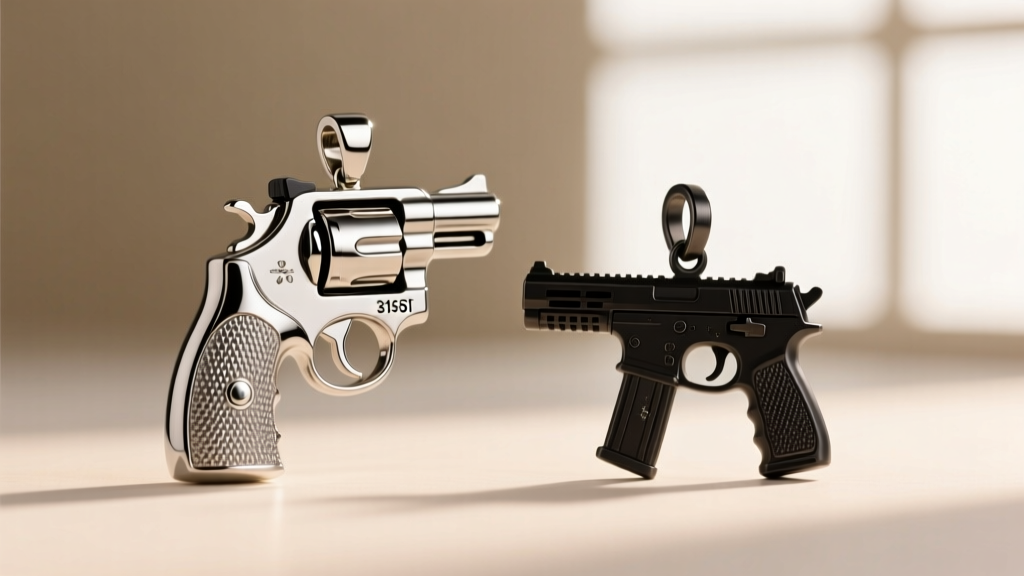
Chain Selection: Supporting the Weight
A detailed, solid-cast gun and holster pendant is inherently bottom-heavy. A standard 1.5-inch solid silver revolver pendant can easily weigh between 18 and 28 grams. If you pair this with a flimsy chain, you will experience premature stretching, clasp failure, or a snapped link. You must match the chain's tensile strength to the pendant's mass.
| Chain Style | Thickness Recommendation | Max Pendant Weight | Best For |
|---|---|---|---|
| Rope Chain | 3.0mm - 5.0mm | Up to 45g | Heavy, solid-cast Western holsters |
| Box Chain | 2.5mm - 4.0mm | Up to 25g | Medium tactical pendants, sleek profiles |
| Curb Chain | 3.5mm+ | Up to 40g | Edgy streetwear, heavy statement pieces |
| Cable Chain | Any | Under 10g | Hollow or minimalist outline pendants only |
Pro-Tip: Always opt for a chain with a lobster clasp rather than a spring ring clasp. Spring rings are notorious for failing under the pendulum-like swinging motion of a heavy holster pendant.
Craftsmanship: Lost-Wax Casting vs. CNC Machining
How your gun in holster necklace is manufactured dictates its level of detail and structural integrity. The GIA Gem Encyclopedia notes that different manufacturing techniques leave distinct microscopic markers that separate fine jewelry from cheap novelties.
- Lost-Wax Casting: This is the gold standard for Western and vintage designs. A master model is carved in wax, encased in plaster, and burned out, allowing molten silver or gold to fill the cavity. Look for 'sprue marks' (small, polished nubs where the metal entered the mold) on the back or bottom edge of the holster. High-end castings will feature actual wood-grain textures on the gun grips and visible stitching holes on the leather holster.
- CNC Machining & 3D Printing: Modern tactical pendants are increasingly being milled from solid blocks of titanium or steel using 5-axis CNC machines. This yields incredibly sharp, mathematically perfect slide serrations, Picatinny rails, and trigger guard undercutting. If you are buying a modern firearm pendant, look for the sharp, crisp edges that only machining can provide.
"A true master-cast holster pendant will feature a hollowed-out back (sometimes called a 'butterfly back' or 'honeycomb' relief). This reduces the overall weight of the silver by up to 30% without sacrificing the visual depth or structural rigidity of the piece."
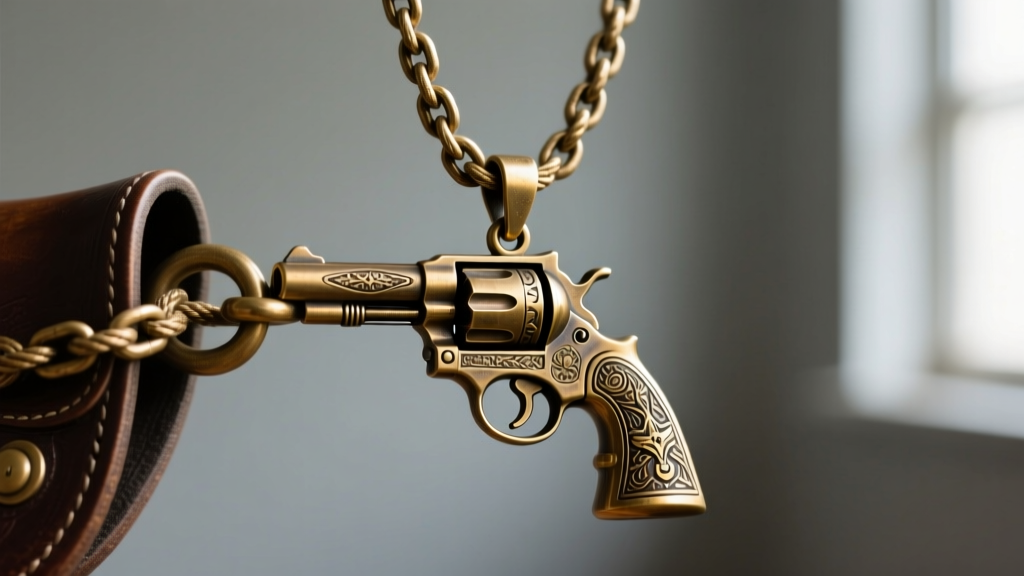
Sizing, Proportions, and Bail Mechanics
The 'bail' is the loop at the top of the pendant that feeds onto the chain. Because gun pendants are asymmetrical (the barrel usually extends further than the grip), a poorly placed bail will cause the necklace to hang crookedly, with the gun pointing awkwardly downward rather than sitting horizontally or at a natural draw angle.
When inspecting a piece, look for an offset bail or a hidden integrated bail that is positioned precisely at the pendant's center of gravity. Furthermore, check the inner diameter (ID) of the bail. If you plan to wear this on a thick 4mm rope chain, the bail ID must be at least 6mm to allow the chain to drape smoothly without kinking. Kinking leads to metal fatigue and eventual chain breakage.
Standard Dimensions to Look For:
- Drop Length: 1.25 inches to 1.75 inches is the sweet spot for men's and women's statement wear. Anything over 2 inches becomes cumbersome and will catch on clothing.
- Width: 0.75 inches to 1.2 inches. Ensure the barrel does not extend so far that it becomes a snag hazard.
- Thickness: Look for a minimum of 3mm at the thickest point (usually the cylinder or the holster snap) to prevent bending.
Styling Your Firearm Pendant
Styling a gun in holster necklace requires balancing its bold, aggressive motif with the rest of your wardrobe. Because the pendant is inherently a focal point, keep the rest of your neckline relatively uncluttered.
For a Western or Heritage look, pair an oxidized sterling silver Colt revolver pendant with a denim or chambray shirt, leaving the top two buttons undone. Layer it with a simple, thin turquoise beaded necklace or a leather cord to anchor the Southwestern aesthetic. Avoid wearing it over graphic tees, as the competing visuals will diminish the impact of the metalwork.
For a Tactical or Streetwear look, a matte black PVD-coated stainless steel 1911 pendant pairs perfectly with heavyweight, solid-color streetwear (like a charcoal or olive drab hoodie). Let the pendant rest on the outside of the garment. PVD (Physical Vapor Deposition) coating ensures the black finish won't rub off onto your clothing, a common issue with cheap electroplated 'black rhodium' alternatives.
Final Verdict: What to Buy
When shopping for a gun in holster necklace, prioritize metallurgical integrity and weight distribution above all else. If you want a timeless, highly detailed Western piece, invest in a hollow-backed, oxidized 925 sterling silver casting on a 3.5mm rope chain. If you prefer a modern, low-maintenance tactical aesthetic, seek out 316L stainless steel or titanium with CNC-milled details and a secure lobster clasp. By avoiding brittle pewter and flimsy cable chains, you ensure that your statement piece remains a durable, functional part of your wardrobe for decades to come.


