The Ultimate Moncler Necklace Care & Cleaning Guide
Discover expert care, cleaning, and storage tips for your Moncler necklace. Learn how to protect rhodium plating and cold enamel from damage.

Understanding the Anatomy of a Moncler Necklace
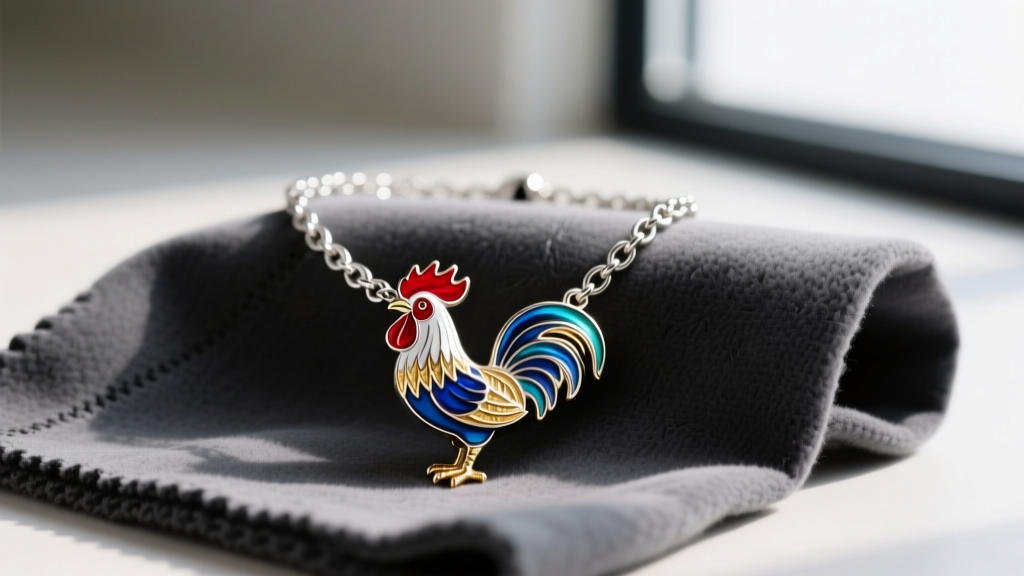
As Moncler’s 2026 accessory collections continue to blend alpine heritage with avant-garde hardware, their necklaces have become highly sought-after statement pieces. However, luxury fashion jewelry requires a fundamentally different care regimen than fine jewelry. To properly maintain your Moncler necklace, you must first understand its material composition. Most Moncler pendants and heavy link chains are crafted from a brass or bronze base metal, chosen for its weight and ability to hold intricate molds like the iconic rooster logo.
This base metal is typically plated with rhodium or palladium. Rhodium, a platinum-group metal, provides a brilliant, tarnish-resistant white finish. In high-end fashion jewelry, this plating is usually applied at a thickness of 0.75 to 1.5 microns. While durable, it is not impervious to friction and chemical degradation. Furthermore, the signature vibrant colors on Moncler pendants are achieved using 'cold enamel'—an epoxy-based resin rather than traditional kiln-fired vitreous enamel. This distinction is critical: cold enamel is highly sensitive to heat, prolonged UV exposure, and harsh solvents. Recognizing these material boundaries is the first step in preserving the structural and aesthetic integrity of your necklace.
Preventative Maintenance: The 'Last On, First Off' Rule
The most effective cleaning method is preventing the need for deep cleaning in the first place. Human sweat has a pH level ranging from 4.5 to 7.0, and when mixed with the natural oils and salts on your skin, it creates a mildly corrosive environment that can accelerate the wear of rhodium plating. According to the Jewelers of America, cosmetics, perfumes, and hairsprays are the primary culprits behind the dulling of plated fashion jewelry.

Always adhere to the 'Last On, First Off' rule. Your Moncler necklace should be the final item you put on after applying lotions, perfumes, and makeup, allowing those products to fully absorb and dry. Conversely, it should be the first item you remove when returning home. Never wear your necklace in chlorinated pools, hot tubs, or the ocean. Chlorine is highly reactive and can cause microscopic pitting in the rhodium layer, while saltwater can degrade the epoxy bonds of the cold enamel detailing.
Step-by-Step Cleaning Routine for Moncler Necklaces
When your necklace accumulates skin oils, dust, or environmental pollutants, a gentle, manual cleaning is required. Avoid commercial jewelry dips, which are often formulated for solid gold or platinum and contain harsh chemicals like thiourea that can strip rhodium plating and cloud epoxy enamel.
Tools You Will Need
- Distilled water (tap water contains trace minerals and chlorine that can leave spots)
- A pH-neutral, lotion-free liquid dish soap
- An extra-soft baby toothbrush (adult toothbrushes are too abrasive for micron-thin plating)
- A lint-free microfiber cloth
- Compressed air canister (optional, for drying intricate crevices)
The Cleaning Process
- Prepare the Solution: Mix a few drops of the pH-neutral dish soap into a bowl of lukewarm (never hot) distilled water. Hot water can soften cold enamel and compromise its adhesion to the brass base.
- Soak Briefly: Submerge the necklace for no more than 3 to 5 minutes. This is sufficient to loosen surface oils without risking water infiltration into any crystal settings.
- Gentle Agitation: Using the extra-soft baby toothbrush, gently sweep over the chain links and the pendant. Pay special attention to the back of the pendant and the clasp mechanism, where dead skin cells and lint accumulate. Do not scrub the enamel or crystal surfaces directly; let the soapy water do the work.
- Rinse Thoroughly: Rinse the necklace under a gentle stream of lukewarm distilled water to remove all soap residue. Soap film will dry into a cloudy layer that mimics tarnish.
- Dry Completely: Pat the chain and pendant dry with a clean microfiber cloth. Use a canister of compressed air to blow moisture out of the clasp spring and the crevices of the rooster logo. Trapped moisture is the leading cause of localized base-metal oxidation.
What to Avoid: The Enamel and Plating Killers
Misguided cleaning attempts cause more damage to luxury fashion jewelry than daily wear. The Gemological Institute of America (GIA) explicitly warns against using ultrasonic cleaners on jewelry featuring fractures, organic gems, or epoxy-based treatments. This applies directly to Moncler pieces.
| Cleaning Agent / Method | Effect on Rhodium Plating | Effect on Cold Enamel & Crystals |
|---|---|---|
| Ultrasonic Cleaners | Can cause micro-flaking if plating is thin | High-frequency vibrations will shatter epoxy bonds and loosen crystal glue |
| Isopropyl Alcohol | Safe in low concentrations | Degrades epoxy resin, causing it to turn white, cloudy, or brittle |
| Silver Polishing Cloths | Contains mild abrasives that will physically wear away the rhodium layer | Can scratch crystal facets and leave residue in enamel grooves |
| Baking Soda Paste | Highly abrasive; will cause irreversible micro-scratches | Will permanently dull the glossy finish of the cold enamel |
Proper Storage for Luxury Fashion Jewelry
How you store your Moncler necklace when it is not being worn is just as important as how you clean it. Brass base metals are prone to oxidation when exposed to sulfur compounds in the air and ambient humidity. Storing your necklace in a humid bathroom or tossing it into an open jewelry dish will drastically shorten the lifespan of the rhodium plating.
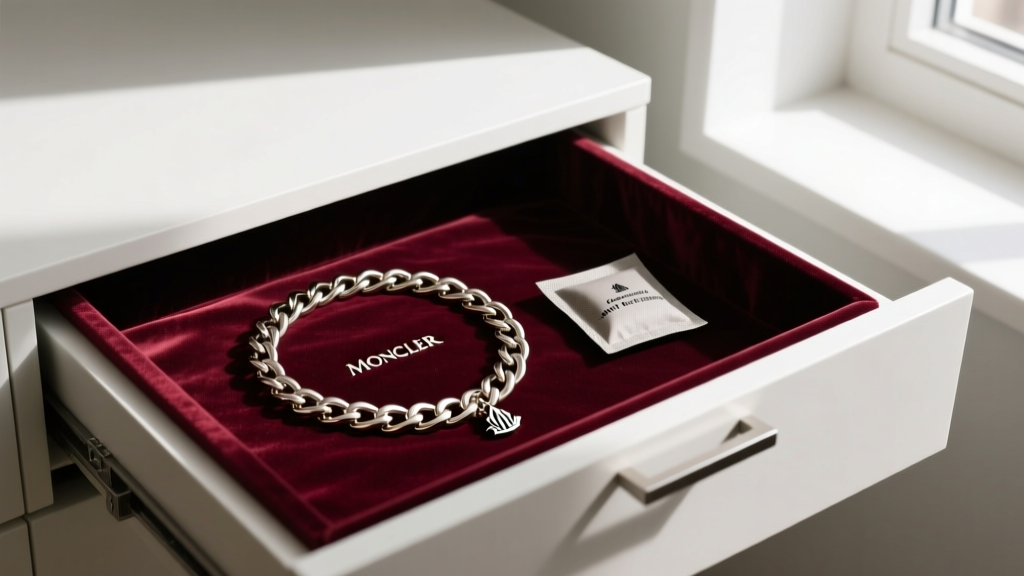
Store your necklace in its original Moncler presentation box or a dedicated, soft-lined jewelry drawer. To actively combat tarnish, place a 3M anti-tarnish strip or a small activated charcoal sachet inside the storage compartment. These materials absorb airborne sulfur and moisture. Always lay the heavy chain flat or hang it from a dedicated jewelry stand; coiling heavy chains tightly can create permanent kinks in the brass links and place undue stress on the solder joints connecting the pendant to the bail.
When to Seek Professional Restoration
Despite meticulous care, rhodium plating is a sacrificial layer. If your Moncler necklace is worn frequently, you may eventually notice a warm, yellowish hue emerging on the high-friction areas of the chain or the back of the pendant. This is not a defect; it is simply the brass base metal showing through the depleted rhodium layer.
At this stage, do not attempt to polish the piece, as polishing will only remove more metal. Instead, take the necklace to a certified bench jeweler who specializes in luxury fashion accessories. They can gently strip the remaining plating, polish the brass base, and re-plate the piece with a fresh layer of rhodium, restoring it to its original 2026 showroom brilliance. For chipped or cracked cold enamel, however, restoration is significantly more complex and often requires sending the piece back to Moncler’s specialized artisan workshops for a factory-level resin color match.


