Open Tomb Necklace Troubleshooting: Fix Hinges & Glass
Learn how to troubleshoot and repair an open tomb necklace. Expert fixes for stuck hinges, broken latches, cracked glass, and heavy chain support.

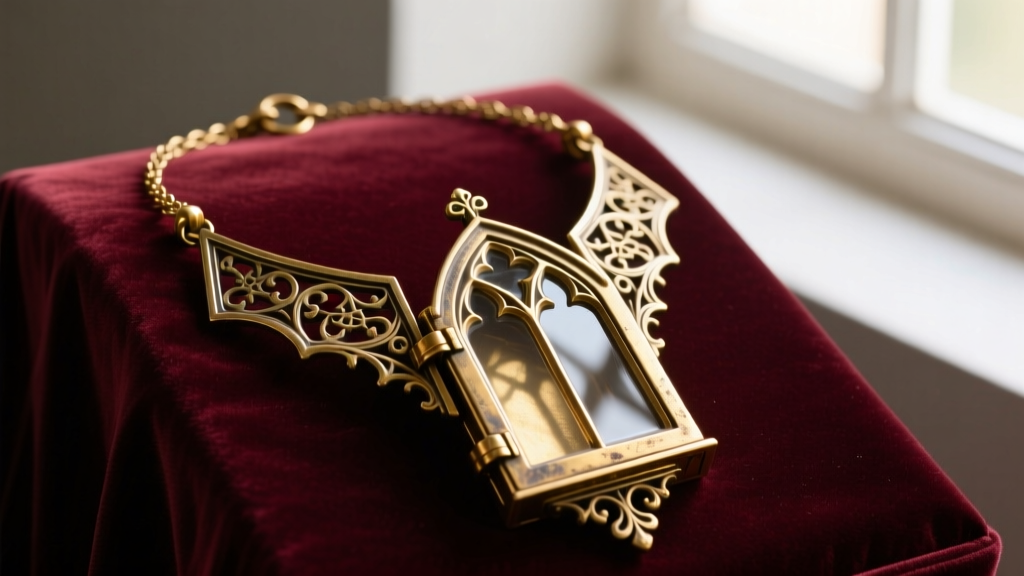
The open tomb necklace—a striking, reliquary-style pendant characterized by its deep interior cavity, hinged lid, and often a glass viewing window—represents some of the most intricate engineering in sentimental and gothic jewelry. Whether it holds a lock of hair, cremation ashes, or a miniature portrait, these heavy, complex pieces are prone to specific mechanical failures. Because an open tomb necklace acts as a kinetic pendulum against the chest, the stress on its hinges, latches, and bail is significantly higher than that of a standard flat pendant.
If your vintage or modern open tomb necklace is sticking, failing to close, or suffering from a cracked crystal, do not force it. Forcing a seized hinge can strip the barrel or snap the pin. This comprehensive troubleshooting guide will walk you through professional-level diagnostics and repairs, ensuring your keepsake remains secure and functional for decades to come.
Understanding the Anatomy of an Open Tomb Pendant
Before attempting any repair, you must understand the mechanical anatomy of the piece. A standard open tomb pendant consists of five critical stress points:
- The Bail: The loop connecting the pendant to the chain. On tomb necklaces, this is often cast directly into the lid or soldered to the top hinge barrel.
- The Hinge Barrel: A hollow metal tube housing a straight pin that allows the lid to pivot.
- The Latch Catch: A tiny metal lip or friction groove on the base that secures the lid when closed.
- The Bezel: The metal rim holding the glass or crystal insert in place over the cavity.
- The Cavity: The interior chamber, often lined with fabric, enamel, or bare metal.
Most mechanical failures occur at the hinge barrel or the latch catch due to the sheer weight of the pendant, which typically ranges from 15 to 45 grams. According to metallurgical guidelines from the Gemological Institute of America (GIA), the repeated kinetic swinging of a heavy pendant causes microscopic metal fatigue at the solder joints connecting the bail and hinge to the main body.
Troubleshooting Stuck or Loose Hinges
A hinge that refuses to open or feels dangerously loose is the most common complaint with open tomb necklaces. The root cause is usually either friction galling or pin deformation.
The Micro-Lubrication Technique
If the hinge is stiff, never use standard household lubricants like WD-40. These contain solvents that can degrade interior adhesives and leave a gummy residue that attracts dust. Instead, use a synthetic watch oil, such as Moebius 9010. Using a 0.2mm micro-oiler needle, apply a microscopic drop directly to the seam of the hinge barrel. Capillary action will draw the oil inside. Open and close the lid gently ten times to distribute the lubricant. If the hinge is made of 925 sterling silver, it is highly susceptible to galling (friction welding) because silver is a soft, sticky metal. Synthetic oil creates a necessary boundary layer.
Pin Realignment and Replacement
If the lid wobbles laterally, the hinge pin is bent or worn. To fix this, you must push the pin out. Use a 0.5mm brass push pin and a rawhide mallet to tap it out from the bottom of the barrel. Brass is softer than the steel or silver pin and will not mar the finish. Once removed, inspect the pin under a loupe. If it is bent, roll it on a flat steel bench block and tap it perfectly straight. If the pin is grooved or worn down by more than 0.1mm, it must be replaced with a new piece of hard-drawn steel wire, cut to length and filed flush with the barrel edges.
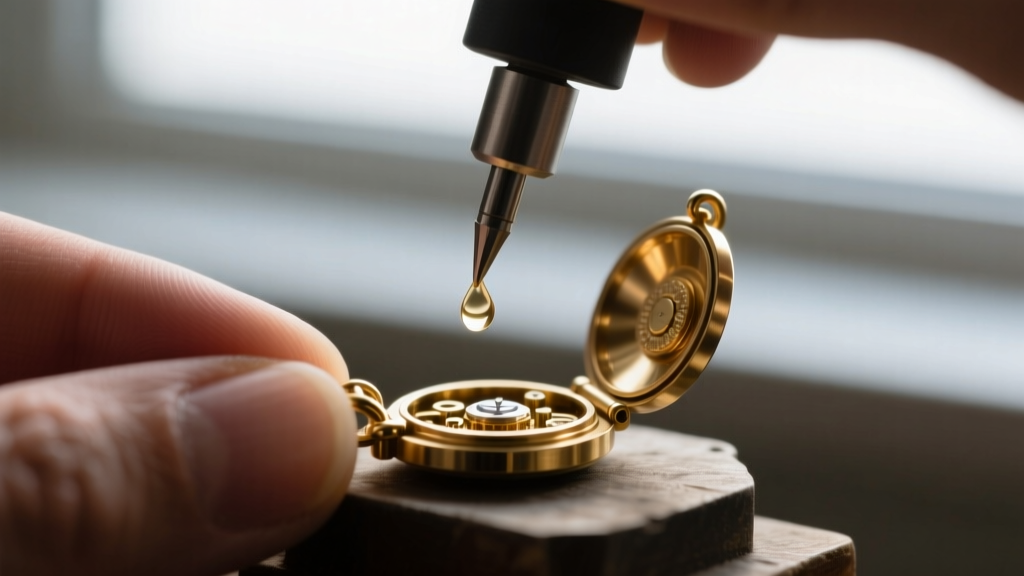
Fixing the Latch: Why Your Tomb Necklace Won't Stay Closed
An open tomb necklace that pops open unexpectedly is a disaster waiting to happen, especially if it contains ashes or irreplaceable mementos. The latch mechanism is usually a simple friction fit—a small metal tab on the lid that snaps into a groove on the base.
Over time, the friction tab wears down or bends inward, losing its tension. To restore the catch, you need a steel burnisher or a pair of fine-tipped tweezers. Gently pry the friction tab outward by exactly 0.2mm to 0.3mm. Test the closure. If it snaps shut with a satisfying click and requires deliberate fingernail pressure to open, the tension is correct. Be careful not to over-bend the tab, as repeated flexing will cause metal fatigue and snap the tab off entirely.
| Latch Type | Common Failure Mode | Professional Fix Method |
|---|---|---|
| Friction Tab | Tab bends inward, loses tension | Gently lever outward with tweezers by 0.2mm |
| Slide Lock | Track debris prevents full engagement | Clean track with isopropyl alcohol and a wooden toothpick |
| Magnetic Catch | Neodymium magnet loses pull or falls out | Re-seat magnet using two-part jeweler's epoxy |
| Screw-Thread | Cross-threading or stripped lid threads | Re-tap threads with a micro-jeweler's tap and die set |
Replacing Cracked Reliquary Glass
The glass window on an open tomb necklace protects the interior from moisture and physical damage. When it cracks, the entire structural integrity of the bezel is compromised. Original vintage glass is often mineral glass, which is highly brittle and prone to shattering from minor impacts.
Sizing and Material Alternatives
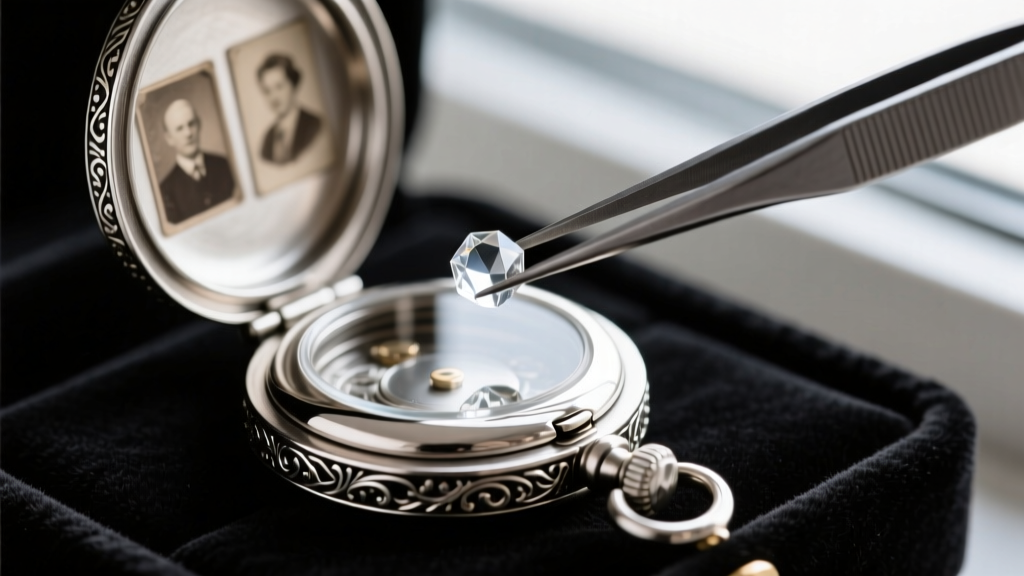
Do not attempt to glue cracked glass back together; the capillary action of the adhesive will ruin the mementos inside. Instead, carefully remove the broken pieces using a wooden orange stick to avoid scratching the metal bezel. Measure the interior diameter of the bezel with digital calipers. For a replacement, order a custom-cut 1.2mm sapphire crystal or a high-grade UV-resistant optical resin from a watchmaking supplier like Rio Grande. Sapphire is virtually scratch-proof and will not shatter under normal wear.
To secure the new crystal, apply a micro-bead of GS Hypo Cement to the interior ledge of the bezel. This adhesive is favored by jewelers because it remains slightly flexible, absorbing shock, and can be cleaned up with isopropyl alcohol before it cures. Allow 24 hours for a full cure before handling the necklace.
Chain Support: Preventing Bail and Link Failure
One of the most overlooked aspects of open tomb necklace troubleshooting is the chain. A heavy 30-gram tomb pendant generates significant kinetic force. If paired with a delicate 1.0mm chain, the constant pulling will eventually elongate the bail, snap the top link, or cause the chain to break at the clasp.
To properly support an open tomb necklace, you must upgrade to a chain that can handle dynamic loads. Follow these strict gauge requirements based on the pendant's weight:
- 15g - 25g Pendants: Require a minimum 2.0mm solid cable or curb chain. Ensure the links are soldered shut.
- 25g - 40g Pendants: Require a 2.5mm to 3.0mm solid wheat chain or a heavy figaro chain. Wheat chains distribute weight evenly across four interlocking links per segment, preventing localized stress.
- 40g+ Pendants: Require a 3.5mm+ solid rope or box chain with a heavy-duty lobster clasp featuring a reinforced internal spring.
Additionally, inspect the interior diameter of the pendant's bail. It must be at least 4mm x 6mm to allow the heavier chain to move freely. If the chain binds inside the bail, the friction will wear through the metal over time, causing the pendant to detach and fall.
Preventing Interior Tarnish and Keepsake Degradation
The interior cavity of an open tomb necklace is a micro-environment. If the piece is made of sterling silver or brass, sulfur compounds and ambient moisture will cause rapid tarnishing, which can stain or degrade the organic materials stored inside, such as hair, fabric, or paper.
To solve this, the interior must be sealed and protected. First, clean the bare metal cavity with a mild silver polish, then wipe it completely clean with naphtha to remove any chemical residue. Next, apply a micro-thin coat of Renaissance Wax to the interior walls using a cotton swab. This museum-grade microcrystalline wax creates an impermeable barrier against moisture and sulfur without off-gassing harmful chemicals.
If the necklace holds hair or fabric, line the bottom of the cavity with a small piece of acid-free, archival-quality tissue paper. Never use standard cotton balls or synthetic poly-fill, as these trap moisture and can harbor microscopic pests. By combining a proper mechanical repair with archival interior preservation, your open tomb necklace will remain a secure, beautiful, and functional heirloom for generations.


