Where to Rent Diamond Necklace Styles: 2026 Guide
Learn how to rent diamond necklace pieces for 2026 galas. Compare costs, decode 4Cs for rentals, and master insurance and inspection checklists.


The Economics of Renting vs. Buying High-Carat Diamonds
The luxury jewelry market has shifted dramatically toward the circular economy. For high-stakes events, red carpets, or black-tie weddings, purchasing a high-carat diamond necklace is often an unjustifiable capital expenditure. In 2026, the rental market for fine jewelry has matured, offering access to museum-quality pieces at a fraction of their retail valuation. But how does the math actually break down when you decide to rent diamond necklace designs for a weekend?
When you rent, you are paying for the depreciation, insurance, and logistical handling of the piece over a 3-to-5-day period. Below is a comparative breakdown of retail versus rental pricing for standard diamond tennis necklaces in the current market.
| Total Carat Weight (TCW) | Retail Purchase Price (VS/G) | Weekend Rental Fee (2026) | Security Deposit Required |
|---|---|---|---|
| 5.00 - 7.00 CT | $12,000 - $18,000 | $350 - $550 | $2,500 |
| 10.00 - 14.00 CT | $25,000 - $45,000 | $700 - $1,200 | $5,000 |
| 20.00+ CT (Rivière) | $80,000 - $150,000+ | $2,500 - $4,500 | $15,000+ |
As the data illustrates, renting a 10-carat piece yields an immediate savings of over $24,000, freeing up capital while still delivering the exact visual impact required for high-society events.
Decoding the 4Cs Specifically for Rental Inventory
When you buy a diamond, you are paying for rarity. When you rent, you are paying for visual performance. This distinction fundamentally changes how you should evaluate the 4Cs (Cut, Color, Clarity, Carat) when browsing a lender's inventory.
Prioritize Cut and Proportions Over Clarity
In a dimly lit ballroom or across a banquet table, no one can see the difference between a VVS1 (Very Very Slightly Included) and an SI1 (Slightly Included) diamond. However, they will immediately notice a poor cut. Insist on renting necklaces featuring diamonds with GIA "Excellent" or "Very Good" cut grades. According to the Gemological Institute of America (GIA), cut quality is the primary driver of a diamond's brilliance and fire. An SI1 diamond with an ideal cut will out-sparkle a VVS2 diamond with a shallow, poorly proportioned cut every single time.
The Fluorescence Trap in Event Lighting
One critical detail often overlooked in rental agreements is diamond fluorescence. Many modern event venues and nightclubs utilize high-intensity UV or blacklight accents. If you rent a diamond necklace with "Strong" or "Very Strong" blue fluorescence, the stones may appear milky, hazy, or oily under these specific lighting conditions. Always request the GIA dossier for the piece and filter your rental search to "None" or "Faint" fluorescence to guarantee uncompromised brilliance.

Vetting the Lender: Insurance, Appraisals, and Contracts
The most significant risk when you rent diamond necklace pieces is not the quality of the stones, but the opacity of the rental contract. High-end jewelry rentals involve complex liability clauses. Standard homeowners or renters insurance policies typically include a "Jewelry Replacement Limit" (JRL) that caps theft or loss coverage at $1,500 to $2,500 unless a specific scheduled rider is applied. The Insurance Information Institute (III) strongly advises consumers to verify sub-limits on high-value portable articles before assuming personal liability.
Expert Warning: Never sign a rental agreement that holds you liable for the "Full Retail Replacement Value" in the event of an unexplained loss. Ensure the contract specifies liability based on the "Actual Cash Value" or the lender's "Wholesale Liquidation Value," and verify that the lender carries a commercial inland marine policy that covers items while in the borrower's possession.
Understanding Damage Waivers
Reputable lenders will offer a Damage Waiver (usually 10% to 15% of the rental fee) that covers accidental damage, such as a bent prong or a snapped chain link. However, this waiver almost never covers "unexplained disappearance" or theft. If you are traveling with the necklace, you must keep it in a hotel safe when not actively wearing it, as leaving it unattended in a suite will void any insurance claim.
Matching the Necklace Silhouette to the Neckline
Selecting the right silhouette is just as critical as selecting the carat weight. The interplay between the diamond necklace and your garment's neckline dictates the overall aesthetic.
- The Rivière (Graduated Tennis Necklace): Best paired with deep V-necks or sweetheart necklines. The graduated stones (larger in the center, tapering to the clasp) follow the natural curve of the décolletage, drawing the eye downward. Ideal length: 16 inches.
- The Diamond Choker: Requires a high-neck, halter, or off-the-shoulder gown. A 14-inch choker sitting flush against the collarbone creates a stark, modern contrast against bare shoulders. Avoid pairing chokers with detailed lace bodices, as the visual competition diminishes the impact of both.
- The Lariat or Y-Necklace: Perfect for plunging necklines or backless gowns worn in reverse. A diamond lariat creates a vertical line that elongates the torso, making it a highly strategic choice for editorial photography and red-carpet appearances.
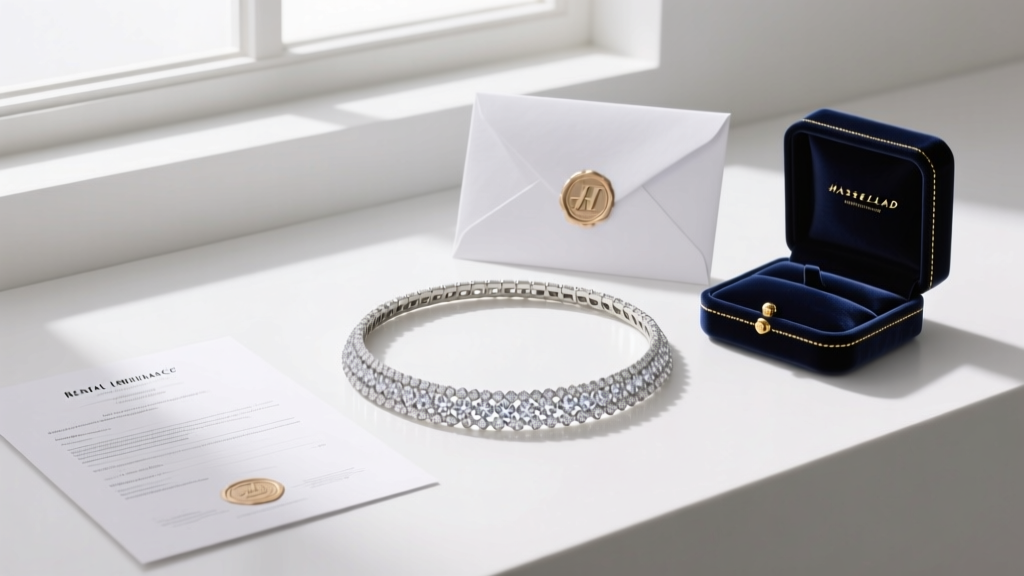
Step-by-Step Inspection Checklist Upon Delivery
When your rented jewelry arrives via secured courier, you have a narrow window (usually 24 hours) to inspect the piece and report pre-existing damage. Failure to document micro-abrasions or structural weaknesses can result in you being held liable for repairs. Perform this exact inspection protocol upon unboxing:
- The Floss Test for Prongs: Take a piece of unwaxed dental floss and gently drag it across the diamond settings. If the floss snags or catches, a prong is lifted or broken. Report this immediately; a lifted prong can lead to a lost stone during your event.
- Clasp and Safety Catch Integrity: Examine the box clasp or lobster clasp. The spring mechanism must snap back with a sharp, audible click. Furthermore, verify the presence of a secondary safety catch (a small figure-eight wire that snaps over the clasp). Never wear a high-carat tennis necklace without an engaged safety catch.
- Ultrasonic Cleaning Warnings: Do not attempt to clean the rented necklace in an at-home ultrasonic cleaner. If the piece features fracture-filled diamonds, or if it incorporates mixed gemstones like emeralds or opals alongside diamonds, ultrasonic vibrations can shatter the stones or strip the fracture-fill resin, leaving you liable for catastrophic damage.
- Link Flexibility Check: Drape the necklace over your knuckles. It should move like liquid fabric. If any section feels rigid or kinked, the internal wire or soldered links are compromised and may snap under the tension of movement.
By approaching the rental process with the analytical rigor of a gemologist and the caution of an insurance underwriter, you can securely access the world's most breathtaking diamond necklaces without the burden of permanent ownership.


