Topaz Tennis Necklace Care: Ultimate Cleaning Guide
Discover expert care, cleaning, and maintenance tips for your topaz tennis necklace. Learn how to protect its brilliance and prevent prong damage.

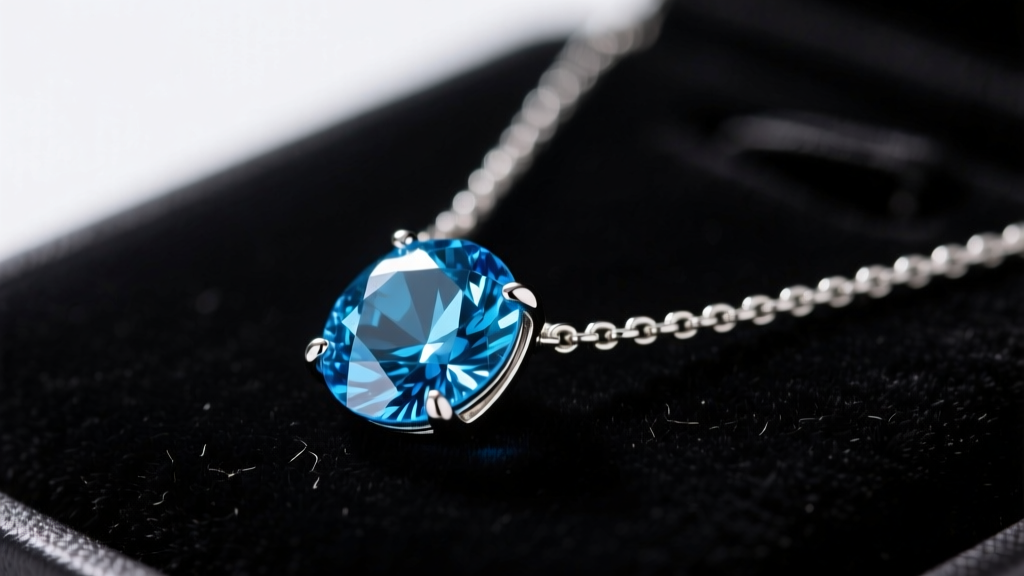
The Science of Topaz: Hardness vs. Cleavage
When caring for a topaz tennis necklace, the first step is understanding the gemological profile of the stone itself. Topaz registers an 8 on the Mohs scale of mineral hardness, making it highly resistant to everyday scratches from dust and environmental debris. However, hardness is only one part of the durability equation. Topaz possesses perfect basal cleavage, meaning its atomic structure has a distinct plane of weakness. A sharp, hard knock against a granite countertop or a metal clasp can cause the stone to split or chip cleanly along this plane.
This structural reality dictates how you must handle, clean, and store your tennis necklace. Unlike diamonds or sapphires, which can withstand more aggressive mechanical cleaning, topaz requires a gentle, calculated approach to preserve its structural integrity and optical brilliance over decades of wear.
The Safe Cleaning Protocol for Topaz Tennis Necklaces
A tennis necklace accumulates skin oils, cosmetics, and environmental dust rapidly because it sits flush against the decolletage. To restore its light performance without risking cleavage fractures, follow this master jeweler-approved cleaning routine.
What You Will Need
- Distilled or filtered lukewarm water (avoid hard tap water, which leaves mineral deposits)
- Mild, phosphate-free dish soap (such as original Dawn)
- An ultra-soft baby toothbrush or a dedicated cosmetic blending brush
- A lint-free microfiber or untreated cotton jeweler's cloth
Step-by-Step Cleaning Process
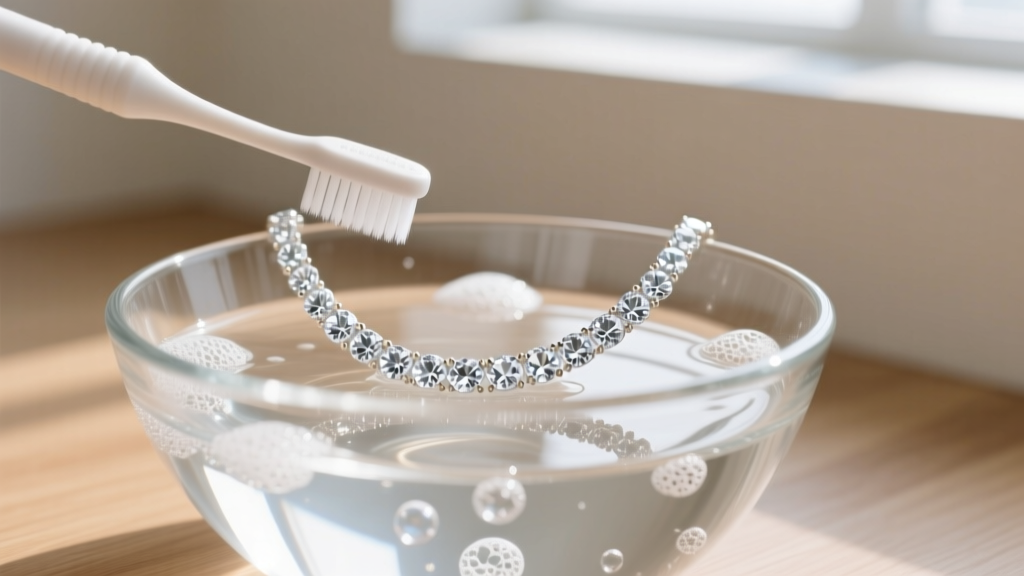
- Prepare the Solution: Mix one drop of mild dish soap into a glass bowl containing one cup of lukewarm distilled water. Never use hot water, as thermal shock can stress the metal settings.
- The Soak: Submerge your topaz tennis necklace for exactly 5 to 10 minutes. This loosens trapped sebum and cosmetic residue around the pavilion (the bottom of the stone) and the prong heads.
- Gentle Agitation: Using the baby toothbrush, lightly sweep across the table (top) of the stones and gently massage the metal links. Do not apply downward pressure. Let the bristles do the work.
- The Rinse: Rinse the necklace under a gentle stream of lukewarm distilled water. Ensure the drain is securely plugged or use a mesh strainer to prevent catastrophic loss if a stone is loose.
- Drying: Pat dry with a microfiber cloth. Avoid paper towels, as their wood-pulp fibers can inflict micro-scratches on precious metal settings over time.
Expert Warning: Never place a topaz tennis necklace in an ultrasonic cleaner. The high-frequency acoustic vibrations can exploit microscopic internal flaws or cleavage planes, causing the stones to fracture. Similarly, avoid steam cleaners, as the sudden blast of high-pressure heat can compromise the structural integrity of treated topaz and loosen tension in the prongs.
Metal Maintenance: Silver, Gold, and Platinum Settings
A standard 17-inch tennis necklace contains between 45 and 65 individual stones, meaning there is a significant amount of metal wire, links, and prongs that require maintenance. The metal alloy you choose drastically alters your care routine.
| Metal Type | Maintenance Vulnerability | Recommended Care Frequency | Special Considerations |
|---|---|---|---|
| Sterling Silver (925) | High tarnish rate due to copper alloy | Weekly wipe-down, monthly wash | Store with anti-tarnish silica strips; use a silver polishing cloth only on metal, avoiding the topaz. |
| 14K / 18K White Gold | Rhodium plating wears off, revealing yellowish core | Re-plate every 12-24 months | Harsh chemicals strip rhodium. Avoid chlorine pools and household bleach entirely. |
| 14K / 18K Yellow Gold | Accumulates soap scum and lotion buildup | Bi-weekly wash | Higher karat (18K+) is softer and more prone to link stretching; handle by the clasp, not the chain. |
| Platinum (950) | Develops a natural 'patina' (satiny scuffing) | Annual professional polish | Extremely secure for prongs; does not tarnish, but requires professional buffing to restore high shine. |
For authoritative guidelines on maintaining precious metals alongside gemstones, refer to the Gemological Institute of America (GIA) Gem Care resources, which emphasize the importance of matching your cleaning agents to the specific metal alloy of your setting.
The 6-Month Prong Audit: Preventing Stone Loss
The most critical vulnerability of any tennis necklace is the prong setting. With upwards of 200 individual prongs securing your topaz stones, the statistical probability of one snagging, lifting, or wearing down is high. A single lifted prong can result in the loss of a gemstone within hours.
The Silk Snag Test
Every three months, perform the 'silk test' at home. Take a piece of fine silk fabric or a thin, tightly woven cotton handkerchief and gently run it over the face of the topaz stones. If the fabric catches or snags on any part of the necklace, you have a lifted or burr-edged prong. Stop wearing the necklace immediately and take it to a bench jeweler for retipping.
Professional Servicing Expectations
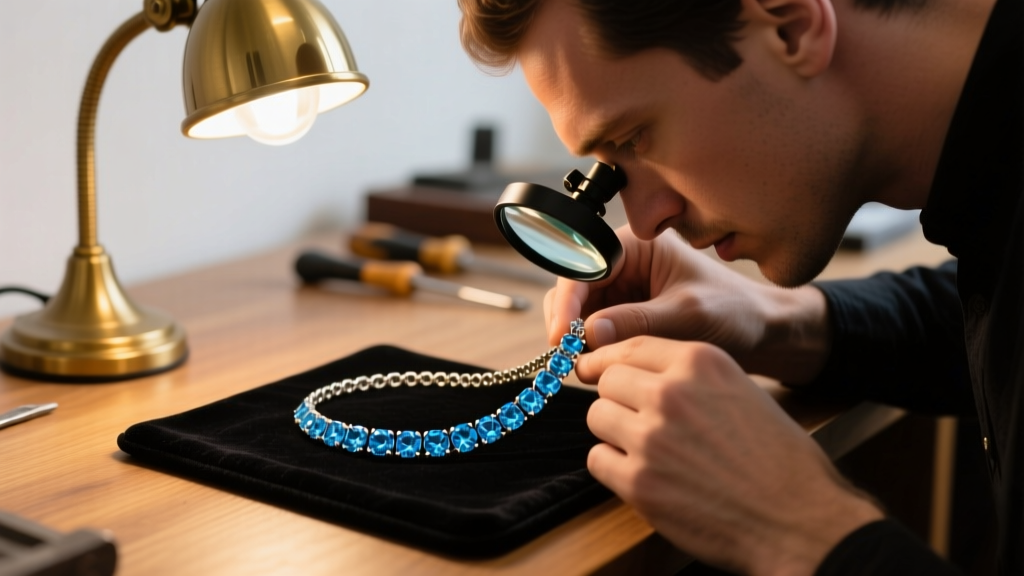
Take your topaz tennis necklace to a certified jeweler every 12 months for a microscopic inspection. They will use a 10x triplet loupe to check for prong wear, gallery wire fatigue, and clasp spring tension. Expect to pay between $50 and $150 for professional tightening and ultrasonic metal cleaning (the jeweler will remove the topaz stones or use localized, safe methods if necessary). For more on finding a qualified professional, consult the GIA Topaz and Jewelry Professional directories.
Proper Storage to Prevent Scratches and Tangles
How you store your topaz tennis necklace when it is not around your neck is just as important as how you clean it. Because topaz is an 8 on the Mohs scale, it will easily scratch softer gems like pearls, opals, and quartz. Conversely, it will be scratched by diamond or sapphire jewelry stored in the same drawer.
- Use Individual Pouches: Always store the necklace in its own soft, untreated flannel pouch or a dedicated velvet-lined compartment in a jewelry box.
- Prevent Tangling: Tennis necklaces are notorious for knotting. Fasten the lobster or spring-ring clasp before storing. For added security, thread the chain through a plastic drinking straw (cut to length) to keep the links rigid and tangle-free during travel.
- Climate Control: Avoid storing the necklace in high-humidity environments like bathroom vanity drawers. Moisture accelerates the oxidation of silver and copper alloys, leading to stubborn tarnish that requires abrasive polishing to remove.
By adhering to this meticulous care regimen, your topaz tennis necklace will maintain its continuous line of brilliance, ensuring the metal remains secure and the gemstones remain flawless for generations.


