How to Style and Wear a 36 Inch Necklace: A Beginner Guide
Discover how to style, layer, and choose the perfect 36 inch necklace. Our beginner-friendly guide covers lengths, materials, and neckline pairing.


Entering the world of long-form jewelry can feel intimidating, especially when you move past standard collarbone lengths and venture into dramatic, sweeping territory. The 36 inch necklace is a cornerstone of versatile jewelry design, offering a blank canvas for layering, knotting, and pendant styling. Often classified within the 'rope' or extended 'opera' categories by the Jewelers of America, this specific length provides a unique silhouette that bridges the gap between traditional necklaces and body-grazing lariats.
For beginners, understanding how this length interacts with your body type, wardrobe, and the physical stress of daily wear is crucial. This guide will break down the exact anatomy of a 36-inch chain, the material grades you should look for, and actionable styling techniques that elevate your everyday look without requiring a professional stylist.
The Anatomy and Fit of a 36 Inch Chain
Before you can style a long chain, you need to understand where it actually sits. A standard 18-inch chain rests on the collarbone, and a 24-inch chain falls to the center of the chest. A 36 inch necklace, however, drops significantly lower, typically resting on the sternum or the upper midriff.
Because human proportions vary, the exact resting point depends on your height and torso length. For individuals under 5'3", a 36-inch chain may fall near the navel, functioning almost like a lariat or belly chain. For those over 5'8", it will rest higher on the solar plexus. This dramatic drop creates a deep 'V' shape that naturally draws the eye downward, making it an incredible tool for elongating the neck and torso. According to gemological and jewelry design standards outlined by the Gemological Institute of America (GIA), understanding body proportion is just as critical as understanding metal carat weight when selecting statement pieces.
Material Grades and Gauge Thickness
The most common mistake beginners make with extra-long chains is choosing a gauge (thickness) that is too delicate. A 36-inch chain has a massive surface area and carries significant kinetic weight. If you choose a 0.8mm cable chain, it will inevitably tangle, kink, and eventually snap under its own pendulum motion.
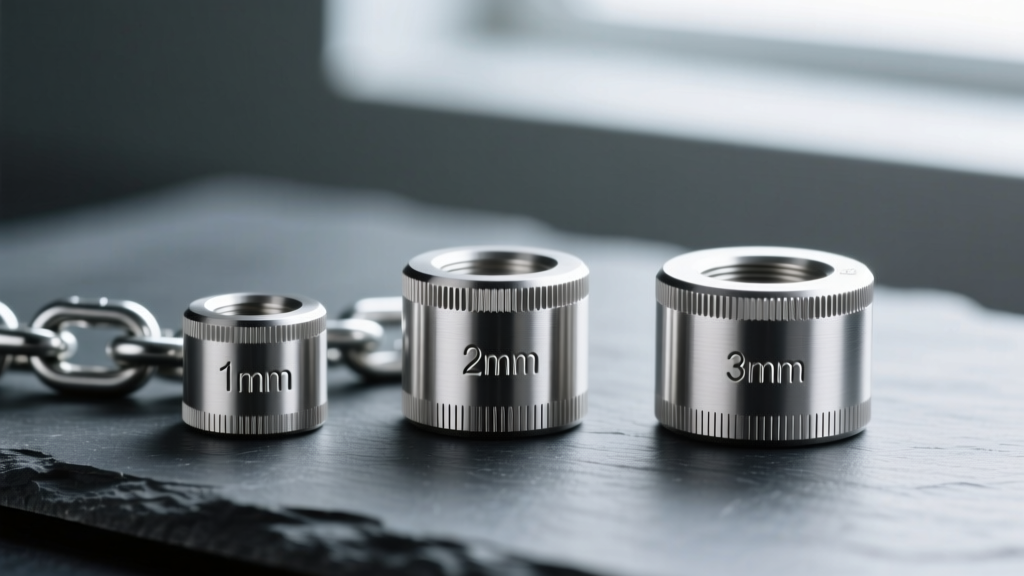
When shopping, you must evaluate both the metal composition and the wire gauge. Here is a breakdown of what to look for to ensure your necklace survives daily wear:
| Chain Gauge | Best Chain Styles | Durability & Use Case |
|---|---|---|
| 1.0mm - 1.2mm | Cable, Bead, Delicate Box | Lightweight pendants only. High risk of tangling. Best for occasional wear. |
| 1.5mm - 2.0mm | Figaro, Rope, Curb, Box | Ideal daily wear range. Supports medium pendants (5-15g) and resists kinking. |
| 2.5mm - 4.0mm | Cuban Link, Mariner, Thick Rope | Heavy-duty statement pieces. Worn alone without pendants. Highly tangle-resistant. |
Choosing the Right Metal
- 316L Surgical Stainless Steel: The ultimate beginner metal. It is hypoallergenic, will not tarnish, and possesses high tensile strength, making it perfect for long, swinging chains.
- 14k Gold-Filled (1/20 14k GF): Unlike microscopic gold plating, gold-filled chains contain a thick outer layer of solid 14k gold mechanically bonded to a brass core. It offers the look of solid gold at a fraction of the price and will not flake off with friction.
- Sterling Silver (925): Beautiful but requires maintenance. Because a 36-inch chain rests against your clothing and stomach, the friction and body oils can accelerate tarnishing. Keep a polishing cloth handy.
4 Beginner-Friendly Styling Techniques
You do not need to simply let a 36 inch necklace hang straight down. Manipulating the chain changes its visual weight and allows it to pair with entirely different outfits.
1. The Asymmetrical Overhand Knot
Gather the chain about a third of the way down from the clasp and tie a loose, simple overhand knot. Let the knot rest off-center on your collarbone while the remaining length drops down your torso. This breaks up the long, unbroken line of metal and creates an avant-garde, layered look using just a single piece of jewelry.
2. The Double-Loop Layer
Because 36 inches is quite long, you can easily double it. However, simply folding it in half creates a bulky 18-inch loop that hangs awkwardly. Instead, loop it once so that one strand sits at 24 inches and the other at 12 inches (choker length). Secure the two strands together at the back of your neck using a small silicone jewelry cinch or a specialized layering clasp to prevent them from sliding and choking you.
3. The Lariat Illusion
If your 36-inch chain features a pendant or a decorative clasp, unfasten it and let the clasp hang down the front of your chest, holding the two ends of the chain in your hands or tucking them into a belt. This mimics the highly sought-after Y-necklace or lariat silhouette without requiring you to buy a specialized piece.
4. The Belt Cinch
For high-fashion or editorial styling, wrap the 36-inch chain around your waist over a tailored blazer or a high-waisted trouser, using it as a delicate chain belt. This works exceptionally well with thicker 3.0mm Cuban link or Figaro chains.
Neckline Pairings: Framing the Chain
The success of a long chain relies heavily on the canvas beneath it. Because the chain creates a deep vertical line, you want necklines that either complement or contrast that geometry.
Expert Rule of Thumb: Never wear a 36-inch necklace with a busy, heavily patterned top or a neckline with excessive ruffles. The chain will get lost visually and physically catch on the fabric details.
- The Turtleneck: The undisputed champion of long-chain styling. A solid black, cream, or navy turtleneck provides a high-contrast, uninterrupted background that makes metallic chains pop.
- The Deep V-Neck: Wearing a 36-inch chain over a V-neck sweater creates parallel vertical lines that dramatically elongate the torso. Ensure the tip of the pendant or the bottom of the chain loop sits at least two inches below the apex of the V-neck fabric.
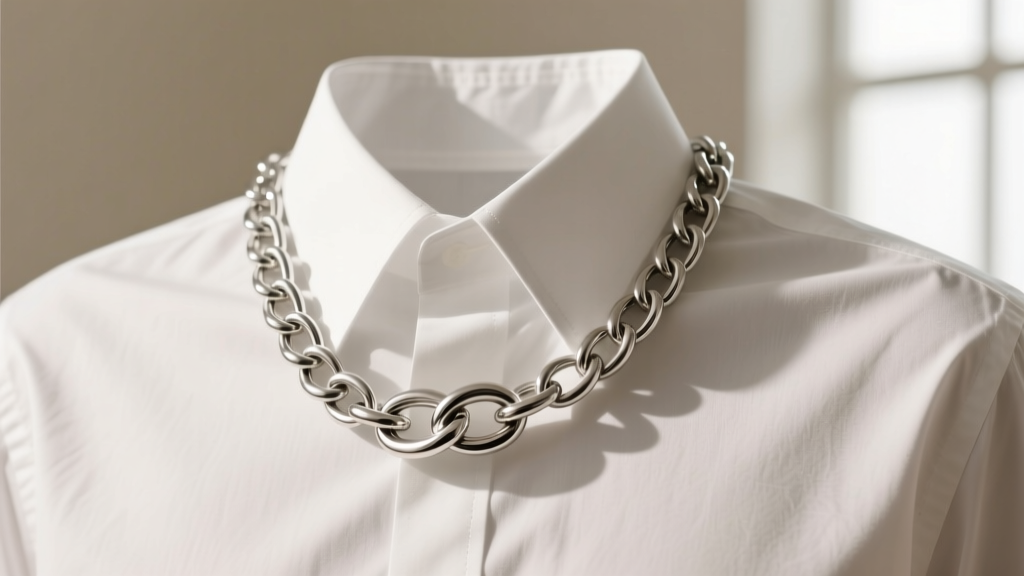
- The Unbuttoned Oxford: Leave the top three buttons of a crisp white or striped button-down shirt undone. The collar frames the upper chest, while the 36-inch chain drops into the exposed skin, creating a relaxed, effortless weekend aesthetic.
The Physics of Long Chains: Avoiding Breakage
Long chains are subject to unique physical stresses that shorter necklaces avoid. When you bend over, a 36-inch chain acts as a pendulum. If you have attached a heavy pendant (over 15 grams) to the front, the kinetic energy generated when you stand back up transfers directly to the jump ring at the back of your neck.
This 'whip effect' is the number one cause of chain breakage in opera and rope lengths. To prevent catastrophic failure and the loss of your jewelry:
- Upgrade the Jump Ring: Ensure the ring connecting the clasp to the chain is soldered shut, or at the very least, made of 16-gauge or thicker wire.
- Use a Silicone Pendant Bail: If you are sliding pendants onto the chain, use a silicone-lined bail to reduce metal-on-metal friction, which can wear down the links over time.
- Remove Before High-Activity: Take off your 36 inch necklace before doing laundry, cooking over a stove, or exercising. The swinging chain can easily catch on cabinet handles, pot lids, or gym equipment.
Final Thoughts on Building Your Collection
Mastering the 36 inch necklace is about understanding proportion, weight, and styling versatility. By starting with a durable 1.5mm to 2.0mm gauge in a resilient metal like 316L stainless steel or 14k gold-filled, you set yourself up for success. Experiment with knotting, layering, and pairing with minimalist, high-contrast clothing to unlock the full potential of this dramatic jewelry staple. As your confidence grows, you can begin collecting varied chain textures—from sleek box chains to intricate rope weaves—building a long-chain wardrobe that adapts to any occasion.


