1950s Pearl Necklace Buying Guide: Authenticity & Value
Discover how to authenticate, value, and buy a vintage 1950s pearl necklace. Learn clasp identification, nacre grading, and 2026 market pricing.

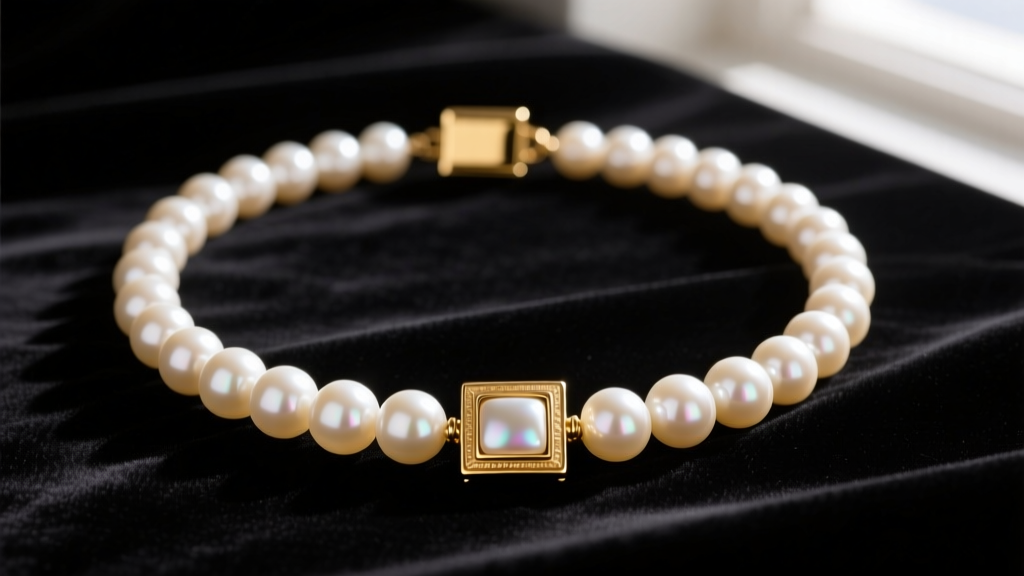
The Allure of the 1950s Pearl Necklace
The 1950s represented a golden era of post-war elegance, and no accessory defined this sophisticated aesthetic quite like the classic pearl strand. Championed by style icons such as Grace Kelly and Audrey Hepburn, the 1950s pearl necklace remains one of the most sought-after vintage jewelry pieces on the market today. However, navigating the vintage jewelry market in 2026 requires a discerning eye. Whether you are hunting for a high-end cultured Akoya strand or a meticulously crafted costume piece, understanding the specific hallmarks, materials, and construction techniques of the mid-century is essential for making a sound investment.
The 1950s Pearl Landscape: Cultured vs. Costume
During the 1950s, the pearl market was distinctly bifurcated into two primary categories: cultured saltwater pearls and high-end faux pearls. Understanding the difference is the first step in evaluating any vintage piece.
Cultured Akoya Pearls
The 1950s saw a massive surge in the importation of Japanese Akoya cultured pearls. Unlike modern commercial Akoyas, which are often harvested after just 8 to 10 months, vintage 1950s Akoyas were typically left in the water for two to three years. This extended cultivation period resulted in exceptionally thick nacre, giving vintage strands a deep, mirror-like luster that is incredibly difficult to replicate in today's mass-produced market. According to the Gemological Institute of America (GIA), nacre thickness is the single most critical factor in determining a pearl's longevity and optical brilliance.
High-End Costume and Faux Pearls
Not everyone could afford imported cultured pearls, leading to a boom in luxury costume jewelry. Brands like Trifari, Coro, and Miriam Haskell created stunning faux pearls using glass beads coated in essence d'orient—a iridescent substance derived from fish scales. Majorica pearls, originating from Spain, also gained massive popularity in the 50s for their convincing weight and luster. Today, pristine 1950s faux strands by top-tier makers are highly collectible in their own right.
Authentication Checklist: Spotting True Vintage
When evaluating a purported 1950s pearl necklace, the pearls themselves only tell half the story. The findings, stringing materials, and construction methods are your best indicators of true mid-century provenance.
1. The Clasp and Findings
Vintage clasps are heavily indicative of their era. In the 1950s, the most common clasps for cultured pearls were:
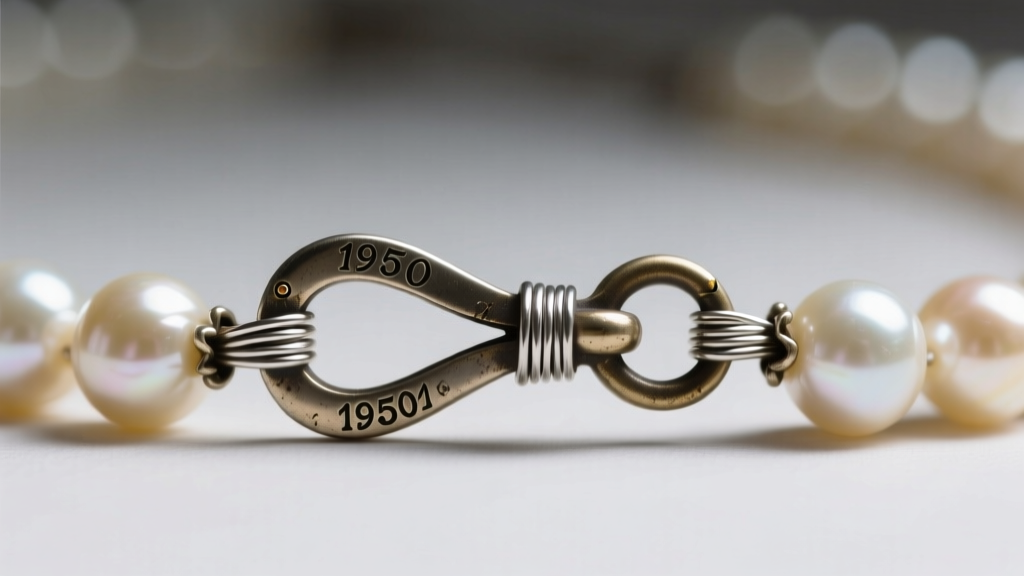
- 14k Gold Fishhook Clasps: A slender, hook-shaped mechanism that slides into a decorative barrel or box. These were favored for their security and delicate profile.
- Push-Pull Box Clasps: Often featuring a figure-8 safety wire or a secondary safety chain to prevent loss if the primary tongue disengaged.
- Hallmarks: Look for tiny stamps on the clasp tongue or side. "14K", "18K", or "Sterling" are standard. Costume pieces might feature maker marks like "TRIFARI" (often with a crown over the T) or "CORO".
2. French Wire and Silk Knotting
Authentic 1950s cultured pearl necklaces were strung on pure silk thread, with a hand-tied knot between every single pearl to prevent them from rubbing together and to minimize loss if the strand broke. Furthermore, examine the ends of the necklace where the silk meets the metal clasp. Vintage pieces utilize French wire (a delicate, coiled wire guard, usually in silver or gold) to protect the silk from fraying against the metal ring. Modern re-strings often use cheap, solid metal half-tubes instead of hand-wrapped wire.
3. The Drill Holes and the Tooth Test
Examine the drill holes under a jeweler's loupe. Cultured pearls will show a sharp, clean hole with a distinct boundary between the nacre and the inner bead nucleus. Faux pearls often exhibit peeling or flaking around the drill hole where the coating has chipped away. To differentiate glass faux pearls from cultured pearls, use the "tooth test." Gently rub the pearl against the biting edge of your front tooth. Cultured pearls will feel distinctly gritty or sandy due to their crystalline nacre structure, while glass or plastic faux pearls will feel perfectly smooth. For a deeper dive into historical stringing techniques, Lang Antiques University offers excellent visual guides on vintage findings.
1950s Pearl Necklace Value & Pricing Matrix (2026 Market)
The value of a vintage pearl necklace fluctuates based on provenance, pearl quality, and whether the strand is original or has been re-strung. Below is a general pricing guide for the current market.
| Category | Material & Characteristics | Typical Clasp | 2026 Est. Value Range |
|---|---|---|---|
| High-End Costume | Essence d'orient on glass, pristine coating, signed maker (e.g., Trifari, Haskell) | Sterling silver or base metal fold-over | $150 - $450 |
| Standard Cultured Akoya | 5.0mm - 6.0mm, good luster, minor blemishes, original silk and knots | 14k Gold fishhook or box clasp | $400 - $900 |
| Premium Cultured Akoya | 6.5mm - 8.0mm, thick nacre, mirror luster, clean surfaces, Mikimoto signed | 18k Gold box clasp with safety | $1,200 - $3,500+ |
| Majorica Faux | Heavy glass core, thick pearlescent coating, intact | Sterling or gold-plated barrel | $80 - $200 |
Collector's Note: A necklace that has been recently re-strung on modern synthetic thread, even if the pearls are original 1950s Akoyas, can lose up to 30% of its vintage collector value. Always ask sellers for documentation regarding the stringing history.
Sizing and Lengths of the Era
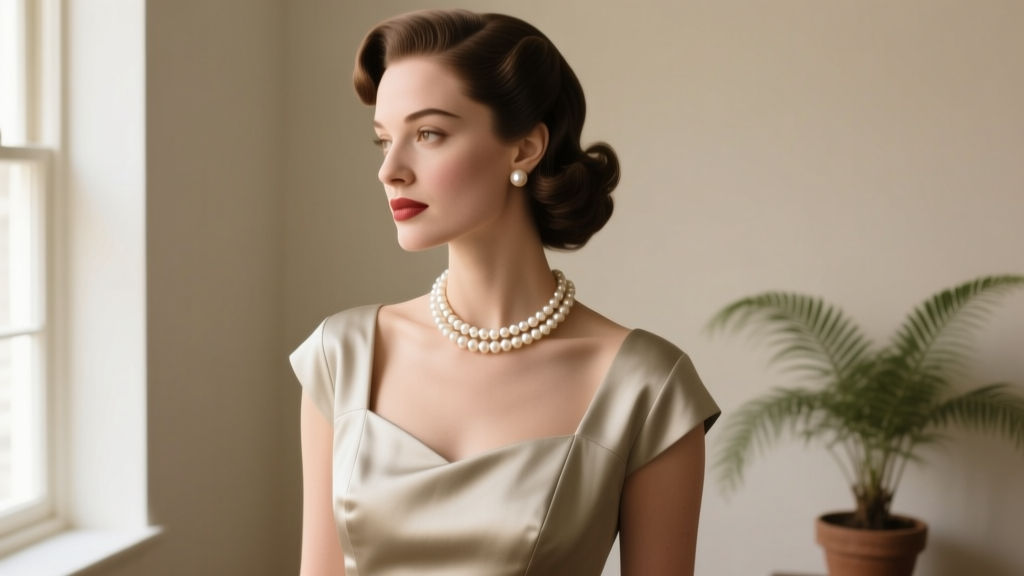
The 1950s favored specific lengths that complemented the popular necklines of the era, such as the bateau (boatneck) and sweetheart necklines. When shopping, keep these vintage measurements in mind:
- Choker (14 to 16 inches): The most iconic 1950s length. Designed to sit snugly at the base of the throat, this length was a staple for both daywear and evening gowns.
- Princess (17 to 19 inches): Falling just below the collarbone, this versatile length was frequently worn with V-neck blouses and tailored suits.
- Matinee (20 to 24 inches): Less common for single strands in the 50s, but occasionally seen in faux costume jewelry designed for business or semi-formal wear.
Caring for Your Vintage 1950s Pearls
Owning a mid-century pearl strand requires specialized care to preserve both the organic gems and the vintage stringing materials.
Maintaining the Silk Thread
Silk degrades over time, absorbing body oils, sweat, and environmental moisture. If you purchase an original, un-re-strung 1950s necklace, do not wear it immediately. Have a professional antique jeweler inspect the tensile strength of the silk. If the thread appears yellowed, brittle, or if the gaps between the knots and pearls are stretched, it must be re-strung using period-correct silk and French wire techniques.
Protecting the Nacre and Coatings
Never use ultrasonic cleaners, steam cleaners, or harsh chemical dips on any pearl necklace, cultured or faux. For cultured Akoyas, wipe them gently with a damp, lint-free microfiber cloth after every wear to remove acidic skin oils that can etch the nacre. For faux essence d'orient pearls, avoid all contact with perfumes, hairsprays, and alcohol-based cosmetics, as these solvents will dissolve the delicate fish-scale coating, causing irreversible peeling.
Final Thoughts on Sourcing
When hunting for the perfect 1950s pearl necklace, prioritize reputable estate jewelry dealers, specialized auction houses, and vetted vintage platforms over generic flea markets. Demand high-resolution macro photos of the clasp, the drill holes, and the French wire before purchasing. By focusing on the structural integrity, nacre quality, and period-correct findings, you can secure a breathtaking piece of mid-century history that will retain its elegance and value for decades to come.


