Troubleshooting Your Gold Peace Sign Necklace: Flips & Fixes
Is your gold peace sign necklace constantly flipping or tarnishing? Discover expert troubleshooting tips for chain weight, bail fixes, and daily care.

The Physics of the Peace Sign Pendant: Why It Fails
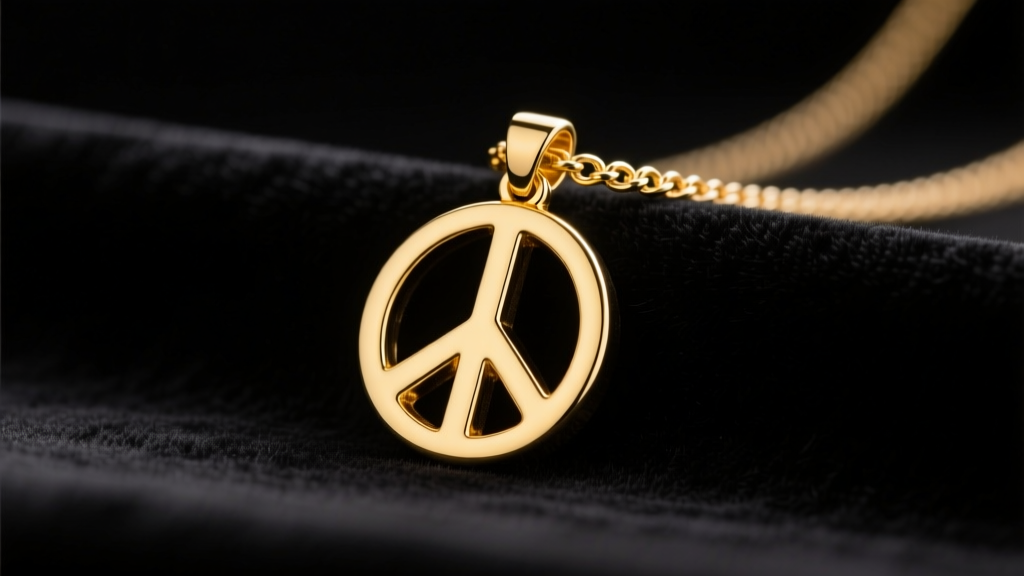
The gold peace sign necklace is an iconic staple in modern jewelry, blending vintage counter-culture aesthetics with contemporary minimalism. However, from a mechanical engineering standpoint, the peace sign is a notoriously difficult pendant to balance. Unlike a simple teardrop or a perfectly symmetrical geometric shape like a plain circle or square, the peace sign features an internal inverted 'Y' structure. This design shifts the pendant's center of gravity slightly below its true geometric center.
When a jeweler solders a fixed bail (the loop that connects the pendant to the chain) exactly at the top apex of the circle, the pendant should theoretically hang straight. In practice, however, chain friction, bail diameter, and the weight distribution of the metal alloy often cause the pendant to catch, rotate, and lock in an upside-down position. If you are constantly flipping your gold peace sign necklace back over, the issue is rarely the pendant itself, but rather a mismatch in the chain-to-bail ratio or the specific weave of the chain you are using.
Troubleshooting the "Upside-Down" Flip
To solve the flipping issue, we must eliminate the friction points that prevent the pendant from self-correcting when it moves against your chest. Here are the three most effective mechanical fixes:
- The 2.5x Bail Rule: The inner diameter of the pendant's bail must be at least 2.5 times the width of the chain. If your chain is 1.5mm thick, the bail needs an inner clearance of at least 3.75mm. If the chain fills the bail, the pendant cannot rotate freely.
- Add a Seamless Jump Ring: If the bail is too small or awkwardly shaped, have a jeweler open the bail slightly and insert a 4mm or 5mm seamless round jump ring. This creates a secondary pivot point, allowing the peace sign to swing freely regardless of the chain's stiffness.
- Switch to a High-Sliding Chain: Stiff chains act like a rigid track, forcing the pendant to stay in whatever position it lands in. Transitioning to a highly flexible chain allows gravity to pull the heavy bottom of the peace sign downward naturally.
Chain Friction and Tangling Diagnostics
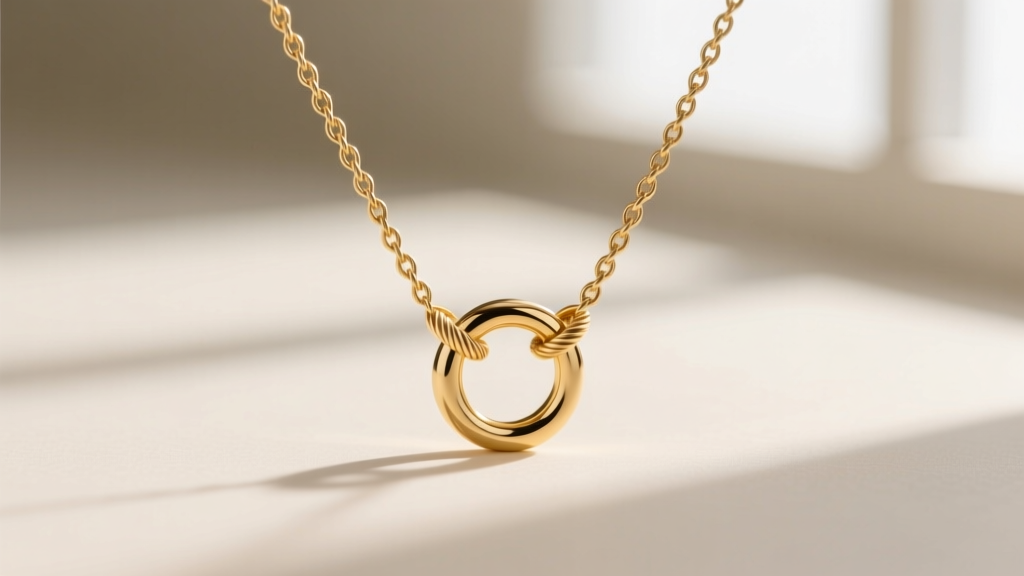
Not all gold chains interact with pendants equally. The surface texture and link articulation of a chain dictate how much friction it generates against the inside of the peace sign's bail. Below is a diagnostic breakdown of common chain weaves and their compatibility with medium-to-large peace sign pendants.
| Chain Weave | Friction Level | Flip Risk | Best Use Case for Peace Signs |
|---|---|---|---|
| Cable Chain | Low | Low | Ideal for daily wear; smooth oval links allow the bail to slide freely. |
| Box Chain | High | Very High | Avoid. The rigid, squared edges catch inside the bail, locking the pendant upside down. |
| Rope Chain | Medium-High | Medium | The twisted links create a spiral effect that can slowly unscrew the bail over time. |
| Snake Chain | Very Low | Low | Excellent for heavy solid gold pendants, though prone to kinking if bent sharply. |
For a standard 12mm to 18mm gold peace sign pendant, a 1.0mm to 1.2mm solid gold cable chain offers the perfect balance of tensile strength and low-friction articulation.
Material Failure Modes: Solid Gold vs. Plated
When troubleshooting tarnish, skin discoloration, or rapid wear at the bail, it is critical to identify the exact metallurgical composition of your necklace. As of 2026, the Federal Trade Commission (FTC) strictly regulates gold terminology, yet misleading marketing still plagues the industry.
According to the Gemological Institute of America (GIA), pure 24k gold is too soft for daily-wear pendants. Therefore, most high-quality peace sign necklaces are cast in 14k gold (58.3% pure gold alloyed with copper, silver, and zinc for hardness). However, if your necklace is turning your skin green or the gold is rubbing off at the bail, you are likely dealing with a plated alternative.
- Solid 14k Gold: Will not flake or turn skin green. May develop a soft patina or micro-scratches over years of wear. Can be polished indefinitely.
- Gold Vermeil: A sterling silver base plated with a minimum of 2.5 microns of gold. The friction point where the chain rubs the bail will eventually wear through the gold layer, exposing the silver beneath. Silver tarnishes, which can look like the gold is 'dirty'.
- Gold Plated / PVD: A brass or copper base with less than 0.5 microns of gold. The copper reacts with sweat and oils, causing the dreaded green skin effect. Once the bail wears through, the pendant cannot be easily replated without stripping the entire piece.
Restoring and Repairing Your Necklace
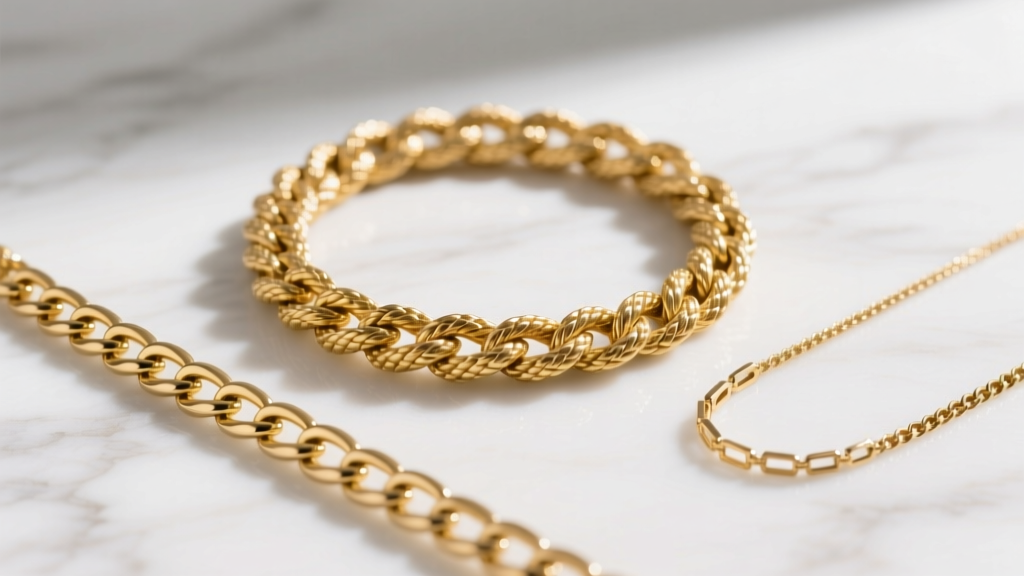
If your gold peace sign necklace has suffered mechanical failure or cosmetic degradation, specific restoration protocols apply depending on the damage type.
Fixing a Snapped Bail
The bail is the highest-stress point on any pendant. If the loop snaps off the peace sign circle, do not attempt to glue it back. Jewelry adhesives cannot withstand the sheer force of a swinging pendant. Take the piece to a professional jeweler who utilizes laser welding. Unlike traditional torch soldering, which requires heating the entire pendant and risks melting delicate details or altering the gold's temper, laser welding uses a concentrated beam to fuse a new jump ring or bail directly to the break point with microscopic precision.
Removing Tarnish and Scratches
Expert Warning: Never place a hollow-cast gold peace sign pendant in an ultrasonic cleaner. The high-frequency acoustic cavitation can cause the thin gold walls to collapse or crack. Always stick to manual cleaning methods for lightweight or hollow jewelry.
For solid gold pendants that have lost their luster, use a specialized impregnated polishing cloth (such as a Sunshine cloth). Rub the face of the peace sign in a single direction rather than in circles to minimize the appearance of micro-scratches. If the pendant features a matte or brushed finish, do not use a polishing cloth, as it will inadvertently polish the textured areas into a high shine, ruining the original design intent. Instead, clean matte finishes with warm water, a drop of mild dish soap, and a soft-bristled baby toothbrush.
Final Verdict: Prevention is Key
A gold peace sign necklace should be a symbol of harmony, not a source of daily frustration. By ensuring your chain weave is compatible with the bail size, understanding the metallurgical limits of your specific gold alloy, and employing proper cleaning techniques, you can preserve both the mechanical function and the aesthetic integrity of the piece for decades. If your pendant continues to flip despite switching to a flexible cable chain, consult a bench jeweler to assess the center of gravity and potentially add a counter-weight or secondary pivot ring to the bail assembly.


