How Cord Friction Affects Your Adjustable Necklace Knot
Discover how cord material properties impact an adjustable necklace knot. Compare friction, durability, and water resistance of waxed cotton, nylon, and silk.


The Physics of the Sliding Knot: Why Material Matters
When designing custom jewelry, the adjustable necklace knot—often a macramé sliding square knot or a lark's head variation—is a beloved closure mechanism. It eliminates the need for metal clasps, offers infinite length adjustments, and provides a seamless, organic aesthetic. However, the functional success of this mechanism relies entirely on the tribology (the study of friction, wear, and lubrication) of your chosen cord material. If a cord is too slippery, the knot will fail to hold the weight of the pendant, slowly creeping down the wearer's chest. If the cord is too rough or thick, the knot will jam, rendering the adjustable feature useless.
To master the adjustable necklace knot, jewelers must understand the relationship between static friction (the force keeping the knot locked in place) and kinetic friction (the force required to slide the knot when intentionally pulled). The ideal cord material offers a high coefficient of static friction but a manageable kinetic friction threshold. Below, we break down the material properties of the most popular jewelry cords and how they interact with sliding knot structures.
Material Comparison Matrix: Friction, Durability, and Water Resistance
Selecting the right cord requires balancing grip with environmental durability. The following table outlines the core properties of standard jewelry cords used for adjustable closures.
| Material | Standard Diameter | Static Friction (Grip) | Water/Sweat Resistance | Best Application |
|---|---|---|---|---|
| Waxed Cotton | 0.8mm - 1.5mm | High | Moderate | Heavy gemstone pendants, rustic styles |
| Braided Nylon (C-Lon) | 0.5mm - 0.9mm | Low to Moderate | Excellent | Micro-macramé, lightweight beads |
| Chinese Knotting Cord | 0.8mm - 2.0mm | Low (Slippery) | Excellent | Structured macramé, jade pendants |
| Suede Leather | 1.0mm - 3.0mm | Very High | Poor | Boho styles, lightweight wooden beads |
| Hemp Cord | 1.0mm - 2.0mm | High | Poor | Eco-friendly designs, casual wear |
Waxed Cotton: The Gold Standard for Knot Friction
Waxed cotton remains the premier choice for a reliable adjustable necklace knot. The cotton fibers provide a naturally high-friction surface, while the wax coating (typically paraffin or beeswax) serves two critical purposes. First, it binds the fibers together, increasing the cord's tensile strength and preventing fraying. Second, the wax creates a slightly tacky surface that responds to body heat. As the wearer's skin warms the cord, the wax softens microscopically, increasing the static friction and effectively "locking" the knot in place.
For standard gemstone beads, which typically feature 0.8mm to 1.0mm drill holes according to the Gemological Institute of America (GIA), a 0.8mm or 1.0mm waxed cotton cord is ideal. It passes through the bead easily while providing enough bulk inside the sliding knot to create necessary internal tension. When tying a sliding square knot with waxed cotton, always pull the working cords taut; the wax will hold the tension long after you release the cord.
Nylon and Chinese Knotting Cord: The Slippery Challenge
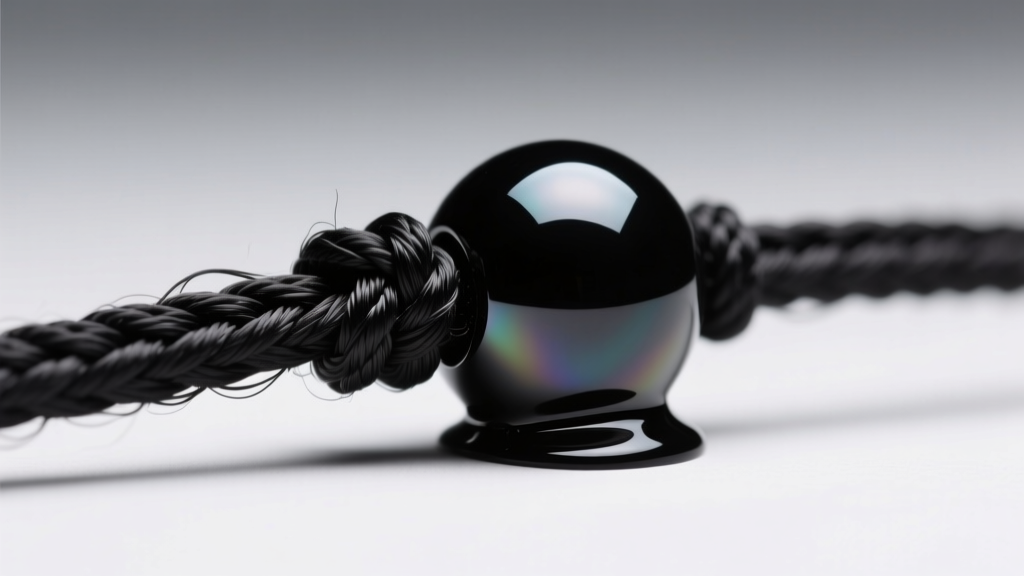
Nylon cords, such as C-Lon or traditional Chinese knotting cord, offer brilliant color saturation, exceptional water resistance, and high tensile strength. However, their smooth synthetic surface presents a major challenge for adjustable closures. The kinetic and static friction coefficients of nylon are remarkably low, meaning a standard single sliding square knot will often slip under the weight of a pendant heavier than 15 grams.
To compensate for this material property, jewelers must alter the knot architecture. When using nylon, you must employ a double sliding square knot or incorporate a micro-silicone bead stopper hidden inside the macramé structure to act as a friction brake. Furthermore, nylon cannot be tied off and cut like cotton; the ends must be thermally sealed. Using a thread zap or a lighter, melt the nylon tip at approximately 220°C (428°F) until it forms a smooth, hardened plastic bead. This prevents unraveling and creates a clean stopper at the ends of your adjustable tails.
Leather and Suede: Rustic Appeal with Structural Limits
Leather offers a distinct aesthetic, but its physical properties require careful handling. Suede leather boasts incredibly high static friction due to its napped surface, making it excellent for holding knots in place. However, suede is highly porous and will degrade, stain, and emit odors when exposed to sweat and skin oils over time. Smooth leather, conversely, resists moisture better but lacks the surface texture required to grip itself in a sliding knot.
The most critical limitation of leather is its bend radius. According to material handling guidelines from Rio Grande Jewelry Supply, leather cords thicker than 1.5mm should not be bent at sharp angles, as the finish will crack and the structural integrity of the hide will fail. Because a tight adjustable necklace knot requires a sharp bend radius, leather is generally unsuitable for sliding macramé knots unless you are using a very thin (under 1.0mm) round leather cord or a flat suede lace tied in a simple overhand slip knot rather than a complex square knot.
Step-by-Step: Matching Cord Diameter to Bead Weight
A common failure point in adjustable necklace designs is mismatching the cord diameter to the pendant's mass. The adjustable necklace knot must generate enough clamping force to counteract gravity. Here is a practical decision framework for pairing cord thickness with pendant weight:
- Under 20 grams (Lightweight resin, small pearls, seed beads): Use 0.5mm to 0.8mm braided nylon or silk. A single sliding square knot is sufficient.
- 20 to 50 grams (Standard quartz, amethyst, or glass pendants): Use 0.8mm to 1.0mm waxed cotton. The wax provides the necessary grip for this mid-range weight.
- Over 50 grams (Large jasper, metal castings, heavy geodes): Use 1.5mm waxed cotton or a doubled 0.9mm nylon cord. You must use a double or triple sliding square knot to distribute the friction across a larger surface area, preventing the knot from slipping down the wearer's chest.
Always verify the drill hole size of your focal bead before purchasing cord. As noted by Fire Mountain Gems, attempting to force a 1.5mm cord through a 1.0mm hole will strip the wax coating off cotton cords or fray nylon, compromising both the aesthetic and the structural integrity of the piece.
Troubleshooting Common Adjustable Necklace Knot Failures
Even with the perfect material, environmental factors and wear can cause your adjustable closure to malfunction. Here is how to troubleshoot the two most common issues:
1. The Knot is Jammed and Will Not Slide
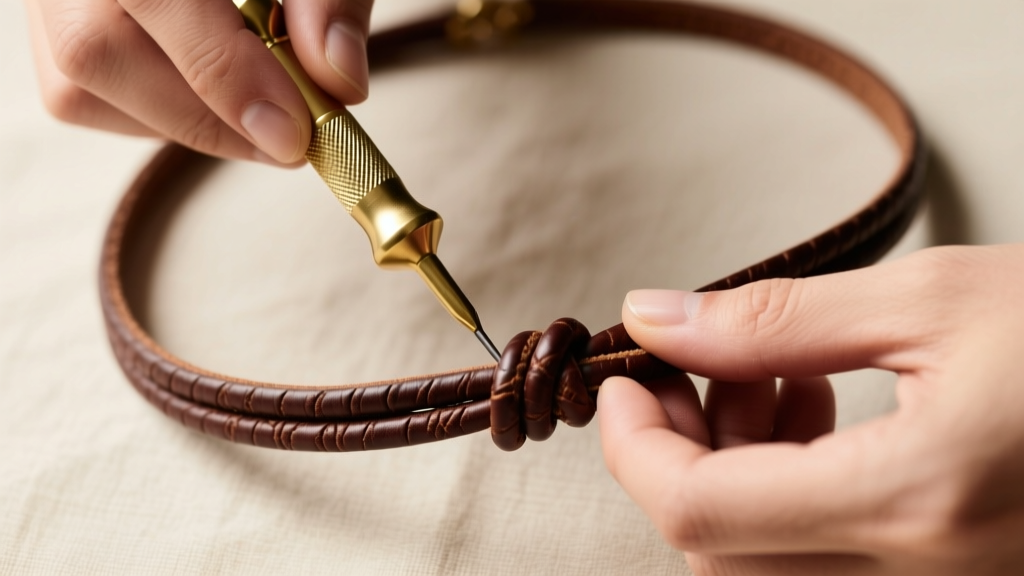
This usually occurs with natural fibers like hemp or uncoated cotton, which swell when exposed to ambient humidity or sweat, increasing the kinetic friction to an immovable degree. To fix a jammed knot, never pull the cord with brute force, as this will snap the fibers. Instead, use a fine brass beading awl. Gently insert the awl into the center of the knot and twist slightly to break the internal tension and separate the swollen fibers. Once loosened, apply a microscopic amount of beeswax or a specialized cord conditioner to restore smooth sliding action.
2. The Knot Slips Under the Pendant's Weight
If your carefully tied knot slowly creeps down the cord, the static friction is insufficient for the pendant's mass. If you cannot switch to a higher-friction material like waxed cotton, you can chemically augment the grip. Apply a micro-drop of flexible jewelry adhesive, such as E6000 or GS Hypo Cement, to the *inside* of the knot before pulling it tight. Avoid cyanoacrylate (superglue), as it dries brittle and will crack when the cord flexes, creating sharp edges that will eventually saw through the cord fibers. Allow the flexible adhesive to cure for 24 hours; it will act as a permanent, rubberized friction brake inside the knot structure.
Final Verdict: Choosing Your Cord
The adjustable necklace knot is a brilliant fusion of form and function, but it is entirely dependent on the material properties of the cord you select. For 90% of jewelry applications, a 1.0mm waxed cotton cord offers the perfect equilibrium of high static friction, manageable kinetic sliding, and ease of use. Reserve nylon for lightweight, water-resistant designs where you are willing to engineer more complex knot structures, and limit leather to simple slip knots on lightweight, casual pieces. By respecting the physics of your materials, you ensure your adjustable closures remain both beautiful and flawlessly functional for years to come.


