Star Necklace Meaning & Value: The Ultimate Budget Guide
Discover the star necklace meaning and learn how to assess true value. Compare materials, pricing tiers, and craftsmanship to make a smart budget choice.


The Symbolic Weight: Decoding the Star Necklace Meaning
Before allocating a budget to any piece of fine jewelry, it is crucial to understand the sentimental and historical weight it carries. The star necklace meaning spans across centuries and cultures, universally representing guidance, hope, and the navigation of darkness. Historically, sailors and travelers relied on the North Star (Polaris) for navigation, making star pendants a popular gift for graduates, travelers, or individuals embarking on a new life chapter. In a modern context, gifting a star necklace is a tangible way to say, "I will always be your guide."
However, the specific geometry of the star alters its symbolic resonance and, consequently, its market demand. A classic five-pointed star (pentagram) often represents the five elements or human balance, while a six-pointed star (hexagram) symbolizes harmony and cosmic order. Shooting star motifs, which feature asymmetrical trails, are heavily associated with luck, wishes, and fleeting moments of brilliance. Understanding these nuances helps you decide whether you are purchasing a profound talisman or a trendy aesthetic accessory, which directly dictates how much you should invest.
Material Tiers & Pricing: What Are You Actually Paying For?
When evaluating the financial value of a star pendant, the base metal and finishing techniques are the primary cost drivers. The jewelry market is saturated with misleading terminology, particularly regarding gold finishes. To make a sound budget assessment, you must look past the marketing jargon and examine the metallurgical reality.
According to the Federal Trade Commission (FTC) Jewelry Guides, there are strict legal definitions for gold plating, gold vermeil, and solid gold. Gold-plated items consist of a base metal (usually brass or copper) coated with a microscopic layer of gold (less than 0.5 microns). These are budget-friendly but will tarnish and wear off within months of daily use. Gold vermeil, on the other hand, requires a sterling silver base with a gold layer of at least 2.5 microns, offering vastly superior longevity for a moderate price increase.
| Material Grade | Average Price Range | Longevity & Value Assessment |
|---|---|---|
| Gold-Plated Brass | $20 - $45 | Poor. High risk of skin irritation and rapid tarnishing. Zero resale value. |
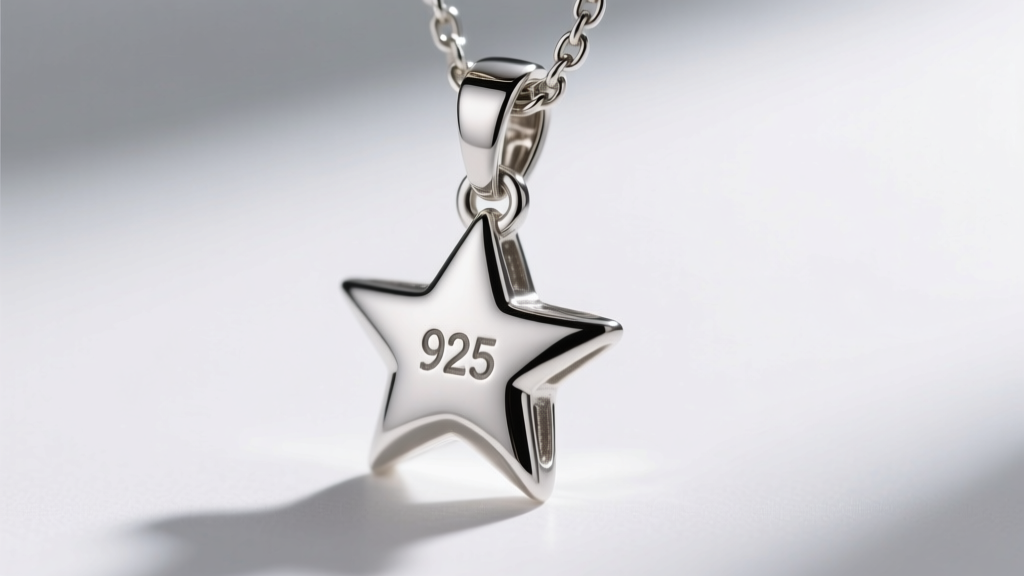
| 925 Sterling Silver | $40 - $120 | Good. Durable and easily polished. Excellent budget choice for non-allergic skin. |
| Gold Vermeil (2.5m+) | $80 - $180 | Very Good. Hypoallergenic base. Will last years with proper care, but eventually requires re-plating. |
| Solid 14k Gold | $250 - $650+ | Excellent. Heirloom quality. Retains intrinsic melt value and withstands daily water exposure. |
| Platinum 950 | $800 - $1,500+ | Premium. Extremely dense and durable. Ideal for diamond-set star pendants due to prong strength. |
Assessing Craftsmanship: Cast vs. Die-Struck Construction
A common mistake budget-conscious buyers make is assuming that two identically sized 14k gold star pendants should cost the same. The manufacturing method drastically alters both the price and the structural integrity of the piece.
Die-Struck Stars
Die-striking involves using immense hydraulic pressure to stamp a star shape out of a flat sheet of metal. This process is highly efficient and keeps manufacturing costs low. However, die-struck stars are often lightweight, slightly hollow-feeling, and possess sharp, sometimes brittle edges. If a die-struck star pendant catches on clothing, it is highly prone to bending or warping. These are acceptable for lightweight, occasional-wear layering pieces but represent poor long-term value for a daily-wear talisman.
Lost-Wax Cast Stars
Lost-wax casting is a more labor-intensive process where a wax model is encased in plaster, burned out, and replaced with molten metal. This results in a solid, three-dimensional pendant with a satisfying heft and rounded, comfortable edges. Cast stars can feature intricate milgrain detailing, high-polish bevels, and secure settings for gemstones. When assessing value, a cast 14k gold star pendant justifies its 20% to 30% price premium over a die-struck alternative due to its superior durability and artisanal finish.
The Hidden Costs of Celestial Gemstones
Many star necklaces incorporate diamonds or sapphires to mimic the twinkling of a night sky. If your budget allows for a gemstone-accented star, you must understand the mechanics of melee diamonds. According to the Gemological Institute of America (GIA), melee diamonds (those weighing less than 0.18 carats) are cut in two primary styles: single-cut and full-cut.
- Single-Cut Melee: Features only 17 or 18 facets. These are cheaper to produce and often used in mass-market, budget-tier star pendants. They lack the complex light return of larger diamonds and can appear glassy or flat under indoor lighting.
- Full-Cut Melee: Features the standard 57 or 58 facets of a full-sized brilliant round diamond. Full-cut melee costs roughly 25% more than single-cut but provides the intense scintillation and fire necessary to make a small star pendant visibly sparkle from across a room.
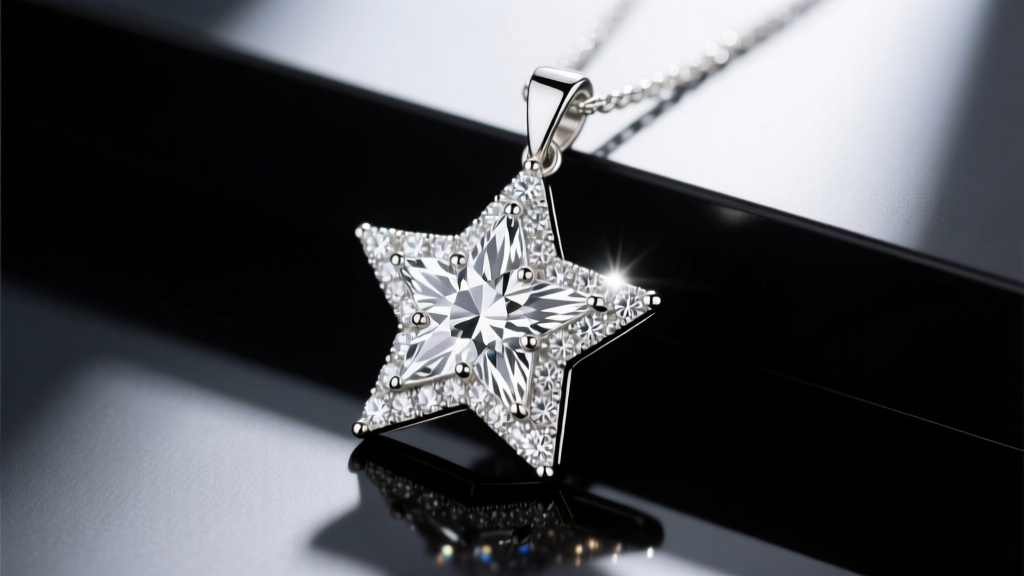
When evaluating a diamond star necklace, always ask the jeweler if the pave or bezel settings utilize full-cut melee. Paying a premium for single-cut stones is a poor allocation of your budget.
Value Framework: Matching Meaning to Your Budget
To maximize your return on investment, align your budget with the intended purpose and symbolic weight of the necklace.
The "Guidance" Gift (Budget: $150 - $300)
If you are gifting a North Star pendant to a graduate or traveler to symbolize guidance, opt for a heavy 925 sterling silver or 14k gold vermeil piece with a solid cast construction. The focus here is on durability and the tactile weight of the piece, which conveys permanence and reliability without the premium of solid gold.
The "Heirloom Milestone" (Budget: $400 - $800)
For profound milestones—such as the birth of a child or a major life triumph—where the star represents a permanent guiding light, invest in solid 14k or 18k gold. A bezel-set diamond in the center of a solid gold star ensures the piece can be worn daily, in the shower, and during sleep without fear of degradation. This tier offers the best intersection of intrinsic metal value and emotional longevity.
The "Trend Layering" Piece (Budget: $40 - $90)
If the star necklace is purely for aesthetic layering with other celestial motifs (like moons or suns), a gold-plated or thin sterling silver die-struck piece is financially logical. Allocate minimal budget here, as these pieces are subject to high friction and rapid wear when tangled with other chains.
Care & Depreciation: Protecting Your Investment
The true value of a necklace is also measured by how well it ages. Star pendants, particularly those with deep grooves or pave diamonds, trap skin oils and environmental dust, which dulls the metal and obscures gemstone brilliance. To maintain the value of your piece, clean it bi-weekly using a soft-bristled baby toothbrush and a solution of warm water with a single drop of mild, phosphate-free dish soap. Avoid ultrasonic cleaners if your star pendant features fracture-filled diamonds or delicate gemstone inlays like opals or turquoise, as the high-frequency vibrations can shatter the stones. By understanding both the profound star necklace meaning and the hard metrics of jewelry valuation, you can confidently select a piece that honors the sentiment without compromising your financial boundaries.


