Secure Rings Necklace: Budget vs. Value Assessment Guide
Discover the true cost of a cheap rings necklace. We assess materials, clasp security, and budget vs. value to protect your most precious jewelry.

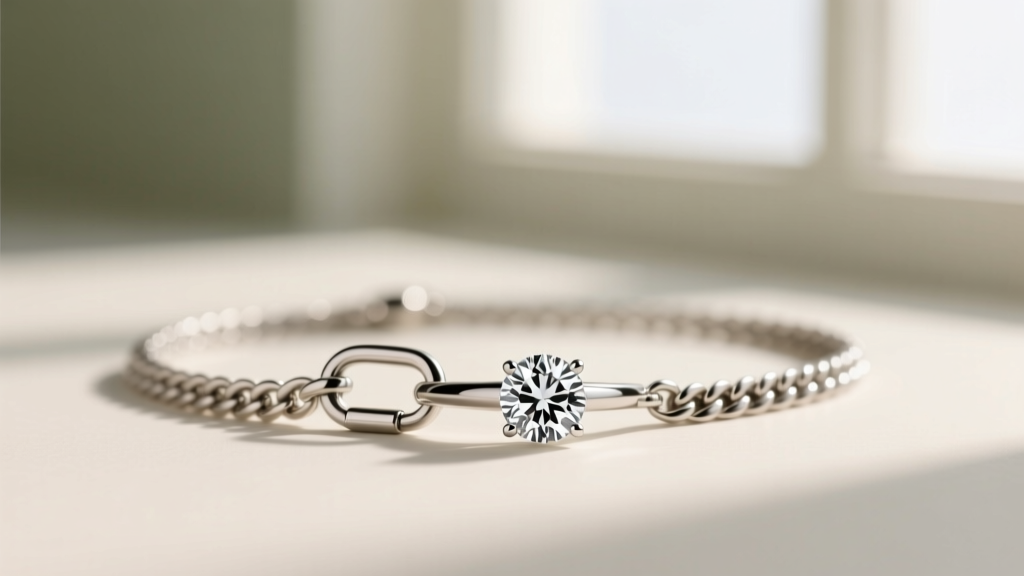
Traveling in 2026 means navigating crowded airports, rushed hotel check-ins, and unpredictable itineraries. For married individuals or those with heirloom jewelry, removing a diamond engagement ring for security checks, swimming, or sleeping introduces a massive risk of loss. Enter the rings necklace—a specialized piece of jewelry designed to securely hold your most valuable rings close to your chest. But not all ring holder necklaces are created equal. When the safety of a $10,000 diamond relies on a $15 piece of metal, understanding the intersection of budget and true value becomes a critical exercise in risk management.
In this comprehensive assessment, we break down the metallurgy, chain weaves, and clasp mechanics that separate dangerous budget gambles from secure, high-value investments. Whether you are looking for a daily wearer for manual labor or a secure travel companion, this guide will help you evaluate the true cost of protecting your most precious assets.
The Hidden Cost of Losing a Ring: Why Your Necklace Matters
When consumers shop for a rings necklace, they often treat it as a simple fashion accessory, applying the same budget constraints they would to a standard pendant chain. This is a fundamental category error. A ring holder is not merely jewelry; it is a security device. According to the Gemological Institute of America (GIA), the majority of gemstone losses occur not from theft, but from accidental dislodging during travel, physical activity, or improper storage.
If you purchase a budget alloy chain with a weak clasp, you are essentially securing a high-value asset with a compromised lock. The 'value' of a rings necklace is not determined by its aesthetic appeal, but by its tensile strength, corrosion resistance, and mechanical reliability. A $100 necklace that guarantees the safety of a $15,000 platinum wedding band offers an infinitely better return on investment than a $20 necklace that snaps under the dynamic load of a snagged ring.
Material Breakdown: What Actually Holds Up?
The environment dictates the material. Sweat, chlorine, saltwater, and daily friction will rapidly degrade inferior metals. Here is how the most common materials stack up in real-world scenarios.
316L Surgical Steel vs. Grade 23 Titanium
316L Surgical Steel is the undisputed king of the budget tier. It is highly resistant to tarnish and offers excellent tensile strength for its price point. However, it is not entirely impervious to harsh environments. Prolonged exposure to saltwater or heavily chlorinated pools can cause microscopic pitting in 316L steel, eventually weakening the structural integrity of the jump rings.
For ultimate security, Grade 23 Titanium (Ti-6Al-4V) is the premium standard. Originally developed for aerospace and medical implants, Grade 23 titanium is completely inert. It will not react to saltwater, sweat, or chemicals, and it boasts a strength-to-weight ratio that far exceeds steel. While a titanium rings necklace will cost 30% to 50% more than surgical steel, the elimination of corrosion-based failure modes makes it the superior value for frequent travelers and beachgoers.
The Problem with Solid Gold Holders
It seems logical to pair a gold wedding band with a solid 14k or 18k gold rings necklace. However, gold is a relatively soft metal. If you are using the necklace to hold a heavy platinum or tungsten ring, the continuous friction of the harder ring sliding against the softer gold loop will act like sandpaper. Over a period of 12 to 18 months, this friction can literally saw through the gold holder loop, resulting in catastrophic loss. If you prefer the look of gold, opt for a gold-plated titanium core or ensure the holder loop features a hardened steel insert.
The Weakest Link: Clasp and Chain Failure Modes
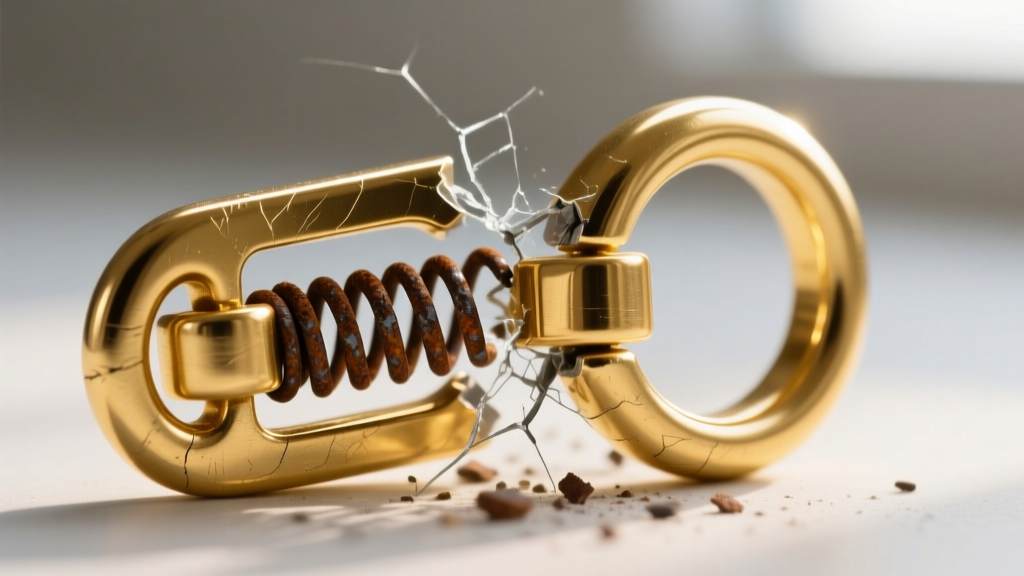
The chain itself rarely snaps under the static weight of a ring. Failure almost always occurs at the clasp or the jump rings connecting the clasp to the chain. Understanding clasp mechanics is vital for assessing value. Jewelers of America frequently cites faulty or degraded clasps as a primary culprit in lost jewelry claims.
| Clasp Type | Security Rating | Common Failure Mode | Best Use Case |
|---|---|---|---|
| Spring Ring | Poor (1/5) | Internal spring corrosion; lever snagging on clothing and pulling open. | Lightweight fashion jewelry only. Never use for heavy rings. |
| Standard Lobster | Moderate (3/5) | Debris lodging in the lever mechanism; accidental depression of the trigger. | Daily wear in low-risk, controlled environments. |
| Locking Carabiner | Excellent (5/5) | Virtually none. Features a screw-gate or auto-locking sleeve over the lever. | Travel, sports, manual labor, and high-value ring security. |
| Magnetic Clasp | Dangerous (0/5) | Shearing force from a snagged ring easily overpowers the magnetic pull. | None. Avoid entirely for ring holder necklaces. |
Furthermore, the weave of the chain matters. Box chains are notorious for snagging and kinking, which can lead to sudden snaps. Cable chains are better, but they can stretch over time. For a rings necklace, a Wheat chain or a Rope chain offers the best combination of flexibility, tensile strength, and snag resistance.
Budget vs. Value: Pricing Tiers Explained
Let us map out what you can realistically expect at different price points in the current market, and where the true 'sweet spot' for value lies.
Under $30: The Gamble
In this tier, you are typically looking at zinc alloys, brass with thin flash plating, or low-grade stainless steel paired with spring ring clasps. The jump rings are often machine-pressed but not soldered shut, meaning a sharp tug on the ring will pull the jump ring open, dropping your diamond onto the floor or into the sand. The budget savings here are entirely negated by the extreme risk of loss.
$50 to $120: The Security Sweet Spot
This is where genuine value emerges. In this bracket, you can acquire a high-quality 316L surgical steel or Grade 23 titanium wheat chain equipped with a locking carabiner clasp and soldered jump rings. Brands in this tier focus on utility and structural integrity rather than brand prestige. A $75 titanium rings necklace with a screw-lock clasp provides 99% of the security of a $500 designer piece, making it the smartest financial decision for practical travelers.
$150 and Above: Fine Jewelry Integration
When you cross the $150 threshold, you are paying for precious metals (solid 14k/18k gold, platinum) and designer branding. While beautiful, as noted earlier, solid gold requires careful maintenance if holding heavier rings. The value here is derived from aesthetic cohesion and heirloom quality rather than pure utilitarian security. If you want the look of fine jewelry with the security of titanium, look for specialized brands that offer PVD-coated titanium in warm gold tones.
Expert Verdict: Building Your Travel Security System
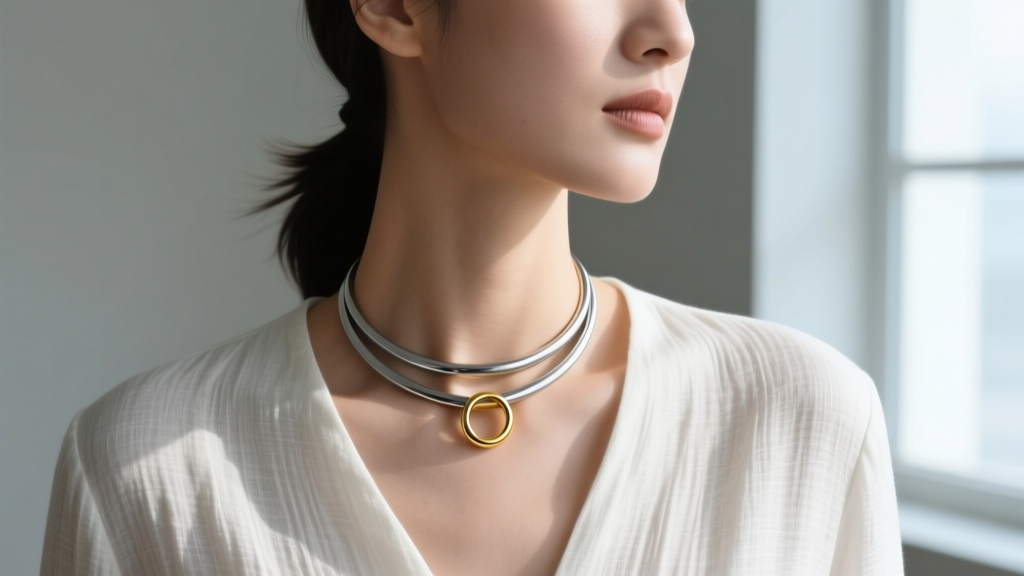
Assessing the budget and value of a rings necklace requires shifting your mindset from 'jewelry shopper' to 'security analyst'. The true cost of the necklace must always be weighed against the replacement cost—both financial and sentimental—of the ring it carries.
For the ultimate balance of budget and uncompromising value, specify the following parameters when shopping: a Grade 23 Titanium or 316L Surgical Steel Wheat chain, a minimum thickness of 2.0mm, soldered jump rings, and a locking carabiner clasp. By prioritizing mechanical failure points and material science over fleeting fashion trends, you ensure that your most precious jewelry remains exactly where it belongs—safe, secure, and close to your heart, no matter where your travels take you.


