How to Make Knots for Necklaces: Fix Slipping and Jammed Cords
Learn how to make knots for necklaces that hold. Troubleshoot slipping adjustable cords, frayed silk, and stuck sliding knots with expert fixes.

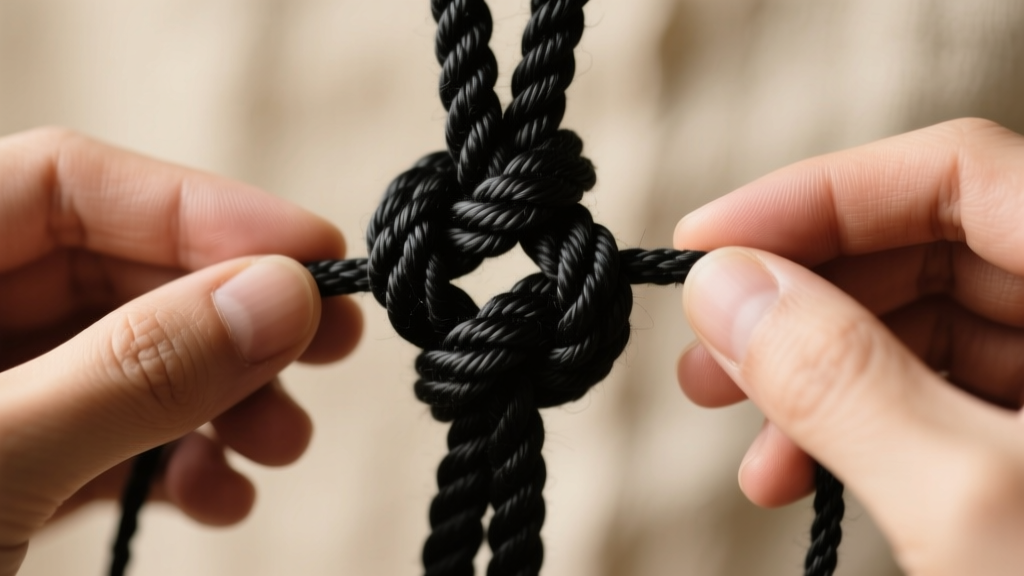
The Anatomy of a Failed Necklace Knot
When learning how to make knots for necklaces, most beginners focus entirely on the aesthetic of the finish, only to have the piece unravel or jam within days of wear. A failed necklace knot is rarely a matter of poor technique alone; it is usually a mismatch between the cord material's coefficient of friction, the bead hole diameter, and the structural mechanics of the knot itself. Whether you are stringing heavy gemstone beads on silk or crafting an adjustable macrame pendant slider, understanding why knots fail is the first step to mastering permanent, professional-grade jewelry construction.
Cord materials possess what jewelers call "memory" and "grip." Nylon has high memory (it wants to return to its straight form) and low grip, making standard overhand knots prone to slipping. Silk has low memory but poor abrasion resistance, meaning it can saw itself apart inside a tight bead hole. Waxed cotton offers exceptional grip but can become brittle if exposed to skin oils and heat over time. In this comprehensive troubleshooting guide, we will diagnose the most common knotting failures and provide exact, actionable solutions to salvage your designs.
Troubleshooting the Adjustable Sliding Knot
The adjustable sliding square knot (often used in macrame) is the most popular closure for pendant necklaces. It requires no metal hardware and allows the wearer to customize the length. However, it is also the most frequent source of frustration for jewelry makers.
Problem: The Knot Slips Open Under Weight
If your sliding knot loosens when a heavy pendant pulls on the cord, you are likely using a cord with a surface that is too slick. Satin cords, silicone, and un-waxed nylon are notorious for this. The square knot relies entirely on surface friction to lock against the core cords.
The Fix: Switch your wrapping cord to a high-friction material like 1.0mm Chinese knotting cord or waxed cotton. Furthermore, the wrapping cord must be equal to or slightly thicker than the core cords. If you are using a 2.0mm leather cord as your core, a 0.5mm nylon wrapping cord will simply not generate enough surface area to grip the leather. Always match or exceed the core cord's diameter with your wrapping cord.
Problem: The Knot is Too Tight to Adjust
A jammed sliding knot is usually caused by twisted core cords. The fundamental rule of the macrame square knot is that the two core cords must remain perfectly parallel and flat inside the knot. If they cross or twist over one another while you are tying the left-right-left-right sequence, the knot will cinch down and lock permanently.
The Fix: Before pulling the knot tight, use a pair of flat-nose pliers or a beading awl to gently separate the core cords inside the knot, ensuring they lay side-by-side. Additionally, avoid pulling the wrapping cord with excessive force; the knot should be snug enough to hold its shape, but loose enough to slide with a firm pinch.
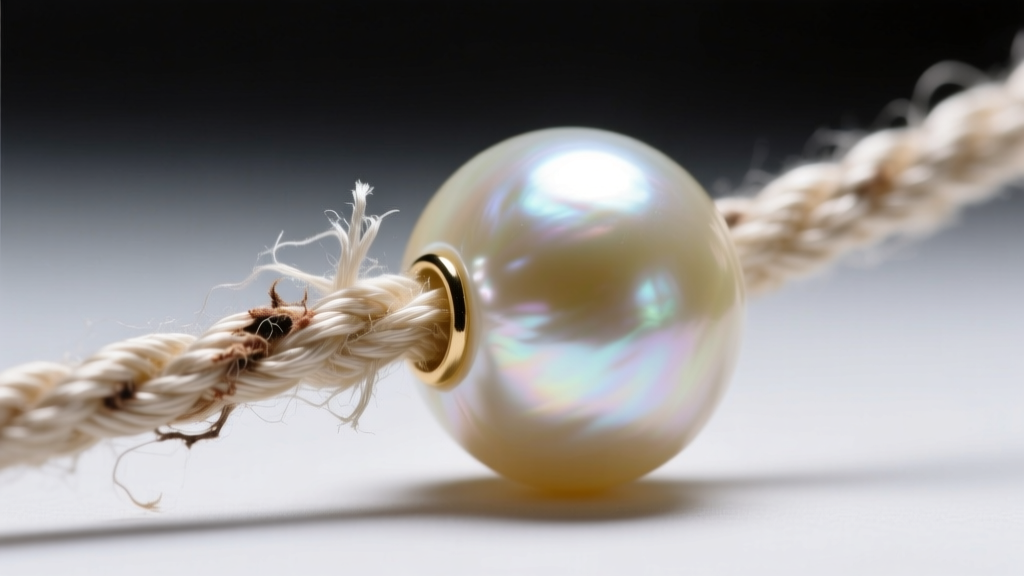
Pearl & Bead Knotting: Solving Fraying and Gapping
Traditional pearl knotting serves two purposes: it prevents pearls from rubbing against each other (which damages the nacre), and it ensures that if the strand breaks, only one pearl is lost. However, achieving uniform, tight knots against the bead is a notorious challenge.
The Bead Reamer and Hole Size Mismatch
Fraying and internal cord severing happen when a cord is forced through a bead hole with rough, unpolished edges. According to the Gemological Institute of America (GIA), pearls require specialized care and handling to maintain their luster and structural integrity. If you are using Griffin silk size 6 (0.70mm), your bead holes must be cleanly drilled to at least 0.80mm. Forcing a thick cord through a tight hole creates microscopic friction burns that weaken the silk's tensile strength by up to 60%.
The Fix: Always use a diamond-coated bead reamer to smooth the inside of gemstone and pearl holes before stringing. Lubricate the reamer with water to prevent heat buildup, which can crack delicate stones.
Gapping: The Knot Won't Sit Flush Against the Bead
When you tie an overhand knot, it often dries slightly away from the bead, leaving an unsightly gap. This happens because the cord stretches while wet or under tension, and shrinks as it relaxes.
The Fix: Use a beading awl or a specialized pearl knotting tool to push the knot flush against the bead while the cord is still slightly damp (if using silk) or under active tension. For a more secure lock, switch from a standard overhand knot to a surgeon's knot, which adds an extra twist to create a bulkier, more stable node that is less likely to pull through the bead hole.
| Cord Material | Ideal Bead Hole Size | Common Failure Mode | Troubleshooting Solution |
|---|---|---|---|
| Griffin Silk (Size 4) | 0.6mm - 0.8mm | Abrasion & snapping at the clasp | Use French wire (gimp) at the clasp loop |
| C-Lon Nylon (Heavy) | 0.8mm - 1.0mm | Knots slipping due to low friction | Use a double surgeon's knot & melt ends |
| Waxed Cotton (1.0mm) | 1.2mm+ | Wax melting & staining porous beads | Avoid using with turquoise or unsealed lapis |
| Leather (2.0mm Round) | N/A (Used for pendants) | Overhand knots stretching and slipping | Use a Lark's Head or Figure-Eight knot |
Finishing Knots: Securing Leather, Suede, and Waxed Cotton
Thicker cords used for pendant necklaces require entirely different finishing mechanics than delicate stringing threads. The standard overhand knot is virtually useless for flat suede or thick leather because the material's memory will cause the knot to unfold over time.
The Overhand Loop Failure
When attaching a metal clasp to a 3mm flat leather cord, tying a simple overhand loop often results in the leather creasing, cracking, and eventually slipping out of the clasp jump ring. Flat cords do not distribute tension evenly in a rounded knot.
The Fix: Use a ribbon clamp or fold-over cord end for flat materials. If you must knot, use a figure-eight knot or a wrapped loop using a thinner, complementary waxed linen thread to bind the leather back onto itself, creating a secure, reinforced collar that the clasp can rest against.

Pro Adhesives: When and How to Glue a Knot
In professional jewelry making, adhesive is considered a secondary fail-safe, not a primary structural element. However, knowing which glue to use—and more importantly, which to avoid—is critical for troubleshooting persistent knot failures.
The Super Glue Mistake
Many hobbyists reach for cyanoacrylate (Super Glue) to secure a slipping knot. While it dries hard and fast, it creates a brittle, glass-like shell. When the necklace flexes against the wearer's collarbone, the brittle glue shatters, taking the cord fibers with it. Furthermore, liquid super glue wicks into silk and nylon via capillary action, weakening the entire strand.
The Right Tool: G-S Hypo Cement
G-S Hypo Cement is the industry standard for securing knots on flexible cords. It dries clear, remains slightly flexible, and features a precision needle tip that allows you to place a microscopic drop exactly inside the knot's crevice without staining the surrounding cord or beads. Apply a single drop to the exit point of the knot, let it cure for 24 hours, and then trim the tail flush with a pair of sharp thread snips.
Quick-Reference Troubleshooting Matrix
Keep this diagnostic checklist handy at your workbench to quickly identify and resolve the most common knotting emergencies:
- Symptom: Knot pulls through the bead hole.
Diagnosis: Bead hole is too large for the cord; knot is too small.
Action: Switch to a surgeon's knot or add a seed bead as a spacer/bumper inside the main bead. - Symptom: Sliding knot refuses to move.
Diagnosis: Core cords are twisted; wrapping cord is too thin.
Action: Untwist cores with an awl; re-tie using a thicker wrapping cord. - Symptom: Silk cord frays right at the metal clasp.
Diagnosis: Metal jump ring is abrading the soft silk.
Action: Thread the silk through a piece of French wire (bullion) before looping through the clasp to create a protective metal-on-metal barrier. - Symptom: Nylon cord knot unravels after trimming.
Diagnosis: Synthetic memory and lack of friction.
Action: Leave a 2mm tail, apply a tiny drop of G-S Hypo Cement, or carefully melt the tail with a thread zapper to create a permanent synthetic bead.
Mastering how to make knots for necklaces is ultimately an exercise in material science. By respecting the physical properties of your cords and matching them to the correct structural knots, you will elevate your jewelry from fragile crafts to enduring, professional-grade accessories.


