Authenticating a Vintage White Coral Necklace: An Expert Guide
Discover expert techniques for authenticating, grading, and preserving a vintage white coral necklace, including material science and market values.

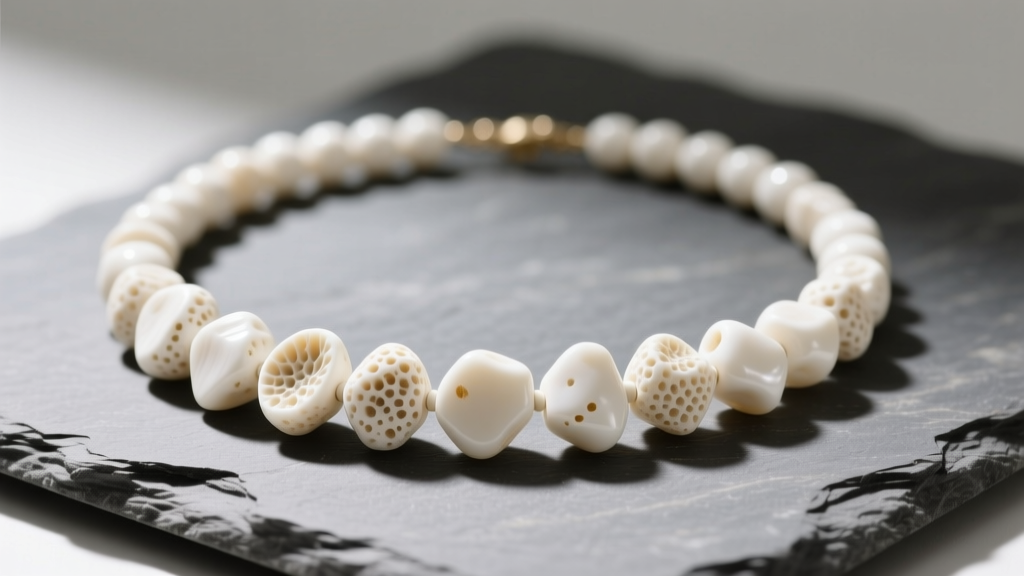
The Material Science of White Coral
When evaluating a vintage white coral necklace, understanding the underlying gemological and chemical properties is the first step in authentication. Unlike mineral gemstones formed through crystallization, coral is an organic gemstone created by marine polyps. Its primary chemical composition is calcium carbonate (CaCO3) in the form of calcite or aragonite, bound together by an organic protein matrix called conchiolin.
Corallium vs. Oulophyllia
Most high-end vintage white coral originates from one of two sources. True precious coral (Corallium japonicum or Corallium elatius) is harvested from deep ocean floors and is prized for its dense, porcelain-like finish. However, pure white Corallium is exceptionally rare; much of the white coral seen in vintage jewelry is actually Oulophyllia (brain coral) or shallow-water reef coral that has been naturally bleached by the sun or historically treated with mild hydrogen peroxide to achieve a uniform creamy white hue.
- Hardness: 3.5 to 4.0 on the Mohs scale, making it highly susceptible to scratching.
- Specific Gravity: 2.65 to 2.75 (heavier than most plastics and bone simulants).
- Refractive Index: 1.48 to 1.65, yielding a soft, waxy to vitreous luster when polished.
Because of its organic matrix, white coral is inherently porous. This porosity is both its greatest vulnerability and the primary diagnostic feature used by gemologists to separate it from synthetic imitations.
Authentication: Separating Organic Coral from Simulants
The market for vintage coral is saturated with simulants, including dyed howlite, bleached bone, celluloid, and modern synthetic resins. In the 1970s, the Gilson company created a highly convincing synthetic coral that mimics the chemical composition of natural coral but lacks its internal structure. According to the Gemological Institute of America (GIA), identifying these simulants requires a multi-step diagnostic approach.
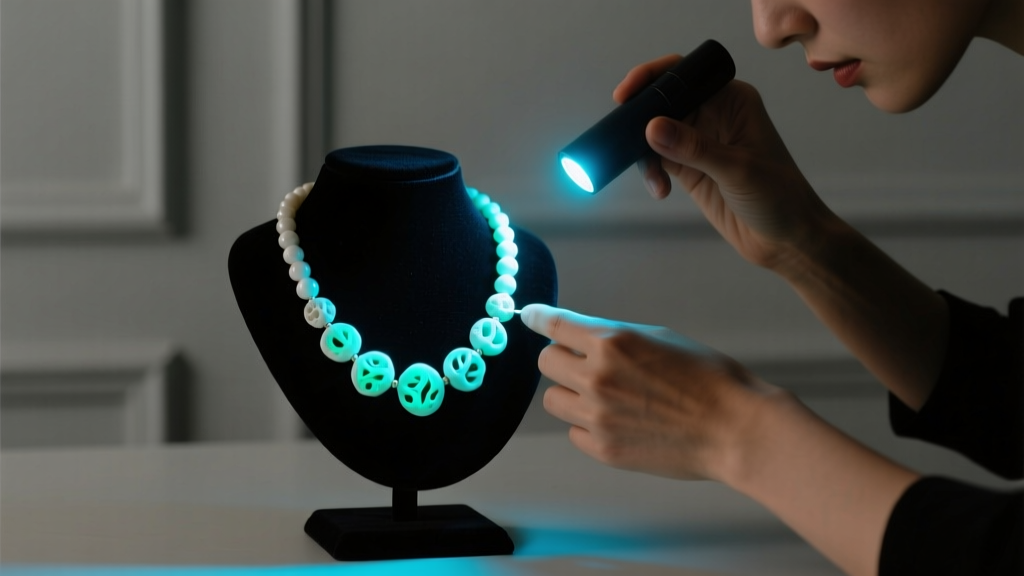
Non-Destructive Testing Methods
Before resorting to any invasive tests, a thorough visual and optical examination is required:
- 10x Loupe Magnification: Natural white coral exhibits a distinct "wood grain" or radial striation pattern, along with natural pits, grooves, and growth rings. Gilson synthetic coral lacks this structure, presenting a uniform, micro-granular texture that looks overly perfect under magnification.
- Long-Wave UV Fluorescence (365nm): Natural coral often displays a mottled, patchy fluorescence due to the uneven distribution of conchiolin proteins. Plastics and resins will either fluoresce uniformly or exhibit a stark, unnatural blue/white glow.
- The Acetone Swab Test: To detect if a lower-grade gray or yellow coral was chemically bleached or surface-dyed, gently rub a cotton swab dampened with pure acetone over a discreet area of the bead. If the swab picks up any yellowish or grayish residue, the coral has been artificially treated.
Expert Warning: Never use the "hot pin test" on a vintage white coral necklace. While a hot pin will melt plastic and smell like burning hair on bone, applying it to genuine coral will permanently scorch the calcium carbonate and conchiolin matrix, destroying the bead's polish and significantly reducing its antique value.
Historical Eras and Stringing Signatures
A genuine vintage piece will exhibit construction techniques and clasp hallmarks consistent with its purported era. The Victoria and Albert Museum's jewelry archives note that organic gems like coral were heavily influenced by the cultural and aesthetic movements of their time. Analyzing the stringing material and clasp type provides critical provenance data.
| Historical Era | Clasp & Hardware | Stringing Material | Avg. Market Value (2026) |
|---|---|---|---|
| Victorian (1837-1901) | 14k Gold filigree, C-clasps, push-box | Heavy natural silk, horsehair | $800 - $2,500+ |
| Art Deco (1920-1935) | Platinum/White gold, diamond accents | Silk with metal spacer bars | $1,500 - $4,000+ |
| Mid-Century (1940-1960) | Gold vermeil, barrel clasps | Early nylon, thick cotton | $300 - $900 |
If a necklace claims to be Victorian but features a modern lobster clasp and uniform, machine-cut beads without natural surface pitting, it is likely a modern reproduction or a vintage strand that has been heavily altered.
Conservation, Restringing, and Failure Modes
White coral is highly reactive to acidic environments. The conchiolin matrix breaks down when exposed to acids, meaning everyday substances like human sweat (pH 4.5-7.0), perfumes, hairspray, and vinegar will chemically etch the surface. This failure mode manifests as a loss of polish, leaving dull, "chalky" spots that cannot be buffed out without removing significant layers of the bead.
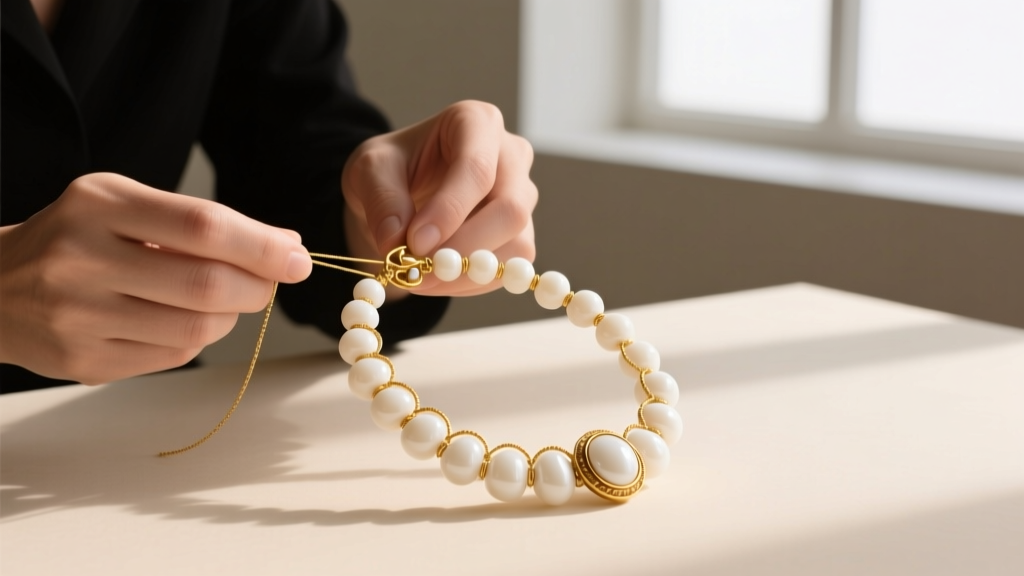
Best Practices for Restringing
When a vintage white coral necklace requires conservation, restringing must be approached with specific material constraints:
- Thread Selection: Never use beading wire (e.g., Tigertail). The microscopic metal strands will act like a saw against the soft 3.5 Mohs drill holes, eventually cutting through the coral. Always use 100% natural silk thread, such as Griffin No. 2 (0.45mm) or No. 3 (0.50mm), which matches the historical 0.8mm to 1.2mm drill holes of vintage beads.
- Knotting Protocol: Every bead must be individually knotted. While coral is relatively soft, bead-on-bead friction over decades will wear down the nacre-like polish and enlarge the drill holes. Knotting also prevents catastrophic bead loss if the silk degrades.
- French Wire (Gimp) Application: A flexible metal coil known as French wire must be used at the terminal ends where the silk loops through the metal clasp jump ring. This prevents the metal from slicing through the organic silk thread over time.
Market Valuation and Provenance Tracking
The valuation of a vintage white coral necklace in the current collector's market hinges on three primary factors: bead uniformity, surface integrity, and hardware originality. Graduated strands featuring perfectly matched, large-diameter beads (12mm+) with minimal natural pitting command the highest premiums. Conversely, severe surface etching, mismatched replacement beads, or evidence of modern epoxy repairs will relegate the piece to the lower end of the valuation spectrum. For serious collectors, obtaining a gemological report confirming the absence of synthetic dyes and verifying the biological species of the coral remains the gold standard for establishing both authenticity and long-term investment value.


