The Anatomy of a Pin Necklace: Technical Guide to Stick Pins & Clasps
Explore the technical anatomy of a pin necklace, from stick pin gauge sizes and clutch mechanics to safe chain conversions for vintage jewelry.

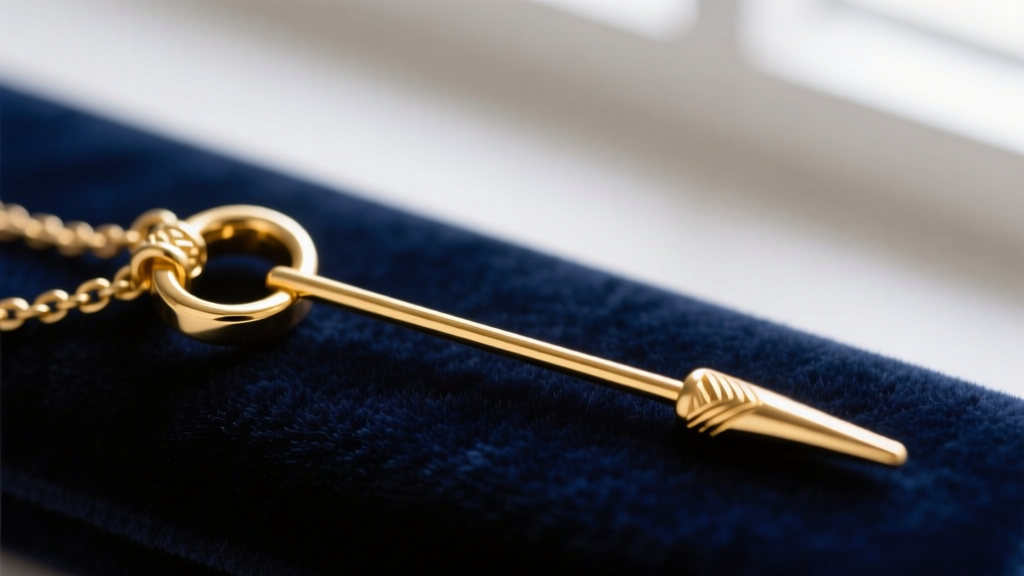
The Evolution and Mechanics of the Pin Necklace
When discussing the architecture of neckwear, the pin necklace occupies a highly specialized niche. Unlike standard pendant necklaces that rely on a fixed bail and a continuous chain loop, a pin necklace—often originating as a vintage stick pin or a convertible brooch—utilizes a rigid metallic stem secured by a secondary fastening mechanism. Historically popularized in the Victorian and Edwardian eras as tie pins and cravat fasteners, these pieces have been adapted into modern pendant necklaces. However, this adaptation introduces significant mechanical challenges. The transition from piercing layered silk cravats to hanging freely from a delicate gold cable chain requires a rigorous understanding of metallurgical shear stress, load-bearing limitations, and clutch fatigue.
For jewelers and serious collectors, treating a pin necklace merely as a decorative object is a recipe for structural failure. The pin stem acts as a cantilever beam; when subjected to lateral force or the pendulum motion of walking, the solder joint at the base experiences maximum bending moment. If the solder alloy possesses a lower yield strength than the base metal, microscopic fissures develop, ultimately leading to catastrophic snapping. In this technical deep dive, we deconstruct the anatomy of the pin necklace, examining gauge tolerances, clutch mechanics, and the precise methodology required for safe chain conversions.
Metallurgy and Gauge Specifications of Pin Stems
A common misconception in jewelry design is that the pin stem should match the karat purity of the pendant body. From an engineering standpoint, this is highly inadvisable. Pure 24k gold is far too malleable (Vickers Hardness ~25 HV), and even standard 14k yellow gold (~130 HV) lacks the necessary tensile strength for a thin pin stem that must endure repeated insertion and removal. Consequently, high-quality pin necklaces utilize stems forged from lower-karat gold alloys (like 10k gold, ~160 HV) or, more commonly, 316L surgical stainless steel or spring steel (200+ HV).
The diameter of the stem, measured in gauges, dictates both the piercing capability and the load-bearing capacity of the necklace. Selecting the correct gauge is critical to prevent the stem from bending under the weight of heavy gemstone clusters.
| Gauge Size | Diameter (mm) | Standard Material | Best Application |
|---|---|---|---|
| 20G | 0.81mm | Surgical Steel | Lightweight pearl pendants, delicate 1mm chains |
| 18G | 1.02mm | 10k Gold / Steel | Standard stick pins, medium-weight vintage conversions |
| 16G | 1.29mm | Nickel Silver / Steel | Heavy brooch conversions, structural support pins |
| 14G | 1.63mm | Spring Steel | Heavy gemstone clusters, secure locking clasps |
According to material science guidelines from Rio Grande Jewelry Supply, work hardening occurs rapidly in thin wire gauges. A 20G steel stem that is repeatedly bent to adjust the pendant's hang angle will quickly exceed its fatigue limit and fracture. Therefore, pin stems must be manufactured perfectly straight and tapered only at the terminal point to reduce insertion friction.
Clutch and Fastening Mechanisms: Failure Points
The security of a pin necklace relies entirely on its clutch mechanism. Unlike a brooch, which locks into a C-catch or trombone clasp integrated into the metalwork, a pin necklace worn as a pendant often relies on a friction or threaded clutch at the terminal end to prevent the chain from slipping off the stem.
Friction vs. Threaded Clutches
The standard butterfly or scroll friction clutch relies on the spring tension of the metal wings gripping the grooves of the pin stem. Over time, the repeated compression and expansion of these wings lead to metal fatigue and a loss of tension. For a pin necklace subjected to the constant kinetic movement of the wearer, friction clutches are a primary failure point.
To mitigate this, expert bench jewelers recommend upgrading to a locking screw clutch or a silicone-lined pearl cup clutch. A threaded clutch requires the pin stem to be precision-machined with a micro-thread (typically 0.8mm pitch), allowing the cap to be screwed down securely against the pendant base. This eliminates reliance on metal tension and provides a vibration-proof lock, essential for heavy pin necklaces worn daily.
Converting Vintage Stick Pins into Safe Necklaces
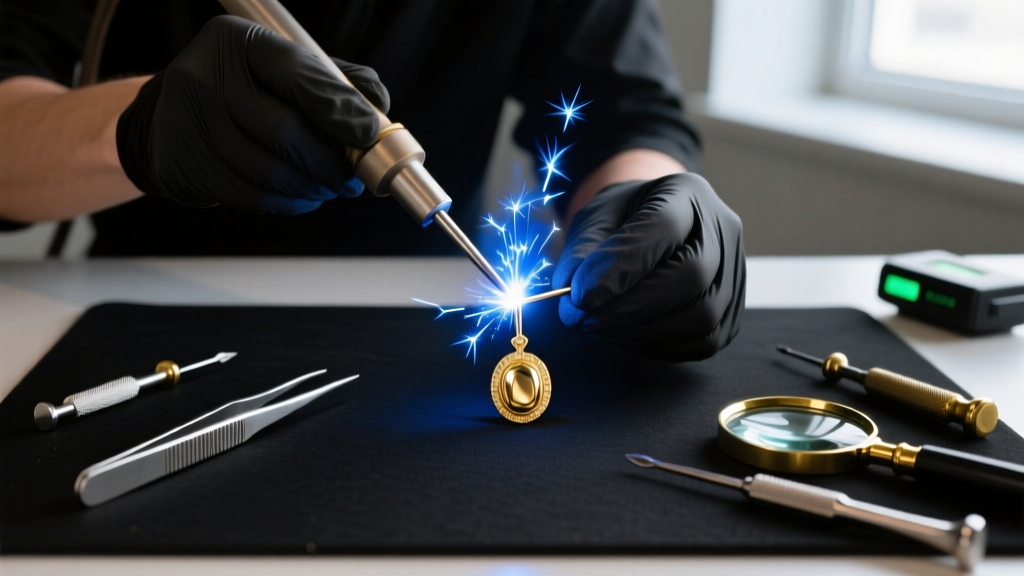
Converting an antique stick pin into a modern pin necklace requires advanced bench techniques. The most common amateur mistake is attempting to bend the pin stem into a loop to accommodate a jump ring. This introduces severe work hardening at the bend radius, guaranteeing a future break. The correct technical protocol involves complete stem amputation and bail integration.
- Amputation: The pin stem is cut flush with the pendant base using a flush-cutting saw, leaving no protruding metal.
- Preparation: The base is filed flat and lightly burred to create a mechanical key for the solder.
- Laser Welding: Rather than using a traditional torch—which risks melting delicate enamel or shattering heat-sensitive gemstones like opals—a laser welder is used to fuse a pre-cast 14k gold bail directly to the base. Laser welding offers pinpoint heat control, keeping the thermal impact zone under 1mm.
- Stress Testing: The newly attached bail is subjected to a 2kg static load test to ensure the weld penetration is sufficient for daily wear.
Expert Insight: Never use soft solder (lead or tin-based) for pin necklace conversions. Soft solder lacks the shear strength to support the dynamic load of a swinging pendant. Always use hard, high-temperature karat gold solders or laser wire welding.
Chain Selection and Load-Bearing Considerations
The chain paired with a pin necklace must be selected based on the tensile strength required to support the pendant's mass, not merely its aesthetic proportion. A heavy 16G steel pin necklace weighing 15 grams will easily snap a delicate 1mm cable chain at the jump ring connection point due to localized stress concentration.
For pin necklaces exceeding 10 grams, a minimum of a 1.5mm rope chain or a 2.0mm box chain is required. Box chains, in particular, offer superior structural integrity because their interlocking square links distribute lateral forces evenly across multiple contact points, rather than relying on the single-point friction of oval cable links. Furthermore, the jump ring connecting the chain to the pin necklace bail must be soldered closed or feature a heavy-gauge split-ring mechanism to prevent prying forces from opening the ring during wear.
Maintenance and Ultrasonic Cleaning Warnings
Maintaining a pin necklace requires specific precautions, particularly regarding ultrasonic cleaners. While ultrasonic waves are excellent for removing sebum and polishing compound from rigid gold structures, they can be devastating to pin necklaces that feature glued elements. Many vintage stick pins utilize shellac or epoxy to secure pearls or cabochons into their bezels. The high-frequency cavitation of an ultrasonic bath will rapidly degrade these adhesives, resulting in stone loss.
Additionally, the micro-threads on a locking screw clutch can become clogged with microscopic debris, causing the cap to cross-thread and seize. Routine maintenance should involve cleaning the threads with a soft brass brush and isopropyl alcohol, followed by the application of a microscopic drop of synthetic watch oil to ensure smooth engagement. For comprehensive care guidelines on antique metalwork, the GIA Gem Encyclopedia provides excellent baseline protocols for preserving historical alloys without compromising their structural integrity.
Ultimately, the pin necklace is a triumph of miniature engineering. By respecting the metallurgical realities of the pin stem, upgrading to secure clutch mechanisms, and executing precise chain conversions, collectors and jewelers can ensure these striking pieces remain both functional and secure for generations.


