How to Choose the Right Length Chain Necklace for Any Neckline
Learn how to measure and select the perfect length chain necklace for your neckline, pendant weight, and body type with our step-by-step styling guide.


Finding the perfect length chain necklace is about much more than simply picking a number off a jewelry menu. The interplay between your neck circumference, the neckline of your garment, and the physical weight of your chosen pendant dictates how a chain will drape, wear, and age over time. A poorly sized chain can twist uncomfortably, obscure a beautiful pendant, or even suffer structural failure if the gauge is mismatched to the drop length. According to the Jewelers of America, understanding standard jewelry measurements is the first step toward building a versatile, damage-resistant collection. This step-by-step guide will teach you exactly how to measure, match, and troubleshoot your chain necklace lengths like a professional bench jeweler.
The Anatomy of Standard Chain Lengths
Before you can select the right length chain necklace, you must understand the industry standard measurements. While custom lengths are available, the vast majority of fine jewelry is manufactured in specific increments designed to hit distinct anatomical landmarks.
- 14 inches (Choker): Sits tightly against the base of the neck. Best for delicate, lightweight chains without pendants.
- 16 inches (Collarbone): Rests perfectly on the collarbone. This is the most versatile length for everyday wear and small to medium pendants.
- 18 inches (Princess): Drops just below the collarbone, resting on the upper chest. Ideal for standard lockets and medium-weight gemstones.
- 20 to 24 inches (Matinee): Falls between the collarbone and the bust. Excellent for business wear, layering, and larger statement pendants.
- 28 to 36 inches (Opera): Drops below the bust, often resting on the sternum or diaphragm. Typically worn as a single statement piece or doubled up.
Step 1: Measure Your Neck and Drop Accurately
Do not rely on guesswork or visual estimation. To find your ideal baseline, you need a flexible tailor's measuring tape or a non-stretchable piece of string and a ruler.
- The Base Measurement: Wrap the tape measure around your neck where a collar would naturally sit. Breathe normally and ensure you can fit two fingers between the tape and your skin. Note this number. For a comfortable choker, add 2 inches to this base measurement.
- The Drop Measurement: To find where an 18-inch or 20-inch chain will actually fall on your specific frame, measure from the nape of your neck (the prominent bone at the back), over your shoulder, and down to your desired resting point on the chest.
- Account for the Clasp: Remember that the listed length of a chain includes the clasp. A heavy lobster clasp can take up to 0.5 inches of the total length, slightly altering the drop.
Step 2: Match Length to Your Most-Worn Necklines
The right length chain necklace should complement, not compete with, your wardrobe. A chain that gets lost in a ruffled collar or awkwardly bisects a neckline creates visual clutter. Use the table below as a definitive framework for pairing chain lengths with common necklines.
| Neckline Type | Ideal Chain Length | Recommended Chain Style |
|---|---|---|
| Crew Neck | 14 to 16 inches | Delicate Cable, Snake, or Herringbone |
| V-Neck | 18 to 22 inches | Figaro, Rope, or Curb with a Y-drop pendant |
| Scoop Neck | 16 to 18 inches | Box Chain or Beaded Chain with a central solitaire |
| Off-the-Shoulder | 14 inches (Choker) | Wide Collar, Paperclip, or layered delicate chains |
| Turtleneck / High Neck | 24 to 30 inches | Thick Curb, Miami Cuban, or long Opera Lariat |
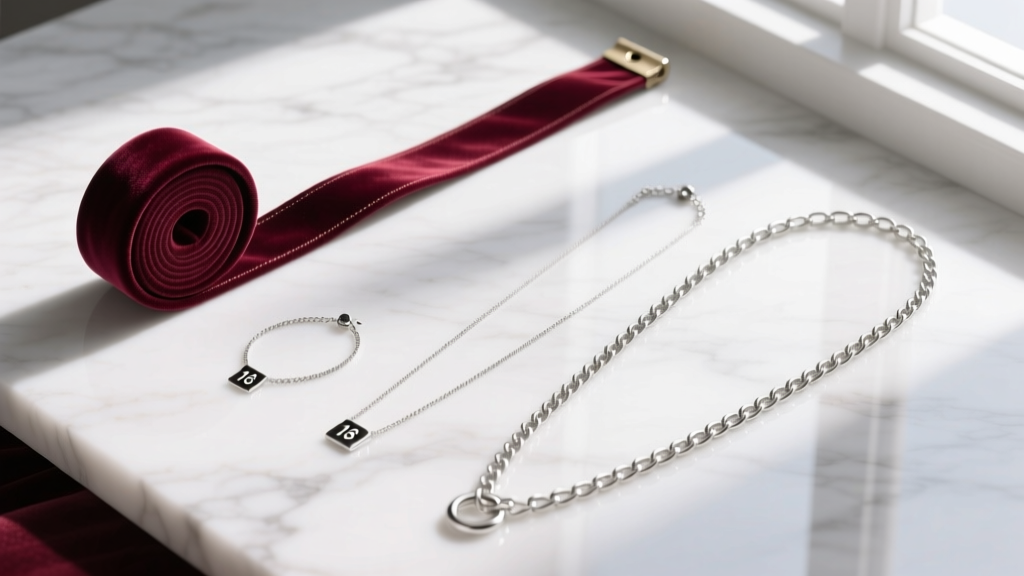
Step 3: Factor in Pendant Weight and Chain Gauge
This is where most consumers make critical errors. The length of a chain directly impacts its structural integrity when bearing weight. A longer chain experiences more kinetic movement, meaning a heavy pendant on a long, thin chain will act like a pendulum, eventually warping the links or snapping the clasp.
Gauge vs. Length Weight Distribution
The Gemological Institute of America (GIA) frequently notes that proper mounting and setting mechanics are vital for jewelry longevity; the same physics apply to the chain holding the setting. When selecting your length chain necklace, adhere to these gauge (thickness) rules based on pendant weight:
- Under 5 grams (Lightweight Solitaires, Small Charms): A 0.9mm to 1.2mm gauge is sufficient for lengths up to 20 inches. For lengths beyond 20 inches, increase the gauge to 1.5mm to prevent tangling and knotting.
- 5 to 15 grams (Standard Lockets, Medium Gemstones): You need a 1.5mm to 2.5mm gauge. Box chains and rope chains in this thickness provide excellent tensile strength. Avoid delicate cable chains at 24 inches with this weight, as the constant pulling will stretch the links into ovals over time.
- Over 15 grams (Heavy Statement Pieces, Solid Gold Crosses): Require a 3.0mm to 5.0mm gauge. Curb, Figaro, and Miami Cuban links are mandatory here. Furthermore, you must check the pendant's bail (the loop that holds the pendant). A heavy pendant usually has a bail with a 4mm to 6mm inner diameter, meaning a delicate 1mm chain will slide through it entirely, rendering the necklace unwearable.
Step 4: The Layering Math for Multiple Lengths
Layering is a dominant trend, but throwing on three random chains will result in a tangled, scratched mess. Metal-on-metal friction causes micro-abrasions, especially when mixing different karats or chain styles. To layer correctly, you must use precise mathematical spacing.
- The 2-Inch Rule (Delicate Chains): If you are layering chains under 1.5mm in thickness, maintain exactly a 2-inch difference between each length (e.g., 14", 16", 18"). This keeps the pendants separated without excessive overlapping.
- The 4-Inch Rule (Heavy Chains): For chains over 2.5mm, you need a 4-inch gap (e.g., 16", 20", 24"). Thicker chains require more physical space to drape properly without catching their links on one another.
- Mixing Textures: Never layer a snake chain with a rope chain. The smooth surface of the snake chain will act as an abrasive file against the intricate grooves of the rope chain, degrading both pieces rapidly.

Troubleshooting Common Fit and Wear Issues
Even when you follow the rules, physical quirks can affect how your necklace behaves. Here is how to troubleshoot the most common annoyances associated with chain lengths.
The Clasp Keeps Sliding to the Front
This happens when the clasp is disproportionately heavy compared to the chain and pendant, or when the chain is too short and rides up the slope of the neck. The Fix: Swap a heavy brass or oversized lobster clasp for a lightweight 5mm spring ring clasp. Alternatively, add a small, decorative counterweight charm directly behind the clasp to anchor it at the nape of the neck.
The Chain Constantly Twists
Certain chain styles, particularly snake and herringbone, are notorious for twisting, which can kink the metal and cause permanent damage. The Fix: If you prefer these fluid styles, opt for a slightly shorter length that rests flat against the collarbone rather than a longer length that swings freely. For longer lengths, switch to a Box or Wheat chain, which are structurally engineered to resist torsion.
The Pendant Flips Upside Down
This is a bail-to-chain ratio issue. If the bail is too wide for the chain, the pendant will slide side-to-side and flip. The Fix: Have a jeweler solder a small jump ring inside the existing bail to reduce its diameter, or use a slightly thicker chain that fills the bail space entirely, locking the pendant in a forward-facing position.
Final Thoughts on Sizing
Selecting the right length chain necklace is an exercise in balancing aesthetics with structural physics. By accurately measuring your drop, respecting the gauge-to-weight ratios, and applying mathematical spacing to your layers, you ensure that your jewelry not only looks exceptional but survives daily wear. Always invest in solid metals and high-quality clasps, as the hardware is the true unsung hero of any well-fitted necklace.


