Repairing Your Vintage Moonstone Bead Necklace: Expert Guide
Learn how to troubleshoot, clean, and restring a vintage moonstone bead necklace. Expert tips on preserving adularescence and fixing broken silk.

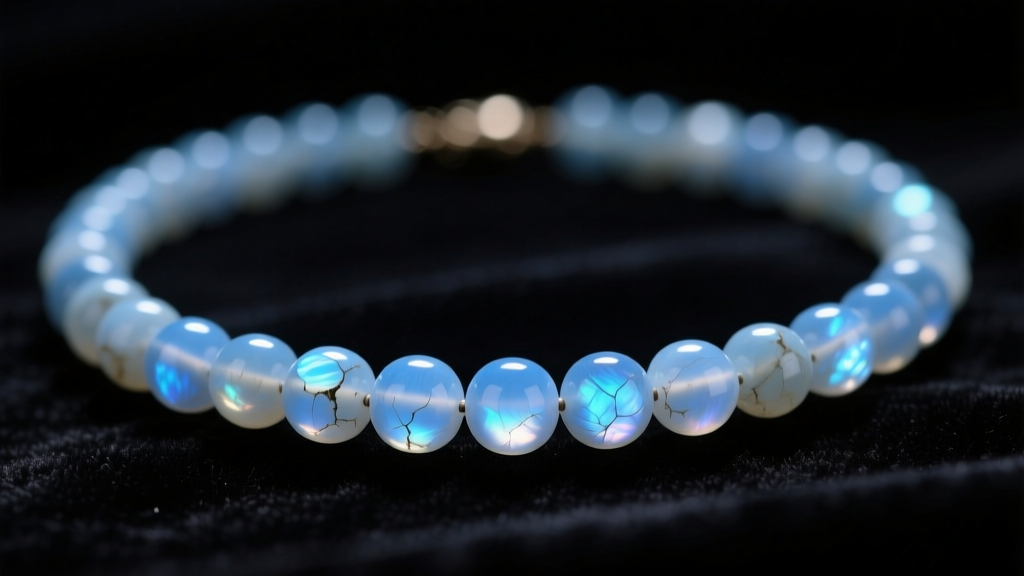
Owning a vintage moonstone bead necklace is akin to holding a piece of captured moonlight. Whether inherited from a relative or sourced from an estate sale, these Art Deco and mid-century bohemian pieces possess an ethereal glow known as adularescence. However, as any seasoned gemologist will tell you, moonstone is as temperamental as it is beautiful. If you are dealing with a snapped strand, a cloudy schiller, or chipped beads, you are facing the classic vulnerabilities of orthoclase feldspar. In this 2026 troubleshooting guide, we will dissect the exact failure modes of vintage moonstone jewelry and provide professional-grade restoration protocols to bring your heirloom back to life.
The Unique Vulnerabilities of Vintage Moonstone
To effectively troubleshoot a vintage moonstone bead necklace, you must first understand its mineralogical weaknesses. Moonstone is a variety of the feldspar-group mineral orthoclase. It scores a mere 6.0 to 6.5 on the Mohs hardness scale, making it significantly softer than quartz (7.0) and far more fragile than diamond or sapphire. More critically, moonstone has perfect cleavage in two directions, intersecting at near 90-degree angles. This means that a sharp knock against a glass table or a hard clasp can cause the bead to split cleanly along its internal crystal lattice. Furthermore, the adularescence—the floating blue or white light—is caused by light scattering between microscopic, alternating layers of orthoclase and albite. If these layers are compromised by chemical intrusion or severe surface abrasion, the stone 'dies' optically.
Diagnosing Common Failure Modes
When evaluating a damaged vintage piece, isolate the exact point of failure before attempting any repairs. Here are the three most frequent issues encountered by jewelry conservators.
1. Silk Thread Degradation and Stretching
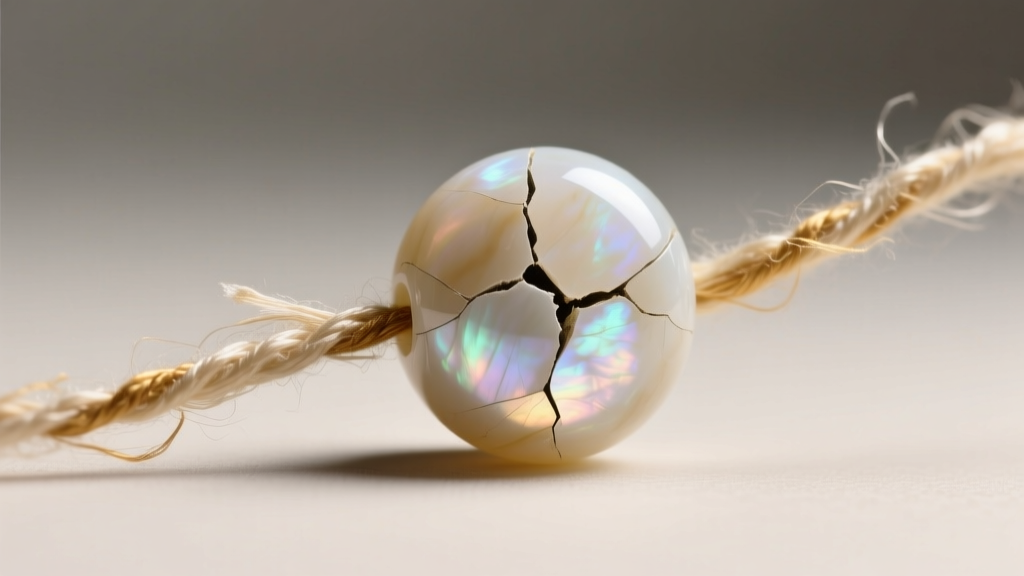
Authentic vintage moonstone necklaces from the 1960s through the 1990s were almost exclusively strung on natural silk. While silk provides a beautiful, supple drape, it is a protein-based fiber highly susceptible to acidic environments. Human sweat, which typically has a pH between 4.5 and 7.0, slowly breaks down the silk's structural integrity. If your necklace feels stiff, shows visible fraying near the drill holes, or has gaps between the knots, the silk is suffering from acid hydrolysis and is at imminent risk of catastrophic failure.
2. Loss of Adularescence (The 'Dead' Schiller)
If your beads look like dull, milky glass rather than glowing orbs, the surface is likely suffocating under decades of cosmetic buildup. Hairspray, perfume, and body oils create a microscopic film that prevents light from penetrating the stone and refracting off the internal lamellae layers. In worse cases, previous owners may have used harsh commercial silver dips or ultrasonic cleaners, which can etch the feldspar surface permanently.
3. Bead Chipping and Drill Hole Abrasions
Inspect the areas immediately surrounding the drill holes. If the vintage beads were strung without proper knotting, or if they were forced onto a wire that was too thick, the edges of the drill holes will chip. Because of moonstone's perfect cleavage, a micro-fracture at the drill hole can easily propagate through the entire bead during the restringing process.
Step-by-Step Troubleshooting and Restoration
Once you have diagnosed the issues, follow these professional conservation and repair steps to restore the necklace safely.
Safe Cleaning Protocols for Feldspar Minerals
Never place a vintage moonstone bead necklace in an ultrasonic cleaner. The 40kHz high-frequency vibrations will exploit the stone's cleavage planes, causing internal shattering. Steam cleaners are equally destructive due to thermal shock. Instead, use the following conservator-approved method:
- Solution: Mix lukewarm distilled water with a single drop of pH-neutral baby shampoo. Avoid tap water, as dissolved minerals can leave spots.
- Application: Dip a ultra-soft microfiber cloth or a clean, soft-bristled makeup brush into the solution. Gently agitate the surface of each bead.
- Rinsing: Wipe the beads with a cloth dampened only with pure distilled water.
- Drying: Pat dry immediately with a lint-free cloth. Do not allow water to sit in the drill holes, as trapped moisture will rot the new stringing material.
Restringing Specifications: Silk vs. Nylon
If the original silk is compromised, you must restring the necklace. While modern high-tenacity nylons (like Silamide) offer superior tensile strength, purists often prefer 100% natural silk for vintage pieces to maintain the authentic drape and historical accuracy. According to the Gemological Institute of America (GIA), proper knotting is non-negotiable for moonstone to prevent bead-on-bead friction, which will scratch the soft feldspar over time.
For standard 6mm to 8mm vintage beads, use Size F (0.35mm) or Size G (0.40mm) silk thread. Crucially, you must use French wire (bullion) at the clasp ends. French wire is a microscopic coiled spring of sterling silver or gold-filled wire that acts as a sacrificial buffer, preventing the metal clasp from sawing through the silk thread over years of wear.
Authenticity Check: True Vintage vs. Synthetic Imitations
Before investing time and money into restringing, verify that your vintage moonstone bead necklace is actually composed of natural feldspar. The 1970s saw a massive influx of 'Opalite'—a man-made glass that mimics moonstone's glow. Use this diagnostic matrix to verify your stones, referencing data from Mindat.org on feldspar mineralogy.
| Property | True Blue Moonstone (Orthoclase) | Rainbow Moonstone (Labradorite) | Opalite (Synthetic Glass) |
|---|---|---|---|
| Visual Glow | Billowy blue/white light floating on surface | Multi-color flashes (blue, green, orange) | Uniform, unnatural milky glow with pink/yellow tints |
| Internal Inclusions | Centipede-like tension fractures, layered striations | Dark magnetite inclusions, distinct twinning lines | Bubbles, swirl marks, completely homogenous |
| Mohs Hardness | 6.0 - 6.5 | 6.0 - 6.5 | 5.5 - 6.0 (Glass) |
| Specific Gravity | 2.56 - 2.59 | 2.68 - 2.72 | ~2.50 (Varies by glass mix) |

Preventative Storage and Maintenance Matrix
Once your vintage moonstone bead necklace is cleaned and restrung, proper storage is vital to prevent future degradation. Moonstone requires specific environmental controls to maintain its optical phenomena and structural integrity.
| Hazard | Consequence | Preventative Action |
|---|---|---|
| UV Exposure | Prolonged direct sunlight can dry out stringing materials and potentially alter the optical contrast of certain feldspars. | Store in a dark, opaque jewelry box or velvet pouch. |
| Thermal Shock | Sudden temperature changes (e.g., wearing into a hot sauna or freezing outdoors) can cause cleavage-plane fracturing. | Remove before entering extreme temperature environments. |
| Chemical Contact | Aerosols, lotions, and acids etch the surface, killing the adularescence. | Adopt a 'Last On, First Off' dressing protocol. |
| Abrasive Storage | Storing alongside diamonds or sapphires will result in severe scratching (Mohs 6 vs Mohs 10). | Isolate in a dedicated, soft-lined compartment. |
Conclusion
Troubleshooting a vintage moonstone bead necklace requires a delicate balance of gemological knowledge and meticulous handcraft. By understanding the specific vulnerabilities of orthoclase feldspar, utilizing pH-neutral cleaning methods, and adhering to strict silk-and-French-wire restringing specifications, you can ensure your heirloom survives for another generation. Treat your moonstone with the respect its fragile, glowing nature demands, and it will continue to captivate with its unearthly light for decades to come.


