How To Say Necklace In Spanish & Shop For Fine Metals
Learn how to say necklace in Spanish while mastering metal properties. Compare gold, silver, and titanium alloys for your next purchase.

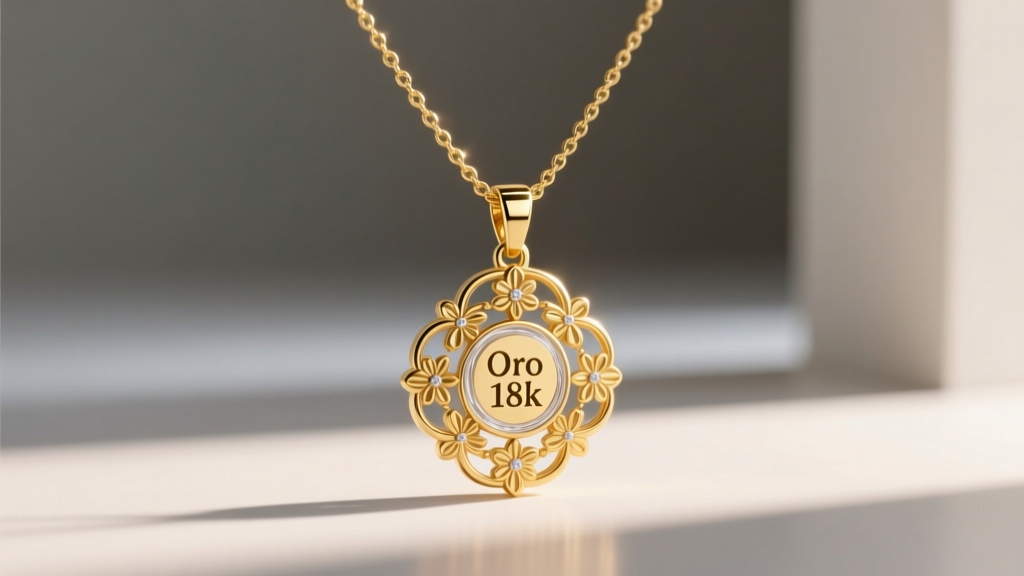
The Linguistic Basics: How to Say Necklace in Spanish
Whether you are navigating the historic silver markets of Taxco, Mexico, or browsing high-end boutiques in Madrid, knowing how to say necklace in Spanish is just the first step in making an informed purchase. The direct translation for necklace is collar. However, the Spanish language offers specific terminology for different necklace styles that directly correlate to their material weight and structural properties.
- Collar: The general term for a necklace, typically resting between the collarbone and the bust (18 to 24 inches).
- Gargantilla: A choker, sitting tightly against the neck (14 to 16 inches). Because it experiences more friction and sweat exposure, material choice here is critical for preventing contact dermatitis.
- Cadena: A chain necklace, usually referring to the metal links themselves without a pendant.
- Dije: The pendant or charm that hangs from the cadena.
Understanding these terms allows you to ask precise questions about the metallurgy of the piece. When shopping abroad in 2026, being able to ask "¿De qué material es esta gargantilla?" (What material is this choker?) signals to the jeweler that you are an educated buyer who cares about alloy composition, not just aesthetics.
Decoding Gold Alloys: Oro Amarillo, Blanco, and Rosa
Gold (oro) is sold by karat (quilate), which dictates the ratio of pure gold to alloy metals. Pure 24k gold is too soft for daily-wear necklaces, so it is alloyed for tensile strength. According to the Gemological Institute of America (GIA), the alloy metals used drastically change the metal's color, hardness, and oxidation resistance.
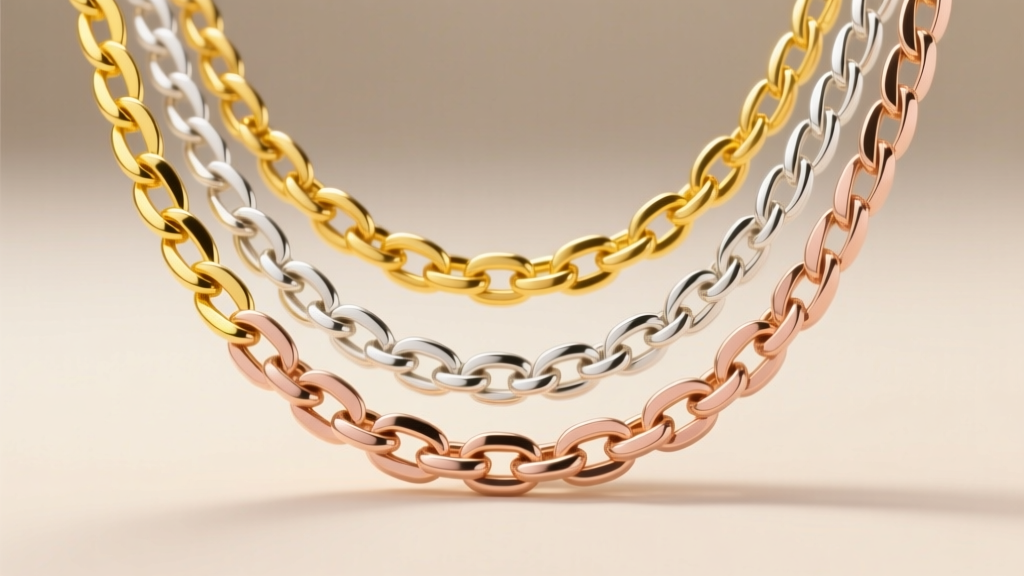
Oro Amarillo (Yellow Gold)
In Spanish-speaking markets, 18k yellow gold (oro de 18 quilates) is the standard for fine jewelry, particularly in Spain and Colombia. It contains 75% pure gold, alloyed with roughly 12.5% copper and 12.5% silver. This specific ratio maintains the rich yellow hue while providing enough structural integrity for delicate cable chains (often drawn at 1.2mm to 1.5mm wire gauges). Look for the 750 hallmark.
Oro Blanco (White Gold)
White gold is created by alloying gold with white metals like nickel, palladium, or manganese. In European and Spanish markets, nickel is heavily restricted due to high rates of contact dermatitis. Therefore, high-quality oro blanco is typically alloyed with palladium. Be aware that white gold is almost always plated with rhodium for a bright white finish. Over 3 to 5 years of daily wear, this plating will wear off, revealing the slightly yellowish underlying alloy, requiring re-plating (baño de rodio).
Oro Rosa (Rose Gold)
Rose gold gets its pinkish hue from a high copper content. An 18k rose gold alloy typically contains 75% gold and 22.25% copper, with a touch of silver. While beautiful, copper is reactive. If the copper ratio is too high (as seen in some lower-grade 10k or 14k rose gold), the necklace can oxidize and leave a green or black residue on the skin when exposed to the acidity in sweat.
Silver Standards: Plata 925 vs. Regional Variations
Silver (plata) is highly popular across Latin America, but not all silver is created equal. The global standard for sterling silver is 92.5% pure silver and 7.5% copper, stamped as 925 or Plata Sterling. The copper adds necessary hardness, but it is also the culprit behind silver's tendency to tarnish (deslustre) when exposed to sulfur in the air.
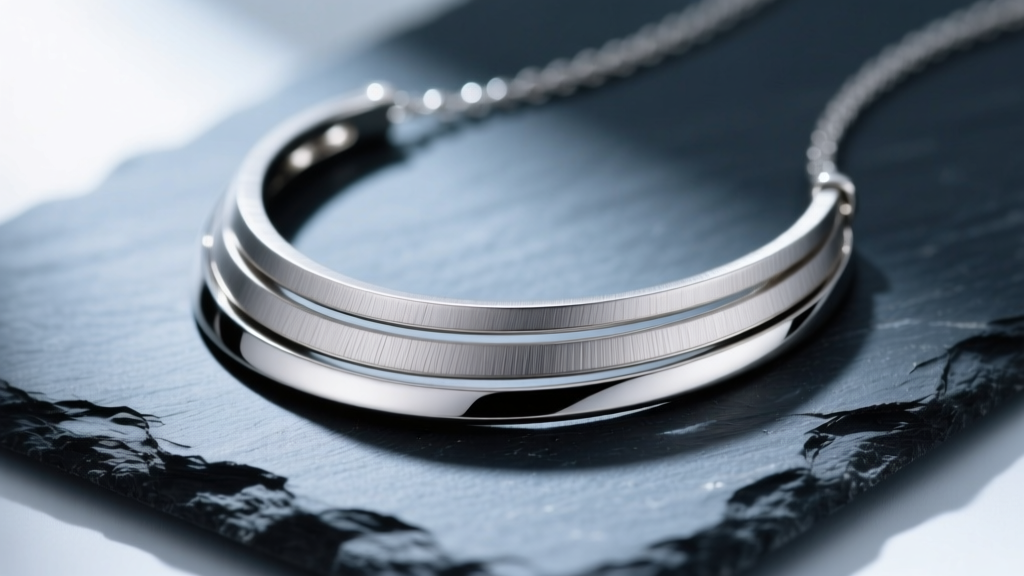
The Taxco Silver Phenomenon (Plata 950 and 980)
If you are shopping in Mexico, you will frequently encounter Plata 950 and Plata 980. According to the Silver Institute, higher silver content means a softer metal. Taxco artisans often prefer 950 or 980 silver because its malleability allows for intricate, hand-hammered repoussé work and deep oxidization detailing that is difficult to achieve with harder 925 silver. However, a 980 silver chain is highly susceptible to stretching and kinking under the weight of heavy pendants. For a durable everyday cadena, insist on 925; for an artisanal, lightweight dije, 950 is superior.
Alternative Metals: Acero Quirúrgico and Titanio
For those with severe metal allergies or those seeking highly durable, waterproof necklaces, alternative metals are the focus of modern jewelry design. In Spanish, you will see these listed as acero quirúrgico and titanio.
Acero Quirúrgico (Surgical Steel)
Not all stainless steel is safe for sensitive skin. You must look for 316L surgical steel. The "L" stands for low carbon, and this grade contains molybdenum, which drastically increases corrosion resistance against chlorides (like sweat and seawater). Cheaper alternatives like 304 steel lack molybdenum and will pit and rust over time. A 316L steel necklace is heavy, highly polished, and virtually indestructible, making it ideal for thick Cuban link chains (cadenas eslabón cubano).
Titanio (Implant-Grade Titanium)
Titanium is the ultimate hypoallergenic metal. However, commercial titanium jewelry is often made from Grade 2 or Grade 4 commercially pure titanium, which can contain trace impurities. For absolute biocompatibility, seek out Grade 23 Titanium (Ti-6Al-4V ELI). This is the exact alloy used in medical implants. It is completely nickel-free, 45% lighter than steel, and possesses a high strength-to-weight ratio. In Spanish, ask if the piece is titanio de grado implante to ensure you are getting the highest metallurgical grade.
A Bilingual Buyer’s Cheat Sheet for Material Properties
Use this structured guide to verify the properties of the necklace you are purchasing in a Spanish-speaking region.
| English Term | Spanish Term | Material Property & Buying Advice |
|---|---|---|
| Hallmark / Stamp | Sello / Contraste | Always look for 750 (18k), 585 (14k), or 925. In Spain, look for the official assay office mark (contraste). |
| Tarnish | Deslustre / Oxidación | Silver and copper-heavy rose gold will tarnish. Ask if the piece has an anti-tarnish coating (baño antideslustre). |
| Hypoallergenic | Hipoalergénico | Ensure white gold is palladium-based, not nickel-based. Titanium and 316L steel are safest. |
| Solid vs. Plated | Macizo vs. Chapado | Oro macizo means solid gold. Chapado en oro means gold-plated over brass or silver, which will eventually wear through. |
| Tensile Strength | Resistencia a la tracción | Crucial for thin chains holding heavy pendants. Platinum and steel have high tensile strength; 22k gold and 980 silver do not. |
Verifying Authenticity in Spanish Markets
When buying fine metal necklaces abroad, understanding local hallmarking laws is vital. In Spain, the precious metals market is strictly regulated by the state. Every piece of oro or plata must bear two marks: the maker's mark (punzón de origen) and the state assay mark (punzón de contraste) indicating the fineness.
In Latin America, regulations can be more relaxed, relying heavily on the jeweler's reputation. If a vendor in a tourist market claims a necklace is oro de 18 quilates but the price is suspiciously close to the spot price of 10k gold, or the piece lacks a stamped 750 hallmark, proceed with extreme caution. Bring a neodymium magnet; while gold and silver are non-magnetic, many base metals used in counterfeit chains (like nickel-iron alloys) will exhibit a magnetic pull. By combining your knowledge of how to say necklace in Spanish with a deep understanding of metallurgical properties, you can confidently acquire heirloom-quality jewelry anywhere in the Spanish-speaking world.


