How to Store Necklaces for Travel: The Tangle-Free Guide
Learn how to store necklaces for travel without tangling or damage. Expert troubleshooting tips for delicate chains and pendants.

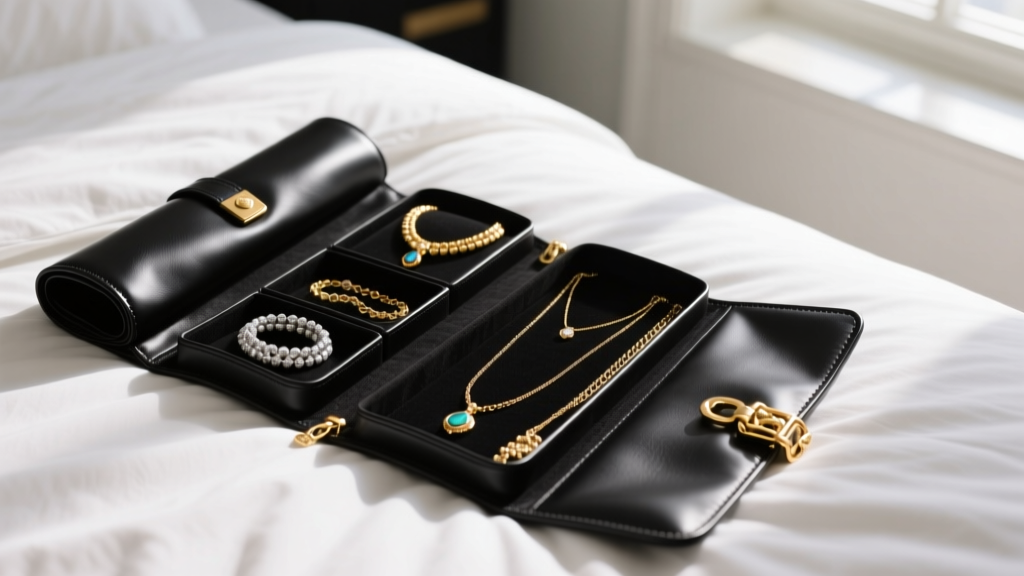
Figuring out how to store necklaces for travel is one of the most persistent challenges for jewelry enthusiasts. You pack a pristine, carefully curated layered set, only to open your luggage at your destination and find a frustrating, tightly knotted ball of metal. Beyond the annoyance of untangling, improper travel storage leads to micro-scratches, bent links, and in severe cases, permanent structural damage to delicate chains. This comprehensive troubleshooting guide moves past generic advice, diving into the material science, chain geometry, and security protocols required to transport your necklaces safely and flawlessly.
The Physics of Tangled Chains: Why Your Necklaces Knot in Transit
To solve the tangling problem, you must first understand the kinetic forces at play. Tangling is not bad luck; it is a predictable result of vibration, friction, and chain geometry. When luggage is subjected to the continuous micro-vibrations of an airplane cabin or the jolting movements of a car trunk, loose chains behave like granular media. The links shift, rotate, and eventually interlock.
The geometry of the chain dictates its vulnerability. For instance, box chains (especially those under 1.5mm in width) feature hollow, cubic links with sharp interior edges that easily catch on the tiny jump rings of other necklaces. Snake chains, composed of tightly wavy metal plates, are highly resistant to tangling but are notoriously susceptible to permanent kinking if bent at an angle sharper than 45 degrees during transit. Cable and curb chains are generally the most forgiving, provided the clasp is secured.
Troubleshooting Common Travel Storage Failures
Failure 1: The 'Clasp Slippage' Knot
The most common cause of severe knotting is an unsecured clasp slipping through the links of its own chain or a neighboring one. The standard advice is to leave the clasp slightly undone and thread it through the end loop. However, this fails with heavy pendants that pull the chain taut. The Expert Fix: Use a 2mm clear silicone tension bead. Thread the clasp through the end loop, then slide the silicone bead over the clasp to lock it against the jump ring. This creates a physical barrier that vibration cannot overcome.
Failure 2: Pendant-to-Chain Micro-Scratching
Storing a necklace with the pendant resting directly against the chain guarantees micro-abrasions. This is governed by the Mohs Hardness Scale. A diamond pendant scores a 10, while an 18k gold chain scores a mere 2.5 to 3. If stored loosely together, the diamond will act like sandpaper against the gold. Always store pendants separated from chains using microfiber dividers, or detach the pendant entirely for transit if the jump ring allows.
Material-Specific Storage Protocols
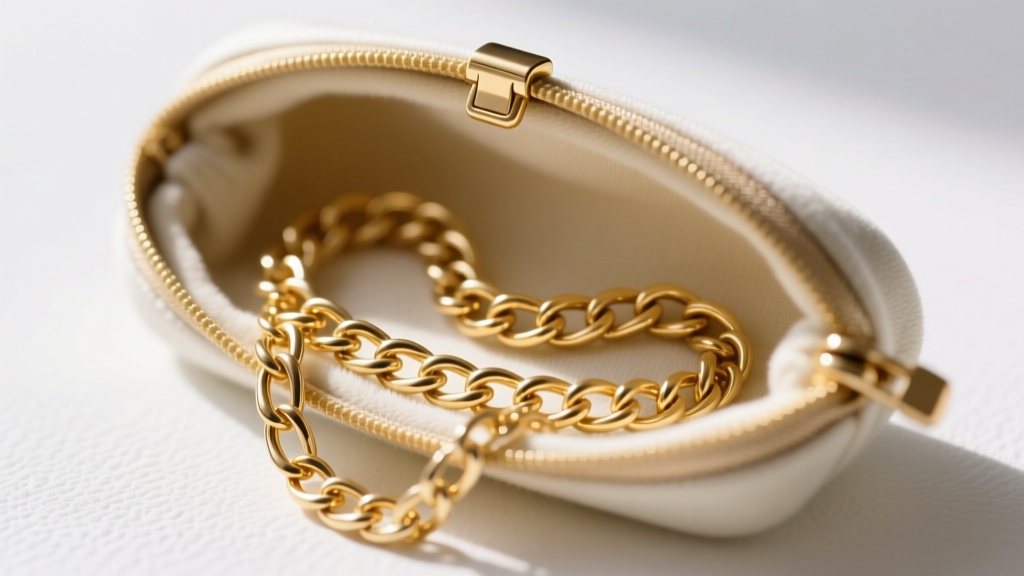
Different metals and organic gems react uniquely to the pressurized, low-humidity environment of an airplane cabin and the varying climates of your destination. Below is a troubleshooting matrix for material-specific travel storage.
| Material | Primary Travel Threat | Expert Storage Solution |
|---|---|---|
| Sterling Silver (925) | Rapid tarnishing due to sulfur exposure in varying climates. | Store in airtight zip-lock bags with a 3M Anti-Tarnish strip. These strips absorb hydrogen sulfide (H2S) gas, preventing silver sulfide formation. |
| 14k / 18k Gold | Surface scratching from harder gems or metal chains. | Wrap individually in untreated, acid-free jeweler's tissue paper. Avoid standard cotton balls, which can snag on prongs. |
| Platinum | Develops a 'patina' (micro-scratches) when rubbed against other metals. | Store in dedicated, individual velvet-lined slots. Platinum is dense but scratches easily; keep it entirely isolated. |
| Pearls & Organics | Dehydration and cracking in low-humidity airplane cabins. | Never store in airtight plastic. Use a breathable, soft cotton pouch and place a slightly damp (not wet) cotton ball in the outer compartment of the jewelry roll to maintain ambient moisture. |
The DIY Hack Debate: Do They Actually Work?
The internet is flooded with DIY hacks for packing jewelry. As experts, we need to separate the genuinely useful from the actively harmful.
The Plastic Wrap Hack: Wrapping necklaces in cling film is widely recommended to prevent tangling. Verdict: HARMFUL. PVC-based plastic wraps trap ambient moisture and off-gas chemicals that accelerate the oxidation of silver and copper alloys. Over a long trip, you may unpack your necklace to find it dull or lightly tarnished.
The Drinking Straw Hack: Threading a chain through a plastic drinking straw and clasping it. Verdict: CONDITIONAL. This works excellently for thick cable or rope chains (over 2mm). However, for delicate 0.8mm chains, the friction of pulling the chain through the straw can stretch the links or snap the spring ring clasp. Use silicone tubing (available at hardware stores) instead of rigid plastic straws for delicate pieces.
Security & Anti-Theft Strategies for High-Value Pieces
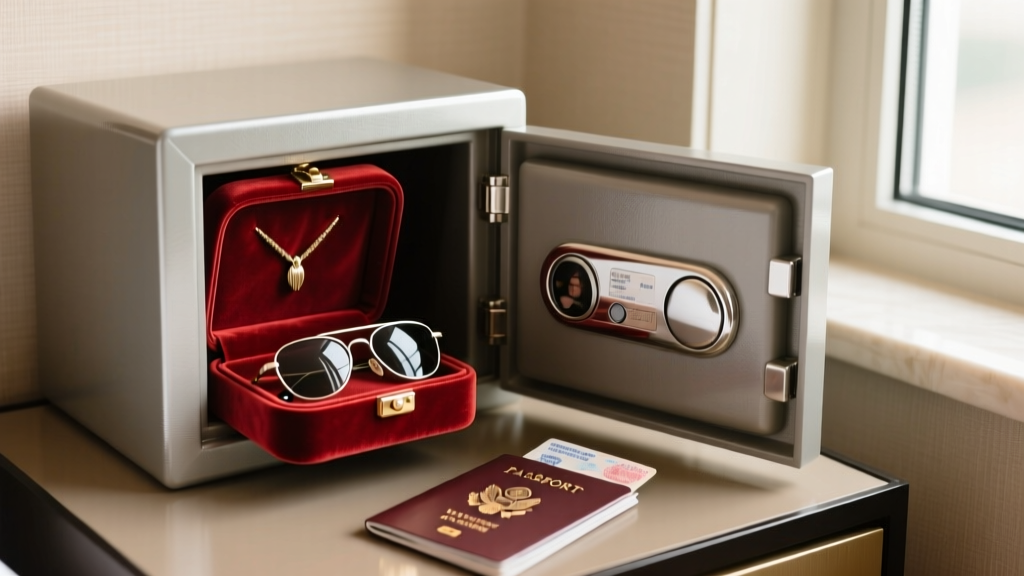
Knowing how to store necklaces for travel isn't just about preventing tangles; it is also about preventing theft. According to travel security experts, hotel room safes are not infallible, and leaving jewelry out in the open invites opportunity theft.
- The Decoy Strategy: Travel with a secondary, inexpensive 'decoy' jewelry case containing a few low-value fashion pieces. Leave this in plain sight or in the hotel safe. Keep your high-value gold and diamond necklaces in a discreet, unbranded toiletry bag or hidden within a rolled pair of socks in your locked hard-shell luggage.
- RFID & Bluetooth Tracking: For heirloom pieces, consider slipping a micro Bluetooth tracker (like an Apple AirTag or Tile Sticker) into the lining of your travel jewelry roll. This provides real-time location data if your luggage is misplaced or stolen.
- Photographic Inventory: Before leaving, take high-resolution, macro photographs of each necklace, specifically focusing on the hallmarks, clasp engravings, and any unique gemstone inclusions. This is critical for insurance claims and police reports in the event of loss.
Step-by-Step Packing Framework for Layered Sets
If you plan to wear a layered necklace set (e.g., a 16-inch choker, an 18-inch pendant, and a 22-inch lariat), packing them requires a systematic approach to ensure they are ready to wear upon arrival.
- Prep the Chains: Wipe each chain down with a clean microfiber cloth to remove body oils and lotions, which act as a magnet for dust during transit.
- Secure the Clasps: Fasten every clasp and secure it with a silicone tension bead or a small piece of jeweler's tape.
- The 'Taco' Fold Method: Instead of rolling the necklaces (which can cause memory kinks in snake and herringbone chains), fold them gently into a soft 'U' or 'taco' shape.
- Barrier Layering: Place a sheet of acid-free tissue paper between each necklace layer to prevent metal-on-metal friction.
- Rigid Enclosure: Place the layered stack inside a hard-shell sunglasses case or a dedicated rigid jewelry box. The rigid exterior absorbs the compressive forces of packed clothing, ensuring the chains remain undisturbed.
By understanding the physical properties of your jewelry and implementing these targeted troubleshooting strategies, you will eliminate the frustration of tangled chains and ensure your necklaces arrive at your destination in pristine, ready-to-wear condition.


