How to Store Statement Necklaces to Protect Your Investment
Learn how to store statement necklaces to protect your investment. Compare budget vs. premium organizers and prevent costly material degradation.

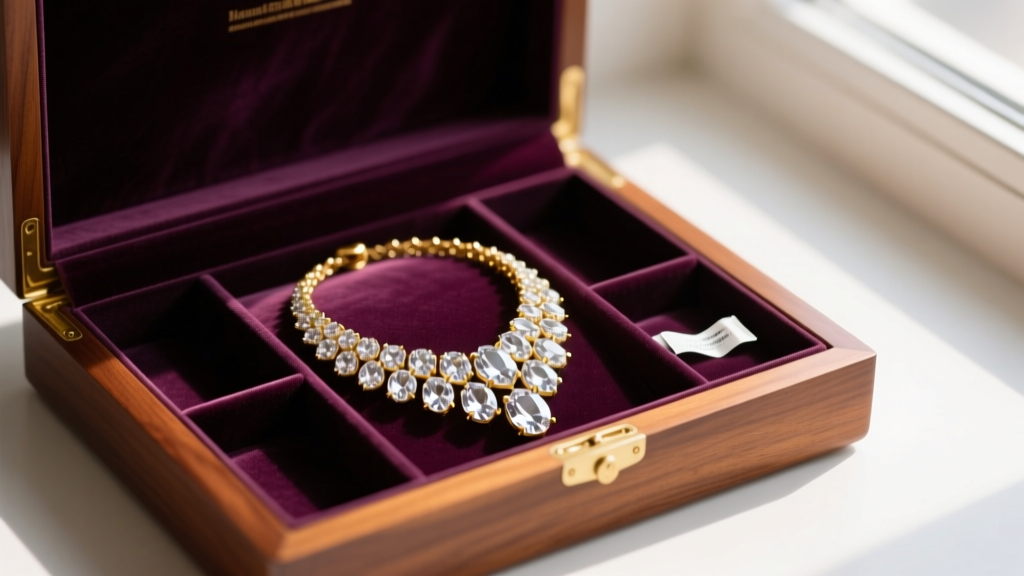
The Financial Reality of Statement Necklace Storage
Statement necklaces are more than just eye-catching accessories; they are significant financial investments. Whether you own a $250 gold vermeil collar, a $1,500 artisan beaded piece, or a high-end crystal bib necklace, the way you store these items directly impacts their long-term value. Many collectors focus entirely on the purchase price but neglect the hidden costs of improper storage. Understanding how to store statement necklaces properly is not just about maintaining their aesthetic appeal—it is a critical budget and value preservation strategy.
When heavy, intricate necklaces are tossed into a communal jewelry box, the financial consequences compound quickly. Tangled chains can warp or snap, requiring professional soldering that costs between $40 and $120 depending on the metal and complexity. Furthermore, friction between different metal alloys and gemstones accelerates wear. A degraded gold vermeil finish will require a professional replating service, which typically ranges from $75 to $150 per piece. By implementing a strategic, budget-conscious storage framework, you can eliminate these unnecessary maintenance costs and protect your jewelry's resale and heirloom value.
Material-Specific Degradation and Storage Needs
To assess the true value of your storage system, you must first understand the specific vulnerabilities of the materials in your collection. According to the Gemological Institute of America (GIA), different metals and gemstones react uniquely to environmental stressors like humidity, sulfur, and UV light.
Sterling Silver (925) and the Sulfur Threat
Sterling silver is highly susceptible to tarnishing when exposed to sulfur compounds in the air, a process that forms silver sulfide on the surface. For heavy statement cuffs or multi-strand silver necklaces, polishing away deep tarnish can result in microscopic metal loss over time, eventually compromising the structural integrity of delicate filigree or clasp mechanisms. To protect silver investments, storage must include anti-tarnish materials like Pacific Silvercloth or 3M anti-tarnish strips, which absorb sulfur gases before they reach the metal.
Gold Vermeil and Plated Brass
Gold vermeil—defined by the FTC as a minimum of 2.5 microns of gold plated over sterling silver—is a popular choice for high-end statement pieces. However, if stored in high-humidity environments (above 60% relative humidity), moisture can penetrate microscopic pores in the gold layer, causing the underlying silver or brass base to oxidize and expand. This leads to blistering and flaking of the gold layer, a failure mode that ruins the piece's value entirely. Airtight storage with silica gel desiccants is non-negotiable for vermeil.
Porous and Organic Gemstones
Statement necklaces frequently feature large, porous stones like turquoise, lapis lazuli, or organic materials like pearls and coral. These materials are exceptionally sensitive to dehydration and chemical exposure. Storing a turquoise statement piece in a sealed plastic bag without a humidity buffer can cause the stone to crack or lose its vibrant color. Conversely, storing pearls in airtight plastic causes them to dry out and yellow. The Jewelers of America recommends storing organic gems in soft, breathable cotton or linen pouches to allow for minimal air exchange while protecting them from abrasive scratches.
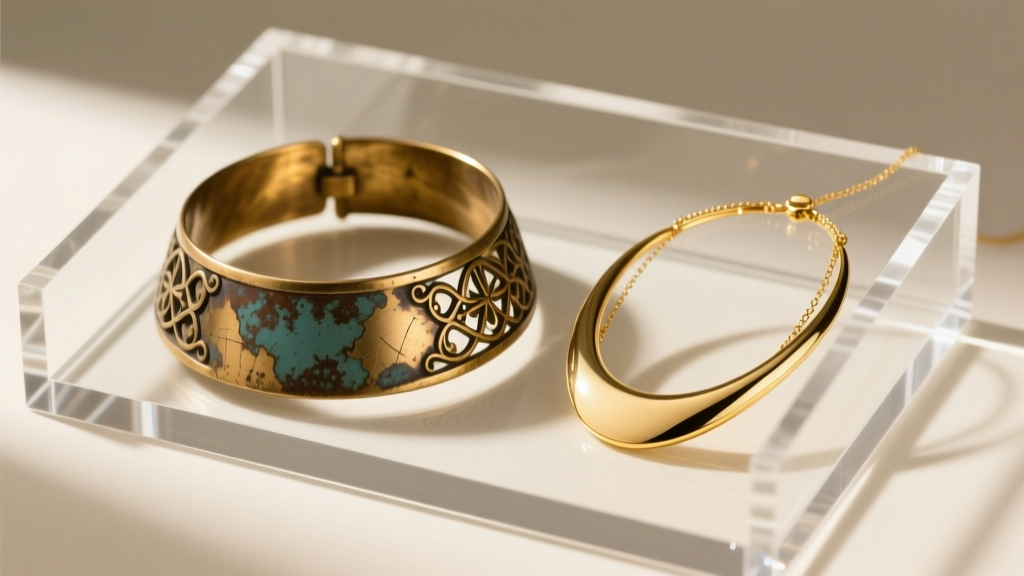
Budget vs. Premium Storage Solutions: A Value Assessment
When deciding how to allocate your budget for jewelry organization, it is essential to weigh the upfront cost of the storage solution against the potential cost of jewelry damage. Below is a comparative analysis of storage tiers based on a standard collection of 10-15 statement necklaces.
| Storage Tier | Estimated Cost | Materials & Features | ROI & Value Assessment |
|---|---|---|---|
| Budget / DIY | $15 - $35 | Heavy-duty ziplock bags, silica gel packets, individual velvet pouches, acrylic wall hooks. | High ROI. Excellent moisture control and scratch prevention, though lacking in aesthetic display value. |
| Mid-Tier | $50 - $120 | Multi-drawer acrylic or wood-grain composite boxes with felt-lined dividers and anti-tarnish strips. | Medium ROI. Good for organization and moderate protection, but felt can sometimes trap moisture if not monitored. |
| Premium | $200 - $600+ | Solid mahogany or walnut chests, chemically neutral suede lining, integrated humidity control, lockable. | Low direct ROI, but essential for fine jewelry investments over $2,000. Provides maximum physical and environmental protection. |
For fashion and semi-fine statement necklaces (valued under $500), the Budget/DIY tier actually provides the highest functional return on investment. The airtight seal of a quality ziplock bag paired with an indicating silica gel packet offers superior moisture protection compared to many mid-tier open-drawer organizers.
Step-by-Step Framework: How to Store Statement Necklaces
To maximize the lifespan and value of your collection, follow this exact protocol before putting your necklaces away for the season or between wears.
- Step 1: The Post-Wear Cleanse. Never store a necklace immediately after wearing it. Skin oils, lotions, and sweat are highly acidic and will accelerate tarnish and degrade porous stones. Wipe the piece gently with a clean, lint-free microfiber cloth. For metal-only pieces, use a designated polishing cloth infused with jeweler's rouge.
- Step 2: Clasp and Secure. A common misconception is to leave chains unclasped to 'relax' the metal. In reality, unclasped chains are highly prone to tangling and kinking, which weakens the soldered links. Always fasten the clasp (e.g., lobster or spring ring) before storage.
- Step 3: Isolate by Hardness. The Mohs scale of mineral hardness dictates storage proximity. Never store a diamond-encrusted pendant (Mohs 10) in the same compartment as a turquoise statement piece (Mohs 5-6). The diamond will easily scratch the softer stone during movement.
- Step 4: Implement Environmental Controls. Place a 2x2 inch 3M anti-tarnish strip and a small packet of indicating silica gel (which changes color when saturated) into each individual storage bag or compartment.
- Step 5: Position for Weight Distribution. Heavy statement collars and bib necklaces should be stored flat. Hanging heavy pieces for extended periods can cause the chain links to stretch or the stringing wire to warp under the constant pull of gravity.
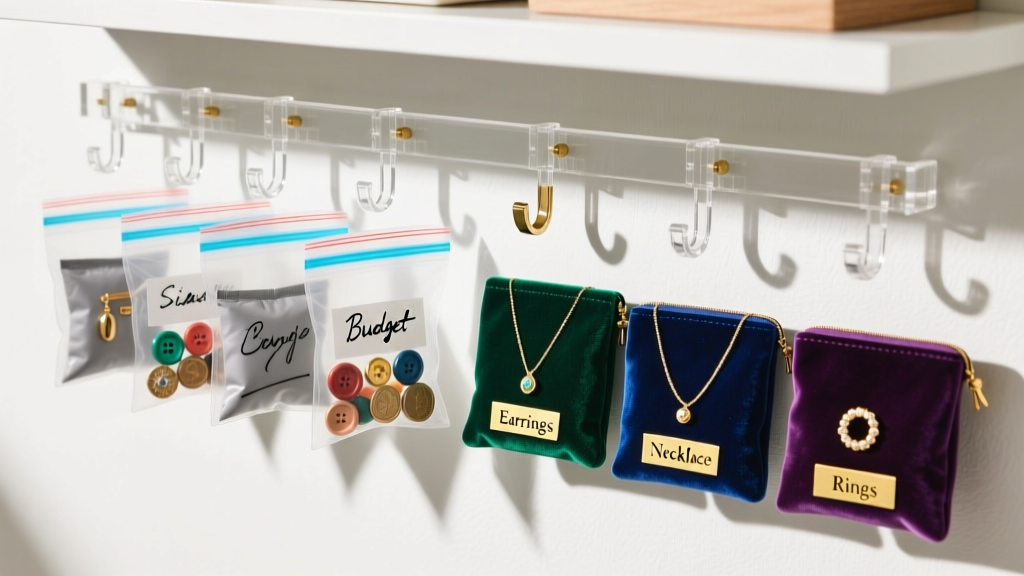
DIY vs. Commercial Organizers: A Cost-Benefit Analysis
Many jewelry enthusiasts assume that expensive, multi-tiered commercial jewelry armoires are the only way to properly store large statement pieces. However, from a strict value-assessment perspective, commercial organizers often prioritize visual display over environmental preservation. Many popular velvet-lined boxes use adhesives and composite woods that off-gas volatile organic compounds (VOCs), which can actually accelerate the tarnishing of silver and copper alloys.
Expert Insight: The most cost-effective and chemically neutral storage method for heavy statement necklaces is the 'Bag-and-Box' technique. Seal each necklace individually in a polyethylene ziplock bag with an anti-tarnish strip, then lay them flat in a rigid, acid-free archival storage box. This method costs under $30 to set up but provides museum-level environmental protection that rivals $500 commercial chests.
If you prefer to hang your necklaces for daily visibility, invest in acrylic or stainless steel wall hooks rather than brass or iron hooks, which can rust and transfer stains to your chains. Ensure the hooks are wide enough to support the entire chain without creating sharp bend points, which cause metal fatigue over time.
Conclusion: Maximizing Your Jewelry ROI
Learning how to store statement necklaces is fundamentally an exercise in asset protection. By shifting your perspective from simple organization to active value preservation, you can save hundreds of dollars in replating, restringing, and polishing fees. Whether you opt for a budget-friendly airtight system or invest in a premium humidity-controlled chest, the key is consistency. Treat your statement pieces with the same environmental respect you would give to fine art, and they will retain their beauty—and their financial value—for decades to come.


