Shell Statement Necklace Guide: Materials & Properties
Compare abalone, mother of pearl, and puka shells for your next shell statement necklace. Learn about durability, Mohs hardness, and care tips.

The Architecture of Organic Jewelry
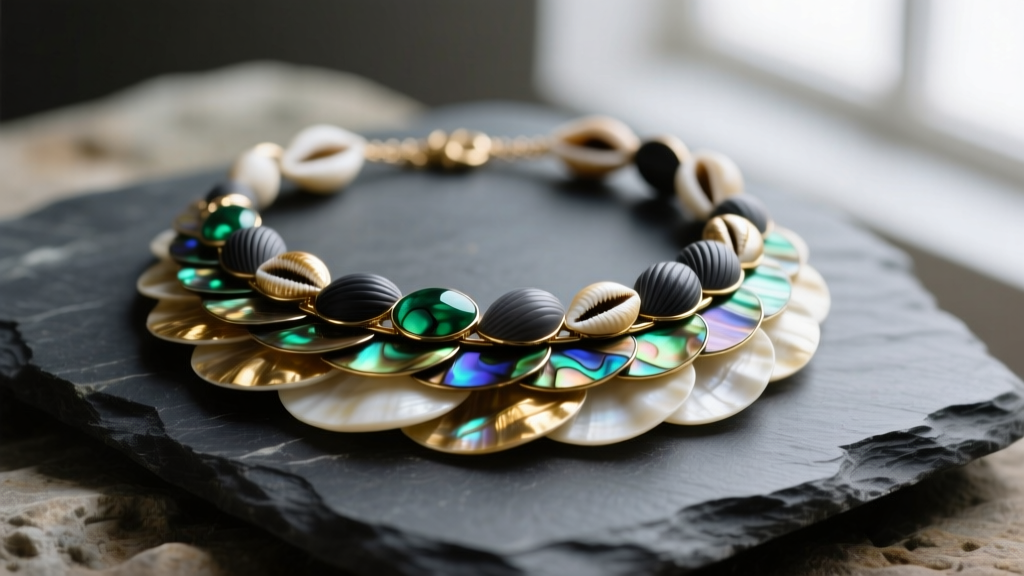
A true shell statement necklace is not merely a seasonal beach accessory; it is an architectural feat of organic material. Unlike delicate gold chains or lightweight resin pendants, statement pieces rely on the sheer volume, texture, and optical properties of marine biology. When selecting, designing, or investing in a shell statement necklace in 2026, understanding the mineralogical and structural differences between shell varieties is critical for longevity, comfort, and aesthetic impact. The difference between a heirloom-quality piece and a fragile costume item lies entirely in the crystalline structure of the calcium carbonate used.
Mineralogy and the Mohs Scale
Shells are primarily composed of calcium carbonate (CaCO3), but the crystalline structure—whether aragonite or calcite—dictates the gem's behavior, weight, and fragility. Nacreous shells consist of microscopic aragonite platelets bound by conchiolin, a complex protein. This 'brick and mortar' structure creates breathtaking iridescence but introduces specific cleavage planes and vulnerability to shear stress. Conversely, porcellaneous shells feature a crossed-lamellar calcite structure that sacrifices high-gloss iridescence for superior impact resistance.
| Shell Type | Primary Structure | Mohs Hardness | Avg. Weight (50mm) | Durability Profile |
|---|---|---|---|---|
| Mother of Pearl | Nacreous (Aragonite) | 2.5 - 3.0 | 18 - 22g | High scratch risk, moderate impact |
| Abalone | Nacreous (Aragonite) | 2.5 - 3.5 | 20 - 25g | Brittle, prone to delamination |
| Puka | Crossed-Lamellar | 3.0 - 4.0 | 12 - 15g | Highly durable, matte finish |
| Cowrie | Porcellaneous | 3.0 - 3.5 | 15 - 18g | Excellent impact resistance |
| Queen Conch | Crossed-Lamellar | 3.0 - 3.5 | 25 - 35g | Very tough, heavy statement weight |
Optical Properties: Thin-Film Interference
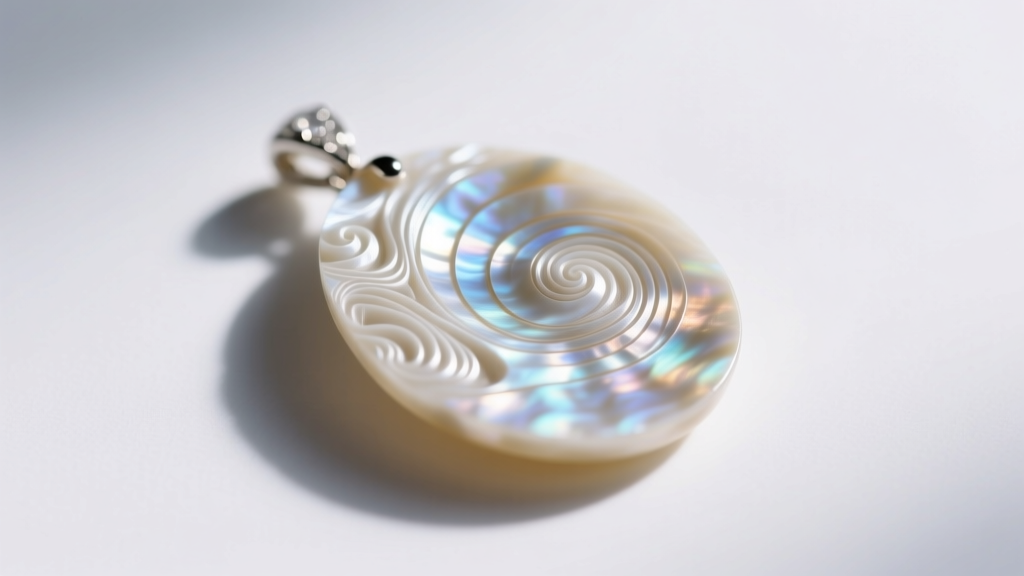
When evaluating a shell statement necklace, the visual depth of the material is paramount. The iridescence seen in Mother of Pearl and Abalone is not caused by pigments, but by thin-film interference. As light strikes the overlapping aragonite platelets (which are roughly 0.5 micrometers thick, similar to the wavelength of visible light), the light waves bounce off multiple layers. The resulting constructive and destructive interference amplifies specific colors. According to Britannica's analysis of nacre, the thicker and more uniform the nacre layers, the more vivid and saturated the color play. Cheaper, mass-produced shell necklaces often feature thinly layered nacre over a chalky core, resulting in a flat, milky appearance rather than a deep, multi-dimensional flash.
Deep Dive: Popular Shell Varieties
Mother of Pearl (Pinctada Genus)
Harvested primarily from pearl-producing oysters, Mother of Pearl (MOP) offers a luminous, satiny white-to-cream base with subtle overtone flashes. It is relatively easy to carve and polish, making it a favorite for large, geometric statement pendants. However, its high calcite-to-aragonite ratio in certain layers makes it highly susceptible to acid etching. MOP is best suited for statement pieces that sit on the outside of garments rather than directly against the skin.
Abalone (Haliotis Genus)
Abalone provides the most aggressive, neon-like color play in the organic gem world, featuring vivid electric blues, greens, and purples. Structurally, abalone is more challenging to work with. The respiratory pores (tremata) naturally present in the shell can create structural weak points. If a lapidary does not properly stabilize the shell with clear epoxy resin before cutting, the vibration of the saw can cause catastrophic micro-fractures. A high-quality abalone statement necklace will feature stabilized, bezel-set stones rather than freely dangling, raw-cut shards.
Puka and Cowrie
For a more textured, bohemian, or matte aesthetic, Puka (naturally occurring cone shell fragments) and Cowrie shells are the industry standards. Because they lack the nacreous layer, they do not iridesce. Instead, they offer a beautiful, porcelain-like gloss or a rugged, organic matte finish. Their crossed-lamellar structure makes them significantly tougher than MOP or Abalone, meaning they can withstand the daily knocks and bumps that a heavy, swinging statement necklace inevitably encounters.
Structural Integrity: Engineering the Stringing
The most common failure mode in a heavy shell statement necklace is not the shell breaking, but the stringing material failing under dynamic load. A substantial shell collar or bib necklace can easily weigh between 80 and 250 grams. Standard silk thread, cotton, or basic nylon will stretch, degrade, and eventually snap under this weight, especially when exposed to the oils and acidity of human skin.
Expert jewelers and high-end designers exclusively use 49-strand micro-fused stainless steel beading wire for heavy organic statement pieces. A .019 to .024-inch gauge wire, coated in abrasion-resistant nylon, provides the necessary tensile strength while maintaining the drape required for a comfortable fit.
Furthermore, the drill hole in the shell is a critical stress point. Shells are inherently brittle. If a rigid metal jump ring is forced through a poorly countersunk drill hole, the lateral pressure will cause the shell to crack over time. Always ensure that the hardware interfacing directly with the shell features a flexible wire loop, a cushioned rubber grommet, or a softly padded bezel setting to distribute the mechanical load.
Sourcing, Ethics, and CITES Regulations
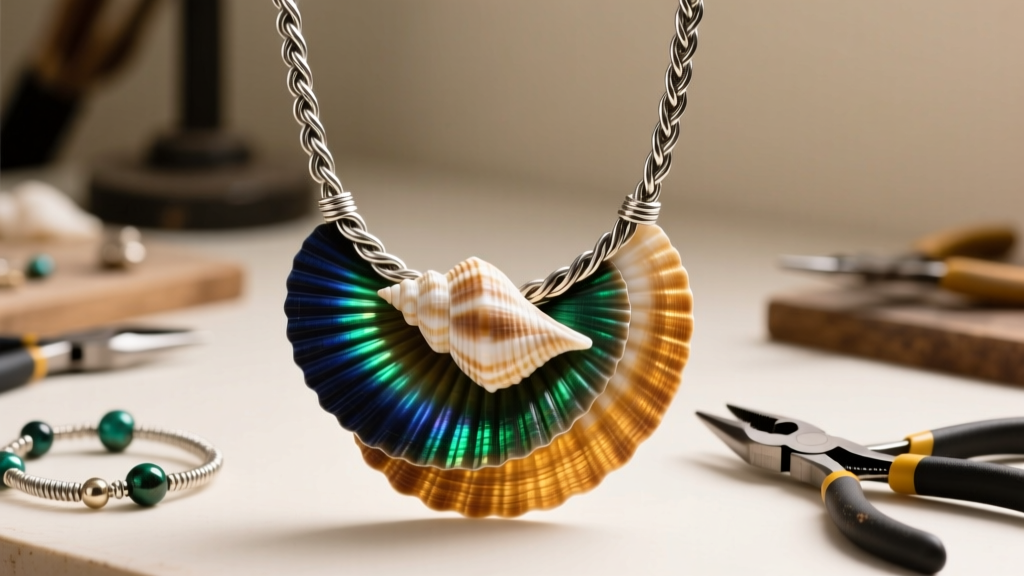
As we navigate the jewelry market in 2026, ethical sourcing and environmental regulations are non-negotiable factors in material selection. The CITES (Convention on International Trade in Endangered Species) strictly regulates the trade of several marine species. The Queen Conch (Strombus gigas), prized for its beautiful pink 'cameo' interior and immense size, is listed on CITES Appendix II, meaning international commercial trade is heavily restricted and requires specific export permits.
For designers and consumers seeking the aesthetic of restricted shells without the legal and ethical baggage, sustainable alternatives are abundant. Trocas shell, a sustainably harvested sea snail, offers a brilliant, pearlescent white interior that closely mimics high-grade Mother of Pearl. Additionally, freshwater mussel shells from the pearl farming industry provide a highly sustainable, upcycled source of nacreous material, ensuring that your shell statement necklace is both beautiful and ecologically responsible. The Gemological Institute of America (GIA) frequently highlights the importance of verifying the origin of organic gems to ensure they are not contributing to the depletion of vulnerable marine ecosystems.
Care and Maintenance Protocols
Organic gems require vastly different care protocols than crystalline stones like diamonds or sapphires. The primary enemy of any shell statement necklace is acid. Human sweat has a pH level ranging from 4.5 to 7.0. When calcium carbonate is exposed to an acidic environment, a chemical reaction occurs, forming calcium salts that permanently etch and dull the surface of the shell, destroying its natural luster.
- Post-Wear Cleaning: Never use ultrasonic cleaners, steam cleaners, or chemical jewelry dips. These will instantly strip the conchiolin protein matrix and ruin the nacre. Instead, wipe the shells gently with a damp, lint-free microfiber cloth after every wear to remove skin oils and environmental pollutants.
- Storage: Shells rank low on the Mohs scale (2.5 - 4.0). If stored in a communal jewelry box, metal clasps and harder gemstones will easily scratch the shell's surface. Store your statement piece in a dedicated, soft flannel pouch or a lined compartment away from metal hardware.
- Hydration: While shells should not be soaked in water, extreme aridity can cause the conchiolin binder to dry out and crack, particularly in older vintage pieces. Storing the necklace in a room with moderate humidity (around 40-50%) helps preserve the organic matrix.
Final Thoughts on Material Selection
Choosing the right material for a shell statement necklace requires balancing visual impact with structural reality. If your goal is maximum iridescence and high-fashion elegance, stabilized Abalone or thick-cut Mother of Pearl are unparalleled, provided you commit to meticulous aftercare. If you desire a heavy, sculptural, and highly durable piece that can withstand frequent wear, opt for the crossed-lamellar toughness of Cowrie or sustainably sourced Conch alternatives. By understanding the mineralogy and engineering required to support these organic wonders, you ensure your statement piece remains a breathtaking focal point for years to come.


