The Beginner's Guide to Choosing the Perfect Linked Necklace
Discover how to choose your first linked necklace. Learn about chain types, metal grades, durability, and styling tips in this beginner guide.

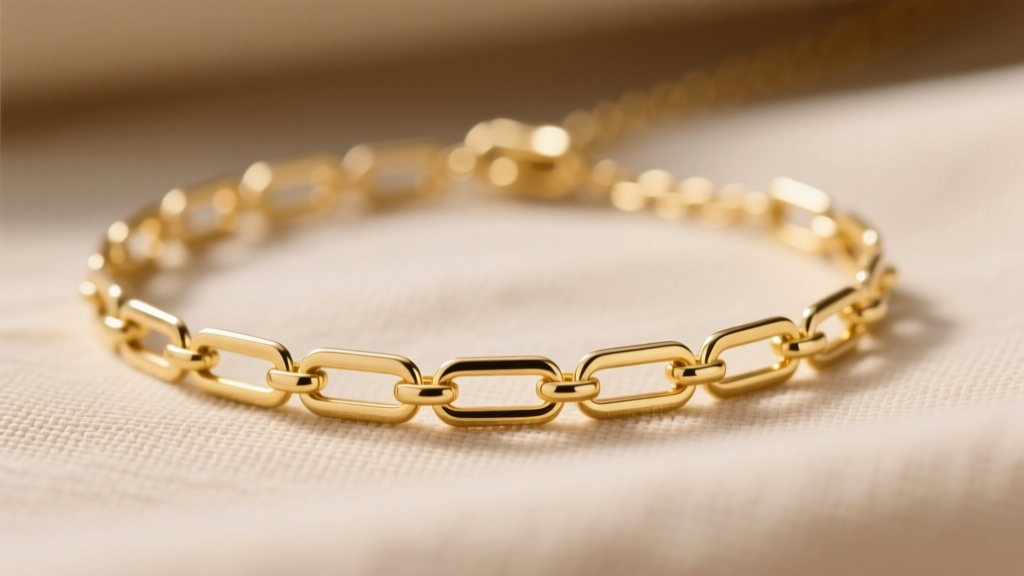
Introduction to the Linked Necklace
A linked necklace is the foundational pillar of any jewelry collection. Unlike delicate thread chains or beaded strands, a true linked necklace relies on interlocking metal geometry to provide structure, durability, and visual weight. For beginners, navigating the sheer volume of chain styles, metal alloys, and clasp mechanisms can feel overwhelming. Should you opt for a classic cable chain or a modern paperclip link? Is gold-filled wire as durable as solid 14k gold? This comprehensive guide strips away the marketing jargon and provides a practical, data-driven framework for choosing your first high-quality linked necklace.
The Anatomy of a Quality Chain Link
Before evaluating aesthetics, you must understand the structural engineering of a linked necklace. The durability of any chain comes down to two critical factors: link geometry and soldering.
- Soldered vs. Unsoldered Links: In high-quality jewelry, each individual link is soldered (welded shut) at the joint. This prevents the chain from pulling apart when snagged. Unsoldered links, common in fast-fashion jewelry under $30, rely on tension to stay closed and will easily stretch and break under the weight of a pendant.
- Wire Gauge and Profile: The thickness of the wire used to form the link dictates its tensile strength. A 1.5mm wire formed into a 5mm link will behave very differently than a 3mm wire formed into the same 5mm link. Thicker wire gauges resist bending and kinking, which are the primary failure modes of daily-wear chains.
The 5 Core Chain Profiles Every Beginner Should Know
The visual character of your linked necklace is determined by its profile. Here are the five most versatile link styles, ranked by utility and aesthetics.
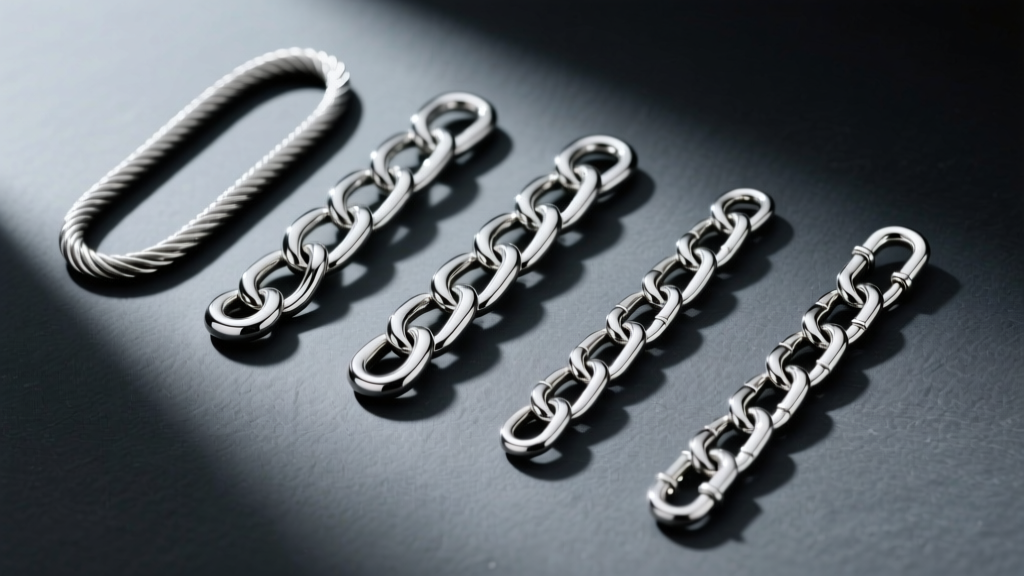
1. The Cable Chain
The cable chain is the most traditional and ubiquitous link style. It features uniform, oval or round links connected in a simple, continuous sequence. Because the links are relatively small and uniform, cable chains are highly flexible and excellent for holding lightweight pendants. However, they can easily kink if stored improperly.
2. The Curb Chain
Curb chains are created by taking a standard cable chain and flattening the links so they interlock and lay completely flat against the skin. This profile is incredibly durable, resistant to kinking, and offers a bold, streetwear-adjacent aesthetic. A 4mm to 6mm curb linked necklace is a staple standalone piece for both men and women.
3. The Rolo Chain (Belcher)
Rolo chains consist of thick, round, uniform links that are often wider than they are long. The heavy wire gauge used in rolo chains makes them exceptionally strong. They are the premier choice for suspending heavy medallions or gemstone pendants, as the robust links can support significant weight without warping.
4. The Figaro Chain
Originating in Italy, the Figaro chain introduces a rhythmic pattern to the linked necklace: typically three short circular links followed by one elongated oval link. This vintage profile adds visual interest without the need for a pendant, making it a perfect entry-level statement piece.
5. The Paperclip Chain
The paperclip link has dominated contemporary jewelry trends. It features elongated, rectangular links that mimic the shape of a standard office paperclip. This design creates a lightweight, airy, and highly reflective surface area, making it ideal for layering multiple necklaces of varying lengths.
Metal Alloys & Real-World Durability
The metal composition of your linked necklace dictates its lifespan, skin reactivity, and maintenance requirements. According to the Gemological Institute of America (GIA), understanding gold purity and alloy mixtures is essential for predicting how a piece will wear over time. Similarly, The Silver Institute notes that pure silver is too soft for chain links, necessitating the use of sterling alloys.
| Metal Grade | Composition | Price Range (18" Chain) | Durability & Water Resistance | Best For |
|---|---|---|---|---|
| Solid 14k Gold | 58.5% pure gold, 41.5% alloy metals | $250 - $800+ | Excellent. Waterproof, hypoallergenic, will not tarnish. | Lifetime daily wear, showering, swimming. |
| 316L Stainless Steel | Iron, chromium, nickel, molybdenum | $25 - $80 | Indestructible. Highly water and scratch-resistant. | Budget-friendly heavy chains, active lifestyles. |
| Sterling Silver (925) | 92.5% silver, 7.5% copper | $60 - $200 | Good. Will oxidize/tarnish over time. Requires polishing. | Classic aesthetics, occasional to daily wear. |
| 14k Gold Vermeil | Sterling silver base + 2.5µm gold plating | $70 - $150 | Moderate. Water and sweat will degrade the gold layer. | Trend-driven pieces, dry-wear only. |
Sizing, Gauge, and Proportions
Choosing the right dimensions for your linked necklace requires balancing length and width (gauge). A common beginner mistake is selecting a chain that is too thin for its length, resulting in a fragile piece that tangles constantly.
Width (Thickness) Guidelines
- 1.0mm - 2.0mm (Delicate): Best reserved for 16-inch chokers or as a base chain for lightweight pendants. Highly prone to tangling if worn long.
- 2.5mm - 4.0mm (Standard): The sweet spot for everyday wear. Thick enough to resist kinking, but subtle enough for professional environments.
- 5.0mm - 8.0mm (Statement): Heavy, bold, and meant to be worn as a standalone piece. Curb and Figaro profiles excel in this width range.
Length Framework
For a standard linked necklace without a pendant, the 18-inch (Princess) length sits perfectly at the collarbone for most body types. If you plan to layer a paperclip or cable chain, opt for a 20-inch or 22-inch Matinee length to create visual separation between the chains.
Clasp Mechanics: The Hidden Weak Point
The clasp is the most frequent point of failure on any linked necklace. Beginners often overlook this component, focusing entirely on the chain links. Here is how to evaluate clasp security:
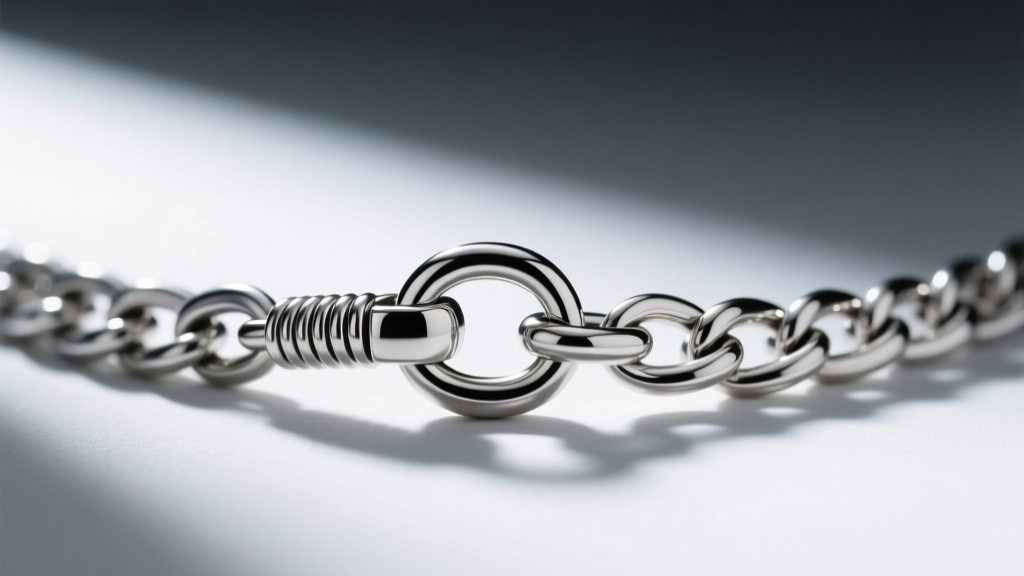
- Spring Ring: The small, perfectly circular clasp pushed open by a tiny lever. These are inexpensive, difficult to operate with one hand, and the internal spring mechanism frequently fails. Avoid these on chains wider than 2mm.
- Lobster Clasp: Shaped like a lobster's claw, this clasp features a robust, self-closing spring mechanism. It is the industry standard for secure, daily-wear linked necklaces.
- Toggle Clasp: A T-shaped bar that slides through a circular ring. While elegant and easy to fasten, toggle clasps can slip undone if the chain is too loose or the links are too rigid. They are best suited for heavy, flexible chains like thick rolo links.
The Beginner's Maintenance Protocol
Even the most durable linked necklace requires basic maintenance to preserve its structural integrity and luster. For solid gold and stainless steel, simply washing the chain weekly with warm water, a drop of mild dish soap, and a soft-bristled baby toothbrush will remove sebum and dead skin cells that accumulate inside the links. For sterling silver, store the necklace in an anti-tarnish cloth pouch and use a specialized silver polishing cloth once a month to remove surface oxidation. Never use abrasive toothpaste or harsh chemical dips, as these will strip the polished finish from the metal and leave the links looking dull and scratched.
By prioritizing soldered links, selecting the appropriate metal grade for your lifestyle, and matching the chain profile to your aesthetic goals, you can invest in a linked necklace that will serve as a reliable, stylish cornerstone of your wardrobe for years to come.


