Beyond the Definition of Pearl Necklace: How to Grade & Authenticate
Move beyond the basic definition of pearl necklace jewelry. Learn our step-by-step gemological guide to grading luster, nacre, and authenticity.

The True Definition of Pearl Necklace Value
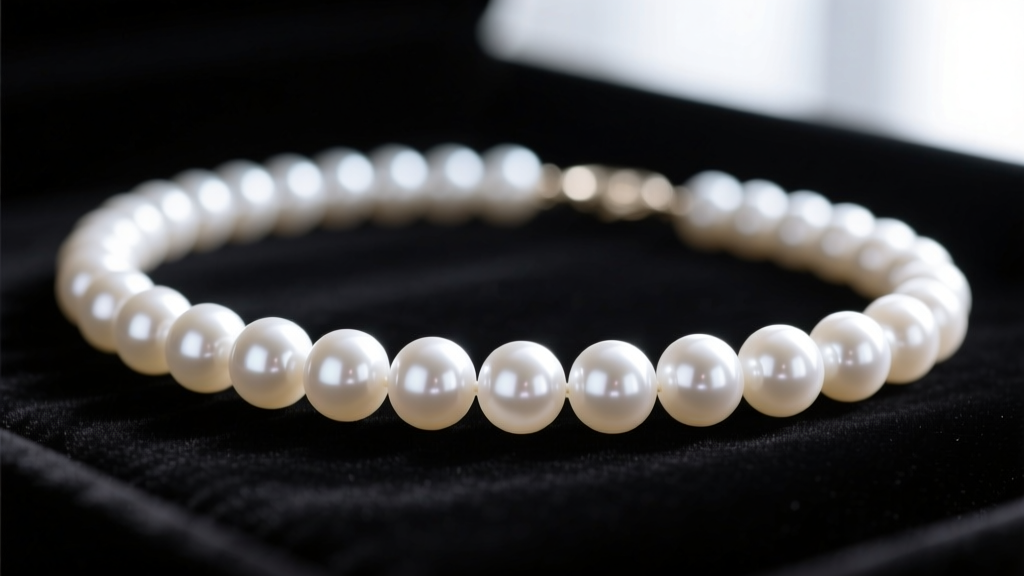
If you search for the strict dictionary definition of pearl necklace, you will find a basic description: a strand of spherical, organic gemstones produced by mollusks. However, in the gemological and high-end jewelry sectors, this rudimentary definition of pearl necklace falls drastically short. A true gemological definition encompasses a rigorous matrix of luster, nacre thickness, surface quality, drill precision, and stringing craftsmanship.
Whether you are evaluating a vintage estate piece, shopping for a modern Tahitian strand, or attempting to authenticate a family heirloom, relying on a superficial definition of pearl necklace quality will leave you vulnerable to overpaying for treated or poorly manufactured goods. This step-by-step guide will teach you how to grade, authenticate, and appraise pearl necklaces like a certified gemologist, moving far beyond basic terminology into actionable, high-level inspection techniques.
Step 1: Identifying the Pearl Type and Origin
The first step in grading any strand is identifying the mollusk species and the geographic origin, as this dictates the baseline expectations for size, color, and pricing. The Gemological Institute of America (GIA) categorizes cultured pearls into four primary commercial types. Use a calibrated millimeter gauge to measure the diameter of the pearls, which will immediately help you narrow down the origin.
| Pearl Type | Typical Size Range | Average Price (18" Strand) | Expected Nacre Thickness |
|---|---|---|---|
| Akoya (Saltwater) | 6.0mm – 9.5mm | $300 – $4,500+ | 0.4mm – 1.2mm |
| Tahitian (Saltwater) | 8.0mm – 16.0mm | $500 – $15,000+ | 0.8mm – 2.5mm |
| South Sea (Saltwater) | 10.0mm – 20.0mm | $1,500 – $50,000+ | 2.0mm – 6.0mm |
| Freshwater (Hyriopsis) | 5.0mm – 12.0mm | $50 – $1,500 | Solid nacre (tissue-nucleated) |
Pro-Tip: If you are looking at a strand of 7mm white pearls with incredibly sharp luster, but the seller claims they are South Sea pearls, the definition of pearl necklace they are using is intentionally misleading. South Sea pearls rarely exist below 9mm. You are likely looking at Akoya or high-grade freshwater pearls.
Step 2: Evaluating Luster and Nacre Thickness
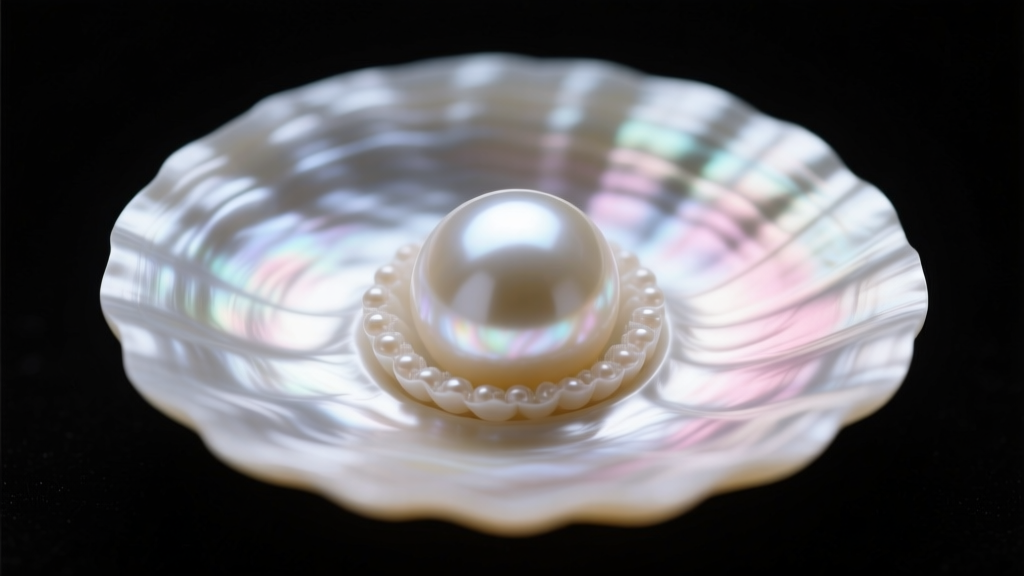
Luster is the single most critical value factor in the gemological definition of pearl necklace grading. It refers to the sharpness and intensity of light reflecting off the surface and through the layers of aragonite platelets (nacre).
The 10x Loupe Nacre Inspection
To authenticate nacre thickness, you must examine the drill holes using a 10x magnification jeweler's loupe.
- The Blink Test: Roll the pearl under direct, bright light. If you see a dark, dull shadow "blinking" through the surface, the nacre is dangerously thin (often less than 0.2mm), revealing the shell bead nucleus underneath. These pearls will eventually peel and are considered commercial-grade at best.
- Drill Hole Edge: High-quality nacre will show tight, concentric rings at the drill hole edge, resembling the growth rings of a tree. If the edges appear chalky, flaking, or separated from the inner bead, walk away.
- The Tooth Test: Gently glide the pearl along the biting edge of your front teeth. Genuine, high-quality nacre feels distinctly gritty, like fine sandpaper, due to the microscopic crystalline structure of aragonite. Glass or plastic imitations will feel perfectly smooth.
Step 3: Inspecting the Surface and Shape
No cultured pearl is perfectly flawless. The Cultured Pearl Association of America (CPAA) notes that surface blemishes are the fingerprint of organic growth. However, the type and placement of these blemishes drastically alter the necklace's valuation.
Surface Grading Scale
When inspecting the strand, look for the following defect categories:
- Pinpricks: Tiny, needle-like indentations. Acceptable in AA-grade strands if not clustered.
- Abrasions: Scuff marks near the drill holes caused by pearls rubbing together without proper knotting. This is a red flag for poor stringing craftsmanship.
- Mottling/Wrinkling: Textural irregularities in the nacre deposition. Common in Tahitian pearls, often adding character, but severe wrinkling reduces structural integrity.
- Chalky Spots: Dull, matte patches lacking luster. These are severe defects that cannot be polished out and significantly drop the grade to 'B' or commercial level.
Regarding shape, perfectly round pearls command the highest premiums. To test for roundness, roll the strand on a perfectly flat, level glass surface. Any pearl that wobbles or deviates from a straight line is classified as near-round, oval, or button-shaped, which should be reflected in a lower price point.
Step 4: Examining the Stringing and Clasp Hardware
A critical, often overlooked component in the professional definition of pearl necklace quality is the stringing material and hardware. High-end pearls should never be strung on synthetic wire or cheap cotton.
The French Wire (Gimp) Requirement
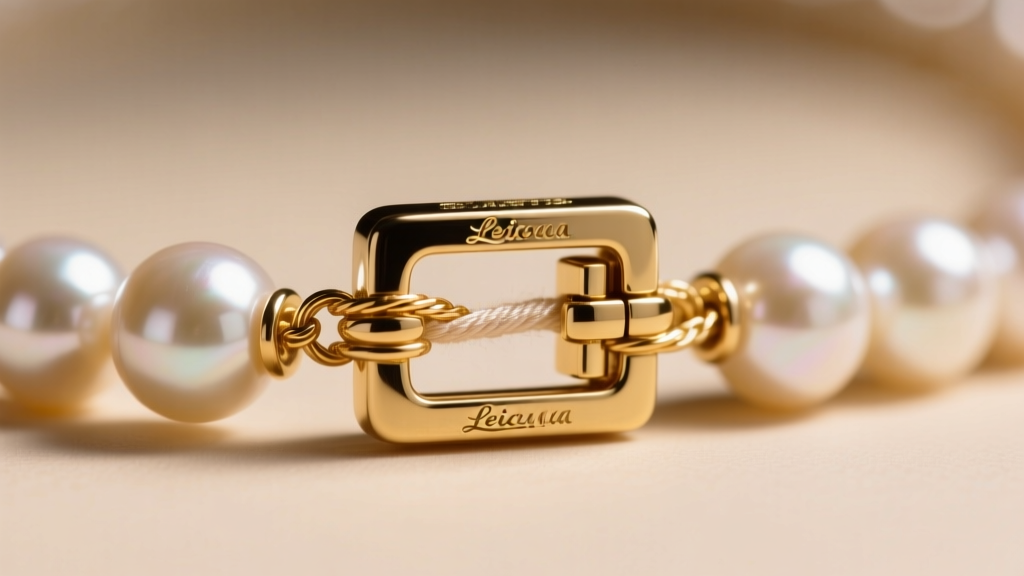
Inspect the connection point where the silk thread meets the metal clasp. A properly crafted necklace will feature "French wire" (also known as gimp)—a microscopic, coiled metal spring that wraps around the silk thread. This prevents the metal clasp ring from sawing through the silk over time. If the silk is tied directly to the metal ring without French wire, the strand is at a high risk of snapping within a few years of regular wear.
Silk Thread Sizing and Knotting
Pearls must be individually knotted to prevent total loss if the strand breaks and to prevent the pearls from rubbing against one another. The knots should be uniform, tight, and flush against the pearl. Furthermore, the silk thread size must match the drill hole. For standard 7mm Akoya pearls, a Size F (0.35mm) silk thread is optimal. If you see thick, bulky knots bunching up at the drill holes, the stringer used an improperly sized thread, which will cause the pearls to sit rigidly rather than draping fluidly against the collarbone.
Step 5: Requesting the Right Documentation
Finally, any transaction involving high-value pearls (typically strands retailing over $2,500) must be accompanied by independent laboratory documentation. Do not accept in-house "certificates of authenticity" generated by the retailer.
"A true gemological definition of pearl necklace authenticity relies on third-party verification of treatments, specifically the detection of artificial bleaching, dyeing, or irradiation."
Request a GIA Pearl Classification Report. Unlike diamond reports that assign strict cut and clarity grades, GIA pearl reports describe the exact dimensions, shape, color, overtone, luster, surface condition, and nacre thickness. Crucially, it will explicitly state if the pearls are "saltwater cultured" or "freshwater cultured," and it will detect if black Tahitian pearls have been artificially dyed or if white pearls have been heavily bleached to hide low-grade chalky nacre.
By applying this rigorous, multi-step inspection framework, you elevate your understanding far beyond the basic definition of pearl necklace jewelry. You transform from a passive consumer into an educated buyer, capable of identifying true heirloom quality and avoiding the pitfalls of commercially graded, poorly constructed strands.


