Peridot Cross Necklace: A Gemological and Technical Guide
Discover the technical specifications, gemological grading, and setting requirements for selecting a durable and vibrant peridot cross necklace.

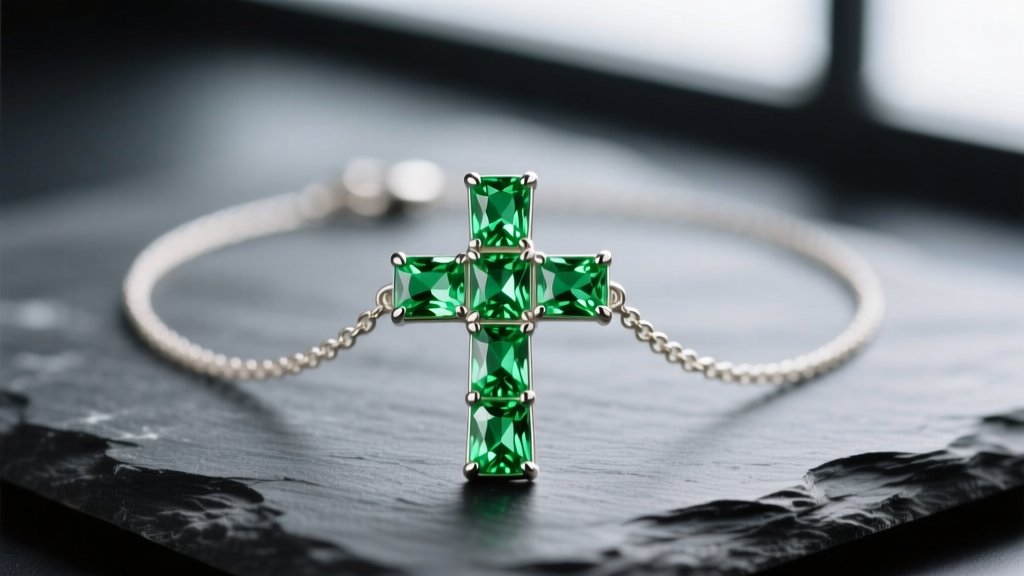
The peridot cross necklace is a staple in both devotional and fashion jewelry, prized for its vibrant, singular green hue. However, beneath its aesthetic appeal lies a complex gemological profile that demands precise technical consideration. Unlike harder gems such as sapphire or diamond, peridot (the gem-quality variety of the mineral olivine) presents unique structural vulnerabilities. Designing, setting, and maintaining a peridot cross pendant requires a deep understanding of its crystallography, cleavage planes, and optical properties. This guide provides an expert-level deep dive into the technical specifications necessary to evaluate, engineer, and care for high-quality peridot cross necklaces.
The Gemological Profile of Peridot (Olivine)
Peridot belongs to the silicate mineral group, specifically the solid solution series between forsterite (magnesium-rich) and fayalite (iron-rich). The chemical formula is (Mg, Fe)2SiO4. In gemological terms, the vibrant green color of peridot is idiochromatic, meaning it is caused by the stone's essential chemical composition—specifically, the presence of iron (Fe2+) ions, rather than trace impurities. According to the Mindat mineral database, the iron content in gem-quality peridot typically ranges between 10% and 15%. If the iron content exceeds this threshold, the stone's tone darkens significantly, reducing its brilliance and market value.
With a Mohs hardness rating of 6.5 to 7, peridot is moderately durable but lacks the toughness required for high-impact wear. More critically, peridot exhibits distinct cleavage in some directions and a conchoidal fracture. It is highly susceptible to stress fracturing, a vulnerability that heavily influences how the stones must be cut and set within the rigid geometry of a cross pendant.
Color Grading and the 'Evening Emerald' Standard
The refractive index (RI) of peridot ranges from 1.654 to 1.690, yielding a respectable but not exceptional brilliance compared to higher-RI stones like zircon or diamond. However, peridot possesses a notably high birefringence of 0.036. When viewing a peridot stone through the table facet with a 10x jeweler's loupe, this high birefringence causes a visible 'facet doubling' effect on the pavilion facets. This optical signature is a reliable diagnostic tool for gemologists to distinguish natural peridot from green glass or synthetic spinel imitations often found in commercial-grade cross pendants.
The most prized color in the trade is the 'Evening Emerald'—a pure, vivid grass-green with a slight yellowish secondary hue and medium-light tone. Stones under 3 carats (which comprise the majority of calibrated stones used in cross arms) often appear washed out if the tone is too light. Therefore, expert buyers look for calibrated peridots in the 4x6mm to 5x7mm range with a saturated, medium-dark tone to ensure the cross pendant reads as a rich green rather than a pale yellow-green from a standard viewing distance of 18 inches.
Optimal Cuts and Proportions for Cross Settings
Cross pendants typically utilize either five or seven stones. The center stone is often a larger oval, pear, or emerald cut, while the intersecting arms feature calibrated pears, marquises, or baguettes. The technical challenge here lies in the geometry of pear and marquise cuts, which feature sharp, acute points.
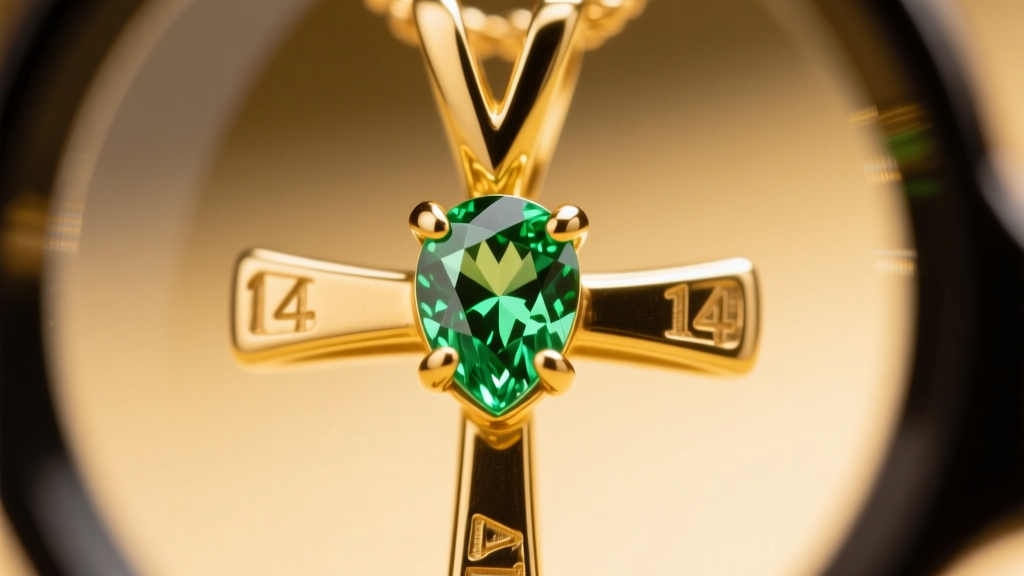
Because peridot is brittle and prone to chipping at acute angles, standard prong settings are entirely inadequate for the tips of pear or marquise stones in a cross layout. The points must be protected. Furthermore, lapidaries must avoid cutting peridot with overly shallow pavilions. A shallow cut leads to 'windowing'—a dead zone in the center of the stone where light leaks out the bottom rather than reflecting back to the eye. In a cross pendant, where stones are often viewed at dynamic angles against the chest, a deep, well-proportioned pavilion is critical to maintain the stone's internal light return and mask the yellowish-brown undertones that can emerge in poorly cut peridot.
Setting Engineering and Chain Metallurgy
The structural integrity of a peridot cross necklace relies as much on its metallurgy and setting engineering as it does on the gemstones. Due to peridot's sensitivity to pressure and thermal shock, the setting process must be executed with extreme care. Bezels offer the highest protection but restrict light entry, potentially dulling the stone's idiochromatic green. Therefore, modified prong settings are the industry standard for fine peridot crosses.
| Setting Style | Protection Level | Light Return | Best Application in Cross Design |
|---|---|---|---|
| Standard 4-Prong | Low | High | Oval or Round center stones only. |
| V-Prong (Chevron) | High | Medium-High | Mandatory for pear/marquise arm tips. |
| Full Bezel | Maximum | Low | Baguette cuts or high-impact daily wear. |
| Channel Setting | Medium | Medium | Square/princess cuts along the cross arms. |
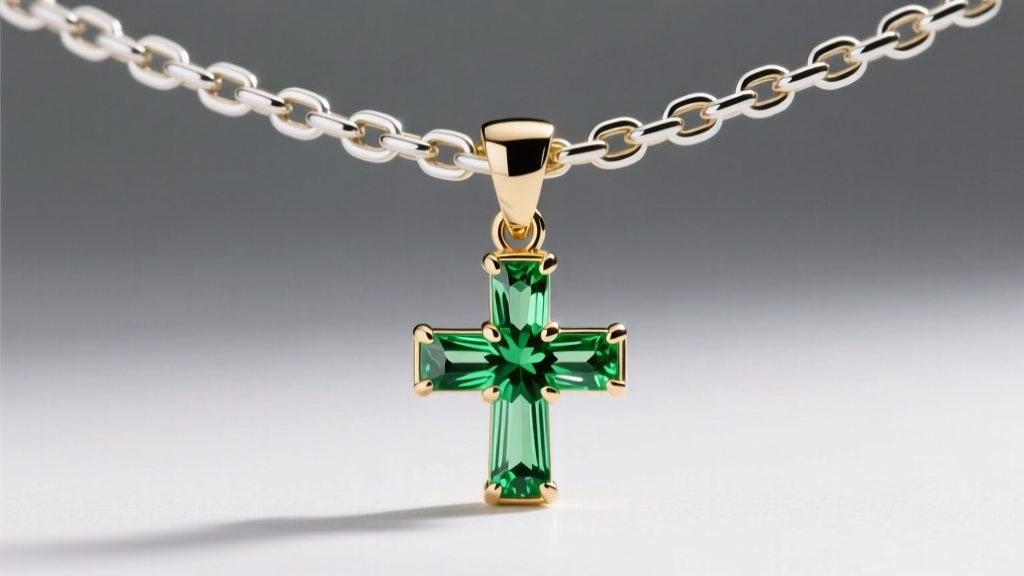
Regarding chain metallurgy, a five-stone peridot cross in 14k gold typically weighs between 4.5 and 7.0 grams. Suspending this weight requires a chain with adequate tensile strength. A standard 0.8mm cable chain is prone to kinking and link separation under the pendulum motion of a cross pendant. Experts recommend a 1.0mm to 1.2mm box chain or wheat chain. These interlocking link structures distribute stress evenly and resist the torsional forces that cause traditional cable chains to snap at the bail connection point.
Known Failure Modes and Preventative Care
The most common cause of catastrophic failure in peridot jewelry is improper cleaning. According to the Gemological Institute of America (GIA), peridot is highly sensitive to rapid temperature changes and thermal shock. Placing a peridot cross necklace in an ultrasonic cleaner or using a steam cleaner will almost certainly cause the stone to fracture along its internal stress lines or 'lily pad' inclusions (disk-like fractures that resemble lily pads).
Additionally, peridot is vulnerable to acidic solutions. Perspiration, cosmetics, and household cleaners containing mild acids can etch the surface of the stone over time, destroying its vitreous luster and leaving a frosted, dull appearance. The only approved cleaning method for a peridot cross is a gentle wash in lukewarm water with a mild, pH-neutral dish soap, using a soft-bristled brush to clear debris from the pavilion facets, followed by air drying or patting with a microfiber cloth.
Market Valuation and Pricing Tiers
When evaluating the pricing of a peridot cross necklace, it is essential to separate the gemstone value from the precious metal and labor costs. Peridot is generally an abundant and affordable gemstone, but the price per carat scales exponentially with size and color saturation.
- Commercial Grade ($15 - $30 per carat): Stones exhibit noticeable yellow or brown secondary hues, visible inclusions, and poor symmetry. Often set in sterling silver or 10k gold with mass-produced, unguarded prong settings.
- Fine Grade ($50 - $80 per carat): Good transparency, minimal windowing, and a pleasant medium green color. Typically set in 14k gold with adequate V-prong protection on the points.
- Gem Grade ($100 - $250+ per carat): Rare, large-calibrated stones (usually the center stone of the cross) featuring the coveted 'Evening Emerald' pure green hue, eye-clean clarity, and precision custom cutting to maximize the 0.036 birefringence.
Ultimately, a masterfully engineered peridot cross necklace balances the stone's optical brilliance with rigorous structural protections. By prioritizing V-prong settings, appropriate chain gauges, and strict adherence to non-thermal cleaning protocols, collectors and wearers can ensure their peridot cross remains a vibrant, intact heirloom for decades.


