Necklace Cuff Guide: How to Choose, Fit, and Style
Discover everything about the necklace cuff. Learn how to measure your neck, choose the right metal, and style rigid collars with any neckline.


What Exactly Is a Necklace Cuff?
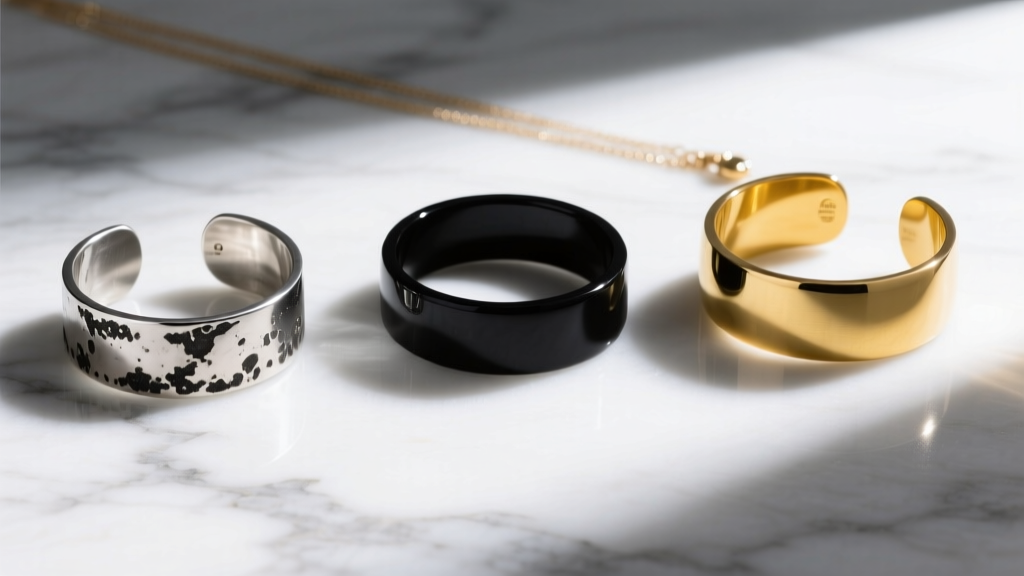
When building a versatile jewelry collection, beginners often gravitate toward standard chains and delicate pendants. However, the necklace cuff remains one of the most striking, underutilized statement pieces in modern accessorizing. Unlike a flexible choker that wraps snugly around the throat, or a multi-strand collar that drapes, a true necklace cuff is a rigid or semi-rigid open-backed band. It relies on structural tension and its own architectural shape to rest securely on the collarbones.
The defining feature of a necklace cuff is the gap at the back (or occasionally the side). This open design allows you to slide the piece onto your neck without the need for a clasp, making it incredibly easy to put on and take off. However, this clasp-free engineering also means that fit, material rigidity, and neckline pairing are far more critical than they are with traditional chain necklaces. In this guide, we will break down the exact specifications you need to know to master the necklace cuff.
Materials and Durability: What to Look For
Because a cuff must maintain its shape while enduring the stress of being opened and closed around your neck, material choice is paramount. Flimsy metals will warp, while overly brittle materials will snap.
Metal Grades and Plating Standards
For everyday wear, sterling silver (925) and solid 14k or 18k gold are the gold standards. Sterling silver offers a great balance of malleability and strength, provided the cuff has a thickness of at least 2.5mm to 4mm. Anything thinner risks permanent bending. If you are shopping on a budget, you will likely encounter gold-plated brass or copper. Here, you must look for gold vermeil. According to the Federal Trade Commission Jewelry Guides, true vermeil requires a sterling silver base coated with at least 2.5 microns of gold. Standard flash plating (often under 0.5 microns) will rub off against your skin within weeks, especially at the friction points where the cuff rests on your collarbone.
Alternative Materials: Resin, Acetate, and Leather
For bold, avant-garde styling, acrylic and bio-resin cuffs are highly popular. These materials are exceptionally lightweight, allowing for oversized, sculptural designs that would be unbearably heavy in solid metal. However, they lack tensile flexibility. You must never force a resin cuff open wider than its natural gap, as it will suffer a catastrophic structural failure (snapping). Leather-wrapped cuffs offer a bohemian alternative, usually featuring a hidden aluminum or copper core to help them retain their circular shape over time.
The Sizing Matrix: How to Measure for a Rigid Collar
The most common mistake beginners make is buying a cuff based on generic "one size fits all" labels. A necklace cuff must match the horizontal width of your neck and the slope of your shoulders. To find your ideal size, use a flexible tailor's tape measure to find the circumference of your neck just below the Adam's apple. Then, use the matrix below to determine the required inner width and gap size.
| Neck Circumference | Ideal Cuff Inner Width | Required Back Gap | Best Fit Profile |
|---|---|---|---|
| 12 - 13 inches | 4.0 - 4.25 inches | 1.0 - 1.25 inches | Petite / Narrow Shoulders |
| 14 - 15 inches | 4.5 - 4.75 inches | 1.5 - 1.75 inches | Average / Standard Fit |
| 16 - 17 inches | 5.0 - 5.5 inches | 2.0 - 2.5 inches | Broad / Athletic Shoulders |
Note: The inner width refers to the straight-line distance from the left inner edge to the right inner edge of the cuff, not the total circumference of the metal.
Neckline Pairing: A Visual Framework
A necklace cuff acts as a geometric frame for your face and upper chest. Pairing it with the wrong neckline will create visual clutter, while the right pairing elevates both the garment and the jewelry.
- The Strapless or Off-the-Shoulder Top: This is the ultimate canvas for a necklace cuff. The bare skin provides high contrast, allowing sculptural, wide-band cuffs (1 inch or thicker) to shine without competing with fabric lines.
- The Deep V-Neck: Opt for a tapered or V-shaped cuff that mimics the angle of the neckline. A perfectly circular, thick cuff will clash with the sharp angles of a V-neck blouse.
- The Crew Neck or Turtleneck: Generally, avoid wearing a rigid cuff directly over a standard crew neck, as it will sit awkwardly on the fabric seam. However, a sleek, thin silver cuff worn over a tight, black ribbed turtleneck creates a striking, modernist silhouette.
- The Button-Down Shirt: Leave the top two buttons undone and let a medium-weight gold cuff rest directly on the skin, framing the open collar. Ensure the cuff's gap is hidden behind the neck.

Care, Maintenance, and Avoiding Metal Fatigue
The number one reason rigid collars break or lose their shape is improper handling. Beginners often pull the two ends of the gap apart horizontally to force the cuff over their head. This introduces severe metal fatigue at the stress points, eventually causing the metal to warp into an oval shape or snap entirely.
The Correct Application Method: Bring the cuff to the front of your neck, resting the solid curve against your throat. Then, gently rotate the piece 90 degrees so the gap slides over the side of your neck, finally twisting it back to its resting position. This rotational method preserves the structural integrity of the metal. For storage, never stack heavy items on top of your cuffs, and keep them in a padded, flat jewelry box to prevent accidental crushing.
Where to Buy: Price Tiers and Brand Examples
Understanding the market will help you set realistic expectations for quality and pricing. According to the Gemological Institute of America (GIA), the value of gold jewelry is heavily dictated by its karat weight and manufacturing technique, which directly applies to how cuffs are priced.
- Entry-Level ($30 - $60): Brands like & Other Stories or Zara offer trendy, brass-based cuffs with thin flash plating. Great for seasonal trends, but expect a lifespan of 1-2 years with regular wear.
- Mid-Tier Demi-Fine ($80 - $180): Brands such as Missoma and Monica Vinader specialize in heavy gold vermeil and recycled sterling silver cuffs. These offer excellent durability, proper 2.5-micron plating, and ergonomic gap sizing.
- Fine Jewelry & Designer ($800 - $3,000+): For investment pieces, look to houses like Bottega Veneta or independent goldsmiths crafting solid 14k/18k gold or platinum cuffs. These will never tarnish, can be polished indefinitely, and hold intrinsic metal value.
Mastering the necklace cuff requires a shift in how you think about jewelry. It is not merely an accessory; it is an architectural element of your outfit. By respecting the material limits, sizing the gap correctly to your anatomy, and pairing it with complementary necklines, you can transform a simple rigid band into your most powerful styling tool.


