Is a Solid Gold Good Luck Necklace Worth the Investment?
Discover if a solid gold good luck necklace is worth the investment. We compare material costs, durability, and pricing tiers for talisman jewelry.

The True Cost of a Daily-Wear Talisman
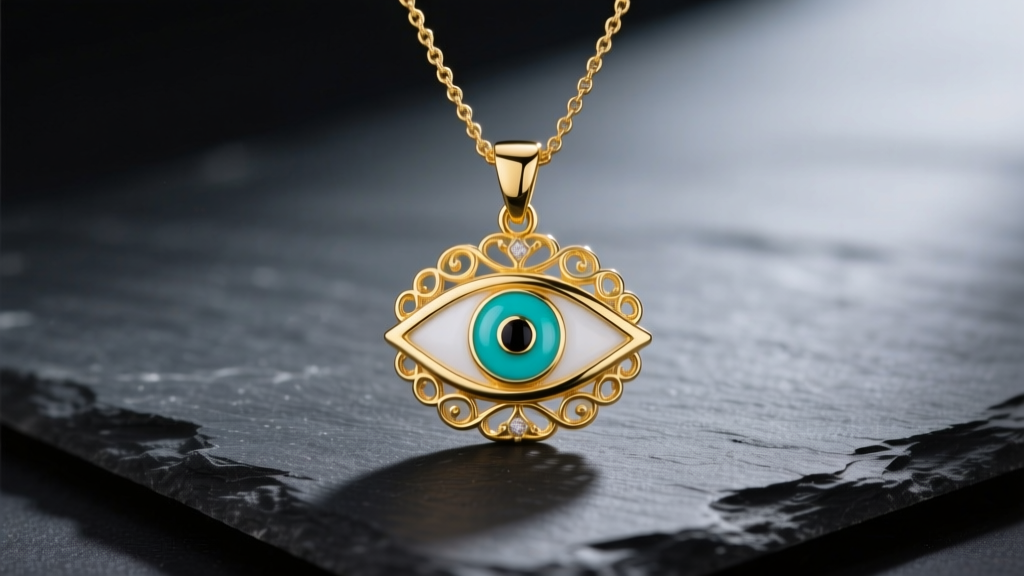
When you purchase a good luck necklace, you are buying more than just an accessory; you are investing in a daily-wear talisman. Whether it is an Evil Eye to ward off negativity, a Hamsa for protection, or a four-leaf clover for fortune, these pendants are meant to be worn continuously. However, this continuous wear creates a unique budget dilemma. The friction from clothing, exposure to cosmetics, and the inevitable contact with water and sweat will rapidly degrade lower-quality metals. As we navigate the jewelry market in 2026, the price gap between fashion-tier talismans and fine jewelry has widened significantly, driven by fluctuating precious metal markets. This raises a critical question for value-conscious buyers: is the premium for a solid gold good luck necklace genuinely worth the investment, or are you merely paying for a brand name?
To answer this, we must look past the marketing aesthetics and evaluate the metallurgical realities, hidden replacement costs, and long-term value retention of these symbolic pieces. In this comprehensive budget assessment, we break down exactly what you get at every price point, helping you allocate your jewelry budget with precision and confidence.
Material Breakdown: Fashion vs. Fine Talismans
The foundation of any necklace's value lies in its base material. When shopping for a good luck necklace, you will generally encounter three distinct pricing and material tiers. Understanding the structural integrity of each is vital for assessing true value.
Gold Vermeil and Plated Brass ($30 - $120)
At the entry-level, you will find gold-plated brass and gold vermeil. It is crucial to understand the legal distinction here. According to the Federal Trade Commission (FTC), for a piece to be legally marketed as 'vermeil' in the United States, it must feature a sterling silver base coated with a minimum of 2.5 microns of gold. However, many fast-fashion brands utilize 0.5-micron 'flash plating' over brass, which can wear away to reveal the base metal in as little as three to six months of daily wear. If your budget is strictly under $100, vermeil is an acceptable choice for occasional wear, but it is a poor long-term investment for a daily talisman. The recurring cost of replacing tarnished pendants every year will quickly surpass the cost of a solid piece.
Solid 14k and 18k Gold ($400 - $950)
Stepping into the fine jewelry tier, solid gold offers lifelong durability and intrinsic scrap value. According to the Gemological Institute of America (GIA), the alloy mix in solid gold dictates its hardness and suitability for jewelry. For a good luck necklace featuring intricate details—such as micro-pavé diamonds around an Evil Eye or delicate enamel work on a Hamsa—14k gold is actually superior to 18k. On the Vickers hardness scale, 14k gold (approximately 140-160 HV) is significantly harder and more resistant to scratching and bending than 18k gold (approximately 120-130 HV). While 18k offers a richer yellow hue, 14k provides the structural integrity required to keep gemstone prongs secure during the rigors of daily, never-take-it-off wear.
Motif Value Matrix: Which Charm Holds Its Worth?
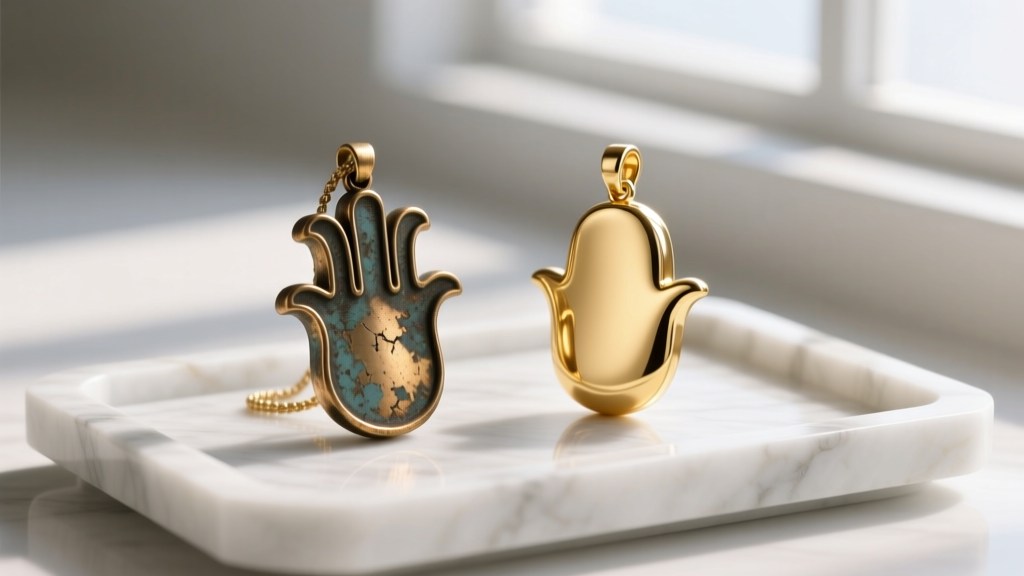
Not all good luck symbols are manufactured equally, and their structural designs impact their long-term value and durability. A solid gold pendant is an investment, but some motifs are more prone to damage or hold their resale value better than others. Below is a comparative matrix assessing the most popular talisman motifs based on a standard 1.5-gram solid 14k gold build.
| Motif | Structural Vulnerability | Avg. Retail (14k) | Resale / Intrinsic Value | Durability Rating |
|---|---|---|---|---|
| Evil Eye (Enamel) | High (Enamel chips on impact) | $350 - $500 | Low (Melt value only) | 3/5 |
| Hamsa (Solid) | Low (Solid cast, no weak points) | $400 - $600 | High (Close to scrap) | 5/5 |
| Four-Leaf Clover | Medium (Thin edges can bend) | $300 - $450 | Medium | 4/5 |
| Horseshoe (Pavé) | High (Prongs snag on fabrics) | $550 - $850 | Medium (Stone loss risk) | 2/5 |
As the data illustrates, if your primary goal is pure financial value retention and indestructibility, a solid, un-enameled Hamsa or a simple cast Clover offers the best return on investment. Evil Eyes and diamond-accented Horseshoes carry higher retail markups due to labor-intensive stone setting and enamel firing, but they depreciate faster and require more careful maintenance.
Hidden Costs: Chain Durability and Clasp Failure
A massive oversight in jewelry budgeting is focusing entirely on the pendant while ignoring the chain and clasp. The chain is the mechanical lifeline of your good luck necklace. If the chain snaps, the talisman is lost. When budgeting for a fine jewelry piece, you must allocate at least 30% to 40% of your total spend toward a high-quality chain.
For pendants weighing between 1.5 and 3 grams, a 1.0mm or 1.2mm cable chain is structurally insufficient. The constant friction of the pendant's bail rubbing against the same two links of a delicate cable chain will eventually act like a saw, thinning the gold until it snaps. For daily wear, a 1.5mm to 2.0mm box chain or a rope chain is mandatory. Box chains distribute weight more evenly and are significantly harder to kink.
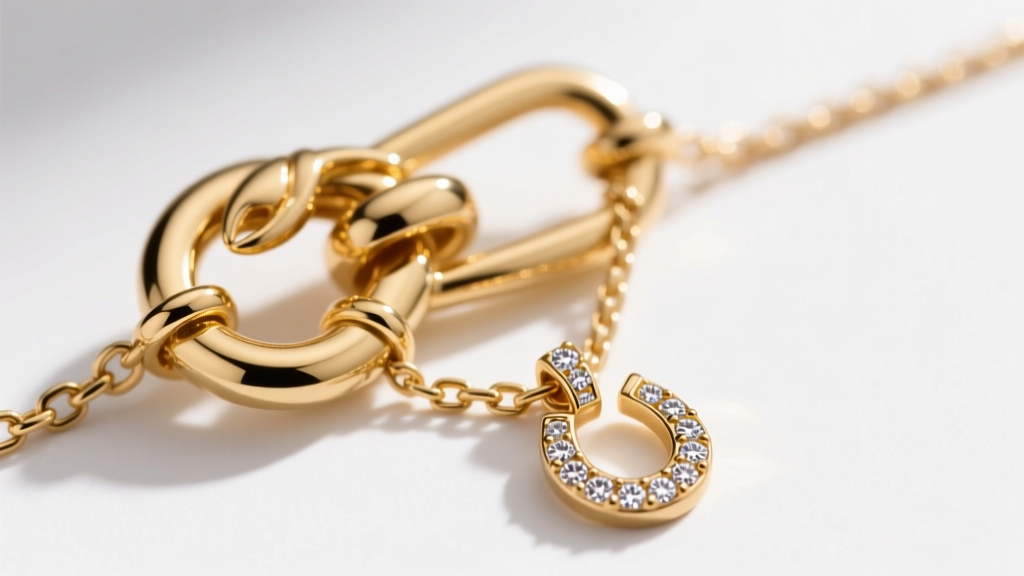
Furthermore, the clasp is a frequent point of failure. Many brands cut costs by pairing expensive solid gold pendants with hollow, lightweight spring-ring clasps. Spring rings rely on a tiny internal steel spring that is highly susceptible to rusting when exposed to shower water, and the delicate lever is easily broken by long fingernails. Always insist on a solid lobster clasp. A genuine solid 14k lobster clasp will cost the manufacturer roughly $15 to $25 more than a spring ring, but it provides a secure, mechanical lock that will easily outlast the pendant itself. If a brand is charging $600 for a necklace with a flimsy spring-ring clasp, they are compromising on structural integrity to protect their profit margins.
The Verdict: How to Budget for Your Talisman
So, is a solid gold good luck necklace worth the investment? The answer depends entirely on your wearing habits and your definition of value. If you intend to wear the necklace 24/7—sleeping, showering, and exercising in it—fashion jewelry will fail you within a year, making the upfront cost of solid gold a mathematical necessity rather than a luxury.
To maximize your budget and ensure you are getting true value, follow this actionable purchasing framework:
- Set a Minimum Weight Threshold: Ensure the pendant weighs at least 1.2 grams. Anything lighter is essentially gold foil and will dent or warp under the pressure of daily life.
- Prioritize 14k Over 18k for Active Lifestyles: The superior Vickers hardness of 14k gold will protect the structural integrity of the bail and any gemstone prongs.
- Demand a Lobster Clasp and Box Chain: Never compromise on the chain mechanics. A 1.5mm box chain with a solid lobster clasp is the non-negotiable baseline for a secure talisman.
- Avoid High-Maintenance Enamel for 'Never-Off' Wear: If you never take your jewelry off, skip the enameled Evil Eye and opt for a solid gold Hamsa or Clover to avoid the inevitable heartbreak of chipped glass enamel.
Ultimately, a well-constructed solid gold good luck necklace is a one-time purchase that transitions from a mere accessory into a permanent, enduring companion. By scrutinizing the metallurgy, chain mechanics, and motif durability, you can confidently invest in a piece that protects your peace of mind without compromising your financial boundaries.


