Why the Gold Coin Necklace Women Choose Remains Timeless
Discover how to choose, style, and care for a gold coin necklace. Learn about karats, chain pairings, and motifs in this beginner-friendly guide.


The Enduring Appeal of Gold Coin Jewelry
Few accessories bridge the gap between ancient history and modern minimalism quite like the gold coin pendant. For decades, the gold coin necklace women select for their daily rotation has served as a versatile anchor in their jewelry collections. Whether you are drawn to the historical romance of a Roman denarius replica, the personalized touch of a zodiac motif, or the raw value of an authentic bullion piece, understanding the anatomy of these necklaces is crucial for making a smart investment.
As a beginner, navigating the jewelry market can feel overwhelming. Terms like 'karat,' 'gauge,' and 'bail size' are often thrown around without proper context. This comprehensive guide breaks down everything you need to know about selecting, pairing, and maintaining a gold coin necklace, ensuring your piece looks stunning and structurally sound for years to come.
Decoding Gold Purity: 14K vs. 18K vs. 22K
The first decision you will face is the purity of the gold. Pure gold (24K) is incredibly soft and malleable, making it unsuitable for everyday jewelry that faces friction and impact. To increase durability, gold is alloyed with metals like copper, silver, and zinc. According to the Gemological Institute of America (GIA), the karat system measures this ratio of pure gold to alloy metals.
| Karat | Gold Content | Durability | Price Range (Pendant) | Best For |
|---|---|---|---|---|
| 14K | 58.3% | High | $150 - $450 | Daily wear, active lifestyles, intricate stamping |
| 18K | 75.0% | Medium | $350 - $900 | Rich yellow hue, heirloom pieces, luxury gifting |
| 22K | 91.6% | Low | $1,000 - $3,000+ | Authentic bullion coins, occasional wear, investment |
Expert Insight: If you are buying a replica historical coin meant for daily wear, 14K or 18K is ideal. The alloy metals provide the structural integrity needed to keep the coin's stamped details crisp over time. However, if you are setting an actual government-minted bullion coin (like a South African Krugerrand or a British Sovereign), these are typically struck in 22K gold. You must treat these with extreme care, as a simple drop on a hardwood floor can dent the rim and diminish the coin's numismatic value.
Choosing the Right Chain: Gauge and Style
A common beginner mistake is pairing a heavy, 20mm coin pendant with a delicate, sub-millimeter chain. This creates a structural failure point. The chain must support the weight of the coin without stretching or snapping, and it must physically fit through the pendant's bail (the loop that connects the coin to the chain).
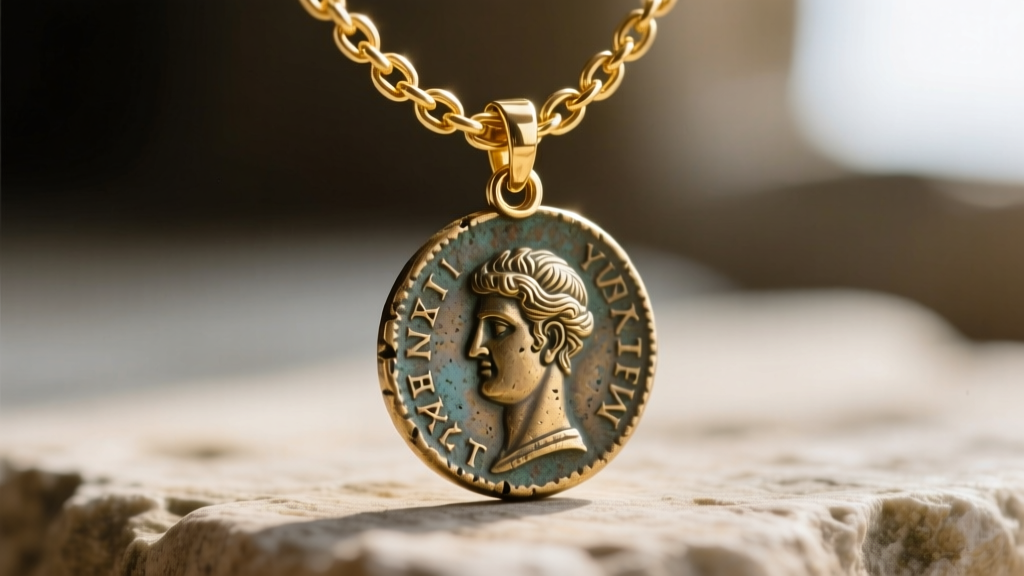
Recommended Chain Types for Coin Pendants
- Box Chain (1.2mm - 2.0mm): The gold standard for coin necklaces. The square, interlocking links distribute weight evenly and resist kinking. A 1.5mm box chain easily supports coins up to 15 grams.
- Cable Chain (1.5mm - 2.5mm): A classic, oval-link chain that offers a traditional, vintage aesthetic. Ensure the links are soldered (closed with a tiny weld) rather than unsoldered, which can pull apart under the pendulum motion of a heavy coin.
- Rope Chain (2.0mm - 3.0mm): Ideal for larger, heavier statement coins (25mm+ diameter). The twisted links reflect light beautifully but can trap skin oils and lotions, requiring more frequent cleaning.
Chains to Avoid: Snake chains and herringbone chains. While beautiful, they are notoriously prone to kinking and bending. Furthermore, their stiff, tubular nature makes it nearly impossible to thread them through the small, delicate bails typically found on coin pendants.
Motif Meanings: Historical vs. Modern Coins
The imagery stamped onto your gold coin necklace dictates its stylistic vibe. The American Numismatic Association notes that jewelry replicas of ancient coins have been popular since the Victorian era, but modern interpretations offer new ways to personalize your look.
Ancient & Reproduction Coins
Replicas of Greek drachmas, Roman denarii, and Byzantine solidi feature profiles of emperors, mythological gods, and ancient flora. These pieces carry a sense of gravitas and history. They pair exceptionally well with matte gold finishes and oxidized detailing that highlights the relief of the stamping. They are perfect for adding an intellectual, worldly edge to a simple linen blouse or a tailored blazer.
Astrological & Custom Zodiac Coins
For a more personalized approach, zodiac coin pendants are incredibly popular. Usually ranging from 12mm to 18mm in diameter, these coins feature the constellation or the symbolic animal of the wearer's star sign on the obverse, and often a sunburst or moon phase on the reverse. Because they are deeply personal, they are frequently layered with other sentimental charms or birthstone accents.
Sizing and Placement: Where Should the Coin Sit?
The diameter of the coin and the length of the chain work together to determine the necklace's overall silhouette. Understanding these proportions is key to achieving your desired look.
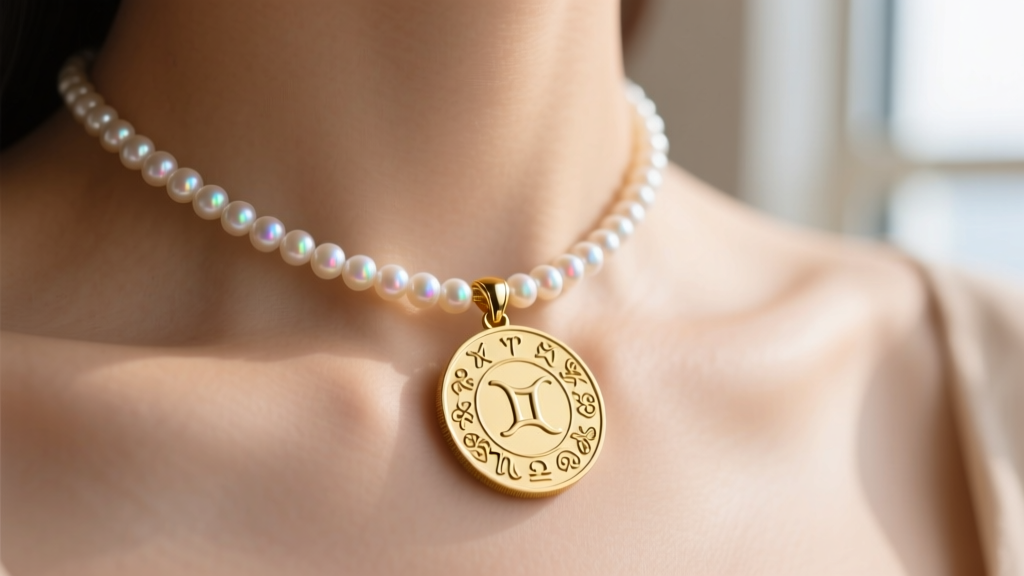
- The Choker / Collarbone Look (16-inch chain): Best suited for smaller coins (10mm - 14mm). This placement draws the eye directly to the face and neck, making it an excellent choice for V-neck and scoop-neck tops. It is also the ideal base layer if you plan to add longer chains.
- The Standard Princess Length (18-inch chain): The most versatile option. A 15mm to 20mm coin resting just below the collarbone works with almost any neckline, from crew necks to button-down shirts. It provides a balanced, effortless look that transitions seamlessly from the office to evening wear.
- The Matinee / Bohemian Drop (22 to 24-inch chain): Reserved for larger, heavier statement coins (25mm+). This length rests on the upper chest and creates a bold, bohemian, or vintage-inspired aesthetic. It pairs beautifully with high-necked sweaters or flowing maxi dresses.
Real-World Care & Maintenance
Gold coin necklaces require specific care to maintain their luster and structural integrity. Because coins feature deep stamping and crevices, they are magnets for skin oils, dead skin cells, and cosmetic residue.
The Cleaning Protocol: Avoid commercial jewelry dips and ultrasonic cleaners, especially if your coin features any enamel work or if it is an authentic, valuable bullion coin (cleaning can strip the patina and ruin its numismatic grade). Instead, use a few drops of mild, phosphate-free dish soap in a bowl of lukewarm water. Let the necklace soak for 15 minutes, then gently agitate the crevices of the coin with a brand-new, ultra-soft baby toothbrush. Rinse thoroughly under distilled water and pat dry with a lint-free microfiber cloth.
The Chlorine Warning: Never wear your gold coin necklace in a swimming pool or hot tub. The chlorine reacts with the copper and silver alloys in 14K and 18K gold, creating microscopic fractures in the metal over time—a phenomenon known as 'chlorine stress corrosion cracking,' which can cause the bail to snap without warning.
Final Thoughts on Building Your Collection
Investing in a gold coin necklace is about more than just acquiring a piece of metal; it is about adopting a versatile styling tool that adapts to your evolving wardrobe. By paying close attention to the karat purity, selecting a structurally sound chain gauge, and choosing a motif that resonates with your personal narrative, you ensure that your necklace remains a cherished staple. Whether you opt for a delicate 14K zodiac piece or a bold 18K historical replica, the right gold coin pendant will effortlessly elevate your everyday style.


