Raven Necklace Troubleshooting: Fix Tarnish, Tangles & Enamel Chips
Is your raven necklace tarnishing, tangling, or chipping? Discover expert troubleshooting tips to restore and protect your gothic bird pendant.

Introduction to Raven Necklace Wear & Tear
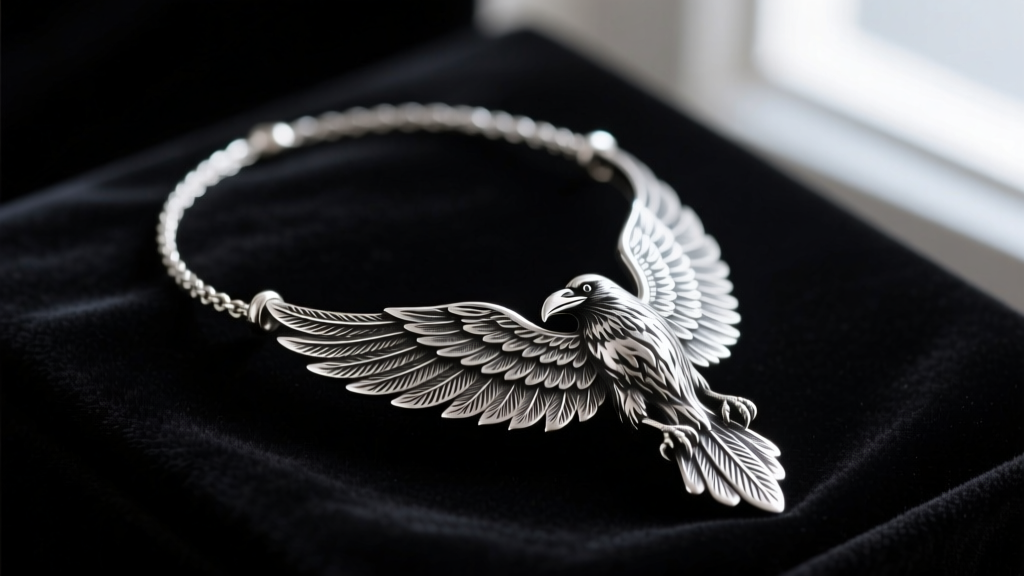
Raven necklaces are iconic staples in alternative, gothic, and nature-inspired jewelry collections. Their intricate designs—featuring deeply carved feather crevices, sweeping wings, and dark patinas—make them visually striking. However, these same complex details make raven pendants uniquely prone to specific wear-and-tear issues. From hidden tarnish buildup in feather grooves to the chipping of delicate black enamel and the snapping of undersized chains, owning a raven necklace requires specialized maintenance.
Instead of tossing a damaged piece or resorting to harsh, generic jewelry dips that strip intentional antiquing, this guide provides a masterclass in troubleshooting. We will diagnose the exact failure points of your raven necklace and provide actionable, jeweler-grade solutions to restore its original dark majesty and structural integrity.
Diagnosing Metal Tarnish and Patina Degradation
The most common complaint with raven pendants is uneven tarnishing or the loss of the dark 'antiqued' finish in the feather details. To troubleshoot this, you must first identify your base metal, as the cleaning protocol for solid sterling silver is vastly different from that of plated pot metal.
The Magnet and Ice Diagnostic Tests
Many mass-market gothic necklaces are sold as 'Tibetan Silver' or 'Antique Silver,' which are typically zinc-alloy or copper-nickel blends containing zero actual silver. According to metal testing guidelines outlined by the Gemological Institute of America (GIA), genuine sterling silver (.925) is non-magnetic and possesses the highest thermal conductivity of any common jewelry metal. Place an ice cube on the pendant; if it melts almost instantly compared to a glass surface, you likely have genuine silver. If a magnet sticks, you are dealing with a ferrous alloy that will rust rather than tarnish.
Restoring Sterling Silver Without Stripping Patina
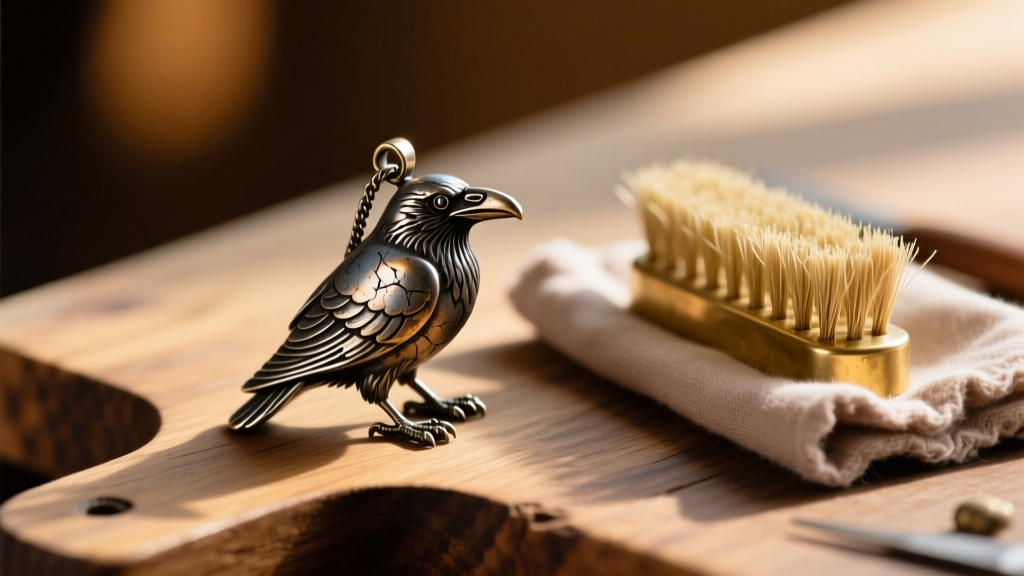
If your .925 sterling silver raven has lost the dark oxidation in its feather crevices due to over-polishing, you can artificially restore the patina using a liver of sulfur solution. Conversely, if the high points of the wings have turned black from silver sulfide buildup (caused by hydrogen sulfide in the air and humidity), do not use liquid silver dips. Dips strip all oxidation, leaving the raven looking flat and cheap. Instead, use a treated polishing cloth wrapped tightly around a wooden skewer to selectively buff only the raised edges of the feathers, leaving the dark crevices intact.
Troubleshooting Table: Metal Composition & Cleaning Protocols
| Metal Type | Composition | Tarnish Profile | Troubleshooting Method |
|---|---|---|---|
| Sterling Silver (.925) | 92.5% Silver, 7.5% Copper | Black silver sulfide on high points | Selective polishing with a rouge cloth; avoid liquid dips. |
| White Bronze / Pewter | Tin, Copper, Antimony | Dull gray oxidation, porous surface | Gentle wash with mild dish soap and a soft-bristle toothbrush. |
| 'Tibetan' / Pot Metal | Zinc alloy, nickel, copper | Green copper carbonate, flaking plating | Seal with clear micro-crystalline wax to stop skin-staining reactions. |
Solving Enamel and Resin Chipping on Raven Wings
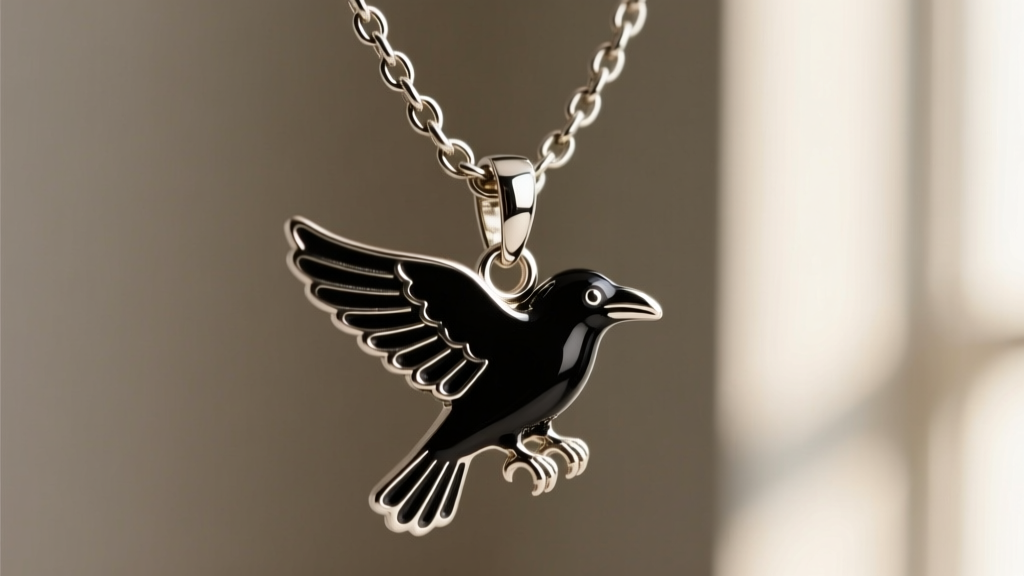
To achieve the iridescent sheen of raven plumage or deep black wings, jewelers often use vitreous enamel, cold enamel (epoxy resin), or UV-cured resins. Because raven pendants are worn on the chest, they are subject to impacts against desks, doorways, and zippers, leading to micro-chips in the colored enamel.
The UV Resin Infill Technique
If your raven necklace features cold enamel or resin that has chipped, traditional superglue (cyanoacrylate) will dry cloudy and ruin the glossy feather effect. The professional troubleshooting method is to use clear, jewelry-grade UV resin. First, clean the chipped crater with 99% isopropyl alcohol to remove skin oils. Using a fine-tipped needle, drop a microscopic bead of UV resin into the chip, ensuring it slightly overfills the gap to account for shrinkage. Cure it under a 36W UV lamp for 60 seconds. Once hardened, wet-sand the overfill with 2000-grit automotive sandpaper and finish with a jeweler's polishing compound to restore the glass-like gloss of the raven's wing.
Untangling and Preventing Chain Knotting
Raven pendants are notoriously heavy. A solid metal raven can easily weigh 15 to 30 grams. To compensate, manufacturers often pair them with thin, lightweight chains that immediately tangle into impossible knots due to the pendant's pendulum-like swinging motion.
Upgrading to the Correct Chain Gauge
According to structural guidelines from Rio Grande Jewelry Supplies, a heavy pendant requires a chain with high tensile strength and rigid links. The flimsy 0.8mm cable chains included with most raven necklaces are a primary failure point. To permanently solve tangling and breakage, re-string your pendant on a 1.5mm (approx. 16-gauge) stainless steel or solid sterling rolo chain. Rolo chains feature round, interlocking links that lay flat and resist twisting. Furthermore, ensure the chain is at least 20 inches long; shorter chains create a tighter arc of motion, increasing the friction and kinetic energy that causes links to fold into knots.
Fixing Weak Clasps and Jump Ring Failures
The single most catastrophic failure point on any heavy pendant necklace is the jump ring—the small circular wire loop that connects the raven charm to the chain. If this ring is not properly closed, the heavy pendant will slide off and be lost.
Proper Jump Ring Manipulation
Never pull a jump ring apart by pulling the ends outward (laterally); this warps the circle into an oval, weakening the metal's structural memory and preventing it from ever closing flush again. The correct troubleshooting technique is to use two pairs of flat-nose pliers. Grip the jump ring on either side of the split seam, and twist one hand toward you and the other away from you, opening the ring laterally. Thread the chain and raven bail, then twist the ends back together until you hear and feel a distinct 'click' or 'snap' as the metal ends align perfectly. For ultimate security on a heavy silver raven, take the piece to a local jeweler to have the jump ring soldered shut, a process that typically costs less than $15 and guarantees the pendant will never detach.
The 5-Minute Diagnostic Checklist
Before wearing your raven necklace for a major event or daily rotation, run through this rapid troubleshooting checklist to ensure longevity:
- Clasp Tension: Does the lobster clasp spring back instantly? If sluggish, apply a microscopic drop of sewing machine oil to the hinge and work it open and closed ten times.
- Bail Clearance: Is the loop (bail) on the raven's back wide enough for the chain? If the chain is forced through a tight bail, it will grind down the metal. Use a needle file to gently widen the bail hole if necessary.
- Patina Check: Inspect the deep feather grooves under a bright LED light. If white, chalky residue is present, it is likely trapped lotion or dead skin. Remove it with a wooden toothpick, never a metal needle, to avoid scratching the silver.
- Sealant Integrity: If wearing a zinc-alloy raven, check the clear coat on the back. If it is peeling, strip it with acetone and reapply a layer of ProtectaClear metal sealant to prevent copper-sweat reactions that stain your collarbone green.
By understanding the specific metallurgical and structural quirks of gothic bird jewelry, you can transform a fragile, problematic accessory into a lifelong, trouble-free heirloom.


