The Elizabeth Montgomery Heart Necklace: An Expert's Deep Dive
Explore the technical details, vintage gold alloys, and authentication tips for the iconic Elizabeth Montgomery heart necklace style.


The Enduring Legacy of Mid-Century Elegance
When jewelry historians and vintage collectors discuss the quintessential mid-century pendant, the Elizabeth Montgomery heart necklace frequently serves as the benchmark for understated elegance. Popularized during the golden era of television in the 1960s and 1970s, this specific style of heart pendant eschews the gaudy, oversized trends of later decades in favor of precise proportions, high-quality gold alloys, and masterful die-striking techniques. For modern collectors and jewelers, understanding the technical specifications of this era's jewelry is crucial for authenticating vintage pieces and creating historically accurate reproductions.
This deep dive examines the metallurgical composition, structural anatomy, and chain-pairing mechanics that define the authentic Elizabeth Montgomery heart necklace style, providing actionable insights for estate jewelry buyers and bench jewelers alike.
Anatomy and Dimensions of the Classic 1960s Heart
The defining characteristic of the Montgomery-era heart pendant is its flat or slightly domed profile, which contrasts sharply with the hollow, three-dimensional designs that followed in the 1980s. Authentic mid-century pieces adhere to strict proportional guidelines that ensure the pendant lays flat against the sternum without flipping or catching on fabrics.
Technical Specifications
- Dimensions: Typically ranging from 12mm to 18mm in width and height. The 15mm x 15mm size is considered the 'sweet spot' for adult wear.
- Thickness: Solid construction measuring between 1.2mm and 2.0mm at the thickest point (the center lobe).
- Weight: Generally between 1.5 grams and 3.2 grams, depending on the exact carat weight and dimensions.
- Bale Construction: Most authentic pieces feature a soldered jump-ring bale (usually 2.5mm to 3.0mm outer diameter) rather than a cast-in-place hidden bale, allowing the pendant to slide freely along the chain.
Metallurgy: The 1960s 14k Yellow Gold Standard
The warm, rich hue of the Elizabeth Montgomery heart necklace is not an accident; it is the result of specific alloying practices common in American jewelry manufacturing during the mid-20th century. According to the Gemological Institute of America (GIA), 14k gold consists of 58.5% pure gold, with the remaining 41.5% comprised of alloy metals like copper, silver, and zinc.
During the 1960s, US manufacturers frequently utilized a higher copper-to-silver ratio in their 14k yellow gold alloys compared to modern standards. This resulted in a slightly warmer, more 'peachy' yellow tone that is highly prized by vintage collectors today. When sourcing a vintage piece, look for the 14K or 585 hallmark, often accompanied by a maker's mark stamped on the reverse of the pendant or on the clasp of the accompanying chain.
The 'Puffy Heart' Misconception
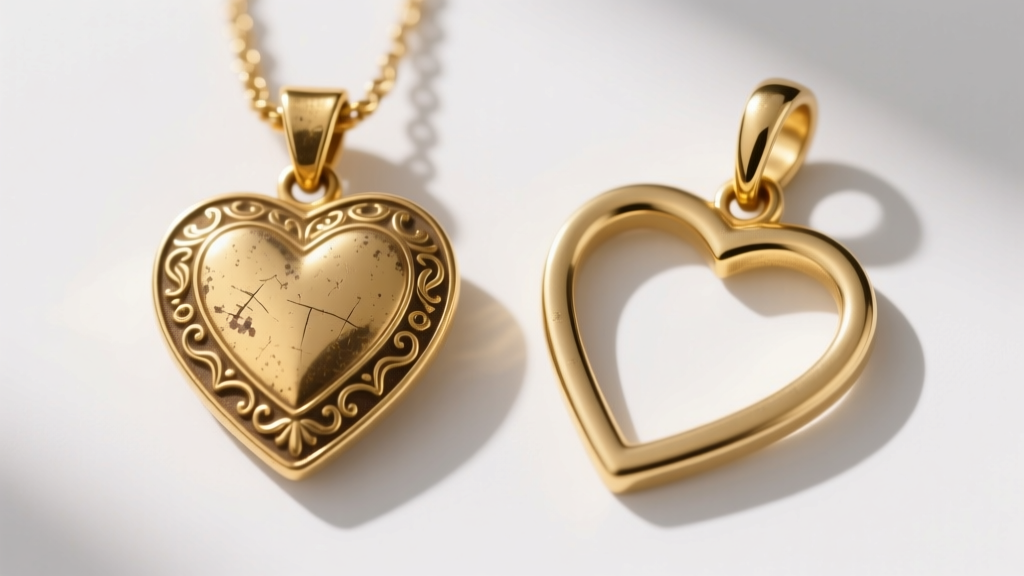
A common error among novice collectors is conflating the classic 1960s flat heart with the 'puffy heart' charm. Puffy hearts—which are hollow, heavily domed, and often feature engraved floral motifs on the front and a woven basket pattern on the back—did not reach peak popularity until the late 1970s and 1980s. The true Elizabeth Montgomery style is distinctly solid, flat-faced, and relies on high-polish light reflection rather than surface engraving for its visual impact. If a piece is hollow and lightweight (under 1.0 grams despite large dimensions), it is likely a later reproduction or a different stylistic offshoot entirely.
Chain Pairing: Achieving the Correct Vintage Drape
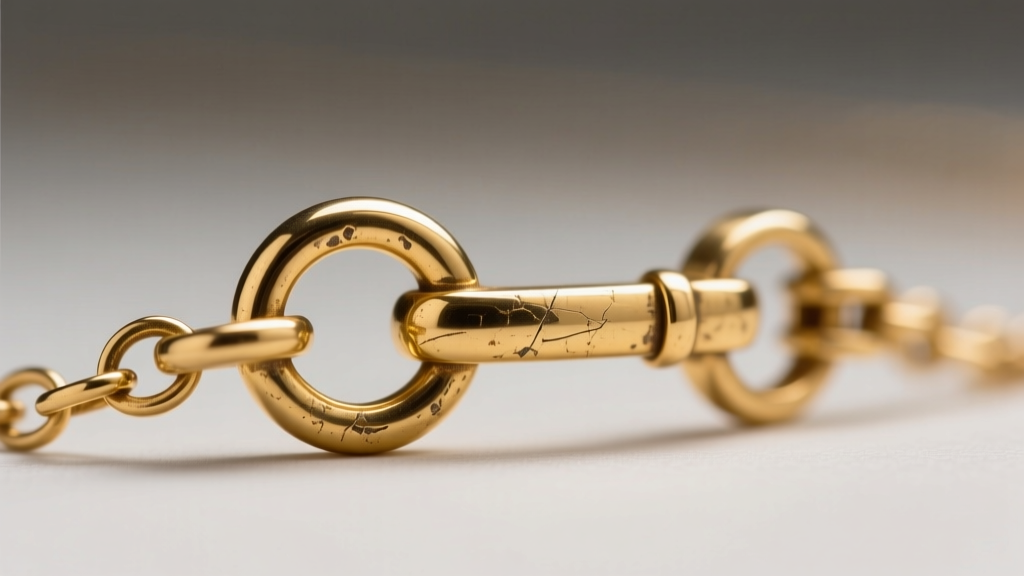
The pendant is only half of the equation. The Elizabeth Montgomery heart necklace relies heavily on the drape of the chain to achieve its signature look. Mid-century chains were designed with tensile strength and fluid articulation in mind. The most historically accurate pairing is a 1.0mm to 1.2mm cable chain or a delicate rope chain, typically measuring 16 to 18 inches in length.
| Chain Type | Width (mm) | Drape Profile | Durability & Notes |
|---|---|---|---|
| Cable Chain | 1.0 - 1.2mm | Fluid, classic, lays flat | Highly durable if links are soldered; standard for the era. |
| Rope Chain | 1.2 - 1.5mm | Textured, catches light well | Prone to kinking if stored improperly; excellent vintage sparkle. |
| Box Chain | 0.8 - 1.0mm | Stiff, geometric drape | Less common in the 60s for this specific pendant; modern alternative. |
| Snake Chain | 1.5 - 2.0mm | Smooth, tubular, rigid | Not recommended; too rigid and historically inaccurate for this style. |
Furthermore, authentic vintage chains utilize spring ring clasps (usually 5mm or 6mm) equipped with a soldered jump ring on one end and a small, open 'C' catch on the other. Modern lobster clasps, while more secure, instantly date a piece to the late 1980s or newer.
Manufacturing Techniques: Die-Struck vs. Cast
To truly understand the Elizabeth Montgomery heart necklace, one must examine how it was manufactured. The vast majority of high-quality mid-century pendants were die-struck rather than cast via the lost-wax method.
Why Die-Striking Matters
Die-striking involves stamping a sheet of gold alloy between two hardened steel dies under immense pressure. This process compresses the molecular structure of the gold, resulting in a pendant that is denser, harder, and capable of holding a much sharper edge and higher polish than a cast piece. According to the Lang Antique Jewelry University, die-struck vintage jewelry exhibits superior longevity and a distinct 'crispness' in its silhouette. When examining a vintage heart pendant, look for the razor-sharp inner cleft of the heart; a soft, rounded cleft is a telltale sign of modern lost-wax casting and microscopic porosity.
Sourcing and Authentication in the Modern Market
Finding an authentic, period-correct Elizabeth Montgomery heart necklace requires a discerning eye, as the market is flooded with modern reproductions marketed as 'vintage-style.' When evaluating a piece at an estate sale or auction, apply the following technical checklist:
- Inspect the Solder Joints: Vintage jump rings and bales were soldered using traditional torch methods, which often leave a tiny, visible bead of solder or a slight discoloration (fire scale) under 10x magnification. Modern laser welders leave a much cleaner, almost invisible seam.
- Check for Patina: Authentic 14k gold from the 1960s will often have a soft, accumulated patina in the recessed areas, particularly around the bale and the clasp mechanism. Artificially applied patina often looks uniformly dark and sits on the surface rather than in the micro-scratches.
- Evaluate the Maker's Mark: Use a jeweler's loupe to locate the maker's mark. Cross-reference this stamp with mid-century American jewelry manufacturing databases. Many prominent 1960s makers, such as Trifari or Napier (for costume equivalents), or specific fine jewelry stampers, have well-documented hallmarks.
Care and Restoration of Vintage Gold Pendants
Preserving the integrity of a mid-century die-struck heart pendant requires specialized care. Avoid commercial 'dip' polishes, which contain harsh thiourea chemicals that can strip the alloyed metals from the surface, leaving the gold porous and brittle over time.
Bench Jeweler Tip: When polishing a vintage 14k heart pendant, use a soft muslin wheel with a mild rouge (like Zam or Wenol) at low RPMs. Never use a stiff bristle brush or aggressive cutting compounds, as these will round off the crisp, die-struck edges that define the Elizabeth Montgomery aesthetic.
For routine cleaning, a simple solution of warm distilled water, a few drops of ammonia-free dish soap, and a soft-bristled baby toothbrush is sufficient to remove sebum and environmental dirt without compromising the historical patina or the structural integrity of the vintage solder joints.


