Silver Chunky Heart Necklace: Material Guide & Care
Discover the metallurgy behind the perfect silver chunky heart necklace. We compare 925 vs 935 silver, chain gauges, and weight distribution.

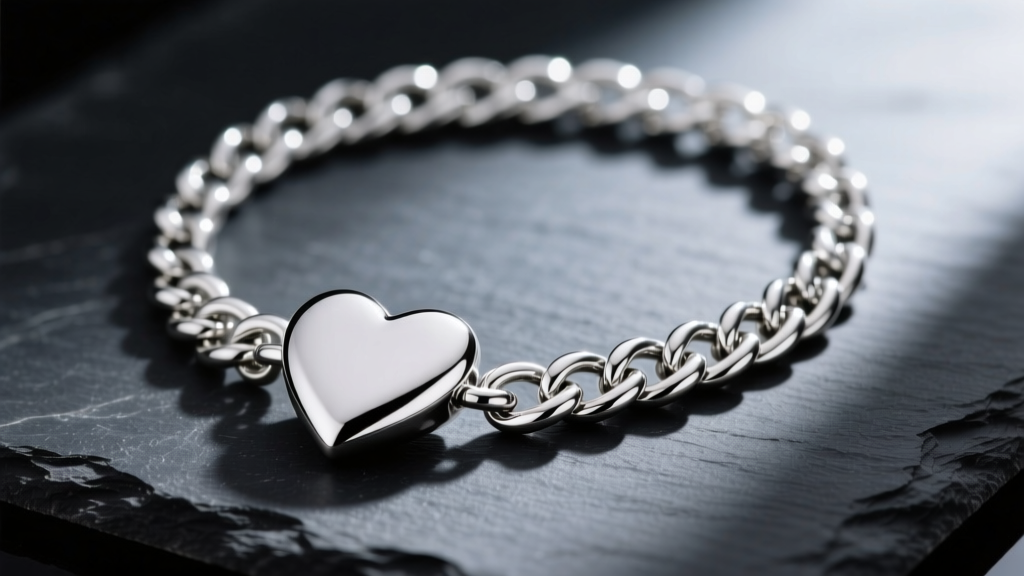
The Resurgence of Heavyweight Silver Jewelry
The modern jewelry landscape has seen a definitive shift toward bold, structural silhouettes, and the silver chunky heart necklace sits at the absolute center of this movement. Moving far beyond the delicate, whisper-thin chains of the 2010s, today's collectors and style enthusiasts are demanding substantial weight, three-dimensional volume, and impeccable metallurgical integrity. However, purchasing a heavy statement piece is not merely an aesthetic choice; it is an exercise in structural engineering. When a pendant exceeds 20 grams, the physical properties of the silver alloy, the tensile strength of the chain, and the mechanics of the clasp become critical factors in the garment's longevity and wearability.
In this comprehensive material guide, we deconstruct the anatomy of heavyweight silver pendants. We will explore the chemical differences between standard sterling and advanced alloys, calculate the necessary chain gauges to support dynamic loads, and provide a framework for evaluating the craftsmanship of a truly heirloom-quality piece.
Defining 'Chunky': Gram Weight and Casting Methods
In the jewelry industry, the term 'chunky' is often misused to describe wide but hollow pendants. True structural chunkiness is defined by mass and volume. A genuine silver chunky heart necklace should feature a pendant weighing anywhere from 15 grams to over 45 grams, with a depth (Z-axis) of at least 6 to 10 millimeters. This three-dimensional profile is what allows the heart to catch light from multiple angles and sit flush against the sternum without flipping over.
Solid Cast vs. Hollow Electroformed
Manufacturing methods dictate the durability of heavyweight pendants. According to the Gemological Institute of America (GIA), silver is a highly malleable metal, making it prone to denting if not properly supported.
- Solid Investment Casting: The gold standard for chunky hearts. Molten silver is poured into a plaster mold, resulting in a completely solid piece. While expensive due to the high precious metal content, solid casts can be polished, buffed, and repaired indefinitely.
- Hollow Electroforming / Resin-Filled: Some manufacturers create large, voluminous hearts that weigh under 10 grams by using hollow silver shells or resin cores. These should be strictly avoided for everyday chunky jewelry, as a single accidental impact against a hard surface will cause irreversible denting or structural collapse.
Silver Alloys Compared: Which Grade Wins?
Pure silver (999 fine silver) is far too soft to support the structural demands of a heavy necklace; the bail would quickly warp under the pendulum-like swinging motion of a 30-gram heart. Therefore, alloying metals are mandatory. But not all silver alloys are created equal, especially when it comes to tarnish resistance and skin reactivity.
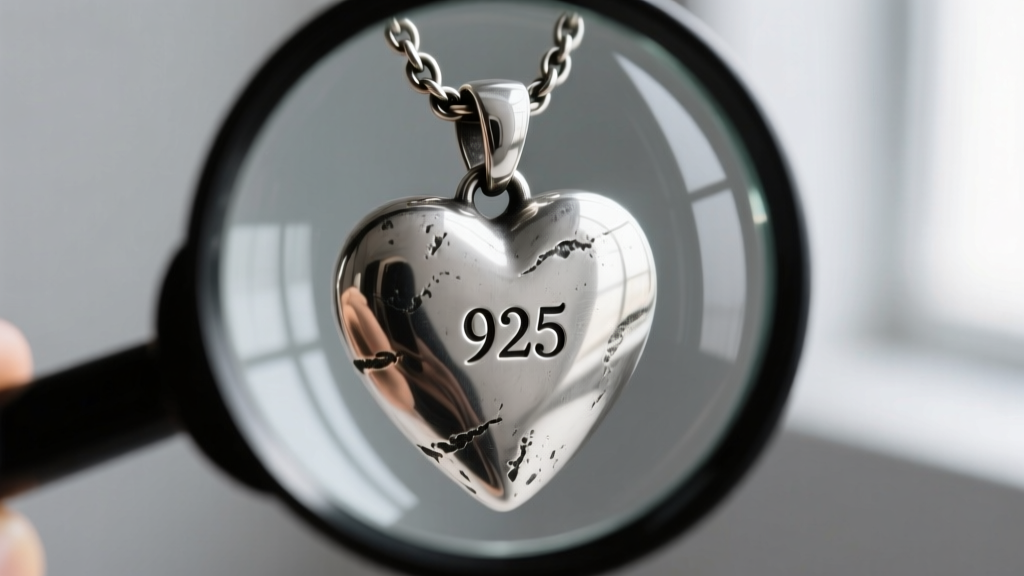
The Metallurgy of Tarnish
Silver itself does not tarnish; it is the copper (or other base metals) added to the alloy that reacts with sulfur and moisture in the air to create silver sulfide, the black film we recognize as tarnish. For a piece that rests directly against the skin and absorbs body oils, perfume, and environmental humidity, the alloy composition is paramount.
| Silver Grade | Composition | Tarnish Resistance | Structural Hardness | Best Application |
|---|---|---|---|---|
| 925 Sterling | 92.5% Ag, 7.5% Cu | Moderate (Requires upkeep) | Standard | Classic, high-polish hearts |
| 935 Argentium | 93.5% Ag, Ge, Cu | Exceptional (Germanium oxide barrier) | High (Work-hardens well) | Low-maintenance, matte finishes |
| Vermeil | 925 Base, 2.5µm+ Au | High (Gold exterior) | Standard | Two-tone chunky aesthetics |
| Silver Plate | Brass Core, Ag Coat | Low (Wears to brass) | Variable | Avoid for heirloom chunky pieces |
For a silver chunky heart necklace intended for daily wear, 935 Argentium Silver is the superior choice. The addition of germanium creates a transparent, self-healing oxide layer on the surface that drastically slows the formation of silver sulfide. Furthermore, Argentium's fusion-welding capabilities mean that if the bail (the loop connecting the heart to the chain) ever requires resizing or repair, it can be laser-welded without leaving visible seams or requiring re-plating.
Chain Gauge and Tensile Strength Mechanics
The most common failure point in heavy necklace design is not the pendant itself, but the chain. Hanging a 35-gram solid silver heart on a delicate 1.5mm cable chain is a recipe for disaster. When the wearer walks, the pendant creates a dynamic load—a pendulum effect that can exert up to three times its static weight in shear force on the chain links and clasp.
Minimum Gauge Requirements
To prevent link elongation (where oval links slowly stretch into weak, elongated teardrops), the chain must possess adequate tensile strength. We recommend the following pairings based on pendant weight:
- 15g - 25g Pendants: Require a minimum 3.0mm chain width. A standard Figaro or medium Curb chain provides sufficient lateral stability.
- 25g - 45g Pendants: Require a minimum 4.0mm to 5.5mm chain width. A Miami Curb, Rope, or heavy Cuban link chain is mandatory. These chain styles feature interlocking or woven links that distribute kinetic energy across multiple contact points, preventing single-link failure.
Furthermore, the jump ring connecting the chain to the clasp must be soldered shut. An open jump ring, no matter how thick the wire, will eventually pull apart under the repetitive dynamic stress of a heavy heart pendant.
Clasp Mechanics and Bail Sizing
The hardware of a silver chunky heart necklace must be as robust as the pendant it supports. Spring ring clasps are entirely unsuited for heavyweight jewelry; their internal springs degrade quickly under heavy loads, and their small surface area makes them prone to slipping open when caught on clothing.
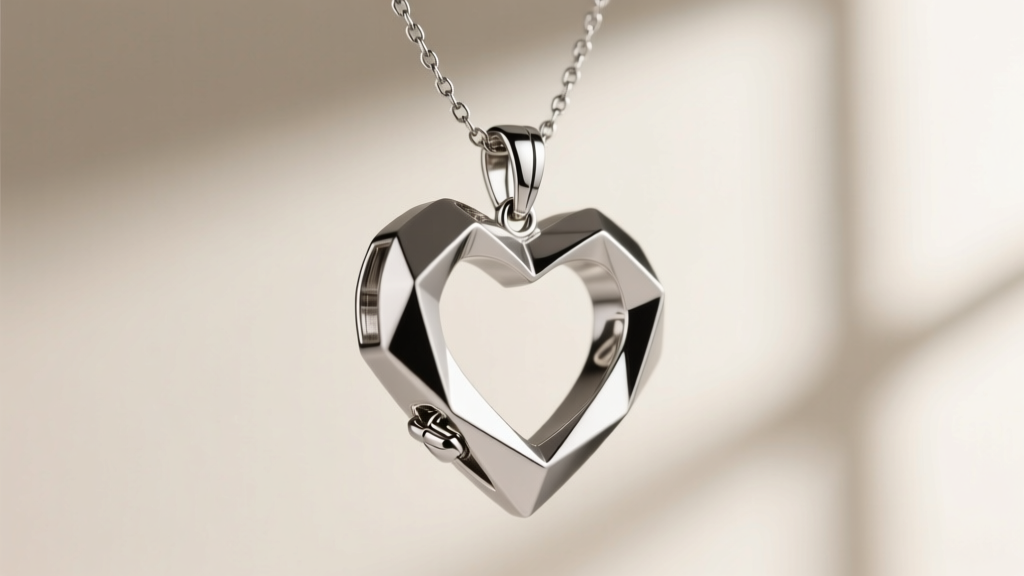
The Locking Lobster and Box Clasp
For pendants exceeding 25 grams, a heavy-duty locking lobster clasp or a box clasp with a figure-eight safety catch is non-negotiable. A locking lobster features a secondary gate that prevents the lever from being accidentally depressed. According to hallmarking standards tracked by The London Assay Office, the integrity of the clasp and its attachment points are vital markers of fine jewelry craftsmanship, ensuring the piece remains secure during active wear.
Bail Proportions and Friction
The bail is the unsung hero of the chunky heart necklace. If the inner diameter of the bail is too tight against the chain, the pendant will not lay flat; it will bind and stick out awkwardly. A general rule of thumb in jewelry fabrication is that the bail's inner diameter should be at least 1.5 times the width of the chain. Therefore, a 4.0mm Miami Curb chain requires a bail with an inner clearance of at least 6.0mm. Additionally, the bail should be cast as a single unit with the heart or attached via a heavy, soldered pin—never simply glued or pressure-fitted.
Patina, Polish, and Surface Maintenance
Because chunky heart necklaces often feature deep crevices, beveled edges, or intricate engraving, maintaining the finish requires specific techniques. High-polish finishes will naturally show micro-scratches and fingerprints more readily than matte or brushed finishes.
Many high-end silver chunky heart necklaces are treated with a light rhodium plating to mimic the bright white luster of platinum and prevent tarnish. While beautiful, rhodium will eventually wear off on the high-contact points of the heart. Alternatively, embracing a natural or artificially oxidized patina in the recessed areas of the heart can actually enhance the three-dimensional volume of the piece, making the chunky silhouette appear even more pronounced. To clean an oxidized piece, avoid harsh liquid silver dips, which will strip the intentional darkening from the crevices; instead, use a soft polishing cloth strictly on the raised, high-relief surfaces.
Verdict: Investing in the Right Material
A silver chunky heart necklace is a bold declaration of personal style, but its longevity relies entirely on the marriage of material science and structural design. By prioritizing solid investment casting, opting for advanced alloys like Argentium or heavily plated vermeil, and ensuring the chain gauge and clasp mechanics are rated for the pendant's dynamic load, you secure a piece that will not only turn heads but will endure as a resilient, wearable artifact for decades to come.


