Troubleshooting the Perfect Pendant for Silver Necklace Chains
Solve pairing issues with our expert guide. Learn bail sizing, weight limits, and tarnish fixes to choose the right pendant for silver necklace chains.

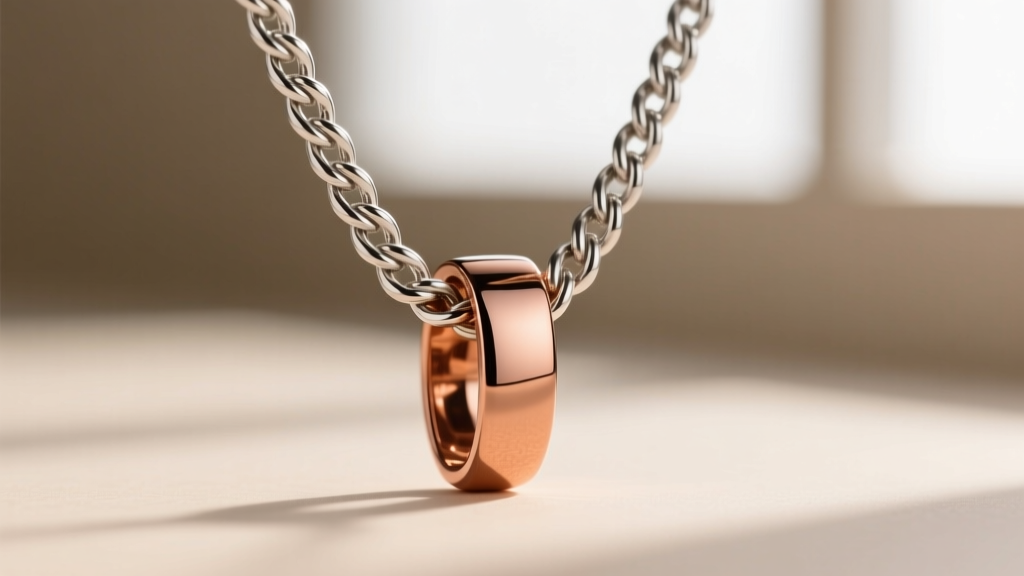
Finding the perfect pendant for silver necklace chains often feels like a simple aesthetic choice, but underneath the surface, it is an exercise in structural engineering and metallurgy. As jewelry trends evolve in 2026, we see heavier, raw-crystal pendants and mixed-media vintage pieces being paired with delicate heritage chains. This mismatch leads to a predictable wave of broken links, stuck bails, and accelerated tarnishing. At Jewel Style Radar, we approach jewelry pairing as a problem-solving discipline. Below is our master troubleshooting guide to diagnosing and fixing the most common hardware and chemical failures when pairing pendants with sterling silver chains.
The 'Stuck Pendant' Dilemma: Bail-to-Chain Ratios
The most frequent complaint we see is a pendant that refuses to slide smoothly along the chain, causing the chain to bunch up or the bail to wear down prematurely. This is almost always a failure of the bail-to-chain ratio. The inner diameter (ID) of the pendant bail must be at least 1.5 times the outer diameter (OD) of the chain. For example, if you are using a 2.0mm Figaro chain, your bail needs an ID of at least 3.0mm to accommodate the lateral width of the links when the necklace bends around the neck.
Troubleshooting Fix: If your pendant has a soldered bail that is too small, do not try to force it or file it down yourself, as this weakens the structural integrity. Instead, take it to a jeweler to have the bail cut and replaced with a 'donut bail' or a 'wrap bail' that accommodates thicker chains. For omega or herringbone chains, you must use a specialized omega bail with a flat, wide opening; standard loop bails will pinch and permanently kink these fluid-style chains.
Weight vs. Gauge: Preventing Chain Snap
Sterling silver (925) is a relatively soft alloy. When a heavy pendant acts as a pendulum against a delicate chain, the kinetic energy concentrates on the weakest link—usually the soldered point near the clasp or the link resting inside the bail. According to hardware specifications from Rio Grande, a chain's tensile strength drops significantly when subjected to dynamic movement rather than static weight.
| Chain Style | Gauge (mm) | Max Safe Weight | Link Failure Point | Best Pendant Type |
|---|---|---|---|---|
| Box Chain | 0.8mm - 1.0mm | 4 grams | 6.5 grams | Lightweight solitaire gems, thin lockets |
| Rope Chain | 1.2mm - 1.5mm | 12 grams | 18 grams | Medium die-cast medals, standard crystal points |
| Figaro Chain | 2.0mm - 2.5mm | 25 grams | 35 grams | Heavy vintage lockets, large signet pendants |
| Cuban Link | 3.0mm+ | 60+ grams | 80+ grams | Oversized raw stones, multi-layered resin art |
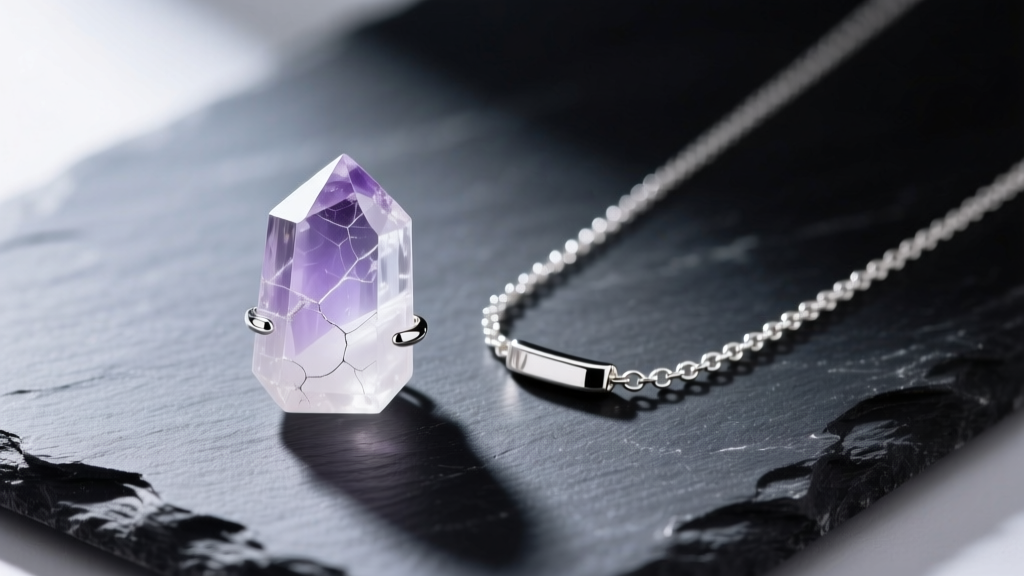
Troubleshooting Fix: If you have a 15-gram pendant but only own a 0.8mm box chain, you must upgrade your chain. Attempting to reinforce a thin chain with jump rings will only create rigid stress points that lead to sudden snapping. Opt for a 1.5mm rope chain, which distributes tension across multiple intertwined links.
Galvanic Corrosion & Tarnish Transfer
Have you ever noticed your silver chain turning black exclusively in the area where the pendant rests? This is rarely just standard environmental tarnish; it is often galvanic corrosion or sulfur transfer. Standard 925 sterling silver contains 7.5% copper. If your pendant is made of a base metal alloy, brass, or contains high-sulfur inclusions (like certain raw pyrite or unsealed turquoise), moisture from your skin creates an electrolytic bridge. This accelerates the oxidation of the copper in the silver chain, resulting in dark, stubborn copper oxide and silver sulfide buildup.
Troubleshooting Fix: To stop this chemical reaction, you must isolate the metals. You can apply a micro-thin layer of clear jewelry sealant (like ProtectaClear) to the back of the offending pendant. Alternatively, upgrade your chain to Argentium silver (935 or 960 grade). Argentium replaces some of the copper with germanium, which forms a transparent, tarnish-resistant oxide layer that virtually eliminates galvanic blackening when paired with reactive pendant metals.
Bail Hardware Fixes for Oddly Shaped Pendants
Not every pendant comes with a pre-drilled hole or a soldered bail. When working with raw stones, sea glass, or irregular vintage finds, choosing the right adhesive or mechanical bail is critical for longevity.
- Glue-On Pad Bails: Best for flat-backed pendants. Failure Mode: Using standard cyanoacrylate (Super Glue), which becomes brittle and shatters upon impact. Fix: Use a two-part jeweler's epoxy (like G-S Hypo Cement or Devcon 5-Minute Epoxy) and lightly sand the pendant's surface with 400-grit paper for mechanical grip.
- Pinch Bails: Ideal for top-drilled briolettes. Failure Mode: The prongs snap off if opened and closed repeatedly. Fix: Set the prong into the stone's drill hole once using a drop of resin, and never remove it.
- Wrap Bails: The safest option for irregular, undrilled stones. These use a wire-cage mechanism that grips the stone without adhesives, allowing you to swap the pendant between different silver chains easily.
Clasp Failures Under Pendant Tension
The clasp is the second most common point of failure when wearing a heavy pendant. Spring ring clasps, which are standard on lightweight chains, rely on a tiny internal steel spring. When subjected to the downward drag of a 10-gram pendant, the spring mechanism fatigues, and the clasp will eventually slide open, dropping your jewelry.
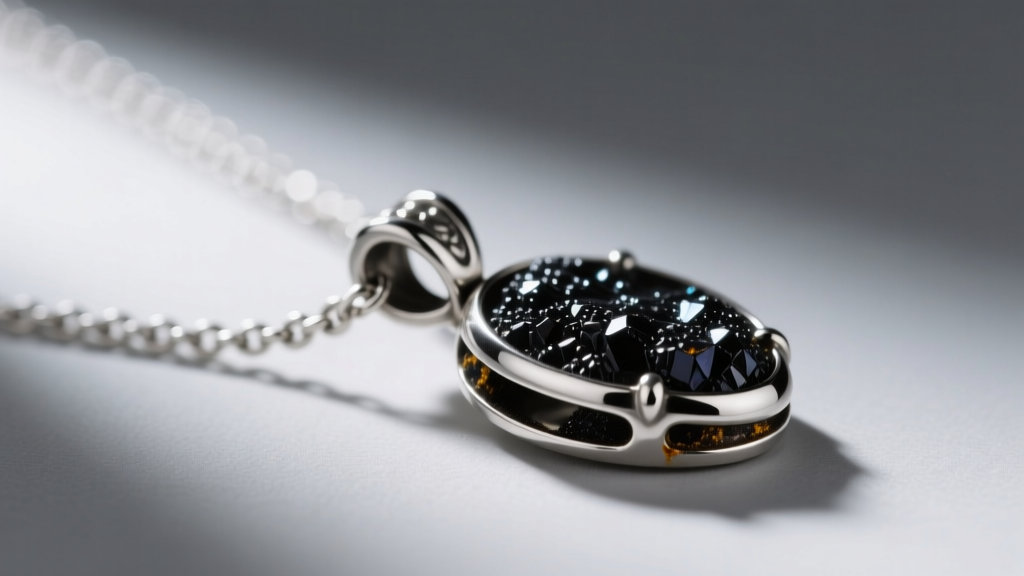
Troubleshooting Fix: For any pendant exceeding 8 grams, replace the spring ring with a lobster clasp or a toggle clasp. Lobster clasps feature a heavier internal spring and a wider jaw that locks securely. For pendants over 25 grams, a toggle clasp is the gold standard; the kinetic weight of the pendant actually pulls the T-bar tighter against the O-ring, making it virtually impossible to slip open accidentally. For expert guidance on metal fatigue and clasp mechanics, the educational resources at Fire Mountain Gems offer excellent visual stress-tests for jewelry findings.
Stone-Specific Troubleshooting: Cleaning Interactions
When your silver chain inevitably requires polishing, the pendant can become a casualty. According to the GIA Gem Care guidelines, porous gemstones like opal, turquoise, malachite, and pearls will absorb liquid silver polishes, leading to permanent discoloration and structural degradation. Furthermore, ultrasonic cleaners—which are excellent for bare silver chains—will shatter emeralds and fracture raw quartz pendants due to high-frequency vibrations.
Troubleshooting Fix: Never clean a chain while the pendant is attached. Always unhook the pendant before polishing. If you must clean the assembled piece, use a dry, impregnated silver polishing cloth and carefully maneuver it around the bail, ensuring no polishing compounds transfer to porous stones. For a chemical-free clean that is safe for almost all pendant materials, use a mild solution of distilled water and phosphate-free dish soap, agitating gently with a soft baby-hair brush.


