Choosing a Necklace Letter M: Metal Properties Guide
Discover the best metal for your necklace letter M pendant. We compare 14k gold, sterling silver, platinum, and titanium for durability and wear.

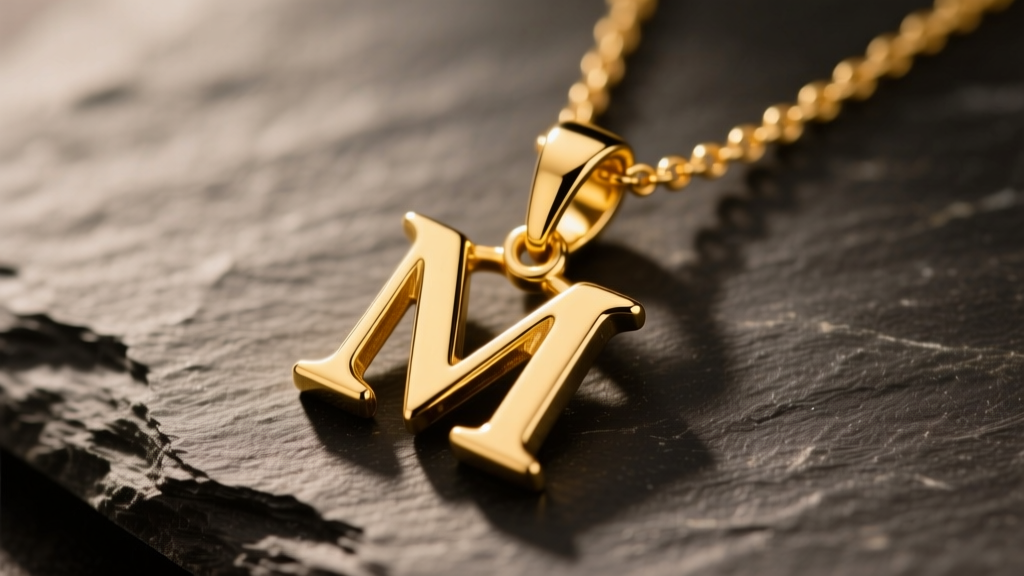
The Geometry of the Letter M: Why Material Choice is Critical
When selecting an initial pendant, the specific geometry of the letter dictates how it will wear over time. A necklace letter M presents unique structural challenges compared to simpler, curved letters like 'O' or 'C'. The letter 'M' features multiple sharp vertices, deep inner crevices, and protruding 'legs' that are highly susceptible to snagging, impact damage, and localized wear. Consequently, the metallurgical properties of the metal you choose—specifically its Vickers hardness (HV), tensile strength, and alloy composition—will determine the lifespan and aesthetic integrity of the piece.
In 2026, advancements in precision laser cutting and 3D wax casting have allowed for incredibly intricate initial designs. However, these manufacturing techniques do not override the fundamental laws of metallurgy. A poorly chosen alloy will result in rounded edges, bent prongs, or a snapped bail within months of daily wear. This guide provides an expert-level material comparison to help you select the optimal metal for a letter M necklace, balancing durability, skin sensitivity, and long-term maintenance.
Metallurgical Breakdown: Comparing the Top 4 Metals
To understand how different metals handle the sharp angles and structural demands of an 'M' pendant, we must look beyond marketing terms and examine the raw data. Below is a comparative analysis of the most common jewelry metals used for initial necklaces.
| Metal / Alloy | Vickers Hardness (HV) | Tarnish Resistance | Edge Retention | Estimated Price Range (16" Chain + Pendant) |
|---|---|---|---|---|
| 14k Yellow Gold | 140 - 160 HV | Excellent | Very High | $350 - $600 |
| 18k Yellow Gold | 120 - 135 HV | Excellent | Moderate | $550 - $950 |
| Sterling Silver (925) | 60 - 75 HV | Poor | Low | $45 - $120 |
| Platinum (950) | 110 - 130 HV (Work-hardens) | Excellent | High | $1,200 - $2,500 |
| Grade 5 Titanium (6Al-4V) | 330 - 360 HV | Excellent | Extreme | $80 - $200 |
Gold Alloys: 14k vs. 18k for Intricate Initials
Gold remains the premier choice for fine jewelry, but pure 24k gold is far too soft (approx. 25 HV) for a pendant with sharp extremities. Therefore, alloying is mandatory. According to the Gemological Institute of America (GIA), the mixture of secondary metals like copper, silver, and zinc fundamentally alters the durability of the final piece.
14k Gold (58.5% Pure Gold): For a necklace letter M, 14k gold is generally the superior choice for daily wear. The higher percentage of alloy metals (often copper and silver) increases the Vickers hardness to roughly 150 HV. This added rigidity ensures that the sharp bottom 'legs' of the 'M' will not easily bend if caught on a sweater, and the outer edges will resist gradual rounding from friction against the skin and clothing.
18k Gold (75% Pure Gold): While 18k gold offers a richer, deeper yellow hue and is less likely to cause contact dermatitis, its lower hardness (around 125 HV) makes it more malleable. If your 'M' pendant features a delicate, elongated serif font, 18k gold may require more frequent professional straightening and polishing to maintain its crisp geometry.
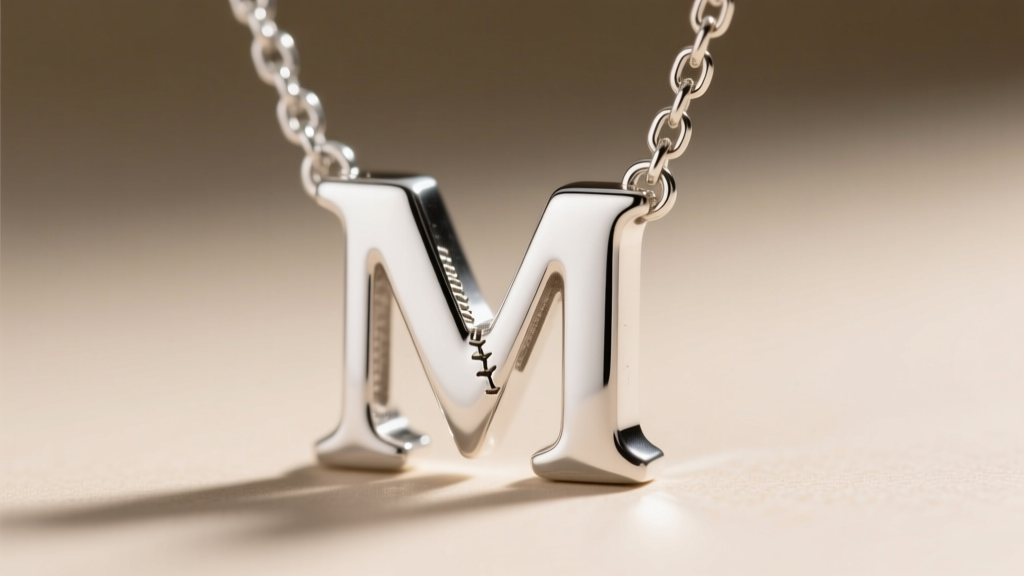
The Solder Point Vulnerability
Regardless of whether you choose 14k or 18k gold, the bail—the loop that connects the 'M' to the chain—is the most critical failure point. In cast letter pendants, the bail is often integrated, but in stamped or laser-cut designs, it is soldered onto the top center of the 'M'. Because the 'M' is top-heavy and wide, lateral stress on the bail is significant. Ensure your jeweler uses a high-temperature, hard solder (melting point above 1450°F) rather than a soft easy-solder, which can fracture under the repetitive torque of a moving necklace.
Sterling Silver: Tarnish and Crevices
Sterling silver (92.5% silver, 7.5% copper) is an accessible and popular entry point for initial necklaces. However, as noted by the Silver Institute, the copper content that gives sterling silver its necessary structural integrity also makes it highly susceptible to oxidation and tarnishing when exposed to sulfur and moisture in the environment.
The specific geometry of the letter 'M' exacerbates this issue. The deep, sharp inner angles where the diagonal strokes meet the vertical legs act as moisture and sebum traps. Over time, these crevices will develop dark, stubborn tarnish that is difficult to remove with a standard polishing cloth. If you opt for a sterling silver necklace letter M, consider a rhodium-plated finish. Rhodium plating creates an inert, highly reflective barrier that prevents tarnish and adds a layer of scratch resistance, though it will eventually wear away on high-friction edges and require re-plating every 12 to 18 months.
Platinum and Titanium: The Heavyweights
For those seeking maximum longevity and hypoallergenic properties, platinum and titanium represent the extreme ends of the luxury and utilitarian spectrums, respectively.
- Platinum (950): Platinum is dense and heavy, giving an 'M' pendant a substantial, luxurious drape. Interestingly, platinum has a lower initial Vickers hardness than 14k gold, but it exhibits unique work-hardening properties. When the sharp edges of the 'M' are scratched or impacted, the metal displaces rather than flakes away, creating a desirable 'patina' over time. Furthermore, platinum's high melting point and structural integrity make it the safest metal for securing any diamond accents embedded within the letter.
- Grade 5 Titanium (Ti-6Al-4V): Aerospace-grade titanium is exceptionally hard (up to 360 HV) and entirely immune to tarnish and corrosion. A titanium 'M' pendant will retain its razor-sharp factory edges indefinitely. The trade-off is that titanium cannot be easily soldered or resized by traditional jewelers. If the bail breaks, the pendant is often unrepairable and must be replaced. It is best suited for minimalist, bezel-set, or solid geometric 'M' designs rather than intricate, filigree patterns.
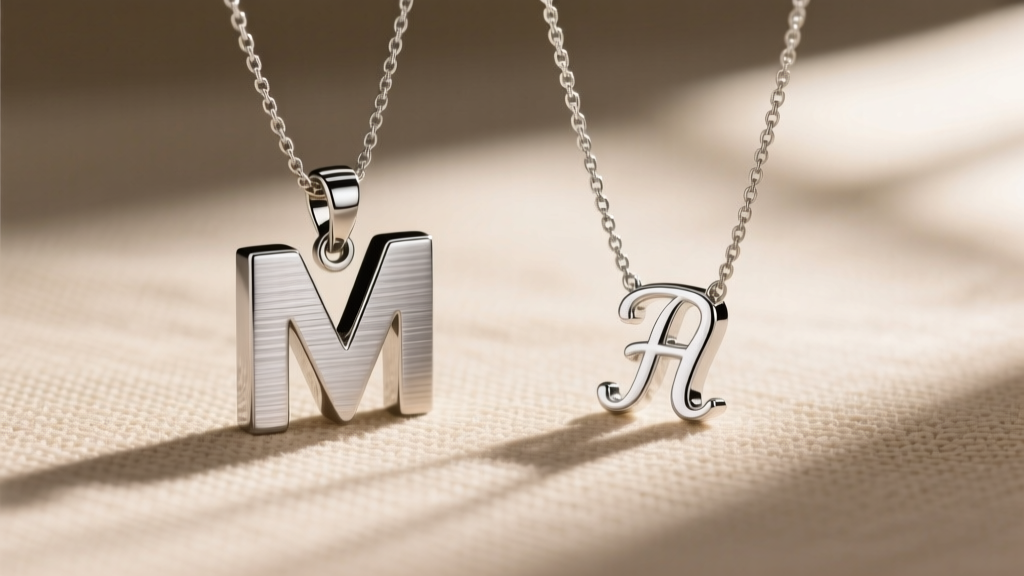
Chain Pairing and Galvanic Considerations
A common mistake when assembling a necklace letter M is mismatching the metallurgy of the pendant and the chain. Beyond aesthetic mismatches, mixing dissimilar metals in the presence of sweat (an electrolyte) can trigger galvanic corrosion. For example, pairing a sterling silver 'M' with a base-metal or low-karat gold chain can accelerate the oxidation of the less noble metal at the point of contact (the bail).
Always match your chain metal to your pendant metal. Furthermore, the chain style must complement the weight of the 'M'. A solid cast 14k gold 'M' pendant weighing over 4 grams will quickly stretch and snap a delicate 0.9mm cable chain. Opt for a 1.2mm to 1.5mm box chain or a wheat chain, which offer superior tensile strength and resist kinking when subjected to the pendulum-like swing of a wide initial pendant.
Expert Maintenance for Sharp-Edged Initials
Preserving the crisp lines of your letter 'M' requires a targeted maintenance routine. Avoid ultrasonic cleaners for oxidized or antiqued silver 'M' pendants, as the high-frequency vibrations can strip the intentional darkening from the inner crevices. Instead, use a soft-bristled infant toothbrush with a mild, phosphate-free dish soap to gently agitate dirt from the sharp corners.
When polishing, use a treated jeweler's cloth and pull the metal in straight, linear motions rather than circular ones. Circular polishing will inevitably round off the sharp vertices of the 'M', softening the font and altering the designer's original aesthetic. Store the necklace flat or hanging individually; tossing a hard titanium or 14k gold 'M' into a jewelry box with softer gemstones or pearls will result in severe scratching to the lesser pieces.
Final Verdict: Matching Your Lifestyle to the Metal
Ultimately, the best material for your necklace letter M depends on your daily environment and aesthetic priorities. If you want a brilliant, low-maintenance piece that holds sharp edges beautifully for decades, 14k gold remains the undisputed champion for initial jewelry. If budget is a primary concern and you don't mind monthly polishing routines to clear tarnish from the deep angles, rhodium-plated sterling silver offers excellent visual appeal. For those with severe metal sensitivities or a preference for indestructible, modern industrial aesthetics, Grade 5 titanium provides an edge that will literally never dull.


