The Solid Rose Gold Necklace: 2026 Trend Analysis & Style Guide
Discover why the solid rose gold necklace is dominating 2026 jewelry trends. Explore 14k vs 18k alloys, layering frameworks, and investment value.

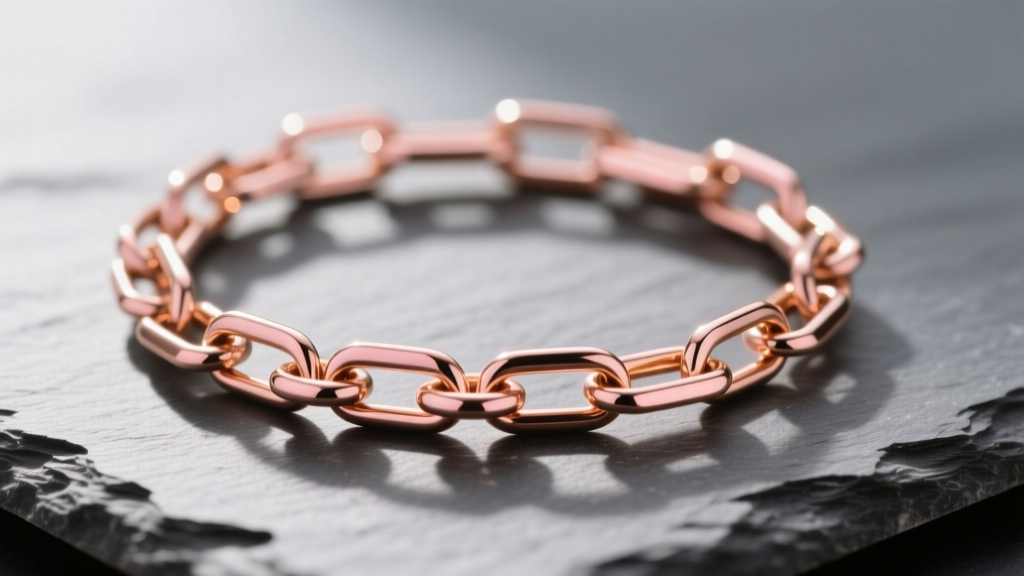
The 2026 Shift: Why Solid Rose Gold is Outperforming Yellow and White
The jewelry landscape of 2026 has decisively pivoted away from the fast-fashion, heavily plated accessories that dominated the early 2020s. In its place, a demand for enduring, intrinsic value has elevated the solid rose gold necklace to the pinnacle of contemporary neckwear. This is not merely a cyclical color preference; it represents a fundamental shift in consumer psychology toward quiet luxury and investment-grade personal adornment. When you purchase a solid rose gold necklace today, you are buying an asset that retains melt value, resists the inevitable tarnishing of base metals, and offers a distinct, warm metallurgical profile that flatters a wider array of skin undertones than traditional yellow or white gold.
According to the Federal Trade Commission Jewelry Guides, the term solid carries strict legal weight in the United States. It dictates that the item is made entirely of the karat gold claimed, throughout its entire thickness, with no hollow spaces or base metal cores. As consumers become more educated on the deceptive nature of gold vermeil and flash-plating, the solid rose gold necklace has emerged as the ultimate antidote to disposable jewelry.
Metallurgy Matters: 14k vs. 18k Solid Rose Gold Necklaces
To truly understand the value of a solid rose gold necklace, one must look at the alloy composition. Pure 24k gold is entirely yellow and too soft for daily wear. Rose gold achieves its signature blush hue through the careful addition of copper and, occasionally, small amounts of silver or zinc. The ratio of these metals drastically alters both the color and the structural integrity of the necklace.
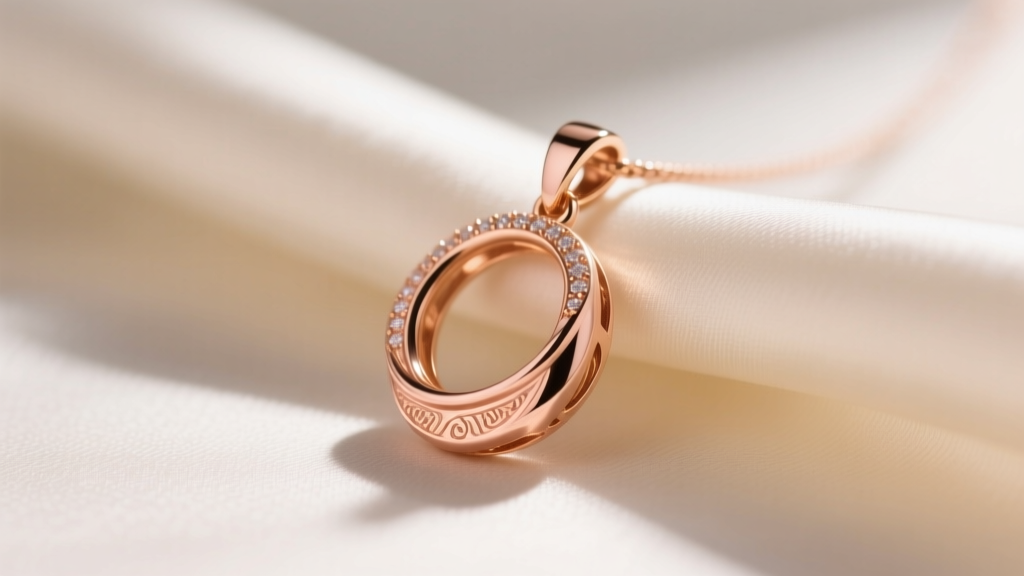
Many consumers mistakenly believe that 18k rose gold is superior in every way because it contains more pure gold. However, in the context of rose gold, a higher gold content actually dilutes the copper, resulting in a softer, more yellow-peach hue. Conversely, 14k rose gold contains a higher percentage of copper, yielding a much deeper, truer pink color and significantly higher tensile strength. The Gemological Institute of America (GIA) notes that copper is a highly durable alloying metal, making 14k rose gold exceptionally resistant to the micro-scratches and bending that plague higher-karat chains.
| Karat Grade | Pure Gold Content | Copper Content | Silver/Zinc | Color Profile | Durability & Use Case |
|---|---|---|---|---|---|
| 14k Rose Gold | 58.5% | ~36.0% | ~5.5% | Deep Pink / True Rose | High (Ideal for daily wear chains) |
| 18k Rose Gold | 75.0% | ~22.0% | ~3.0% | Soft Peach / Champagne | Medium (Best for pendants/occasional) |
The Undertone Matrix: Matching Rose Gold to Skin
One of the primary drivers behind the solid rose gold necklace trend in 2026 is its universal flattery, but nuanced styling requires understanding your specific undertone matrix. The copper-rich nature of rose gold interacts with the melanin and hemoglobin visible just beneath the skin surface.
- Cool Undertones (Blue/Purple Veins): The subtle silver alloys in 18k rose gold provide a soft, peachy contrast that prevents the metal from looking too harsh against pale, cool skin.
- Warm Undertones (Green/Olive Veins): The deep, copper-heavy 14k rose gold harmonizes beautifully with golden and olive skin tones, creating a seamless, glowing effect.
- Neutral Undertones (Mixed Veins): You possess the versatility to wear both, though a mixed-metal stack featuring both 14k and 18k solid rose gold creates a sophisticated, tonal gradient.
Styling Framework: Layering Solid Rose Gold in 2026
Layering is no longer about simply throwing multiple chains together. The 2026 aesthetic demands intentional architecture. The most effective method for styling a solid rose gold necklace stack is the 3-Point Layering Rule, which relies on varying chain textures and precise length differentials to prevent tangling.
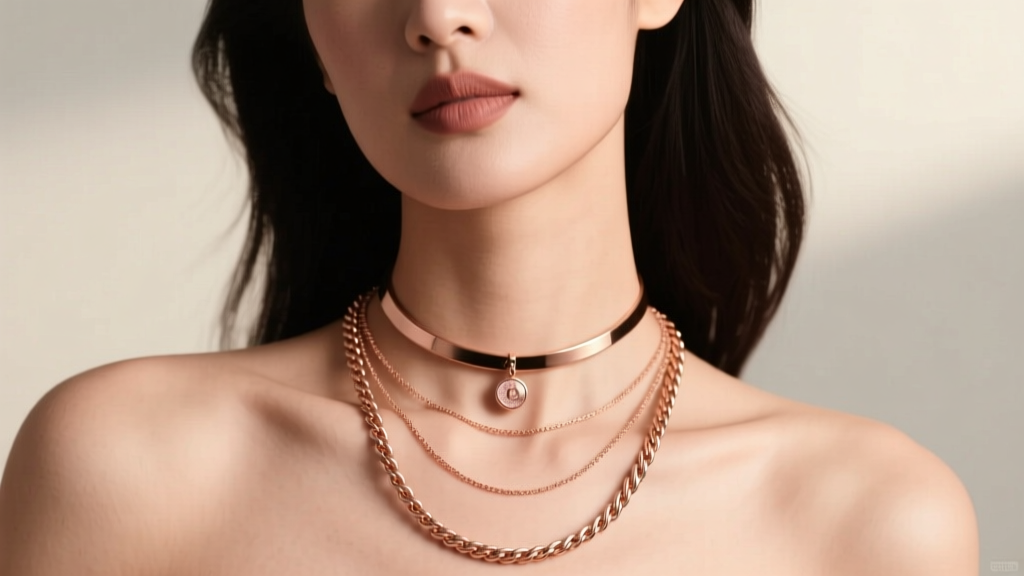
The 3-Point Layering Rule
Point 1: The Anchor (14 to 16 inches). Begin with a lightweight but sturdy chain, such as a 1.5mm solid 14k rose gold box chain or cable chain. This sits high on the collarbone and frames the face. Box chains are preferred here because their interlocking square links lay flat and resist twisting.
Point 2: The Focal (18 to 20 inches). This is where you introduce visual weight. Opt for a 2.5mm to 3.5mm paperclip chain or Figaro chain in solid rose gold, featuring a distinct pendant. Bezel-set morganite, pink sapphires, or lab-grown diamonds complement the warm copper tones of the metal without clashing.
Point 3: The Terminator (24 to 28 inches). Finish the stack with a delicate 1mm to 1.5mm rope chain. The twisted links of a rope chain catch the light differently than the flat links of the anchor and focal chains, adding depth to the bottom of the neckline without overwhelming the outfit.
A critical warning from master jewelers: Never layer chains of drastically different hardness or thickness if they are in direct contact. A heavy 14k rose gold Cuban link will act as an abrasive file against a delicate 18k rose gold cable chain, literally sawing through the softer, thinner links over a period of 6 to 12 months. Always ensure a minimum 2-inch length differential to prevent metal-on-metal friction.
Investment vs. Expense: Pricing Realities
With gold spot prices maintaining historic highs through 2026, as tracked by the World Gold Council, the pricing gap between solid and plated has widened. However, the long-term cost-per-wear heavily favors solid gold. Plated jewelry inevitably wears through to the brass or sterling silver core within 12 to 18 months of daily wear, requiring costly re-plating that often exceeds the original purchase price.
Here is a realistic pricing framework for authentic, solid rose gold necklaces in the current market:
- 14k Solid Rose Gold Cable Chain (18 inches, 1.2mm): $350 to $480
- 14k Solid Rose Gold Paperclip Chain (18 inches, 2.5mm): $650 to $900
- 18k Solid Rose Gold Heavy Cuban Link (20 inches, 5mm): $2,800 to $4,200
While the initial outlay for a solid rose gold necklace is significantly higher than the $40 to $80 demanded by fast-fashion plated alternatives, the solid piece retains intrinsic scrap value and can be polished, repaired, and passed down through generations.
Care and Patina: Embracing Copper Oxidation
Rose gold owes its magnificent hue to copper, and copper is a reactive metal. While a solid rose gold necklace will never flake, peel, or turn your skin green like cheap plated alternatives, the copper alloy can develop a subtle, darker patina over years of wear. This oxidation is accelerated by exposure to chlorine, sulfur, high-acidity sweat, and certain cosmetic lotions.
Rather than viewing this patina as damage, many collectors embrace it as a vintage characteristic that adds depth to the metal. However, if you prefer the original bright pink luster, restoration is simple and non-destructive. Soak the necklace in a solution of warm water, a few drops of mild dish soap, and a splash of white vinegar for exactly five minutes. Follow this with a gentle brushing using a baby-soft toothbrush to dislodge microscopic debris from the links. Rinse thoroughly and pat dry with a microfiber cloth. Avoid ultrasonic cleaners if your solid rose gold necklace features porous gemstones like opals or pearls, as the high-frequency vibrations can cause internal fracturing.


