Designer Diamond Necklace Anatomy: Technical Grading
Explore the technical anatomy of a designer diamond necklace, from micro-pavé grading and 18k alloy compositions to hallmark authentication.

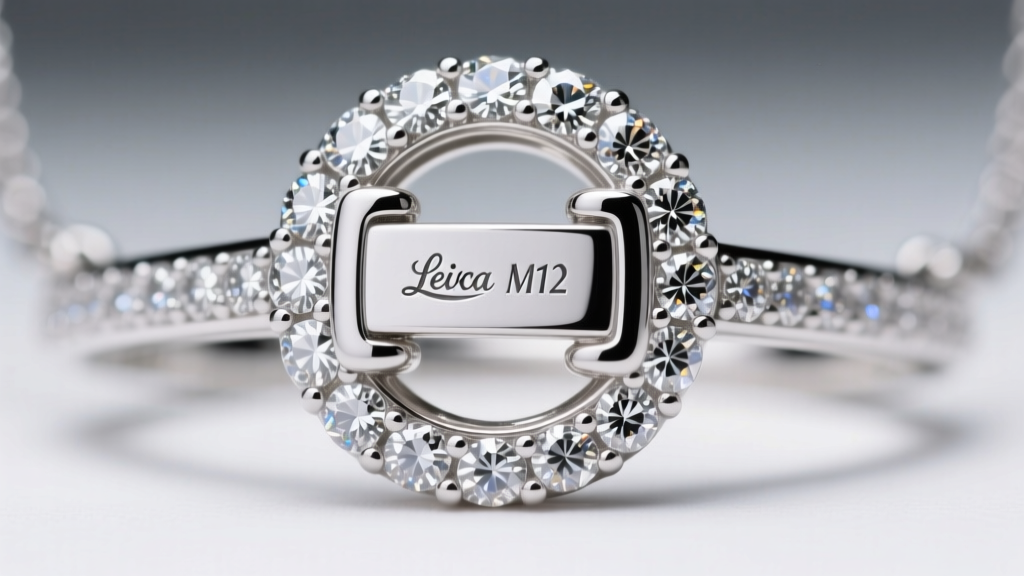
The distinction between a standard luxury jewel and a true designer diamond necklace extends far beyond brand heritage or retail pricing. At the highest echelons of fine jewelry, the difference is rooted in metallurgical precision, gemological strictness, and structural engineering. While mass-market luxury brands often rely on the visual appeal of a logo, top-tier designer houses (such as Harry Winston, Graff, and Van Cleef & Arpels) enforce rigorous technical specifications that dictate how the piece interacts with light, withstands tensile stress, and ages over decades of wear. This deep dive explores the exact material grades, diamond melee specifications, and construction techniques that define the anatomy of an elite designer necklace.
The Metallurgical Matrix: Alloy Formulations & Hardness
The foundation of any high-end necklace is its metal matrix. While generic luxury brands may use standard commercial alloys, designer houses frequently utilize proprietary formulations to optimize the Vickers hardness (HV) of the metal, which is critical for securing microscopic diamond prongs.
Platinum 950: Ruthenium vs. Iridium
Most commercial platinum jewelry is alloyed with 5% Iridium (Pt950/Ir). While workable, Iridium yields a relatively soft metal with a Vickers hardness of approximately 110 HV. In contrast, elite designer houses often mandate a Platinum 950/Ruthenium (Pt950/Ru) alloy. Ruthenium increases the hardness to roughly 135 HV. This 22% increase in tensile strength is non-negotiable for micro-pavé settings, as the prongs holding 0.01-carat melee diamonds must be incredibly thin yet rigid enough to resist deformation from daily impacts.
18k Gold & Proprietary Annealing
Standard 18k yellow gold consists of 75% pure gold, 12.5% copper, and 12.5% silver. However, designer brands like GIA-certified manufacturers often employ specialized annealing processes. By precisely controlling the cooling curve of the 18k gold wire before it is drawn into chain links, they align the crystalline structure of the copper-silver alloy, maximizing flexibility without sacrificing the structural integrity of the clasp mechanisms.
Gemological Strictness: The Micro-Pavé Melee Standard
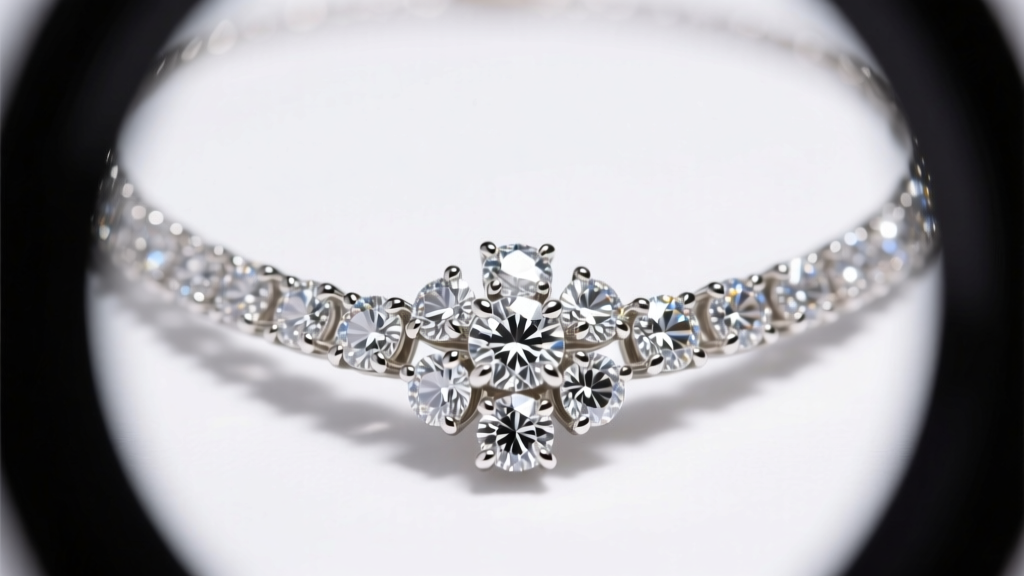
The term 'melee' refers to small diamonds, typically weighing between 0.001 and 0.15 carats. The treatment of melee diamonds is where the technical gap between mass-market and designer pieces becomes most apparent.
Single-Cut vs. Full-Cut Melee
To reduce manufacturing costs, many commercial jewelers use 'single-cut' melee (featuring only 17 or 18 facets) for stones under 0.05 carats. A true designer diamond necklace exclusively utilizes full-cut melee (57 or 58 facets) down to the 0.01-carat threshold. According to gemological standards outlined by the Gemological Institute of America (GIA), a full-cut facet arrangement is required to achieve optimal light return and scintillation in stones smaller than 2mm in diameter. Using single-cut stones in a micro-pavé field results in a 'flat' or 'glassy' appearance under direct lighting.
Color and Clarity Tolerances
While a standard luxury pendant might feature G-H color and SI1-SI2 clarity melee, top-tier designers enforce a strict D-F color and VVS1-VS1 clarity mandate for all pavé stones. Because micro-pavé settings group dozens of stones tightly together, any single SI-level inclusion or I-color tint creates a visible 'dead spot' that disrupts the continuous ribbon of light across the necklace.
Chain Engineering: Laser-Welded vs. Soldered Links
The chain of a designer diamond necklace must support the weight of the pendant while remaining fluid against the clavicle. The method used to close the chain links is a critical point of failure in lesser pieces.
- Soldered Links: Traditional chain making uses a solder paste to fuse the link shut. This solder is typically a lower-karat alloy (e.g., 14k) designed to melt at a lower temperature than the 18k wire. This creates a galvanic weak point prone to corrosion and structural snapping under tension.
- Laser-Welded Links: Elite designers utilize precision laser welding to fuse the exact same 18k or Pt950 wire material without introducing foreign alloys. This maintains the uniform tensile strength of the entire link and prevents the localized discoloration that occurs when solder joints oxidize over time.
Technical Comparison: Mass-Market vs. Top-Tier Designer
The following table breaks down the specific technical parameters that separate a standard luxury necklace from a high-end designer piece, reflecting current market data analyzed by industry authorities like Rapaport.
| Technical Specification | Mass-Market Luxury | Top-Tier Designer House |
|---|---|---|
| Melee Faceting | Single-Cut (under 0.05ct) | Full-Cut (All sizes down to 0.01ct) |
| Platinum Alloy Hardness | Pt950/Iridium (~110 HV) | Pt950/Ruthenium (~135 HV) |
| Chain Link Fusion | Soldered (Lower-karat joint) | Laser-Welded (Uniform alloy) |
| Pavé Setting Technique | Bright-Cut (Removes metal) | French V-Cut (Maximizes light entry) |
| Melee Clarity Grade | SI1 - SI2 | VVS1 - VS1 |
Authentication Markers & Hallmarking Precision
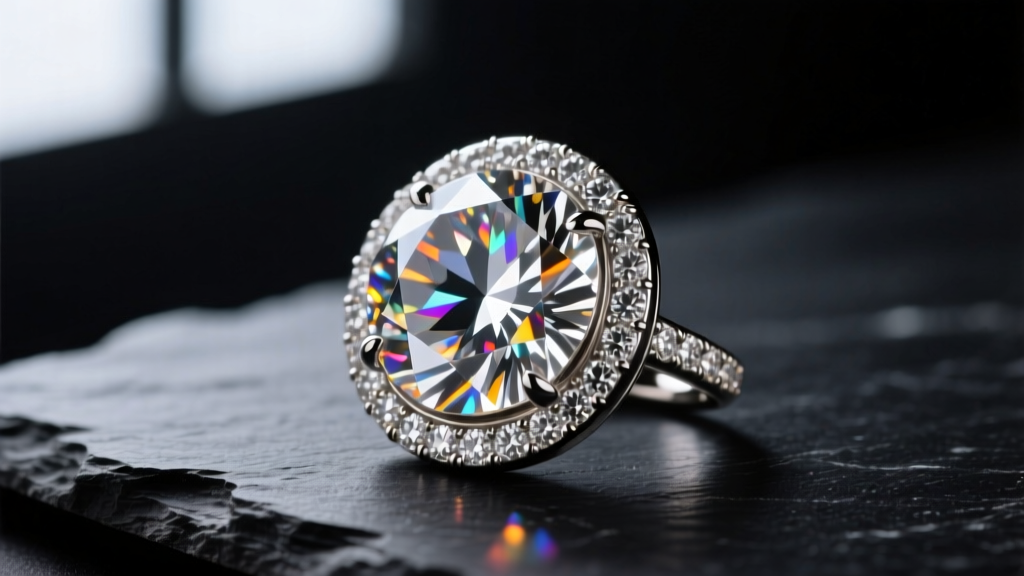
When evaluating the provenance of a designer diamond necklace, technical authentication relies on microscopic markers rather than visible logos. High-end houses employ laser inscription on the interior of the clasp plate or directly on the girdle of the center pendant diamond. Furthermore, the depth and crispness of the physical hallmarks (such as the French Eagle's Head for 18k gold or the St. Bernard Dog Head for platinum) are stamped using high-pressure hydraulic presses, resulting in perfectly sharp, deep impressions that counterfeiters using shallow laser-etching cannot replicate. Understanding these granular technical details is essential for collectors and horologists looking to verify the true pedigree of a designer jewel.


