Expert Guide to the Vintage Avon Unicorn Necklace & Appraisal
Discover expert appraisal techniques, material breakdowns, and market values for the vintage Avon unicorn necklace in this detailed collector's guide.

The Legacy of Avon's Fantasy Motifs
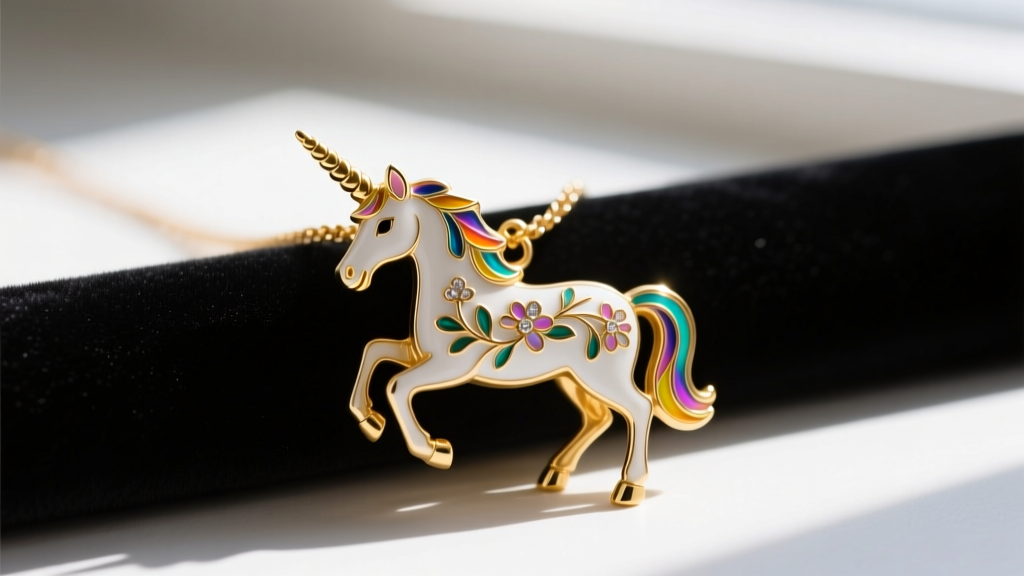
The Avon unicorn necklace occupies a unique space in the pantheon of late-20th-century costume jewelry. While Avon is primarily recognized for its cosmetics and fragrance empire, its jewelry division—particularly from the late 1970s through the 1990s—produced highly collectible, whimsical motifs that catered to the era's fascination with fantasy and mythology. Unlike high-end fine jewelry, these pieces were designed for mass-market accessibility, yet they exhibit a surprising degree of manufacturing consistency and design charm. In 2026, the resurgence of 1980s fantasy aesthetics and Y2K-adjacent nostalgia has driven a renewed interest in these specific animalier pendants among vintage collectors.
For the serious collector or appraiser, evaluating an Avon unicorn pendant requires moving beyond surface-level aesthetics. It demands a technical understanding of the metallurgical processes, enamel applications, and hardware standards utilized by Avon's contracted manufacturers during the piece's era of production. This deep dive explores the exact material specifications, authentication markers, and conservation protocols necessary for properly assessing these vintage necklaces.
Metallurgical & Material Breakdown
To accurately appraise an Avon unicorn necklace, one must first understand the foundational materials. Avon did not cast its own jewelry; instead, it contracted prominent American and international costume jewelry manufacturers. The material composition reflects the industry standards of the 1980s and early 1990s.
Base Alloys and Die-Casting
The intricate details of the unicorn's mane, horn, and facial structure were typically achieved through die-casting rather than stamping. The primary base metal used was Zamak, an alloy of zinc, aluminum, magnesium, and copper. Zamak was favored for its low melting point and exceptional fluidity, allowing it to capture the fine, sculptural details of the unicorn motif without requiring expensive secondary machining. However, Zamak is inherently porous and prone to oxidation if the outer plating is compromised.
Electroplating Specifications
Once cast and polished, the Zamak base underwent a multi-step electroplating process. A typical vintage Avon gold-tone unicorn pendant features:
- Copper Strike: An initial micro-layer of copper to seal the porous Zamak and provide a conductive, smooth surface.
- Nickel Barrier: A layer of nickel to prevent the base metals from migrating into the top layer and to add a bright, reflective undercoat. (Note: Post-2000s pieces may use palladium or hypoallergenic alternatives due to changing contact dermatitis regulations).
- Gold-Tone Flash: The final layer is a brass or bronze alloy, occasionally topped with a microscopic flash of 24k gold. This plating is exceptionally thin—usually between 0.1 and 0.5 microns. This is why "brassing" (the wearing away of the gold tone to reveal the copper or nickel beneath) is the most common failure mode on high-relief areas like the unicorn's horn.
Enamel and Rhinestone Accents
Many Avon unicorn pendants incorporate colored accents. It is critical to identify that these are cold enamels (epoxy resins), not vitreous (fired glass) enamels. Cold enamel is applied via syringe or brush and cured at low temperatures. While vibrant, it is highly susceptible to chemical degradation from solvents. Rhinestone accents, when present, are typically foil-backed glass chatons set with prong or glue-set techniques, utilizing standard round or marquise cuts.
Authentication: Decoding the Hallmarks
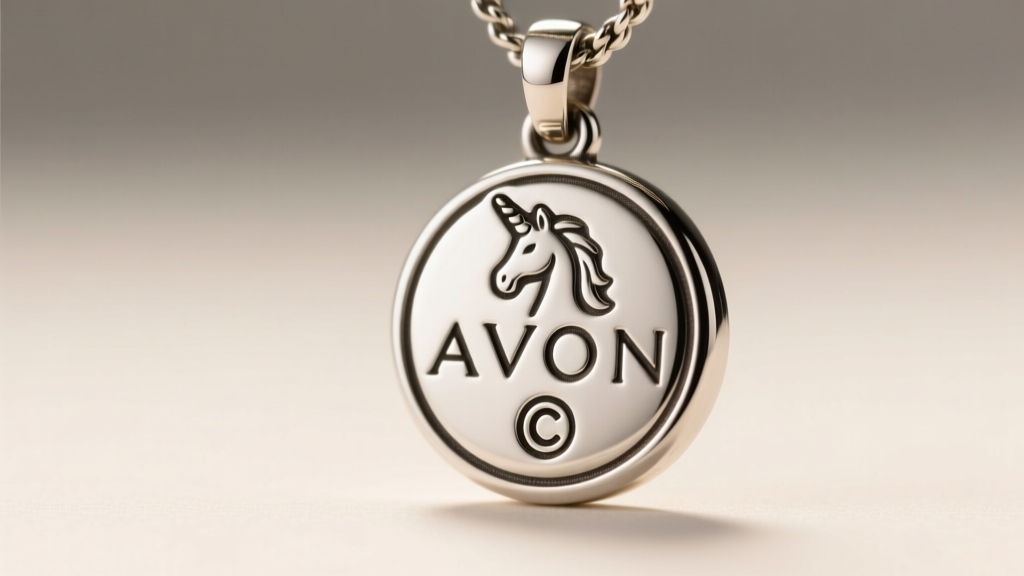
Authenticating an Avon unicorn necklace relies heavily on locating and interpreting the manufacturer's hallmark. Because Avon contracted various factories, the exact placement and font of the mark can vary, but the structural elements remain consistent.
The most common hallmark found on the reverse of the pendant is ©AVON. The copyright symbol (©) is a crucial indicator of vintage production, predominantly used from the 1970s through the early 1990s. Later pieces, or those produced for specific international markets, may simply read AVON in a sans-serif or block font. According to the Collectors Weekly costume jewelry archive, the depth and crispness of the stamp can also help date the piece; deeper, sharper strikes are generally indicative of earlier, higher-quality production runs before manufacturing tolerances were loosened in the late 1990s.
Additionally, examine the jump ring connecting the pendant to the chain. Original Avon hardware often features soldered jump rings or specific oval proportions that differ from modern, mass-market replacements. If the jump ring is a split ring showing signs of recent pliers marks, the pendant may have been re-strung, affecting its collectible value.
Condition Grading & Common Failure Modes
When cataloging an Avon unicorn necklace for a collection or preparing it for resale, applying a standardized condition grading scale is essential. The value of vintage costume jewelry is inextricably linked to the survival of its original finish.
| Grade | Plating Condition | Enamel & Stones | Hardware & Chain | Market Impact |
|---|---|---|---|---|
| Mint (M) | 100% intact gold-tone flash; no brassing or micro-scratches visible under 3x magnification. | Cold enamel is fully seated, glossy, with no yellowing or shrinkage. Stones are pristine. | Original chain present; clasp spring mechanism operates with factory tension. | Commands top-tier premium (often 3x base value). |
| Excellent (EX) | Full plating coverage; minor surface wear on the highest relief points (e.g., horn tip). | Enamel intact but may show microscopic dust inclusions. Foil backing on stones fully reflective. | Original chain; minor oxidation on the clasp spring. | Highly desirable; standard collector grade. |
| Very Good (VG) | Visible brassing on high points; copper strike visible on edges. | Minor enamel chipping near the prongs. One stone may be slightly loose or have a damaged foil back. | Chain may be a period-correct replacement; clasp shows moderate wear. | Wearable; valued primarily for the pendant motif. |
| Good (G) | Extensive brassing; base Zamak metal exposed and potentially oxidizing (white powder). | Significant enamel loss or yellowing. Missing rhinestones. | Chain is a modern replacement; original jump ring damaged or missing. | Low value; purchased only as a restoration project or for parts. |
Chain Mechanics and Hardware Vulnerabilities
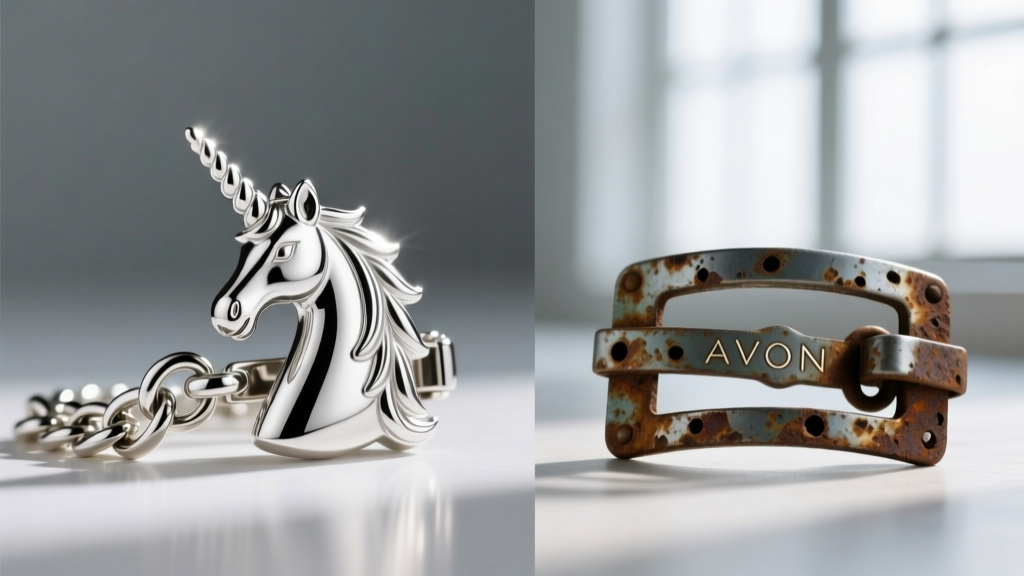
The pendant is only half the equation; the chain and clasp mechanics are frequent points of failure in vintage Avon necklaces. In the 1980s, Avon frequently paired whimsical pendants with herringbone chains. While herringbone chains offer a beautiful, liquid-like drape that complements the fantasy motif, they are structurally fragile. The flat, interlocking links are notoriously prone to kinking. Once a herringbone chain kinks, the structural integrity of the link matrix is permanently compromised, and it will inevitably snag and break.
Alternatively, pieces paired with cable or rolo chains have survived in much higher numbers due to the structural resilience of the round links. When appraising, check the soldering on the clasp end-rings. Original Avon soldering was often done with a lower-temperature lead-tin or silver-bearing paste that can degrade or crack over decades of tension, leading to sudden chain separation.
Conservation and Restoration Protocols
A common mistake made by novice collectors is attempting to clean a vintage Avon unicorn necklace using modern jewelry dips or ultrasonic cleaners. Never use ultrasonic cleaners on cold enamel or foil-backed rhinestones. The high-frequency cavitation will shatter the epoxy resin bond and strip the delicate silver foil from the back of the glass chatons, turning them black or clear.
Furthermore, avoid any cleaning agents containing acetone, methyl ethyl ketone (MEK), or ammonia. These solvents will dissolve the cold enamel, turning it into a sticky, irreparable mess. According to conservation guidelines referenced by Ruby Lane antique jewelry specialists, the safest method for cleaning the gold-tone plating is a gentle wipe with a dry, untreated microfiber cloth. For stubborn skin oils or cosmetics trapped in the crevices of the unicorn's mane, use a soft-bristled makeup brush lightly dampened with distilled water and a drop of pH-neutral dish soap, immediately drying it with compressed air to prevent water spots on the Zamak base.
Market Valuation & Collector Pricing Tiers
As of 2026, the market for vintage Avon animalier and fantasy jewelry has stabilized into distinct pricing tiers, driven by millennial and Gen Z collectors seeking nostalgic, statement-making pieces. The Avon unicorn necklace is highly sought after, but value is strictly dictated by the condition grading outlined above.
- Tier 1: Standard Production (Very Good to Excellent Condition): Typically valued between $25 and $45. These are the most common iterations, featuring standard gold-tone plating and basic enamel work.
- Tier 2: Mint / Deadstock Examples: Valued between $60 and $95. Pieces that include their original Avon presentation boxes, velvet pouches, or informational cards command a significant premium, as provenance and packaging are increasingly important to modern archivists.
- Tier 3: Rare Variants & Prototypes: Valued at $120 to $200+. Occasionally, Avon produced limited-run variants featuring sterling silver overlays, heavy gold electroplate (marked HGE), or unusual colorways (such as deep amethyst or sapphire cold enamel) that were not widely distributed to representatives. These are highly contested in specialized Facebook collector groups and estate auctions.
Ultimately, the Avon unicorn necklace is a masterclass in late-20th-century die-cast costume jewelry. By understanding the Zamak base, the fragility of the flash plating, and the chemical sensitivities of cold enamel, collectors can accurately appraise, preserve, and appreciate these wearable pieces of fantasy history.


