How to Buy an Emerald Diamond Pendant Necklace: A Beginner Guide
Learn how to evaluate clarity, treatments, and settings when buying your first emerald diamond pendant necklace. Expert tips on pricing and care.

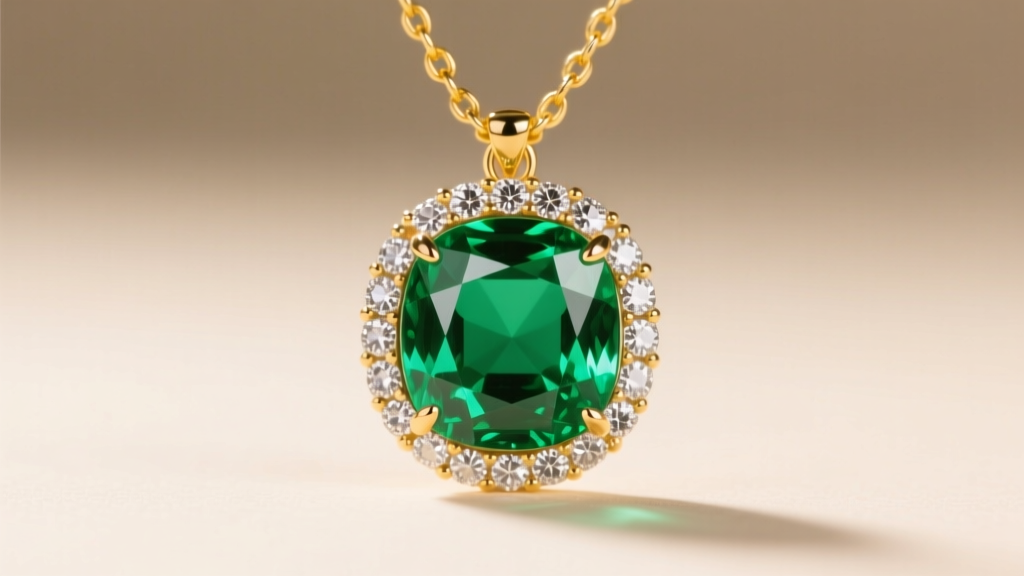
The Allure of the Emerald Diamond Pendant Necklace
Few jewelry pieces command attention quite like an emerald diamond pendant necklace. The deep, verdant saturation of a natural emerald contrasted against the brilliant, icy sparkle of diamond accents creates a timeless aesthetic that bridges vintage glamour and modern elegance. However, for a beginner navigating the fine jewelry market, purchasing this specific combination of gemstones can be a minefield of misleading terminology, hidden treatments, and fragile settings. Unlike diamonds, which are graded on a rigid and universally understood scale, emeralds require a nuanced understanding of origin, inclusions, and chemical enhancements. This guide strips away the marketing fluff and provides a data-driven, gemological framework to help you evaluate, price, and purchase your first emerald and diamond pendant with absolute confidence.
Decoding Emerald Quality: Color, Clarity, and 'Jardin'
When evaluating the center stone of your pendant, you must discard the diamond grading mindset. The Gemological Institute of America (GIA) notes that color is the single most critical value factor for emeralds, not clarity. The most prized emeralds exhibit a bluish-green to pure green hue with vivid saturation and medium-to-medium-dark tone. Colombian emeralds generally command the highest premiums due to their warm, intense saturation, while Zambian emeralds often present a cooler, slightly bluer hue with fewer visible inclusions.
Regarding clarity, every natural emerald contains inclusions. In the gemological world, these internal fractures and mineral deposits are romantically referred to as 'jardin' (French for garden). A completely flawless emerald is almost certainly synthetic or glass. However, the type of inclusion matters. Avoid stones with surface-reaching fractures directly under the table (the flat top facet), as these compromise structural integrity. A pendant rests against the collarbone and is subject to accidental impacts; a heavily included emerald with structural weaknesses can easily chip or split if dropped.
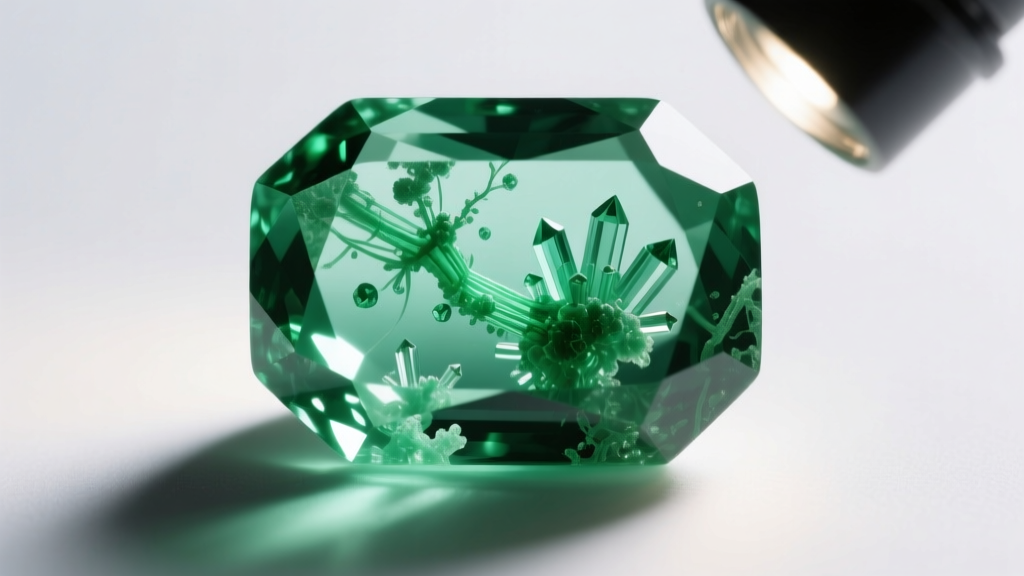
The Truth About Emerald Treatments: Oil vs. Resin
This is where most beginners get scammed. Because emeralds are heavily fractured by nature, the gemstone industry universally treats them to improve clarity and stability. According to the Federal Trade Commission (FTC), sellers must disclose significant treatments, but the terminology can be confusing. Understanding the difference between traditional oiling and modern polymer resins is critical for long-term wearability.
- Minor to Moderate Cedar Oil: This is the traditional, universally accepted treatment. Cedar oil has a refractive index similar to emerald, making fractures less visible. It is stable but requires re-oiling every few years by a professional jeweler.
- Opticon and Epoxy Resins: Modern commercial emeralds are often vacuum-impregnated with synthetic resins. While this makes the stone more durable initially, resins can yellow, cloud, or degrade over time when exposed to heat, UV light, or harsh chemicals. Always demand a lab report (from GIA, AGL, or Gübelin) that explicitly states 'Minor Oil' or 'No Oil'. Avoid stones graded with 'Significant' or 'Prominent' resin fillers.
Diamond Accents: What Actually Matters?
In an emerald diamond pendant necklace, the diamonds usually serve as a halo or side-stone accents. These are typically 'melee' diamonds (weighing under 0.15 carats each). Beginners often overpay for melee diamonds by demanding high clarity and color grades that are visually imperceptible at such small sizes.
According to the American Gem Society (AGS), diamond grading scales apply to all sizes, but practical application differs. For accent diamonds surrounding an emerald, insist on SI1 to SI2 clarity and G to H color. SI (Slightly Included) melee diamonds are eye-clean when set in micro-pave or prong halos, saving you up to 30% compared to VS or VVS grades. G-H color ensures the diamonds face up bright white against the 18k gold or platinum setting without paying the steep premium for D-F colorless grades, which offer zero visible benefit in stones smaller than 2mm.
Setting Styles and Metal Choices for Durability
Emeralds rank 7.5 to 8 on the Mohs hardness scale, but they possess poor toughness due to their inherent inclusions. The traditional 'emerald cut' (a rectangular step cut with truncated corners) was specifically designed to prevent the sharp, vulnerable corners from chipping during setting and daily wear. Therefore, the setting you choose for your pendant is a matter of structural engineering, not just aesthetics.
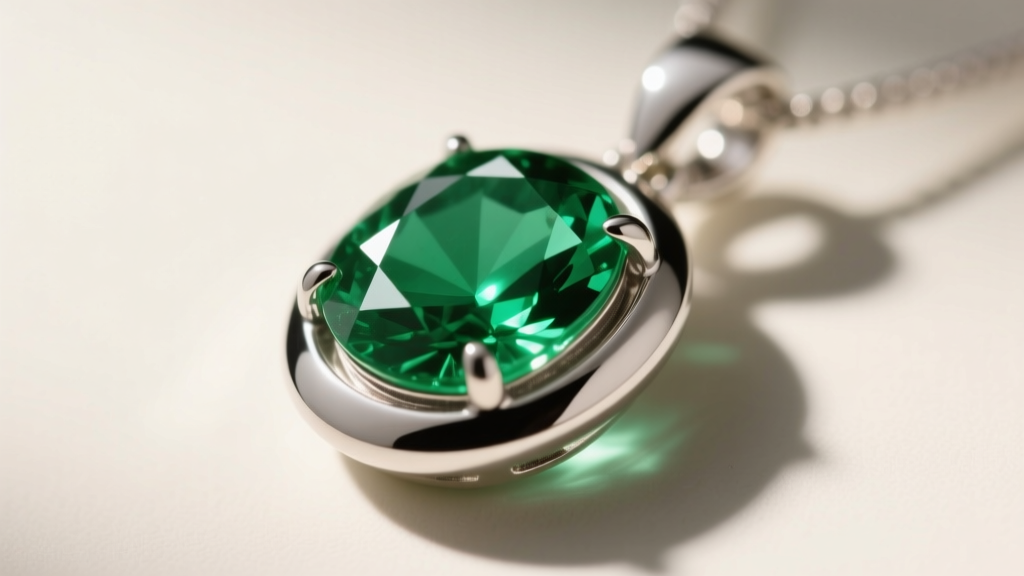
Prong vs. Bezel vs. Halo
A standard four-prong setting leaves the edges and corners of the emerald exposed to snagging on clothing, which can lever the stone out or chip a corner. For everyday wear, a bezel setting (where a rim of metal completely encircles the gemstone) or a diamond halo setting (where a border of small diamonds acts as a physical bumper) is vastly superior. Platinum or 18k white gold are the recommended metals for the setting head, as their tensile strength securely holds the stones, while an 18k yellow gold chain can be attached via a soldered jump ring for a two-tone aesthetic.
Pricing Breakdown: What Should You Expect to Pay?
Pricing for an emerald diamond pendant necklace varies wildly based on origin, treatment, and diamond quality. Use this table as a baseline framework when evaluating retail quotes.
| Quality Tier | Emerald Origin & Treatment | Diamond Accent Quality | Estimated Price Range (1.00ct Center) |
|---|---|---|---|
| Commercial | Zambian / Brazilian (Moderate Resin) | I1-I2 Clarity, J-K Color | $600 - $1,500 |
| Fine | Colombian (Minor Cedar Oil) | SI1-SI2 Clarity, G-H Color | $3,000 - $8,500 |
| High Jewelry | Colombian Muzo (No Oil / Untreated) | VS1+ Clarity, D-F Color | $18,000 - $60,000+ |
Expert Tip: Never buy a high-ticket emerald pendant without a third-party laboratory report. In-house 'certificates' provided by the retailer are not independent assessments and often inflate color and clarity grades.
Chain Pairings and Everyday Wearability
The pendant is only half the equation; the chain dictates how the piece drapes and survives daily tension. For a pendant weighing between 3 and 8 grams (including the emerald and diamond halo), avoid delicate, hollow chains like snake or herringbone, which kink irreparably if bent. Instead, opt for a solid cable chain or a box chain in 14k or 18k gold, measuring 1.2mm to 1.5mm in thickness. An 18-inch length is the industry standard, allowing the pendant to rest perfectly at the collarbone hollow. Always ensure the chain features a lobster clasp rather than a spring-ring clasp, as lobster clasps offer superior mechanical security and are easier to operate with one hand.
Maintenance: The Golden Rule of Emerald Care
The most common failure mode for emerald jewelry occurs not during wear, but during cleaning. Never put an emerald diamond pendant necklace in an ultrasonic cleaner. The high-frequency vibrations will shatter the internal fractures of the emerald, and the heat will boil away the cedar oil treatment, leaving you with a cloudy, opaque, and heavily fractured stone. Similarly, steam cleaners will strip the oil and cause thermal shock.
To clean your pendant at home, mix a few drops of mild, non-detergent dish soap (like Dawn) into a bowl of lukewarm water. Let the pendant soak for five minutes to loosen skin oils and lotion buildup. Gently agitate the water, then use a baby-soft toothbrush to lightly sweep the back of the setting (the pavilion) where dirt accumulates and blocks light return. Rinse under a gentle stream of lukewarm water, ensuring the drain is securely plugged, and pat dry with a lint-free microfiber cloth. Have a professional jeweler inspect the prongs or bezel rim every 12 months to ensure the metal has not worn thin and compromised the security of your gemstone.


