The Ultimate Necklaces for Women Length Guide & Chart
Discover the ultimate necklaces for women length guide. Learn exact measurements, body type adjustments, and neckline pairings for the perfect fit.


Buying jewelry online offers unparalleled selection, but it removes the ability to try pieces on in person. When researching necklaces for women, length is the single most critical variable that dictates how a piece will look, feel, and drape. A chain that sits elegantly on a collarbone in a product photo might hang entirely differently depending on your unique anatomy, wardrobe, and the specific millimeter width of the metal.
As of 2026, the shift toward 'quiet luxury' and permanent, high-quality everyday jewelry means consumers are investing in solid 14k and 18k gold, platinum, and sterling silver pieces meant to last decades. Getting the length right on the first purchase is essential. This comprehensive guide provides exact measurements, body-type adjustments, and proportional frameworks to ensure your next necklace purchase fits flawlessly.
The Standard Necklace Length Chart
The jewelry industry relies on a standardized naming convention for chain lengths. According to Blue Nile's Necklace Length Guide, these measurements are based on a standard mannequin with a 14-inch neck circumference. Below is the definitive chart for standard sizing.
| Length (Inches / cm) | Style Name | Where It Falls | Best Use Case |
|---|---|---|---|
| 14" (35 cm) | Collar / Choker | Tightly around the base of the neck | Open-neck tops, evening wear, minimalist layering |
| 16" (40 cm) | Choker / Princess | Base of the neck / top of collarbone | Everyday wear, V-necks, standard pendants |
| 18" (45 cm) | Princess | Center of the collarbone | The most universal length, ideal for crew necks |
| 20" - 24" (50 - 60 cm) | Matinee | Between collarbone and bust | Business casual, high necklines, layered looks |
| 28" - 36" (70 - 90 cm) | Opera | Below the bust to navel | Formal wear, long sweaters, doubling up |
How Body Type & Neck Size Alter Visual Length
The most common mistake buyers make is assuming a 16-inch chain will look identical on everyone. The reality of physics and anatomy dictates otherwise. If you have a larger neck circumference or a broader chest, a standard 16-inch chain will sit much higher, effectively functioning as a tight choker rather than a princess-length necklace.

The Measurement Formula
To guarantee a perfect fit, take a soft tailor's measuring tape and wrap it around your neck where you want the chain to sit.
- For a Choker fit: Add 2 inches to your exact neck measurement.
- For a Princess fit (collarbone): Add 4 to 6 inches to your neck measurement.
- For a Matinee fit (cleavage line): Add 8 to 10 inches to your neck measurement.
Expert Insight: If your neck measures 15 inches, a standard 16-inch choker will be uncomfortably tight (leaving only 1 inch of ease). You should opt for an 18-inch chain to achieve the visual 'choker' look, or seek out brands that offer custom sizing or standard 17-inch options, which are becoming increasingly common in 2026 to accommodate diverse body types.
Pairing Lengths with Necklines: A Practical Framework
A necklace should complement your clothing's architecture, not fight against it. Here is a structural framework for pairing chain lengths with common necklines, drawing on principles highlighted in Brilliant Earth's Educational Guides.
V-Neck and Scoop Necks
The goal is to follow the natural geometry of the shirt. An 18-inch Princess chain with a Y-drop or a distinct V-shaped pendant mirrors the neckline perfectly. Avoid chokers here, as they visually 'cut' the neck and clash with the downward angle of the fabric.
Crew Necks and Turtlenecks
High, tight necklines require contrast. You have two optimal choices: a bold 14-inch collar that sits entirely above the fabric line, or a long 24-inch to 30-inch Matinee/Opera chain that rests on top of the fabric, elongating the torso. Wearing a standard 16-inch chain with a crew neck usually results in the jewelry getting swallowed by the collar.
Strapless and Off-the-Shoulder
With maximum skin exposure, you want to frame the face and collarbones. Multi-strand 14-inch to 16-inch pieces or a single, substantial statement collar work best. The lack of fabric means the metal will sit directly on the skin, so ensure the chain style is smooth (like a herringbone or box chain) to prevent pulling on fine chest hair or skin.
Chain Width, Pendants, and Proportional Balance
Length is only half the equation; the millimeter width (gauge) of the chain dictates its durability, weight, and ability to hold pendants. Many buyers focus solely on length and are disappointed when a 'dainty' chain arrives looking like a piece of thread.
Understanding Millimeter Widths
- 0.8mm - 1.2mm (Ultra-Dainty): Weighs roughly 1.5 to 2.5 grams (for 16"). Best for minimalist aesthetics and very light pendants (under 3 grams). Warning: These are highly prone to kinking and snapping if caught on clothing.
- 1.5mm - 2.5mm (Standard Everyday): The sweet spot for 2026. Weighs 3 to 6 grams. Offers excellent durability for daily wear while remaining delicate enough to slide through standard pendant bails.
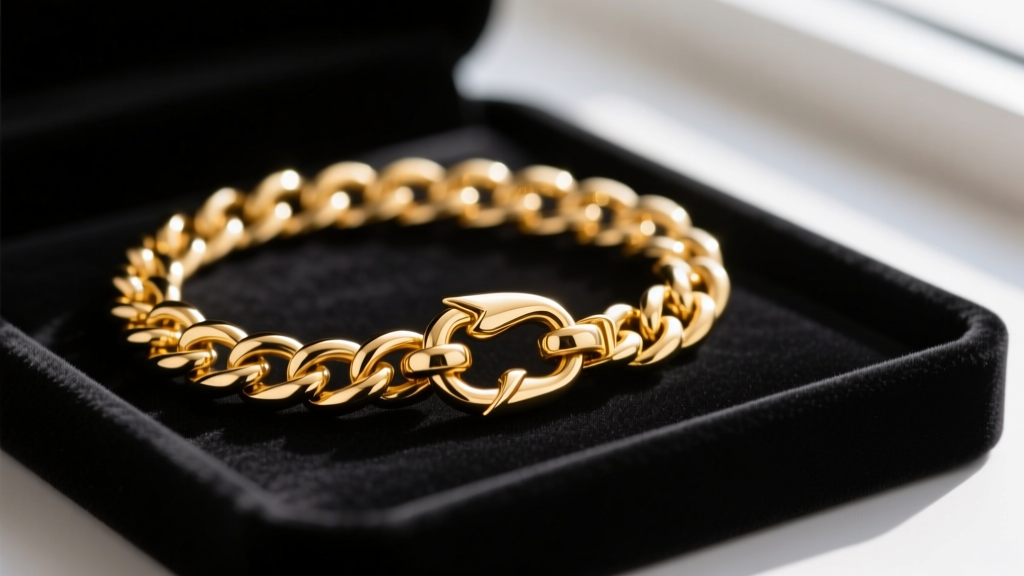
- 3.0mm - 5.0mm (Statement / Standalone): Weighs 8 to 15+ grams. These chains (like Cuban links or thick rope chains) are meant to be worn alone or with heavy, oversized pendants.
The Bail-to-Chain Ratio Rule
When buying a pendant and chain separately, you must check the bail (the loop the chain threads through) dimensions. A standard 1.2mm cable chain requires a bail with an inner diameter of at least 1.5mm. Conversely, if you buy a heavy gemstone pendant with a thick 4.0mm bail, a delicate 1.5mm chain will not fit through it, and the visual weight will be entirely unbalanced. Always cross-reference the bail width with the chain's outer diameter.
Hardware & Clasps: What to Look For
The clasp is the primary failure point on any necklace. The Gemological Institute of America (GIA) frequently notes that improper hardware is the leading cause of precious metal jewelry loss.
The Golden Rule of Clasps: The clasp must be proportional to the chain's weight. A heavy 10-gram chain with a tiny 5mm spring-ring clasp will constantly flip to the front of your neck because the clasp is lighter than the chain itself.
- Spring Ring: Small, circular, and inexpensive. Only suitable for chains under 1.5mm and under 3 grams. They are difficult to operate with one hand and prone to internal spring failure.
- Lobster Claw: The industry standard for quality. Secure, easy to grip, and capable of holding chains up to 5.0mm. Always look for a solid lobster clasp, not a hollow-stamped one.
- Magnetic / Fold-Over: Excellent for accessibility and heavier chains. Ensure magnetic clasps feature a secondary safety catch or a high-grade neodymium core to prevent accidental drops.
Final Buying Checklist
Before adding a necklace to your cart, run through this quick diagnostic checklist to ensure you are getting exactly what you need:
- Measure, Don't Guess: Did you use a soft tape measure on your own neck, or are you relying on a generic size chart?
- Check the Gram Weight: Is the product listing the actual gram weight? (Avoid buying solid gold chains without this metric).
- Verify the Clasp: Is the clasp type and size appropriate for the chain's thickness and weight?
- Bail Compatibility: If adding a pendant, will the chain's width successfully thread through the pendant's bail?
By treating length, width, and hardware as an interconnected system rather than isolated metrics, you can confidently purchase necklaces online that fit beautifully, drape correctly, and withstand the rigors of daily wear.


