Saint Christopher Protect Us Necklace Material Guide
Discover the best metals for your Saint Christopher protect us necklace. Compare durability, tarnish resistance, and pricing for daily wear.

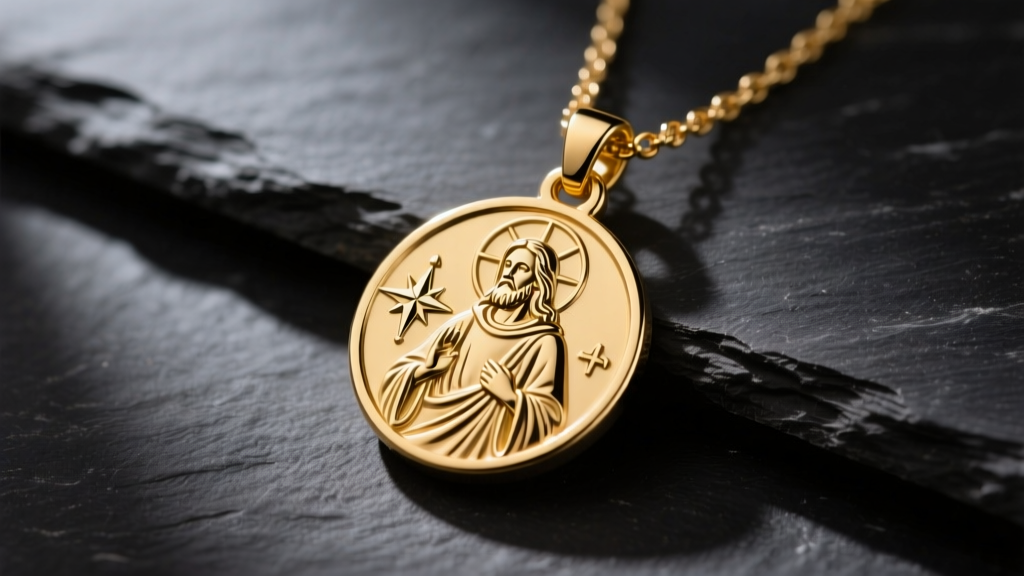
Devotional jewelry is rarely kept in a box; it is meant to be worn as a constant, tangible reminder of faith and protection. The saint christopher protect us necklace is one of the most iconic talismans for travelers, surfers, and commuters alike. Because it is worn daily—often 24/7, through showers, workouts, and sleep—the metallurgical properties of the medal and its chain are just as important as the spiritual significance of the piece.
Choosing the wrong metal can lead to rapid tarnishing, skin irritation, or catastrophic chain failure. In this comprehensive material guide, we break down the exact alloy compositions, hardness ratings, and long-term wear properties of the most common metals used in Saint Christopher jewelry, helping you make an informed investment.
The Significance of Material in Devotional Jewelry
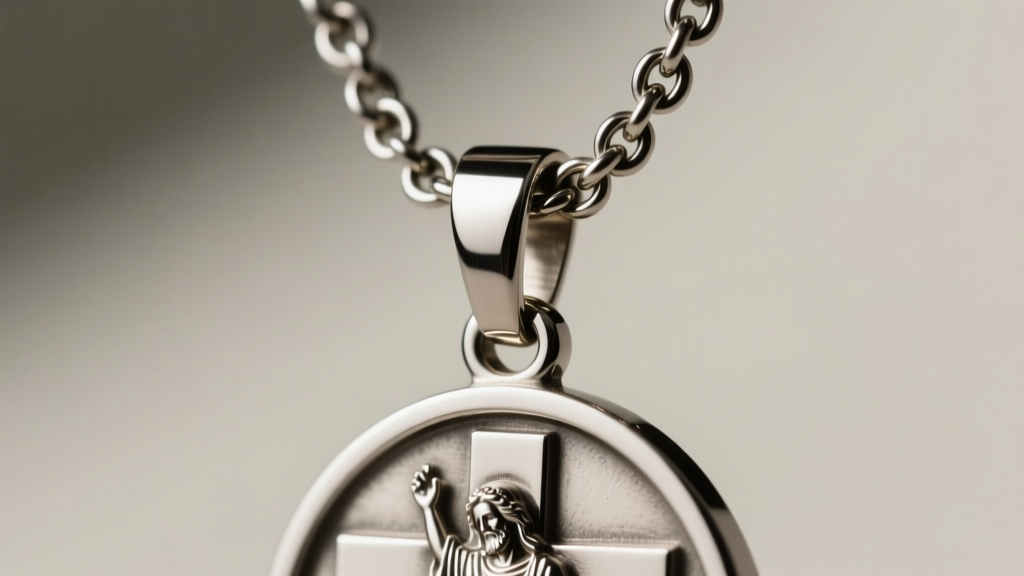
Unlike statement pieces worn occasionally, a Saint Christopher pendant is subject to continuous environmental and mechanical stress. The primary point of failure in any pendant necklace is the bail—the loop that connects the medal to the chain. Constant swinging and friction cause microscopic wear at this junction. If the metal is too soft, the bail will thin and eventually snap. If the metal is highly reactive, sweat and humidity will accelerate oxidation, degrading the intricate engraved details of the saint's image.
Furthermore, the human body's pH levels, combined with lotions, perfumes, and salt water, create a highly corrosive microenvironment against the skin. Understanding how different precious and base metals react to this environment is critical for selecting a necklace that will last a lifetime.
Metal Comparison: Choosing the Right Saint Christopher Medal
Solid Gold (14K vs. 18K)
Gold is the premier choice for heirloom-quality devotional jewelry, but pure 24K gold is far too soft (Mohs hardness of 2.5) for daily wear. According to the Gemological Institute of America (GIA), alloying gold with metals like copper, silver, and zinc increases its durability.
- 14K Gold (58.5% Gold): With a Vickers hardness of roughly 130-160 HV, 14K gold offers the ideal balance of rich color and structural integrity. It resists bail wear and maintains the sharp edges of diamond-cut engravings. Price Range: $350 - $1,200+.
- 18K Gold (75% Gold): Slightly softer (110-125 HV) and more prone to micro-scratches, 18K offers a deeper, warmer yellow hue. It is excellent for those with severe metal allergies, as the lower alloy content reduces the risk of nickel or copper reactions. Price Range: $600 - $2,000+.
Sterling Silver (925) & Rhodium Plating
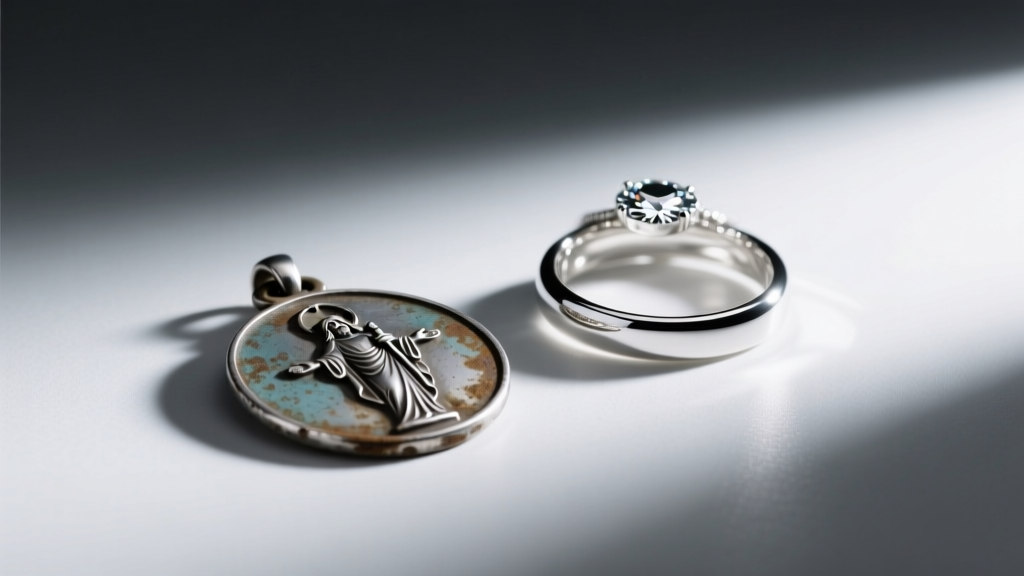
Sterling silver is an alloy containing 92.5% pure silver and 7.5% copper. As noted by The Silver Institute, the copper adds necessary tensile strength but introduces a vulnerability: oxidation. When exposed to sulfur in the air and sweat, the copper reacts to form silver sulfide, causing the medal to turn black.
To combat this, many modern Saint Christopher silver medals are flashed with a microscopic layer of rhodium (a platinum-group metal). Rhodium is highly inert, brilliantly reflective, and completely tarnish-resistant. However, once the rhodium wears off the high-friction edges of the medal, the underlying silver will require regular polishing with a jeweler's cloth. Price Range: $40 - $150.
Surgical Stainless Steel (316L)
For an indestructible, budget-friendly option, 316L marine-grade stainless steel is unmatched. The 'L' stands for low carbon, and the alloy includes 2-3% molybdenum, which specifically prevents pitting corrosion from chlorides (like sweat and ocean water). It is completely hypoallergenic, will never tarnish, and possesses a Mohs hardness of 5.5-6.3, making it highly scratch-resistant. The trade-off is that it cannot be easily resized or repaired by a traditional jeweler if the chain breaks. Price Range: $20 - $60.
Gold Vermeil vs. Standard Plating
Vermeil (pronounced ver-may) consists of a thick layer of gold (minimum 2.5 microns) electroplated over a sterling silver base. Standard gold-plated jewelry uses a brass or copper base with a microscopic gold wash (often less than 0.5 microns). For a Saint Christopher necklace worn in the shower or at the beach, standard plating will wear off within months, exposing the base metal to rapid corrosion. Vermeil will last significantly longer but will eventually require re-plating. Price Range: $80 - $250.
Comprehensive Material Properties Table
| Material | Composition | Mohs Hardness | Tarnish Risk | Allergy Risk | Best For |
|---|---|---|---|---|---|
| 14K Solid Gold | 58.5% Gold, 41.5% Alloy | 3.5 - 4.0 | None | Low (if nickel-free) | Lifetime daily wear, heirlooms |
| 18K Solid Gold | 75% Gold, 25% Alloy | 2.5 - 3.0 | None | Very Low | Sensitive skin, luxury gifting |
| Sterling Silver (925) | 92.5% Silver, 7.5% Copper | 2.5 - 3.0 | High | Low | Budget-conscious, occasional wear |
| 316L Stainless Steel | Iron, Chromium, Molybdenum | 5.5 - 6.3 | None | None (Hypoallergenic) | Active lifestyles, water exposure |
| Gold Vermeil | 925 Silver base, 2.5µm+ Gold | 2.5 - 3.0 | Moderate (over time) | Low | Fashion-forward, medium-term wear |
Chain Selection: Gauges and Link Styles for Medals
The material of the chain is only half the equation; the structural geometry is equally vital. A standard 1-inch (25mm) Saint Christopher medal weighs between 3 and 6 grams. Suspending this weight requires a chain with adequate tensile strength and a link structure that resists kinking.
Optimal Gauge Sizes
Never pair a heavy devotional medal with a delicate chain. A 0.9mm or 1.0mm chain will inevitably stretch or snap under the pendulum effect of a swinging medal.
- 1.2mm - 1.5mm: Suitable for small, lightweight medals (under 3 grams) or for children's necklaces.
- 1.8mm - 2.2mm: The sweet spot for standard adult-sized Saint Christopher medals. Provides excellent tensile strength without looking overly bulky.
- 2.5mm - 3.0mm: Reserved for oversized, heavy-cast medals or masculine, streetwear-inspired layering.
Link Styles and Bail Friction
The shape of the chain links dictates how they interact with the medal's bail. Rolo chains (uniform round links) and Cable chains (uniform oval links) are the superior choices. They articulate smoothly, reducing concentrated friction points on the bail.
Conversely, avoid Snake chains and Box chains for daily-wear pendants. Snake chains are essentially tight metal tubes; they easily kink if bent backward, and their tight crevices trap dead skin, lotion, and dirt, which then acts as an abrasive paste against the medal's bail. Box chains, while beautiful, have sharp internal corners that can act like a microscopic file, slowly sawing through a soft gold or silver bail over a period of years.
Care, Maintenance, and Failure Modes
Even the most durable saint christopher protect us necklace requires basic maintenance to prevent mechanical failure. The most common failure mode is bail thinning. Because the chain constantly rubs against the inside of the bail loop, a soft 18K gold or silver bail can wear down by 20-30% over a decade of continuous wear. Have a jeweler inspect the bail thickness every 3 to 5 years.
Another critical point of failure is the clasp. Standard spring-ring clasps rely on a tiny internal steel spring that is highly susceptible to rust and fatigue, often failing within a few years of daily exposure to water. Always upgrade to a lobster clasp, which utilizes a sturdier, more water-resistant mechanism and provides a larger surface area for secure attachment to the chain's end ring.
For cleaning, avoid harsh ultrasonic cleaners if your Saint Christopher medal features oxidized (blackened) recesses to highlight the engraving. Ultrasonic waves and harsh chemical dips will strip the intentional antiquing, leaving the medal looking flat and washed out. Instead, use a soft-bristled baby toothbrush with a drop of mild dish soap and warm water, gently brushing the crevices to remove sebum and environmental grit.
Final Verdict: Matching Metal to Lifestyle
Choosing the right metal for your Saint Christopher necklace ultimately depends on your lifestyle and budget. If you are an avid surfer, swimmer, or gym-goer who refuses to take your jewelry off, 316L Stainless Steel or 14K Solid Gold are your only viable options for long-term survival. If you prefer the traditional, brilliant luster of precious metals and don't mind a monthly polish, Rhodium-Plated Sterling Silver offers unmatched value. By aligning the metallurgical properties of your necklace with your daily habits, you ensure that your symbol of protection remains intact for the journey ahead.


