Mala Necklace Meaning and Value: Pricing Authentic Beads
Discover the true mala necklace meaning and how material authenticity, hand-knotting, and bead grading dictate real market value.

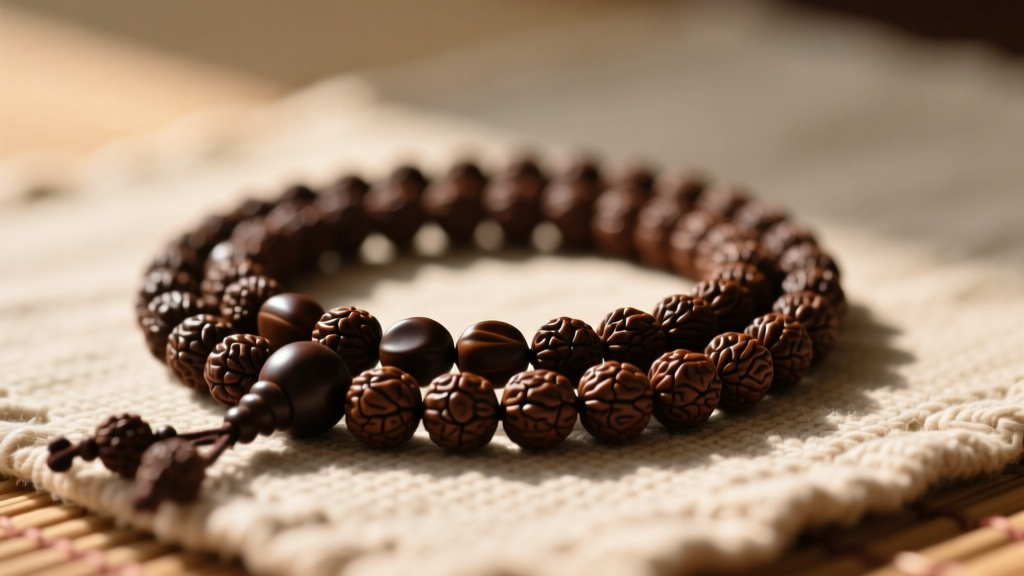
The True Mala Necklace Meaning Beyond Aesthetics
To understand the market value of a mala, you must first understand its purpose. The traditional mala necklace meaning is deeply rooted in Hindu and Buddhist japa meditation practices. A standard mala contains 108 beads, used to count mantras, breaths, or intentions, plus one larger 'guru' bead that marks the beginning and end of the cycle. This spiritual tool is designed to be handled constantly, rubbed between the thumb and middle finger, and exposed to the natural oils and friction of human skin.
Because of this intense physical interaction, the mala necklace meaning extends beyond mere symbolism into the realm of tactile durability and material integrity. When you purchase a mala, you are not just buying a necklace; you are investing in a meditative instrument. Unfortunately, the modern wellness market is saturated with mass-produced, low-quality imitations that fail to honor the traditional construction methods. Assessing the budget and true value of a mala requires a critical eye for material authenticity, stringing techniques, and gemstone grading.
How Material Authenticity Dictates Price and Value
The widest price discrepancies in the mala market stem from the beads themselves. Traditional malas utilize specific botanical seeds, woods, and semi-precious stones, each carrying its own energetic significance and market rarity. Understanding the botanical and geological realities of these materials is the first step in separating genuine value from overpriced tourist trinkets.
Seed and Wood Beads: Rudraksha and Sandalwood
Rudraksha seeds (*Elaeocarpus ganitrus*) are the cornerstone of traditional meditation malas. Their value is determined by their origin and their 'mukhi' (the natural clefts or facets on the seed's surface). Nepalese Rudraksha beads are generally larger with deeper, more pronounced grooves, while Indonesian beads are smaller and smoother. A standard, authentic 5-mukhi Rudraksha mala (the most common variety) should cost between $25 and $60. However, if you encounter a '1-mukhi' Rudraksha mala selling for under $100, it is almost certainly a counterfeit. Genuine 1-mukhi seeds are exceptionally rare, and a verified single bead can command prices upwards of $500 to $1,000. Unscrupulous sellers often carve fake lines into higher-mukhi seeds to mimic the rare 1-mukhi variety.
Sandalwood is another highly counterfeited material. Authentic Mysore sandalwood (*Santalum album*) contains high levels of santalol, providing a rich, woody aroma that actually deepens and improves when warmed by your body heat during meditation. A genuine sandalwood mala will cost between $80 and $150. The failure mode of cheap ($15 to $30) 'sandalwood' malas is rapid scent degradation; they are typically made from inexpensive boxwood or pine, soaked in synthetic fragrance oils that evaporate within two weeks, leaving you with a dull, odorless bead.
Gemstone Malas: Energy vs. Market Grading
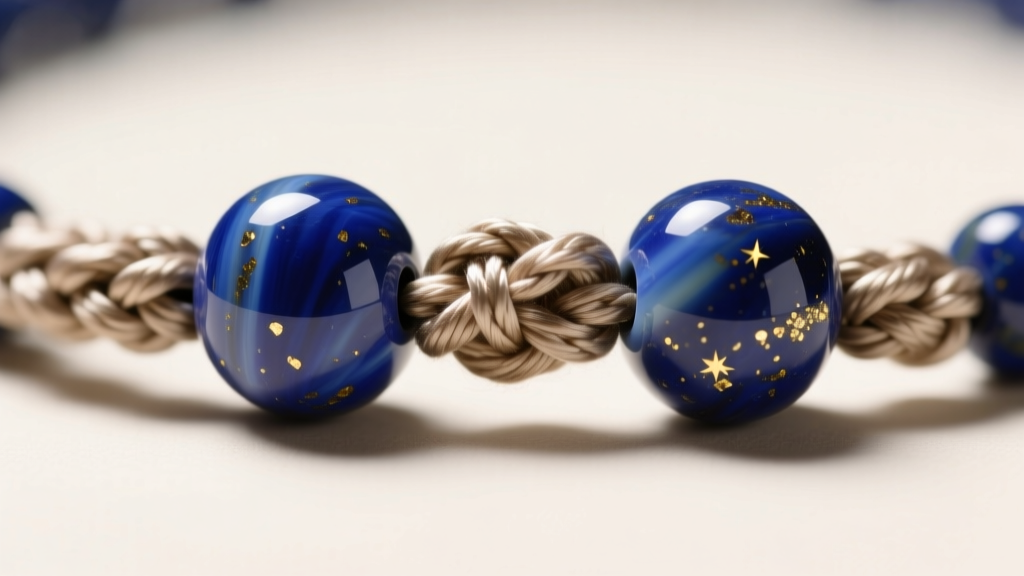
When transitioning from seeds to semi-precious stones, the gemological grading standards heavily influence the price. Take Lapis Lazuli, a popular stone for throat chakra malas. A high-value Lapis mala will feature deep, uniform royal blue beads with minimal white calcite inclusions and distinct, evenly distributed pyrite (gold) flecks. These Grade A malas typically range from $120 to $250. Budget malas ($30 to $50) often use heavily dyed howlite or low-grade lapis with excessive white patches, which can bleed blue dye onto your clothing when exposed to sweat.
Construction Quality: The Hidden Cost of Hand-Knotting
The most critical, yet frequently overlooked, aspect of mala valuation is the stringing method. Traditional malas are hand-knotted between every single bead using durable cotton, nylon, or silk thread. This technique serves two vital purposes: it allows the mala to drape fluidly and makes it easier to move bead-by-bead during japa meditation, and it acts as a fail-safe. If the string breaks, the knots prevent all 108 beads from scattering across the floor.
Hand-knotting a 108-bead mala is a labor-intensive process that takes an experienced artisan between four to six hours to complete. This labor cost is inherently reflected in the retail price of a high-quality mala.
In contrast, budget malas are often strung on elastic cord or cheap nylon without any intermediate knots. Elastic strings degrade rapidly when exposed to skin oils and the friction of daily use. Within three to six months, the elastane core dries out and snaps—a frustrating failure mode that disrupts your practice and ruins the necklace. If a mala stretches like a bracelet, it lacks the traditional structural integrity required for serious meditation.
Budget vs. Premium: A Value Assessment Matrix
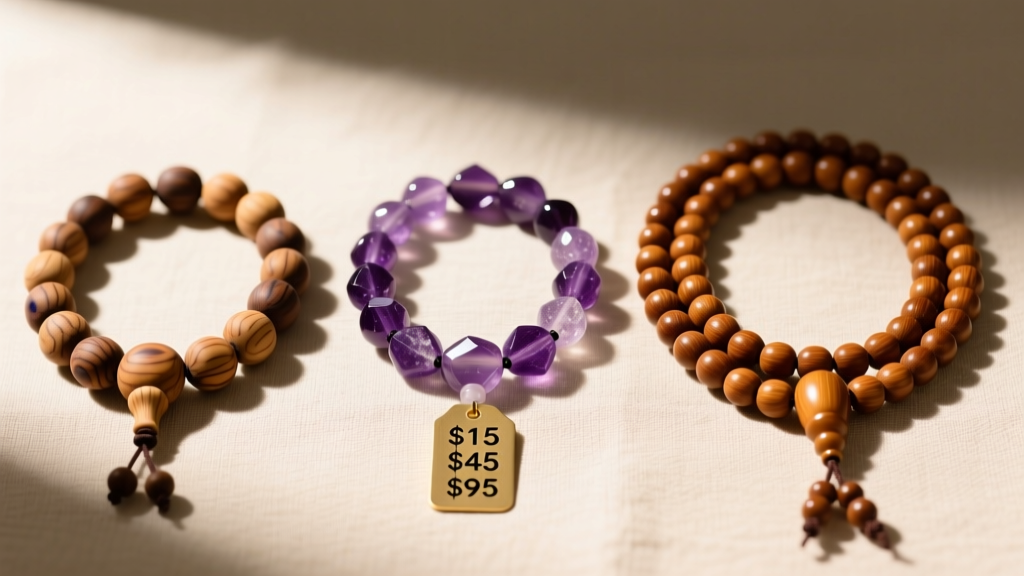
To help you navigate the market, we have categorized mala necklaces into three distinct value tiers based on materials, construction, and ethical sourcing.
| Tier | Price Range | Materials & Beads | Construction | Value Verdict |
|---|---|---|---|---|
| Budget | $15 - $35 | Dyed wood, glass, elastic, low-grade dyed howlite | Machine-strung, unknotted elastic | Poor. High failure rate, synthetic materials disrupt energetic intent. |
| Mid-Range | $45 - $95 | Genuine 5-mukhi Rudraksha, real amethyst, jade | Cotton or nylon string, hand-knotted | Good. Excellent entry point for authentic, durable daily practitioners. |
| Premium | $110 - $300+ | High-mukhi Rudraksha, Mysore sandalwood, Grade A Lapis | Silk thread, expert hand-knotting, ethically sourced | Exceptional. Heirloom quality, deepens with age, honors traditional meaning. |
Red Flags: Spotting Counterfeit and Low-Value Malas
When assessing a mala in person or online, look out for these specific indicators of poor value and deceptive manufacturing:
- Perfect Uniformity in Natural Seeds: Genuine Rudraksha or Bodhi seeds are natural botanical products. They should have slight variations in size, shape, and color. If every seed is perfectly identical, they are likely molded from resin or compressed wood dust.
- The 'Chemical' Sniff Test: Rub the beads vigorously between your palms to generate heat, then smell them. Authentic sandalwood or rosewood will emit a warm, natural, earthy scent. Counterfeits will smell sharply of alcohol, perfume, or chemical solvents.
- The Guru Bead Anatomy: In a traditionally crafted mala, the guru bead has three holes (a T-drill) to allow the string to pass through and exit out the top to form the tassel. Cheap, mass-produced malas often use standard two-hole beads for the guru bead, resulting in an awkward, asymmetrical tassel attachment.
- Frigid Gemstones: Genuine semi-precious stones like quartz, amethyst, or lapis lazuli feel distinctly cool to the touch and take a moment to warm up. Glass or plastic imitations will immediately feel warm or room-temperature.
Final Verdict: Investing in Your Practice
The mala necklace meaning is intrinsically tied to mindfulness, intention, and longevity. Treating this sacred tool as a mere fashion accessory leads to purchasing low-value items that degrade quickly and fail to support a dedicated meditation practice. By understanding the botanical realities of Rudraksha, the geological grading of gemstones, and the vital importance of hand-knotted construction, you can accurately assess a mala's true market value. Expect to invest between $50 and $120 for a genuine, hand-knotted mala that will not only withstand the physical demands of daily japa but will also absorb the energy of your practice, becoming a more beautiful and meaningful tool over time.


